Plus-Size Multiday Hiking Part 1
Exploding Myths, Empowering Hikers and Practical Gear Tips
by Rowena Kew
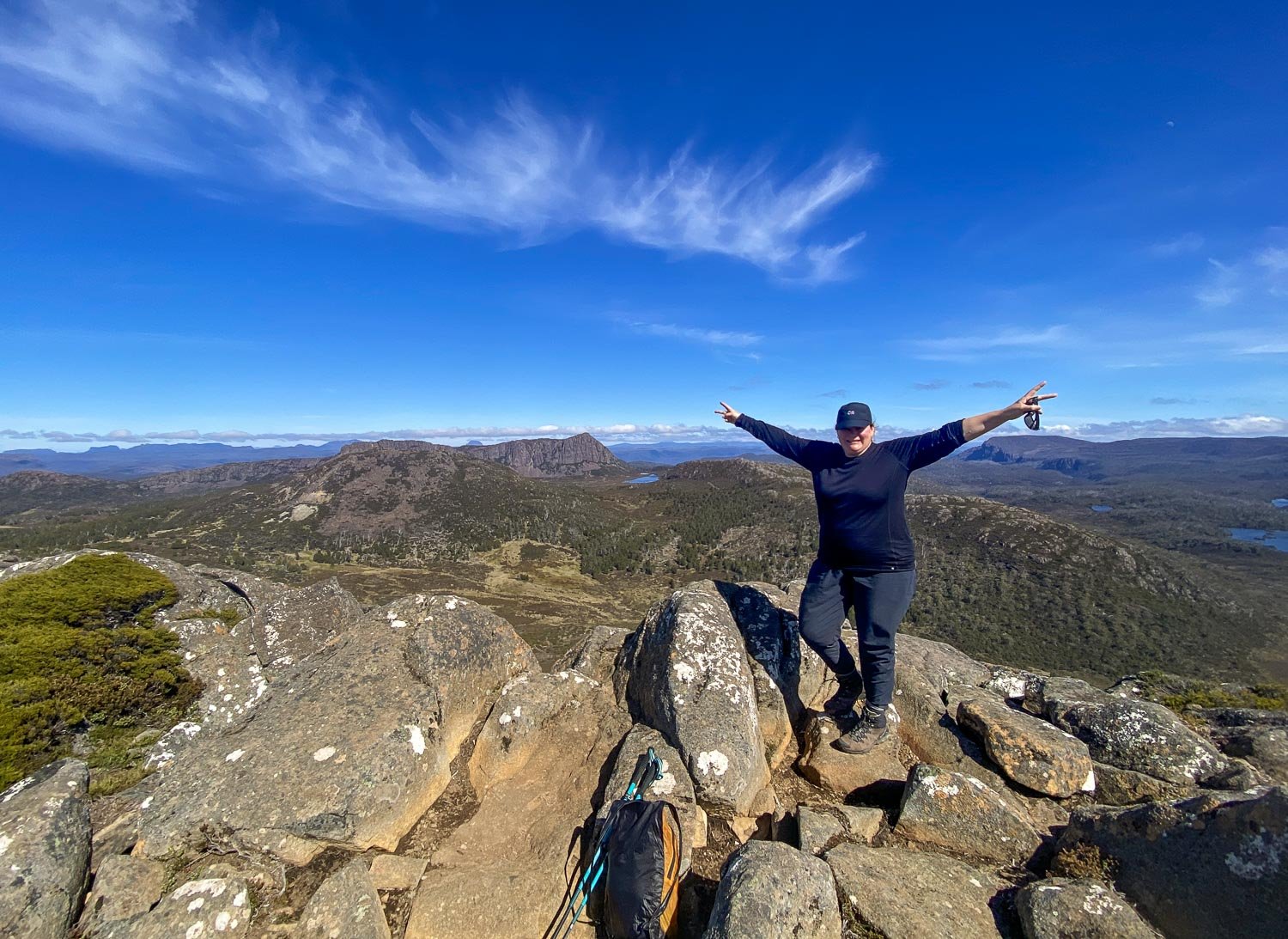
Triumphant atop Mt Jerusalem on the Walls of Jerusalem Track, Tasmania. All images by Ro Kew unless otherwise indicated.
Based in Victoria, Australia, Ro Kew of The Hiking Physio combines her life experience, passion for hiking and physiotherapy expertise to help hikers enjoy the outdoors. Part One covers empowerment, myths, and gear tips. Part Two covers training tips and health on trail.
If you have any acute or chronic health conditions, always consult your own health professionals before starting a new physical activity such as multiday hiking.
Why Plus-Size Hiking and Physiotherapy?
As a fifty-something physiotherapist, hiker and mum living on the Mornington Peninsula, I’m blessed with great local hiking trails; I also venture further afield when I can. However, having spent most of my life in a body that doesn’t match popular media stereotypes, I’ve faced significant barriers to multiday hiking.
I’m not alone. Nearly 70% of the Australian population is classified as overweight or obese (ABS, 2018). Most women are size 14-16, with many 18+, rather than the size 8-12 usually seen on social media. Despite this implied absence, with almost 2 million Australians hiking annually (Statista, 2022) there are plenty of plus-size hikers on the trails. Sadly, for many larger people wanting to try multiday hiking, the barriers can feel insurmountable. They are not, especially with new resources and more accessible support.
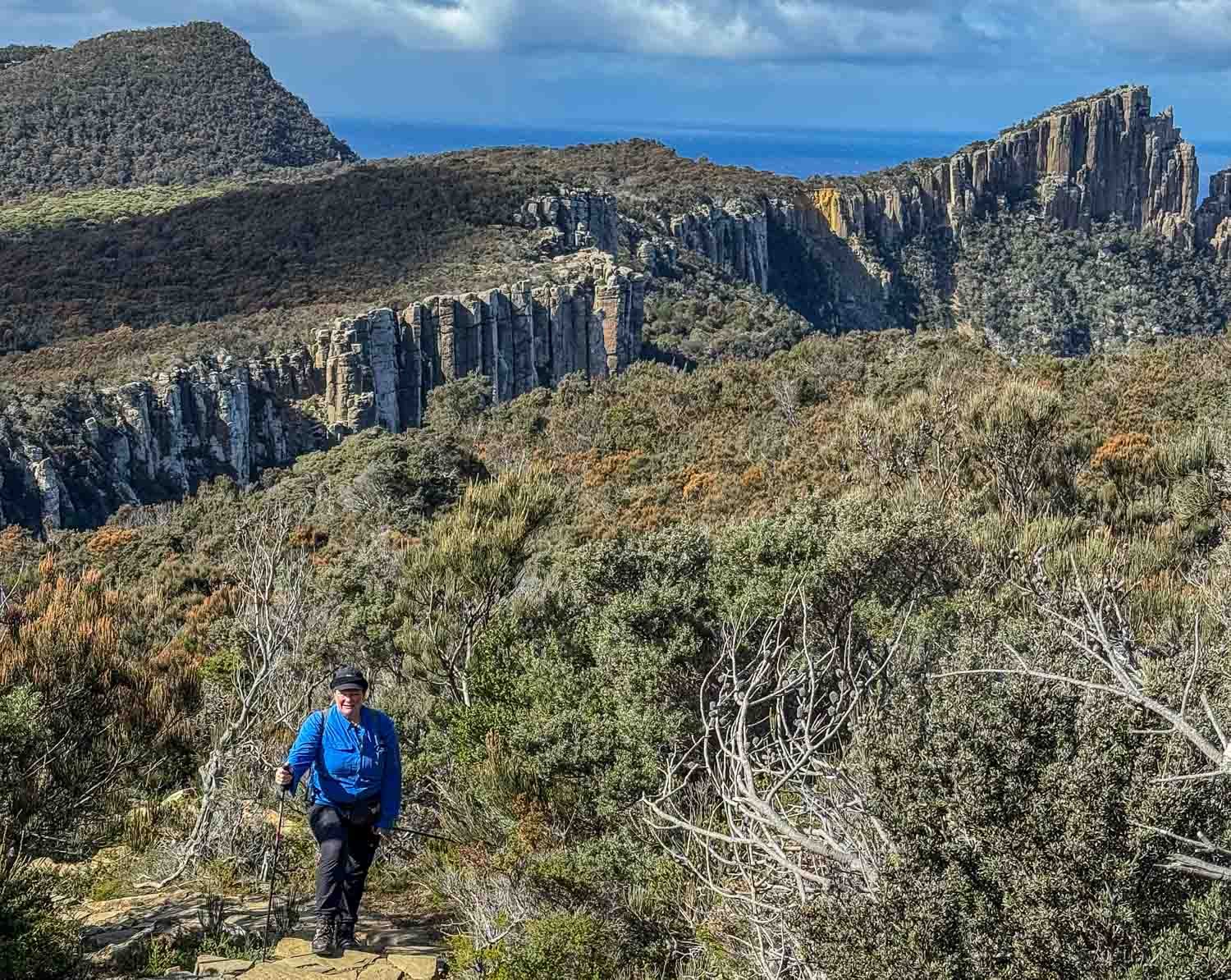
On a spur trail, Three Capes Track.
I have worked as a clinical physiotherapist for many years, but was inspired to start my online business shortly after completing the Overland Track. In the lead up, residual injuries from an accident made training overwhelming, so I looked for professional help. The best option at the time was an online personal trainer working with hikers, but it was a disastrous mismatch. His understanding of the demands of the trail was excellent, but the training didn’t adequately account for my specific injuries or other individual factors. My brief panic ensuing from bailing was quickly followed by the realisation that 1. I’m a physio, 2. I’ve done a lot of hiking and 3. I’ve helped prepare clients for similar things in the past! So, I created and followed my own program.
Hiking the OT and especially climbing Mt Ossa was one of the most epic experiences of my life. Without the right skill set or motivation to make it happen, I could have missed it all! This was an epiphany because it made me realise I could provide the individualised support, injury management, specific training and education that I couldn’t find, to other hikers. The outdoors is for everyone, and preparation is key.
Exploding Myths and Finding Empowerment
You DO Belong on Trail
When you’re plus-size, you face many negative societal myths. The first is that plus-size hikers don’t belong on the trail or that we’re a danger or a liability to everyone. Whilst that can be true, there are risks for anyone – regardless of size – who isn’t realistic about taking on challenges without adequate preparation.
If you’re day hiking, you’ve already taken the first step towards multiday hiking!
Hike Because You Want to Hike
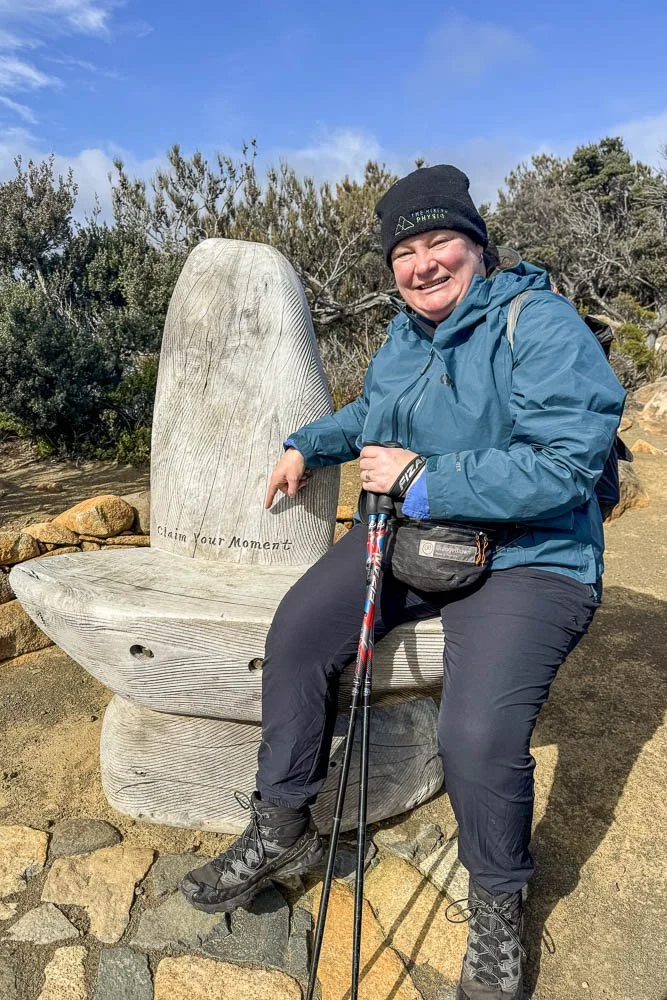
Another disempowering and counterproductive myth is that you should hike primarily to lose weight. Being in a significant calorie deficit is fine for walks around the block but, on multiday hikes, it’s potentially dangerous. On the trail, food is fuel. Under-eating whilst hiking many kilometres for several days may be feasible but, if prolonged, energy levels and enjoyment are likely to tank, fatigue and injury risk are likely to increase, and reserves to deal with the unexpected will be substantially depleted.
Multiday hiking should be about fun, overall physical and mental health and fitness, rather than about losing weight. You should hike because you want to hike.
And of course it won’t be fun all the time – you’ll experience Type 2 and Type 3 “Fun” on any challenging multiday hike and you shouldn’t go into any multiday hike expecting 100% sunshine and roses! However, with the correct approach and planning, you’ll have fun, too!
Overcome Fear and Find Your Tribe
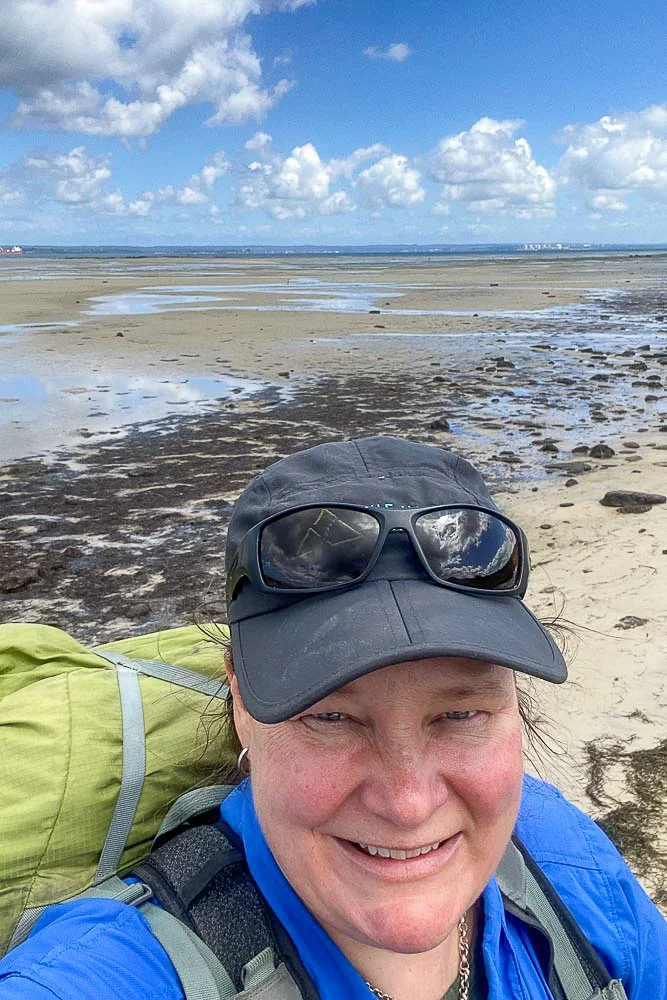
“Take charge of your hiking journey!”
A hiking culture that instils fear is especially disempowering to plus-size hikers because so many assumptions are already made about us. Failures that are accepted as part of learning in others are blamed instead on our weight. The fears of not being able to finish, of looking stupid, or of not being able to keep up can make taking even the first step overwhelming.
Feel the fear and do it anyway. Start with something that isn’t too different from what you currently do. For example, if you normally take the dog for a one hour, two kilometre urban walk, try a two kilometre walk on a hiking trail that also takes an hour. Plan a small walk with a neighbourhood friend or family member – perhaps a grandchild or niece, or an older relative if you’re slow – and see how you go.
Alternatively, join a beginner’s hike with a hiking club. The camaraderie and support of other hikers can be a great way to build the fitness and confidence needed for multiday hiking. There are many hiking clubs, but choose carefully. Some are into death marches: some cater for slower hikers and others don’t. Ask about their philosophy and approach.
Ladybird Outdoor Adventure is a Facebook group founded by Andrea Bayliss because she understood that feeling of being left behind. She didn’t want to be that slowest person where you catch up only to have the others head off immediately, and you never get a rest. The FU-Stop is a miserable experience.
Finding people to hike with, feeling safe enough to even give it a try, is huge. Go you! Search out role models and find your tribe. Don’t give up: this can take time, as your life and that of others change. The people with whom I hiked four or five years ago are not the same people with whom I hike most of the time now. Whatever stage you’re at, you can take charge of your own evolution as a hiker.
Here are a few inspiring role models/groups/resources:
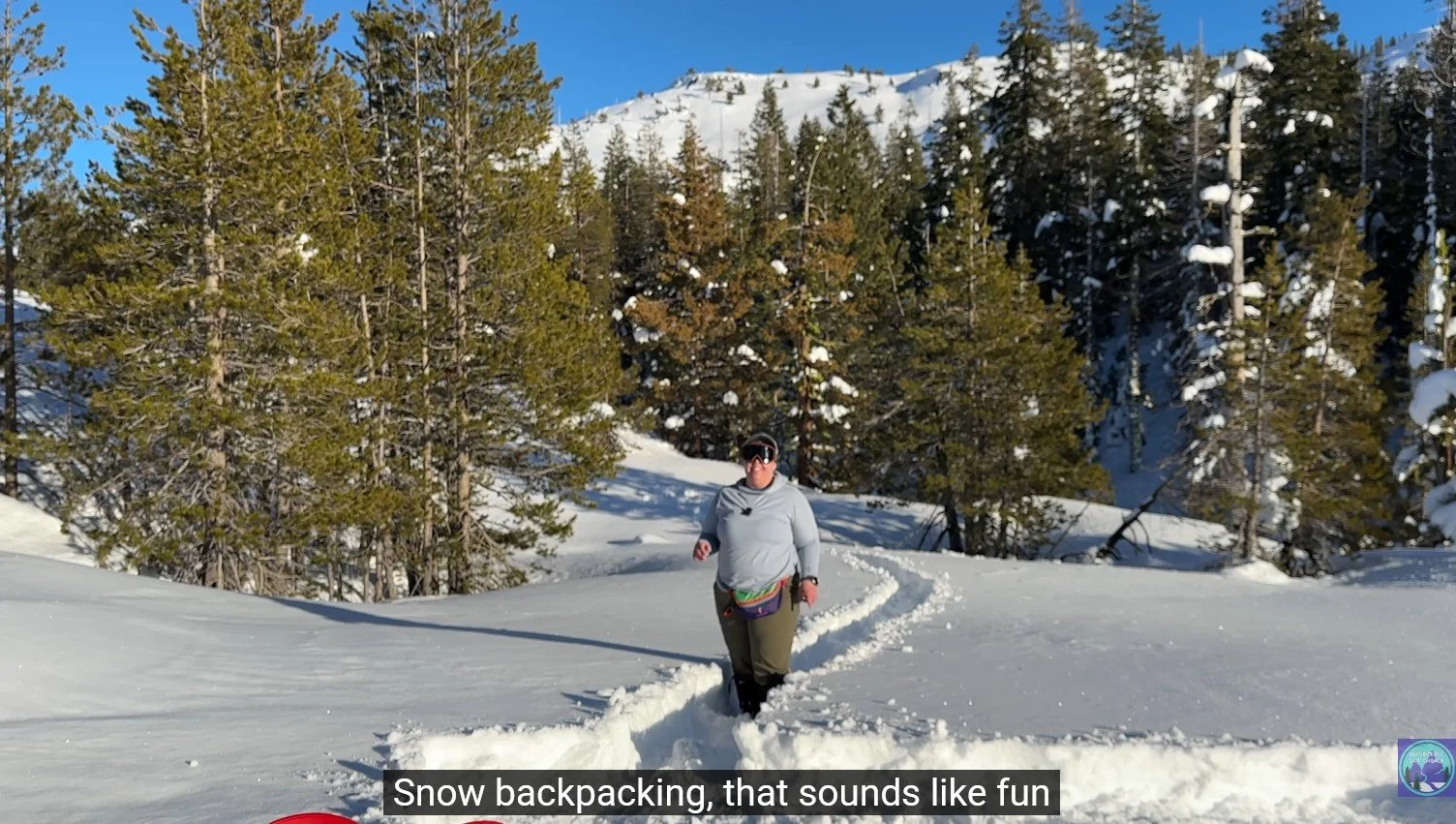
Multiday and long-distance hiker Wandering Switchback has great advice for new hikers of any size (Image Credit: Wandering Switchback, Youtube).
Everybody Outdoors (day hiking)
Fat Girls Hiking book, youtube and Instagram, primarily day hiking.
Plus Size Backpacking Instagram and Facebook.
Are you a plus-size multiday hiker or hiking group? Contact slowerhiking and we will add your website/social media link here! The more, the merrier!
Gear Tips for Plus-Size Hikers*
*Slowerhiking is a strictly not-for-profit website without affiliate links or any form of paid advertising or financial recompense.
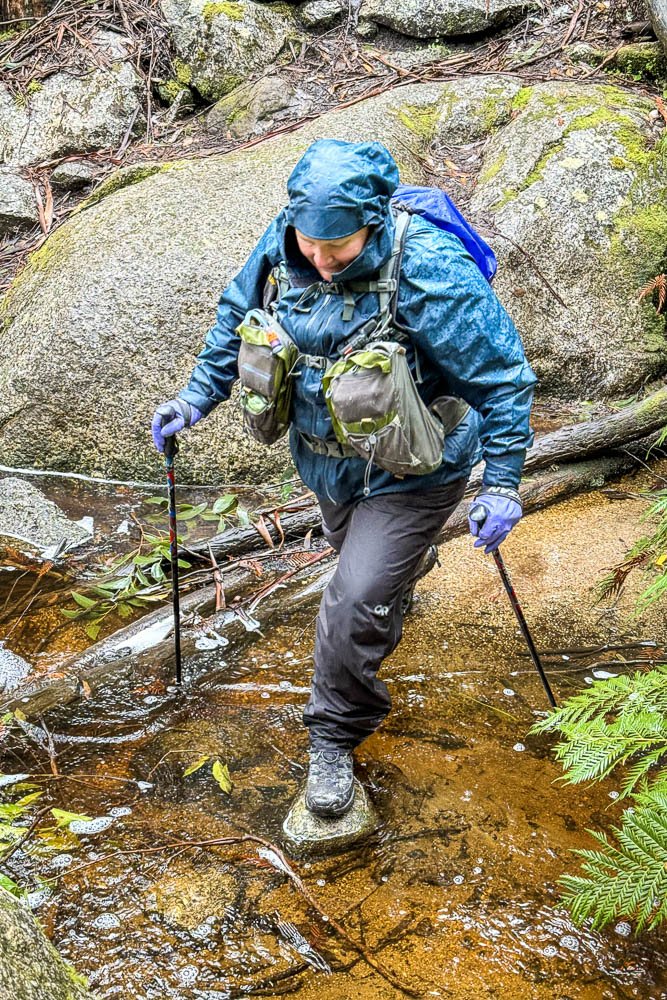
Ro dressed for success on a cold and wet day in Wilson’s Promontory, Victoria.
Multiday hiking requires more equipment: a tent, a sleeping bag and mat, kitchen, toiletries and, ideally, a personal locator beacon. Your pack usually needs to be larger. You also need to be a bit stronger to carry everything, including enough food, water and fuel.
Equipment failures are less critical day hiking as you’re rarely further than half a day from the trailhead. However, avoiding glitches in clothing or gear is far more important when you need to stay dry and warm for days and nights on end. All your gear needs to be fit for purpose, and fit you… but in a non-average body, this isn’t straightforward. Never assume things will or won’t work. Always try them on and test them in controlled conditions before needing to rely on them!
Clothing
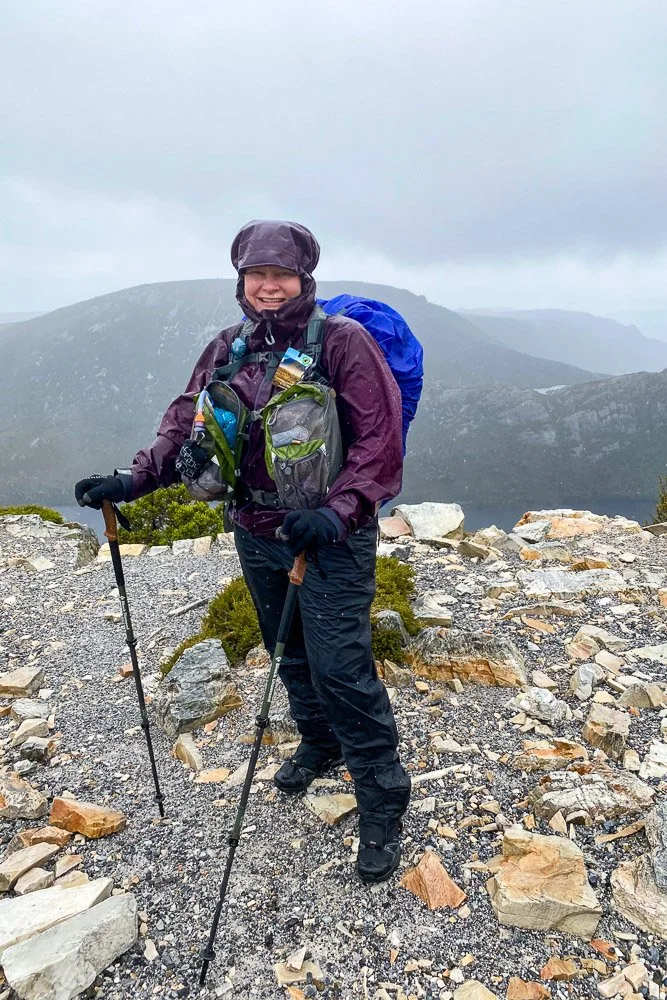
Correct clothing choices — here gloves, rain shell, insulation and base layers, gaiters and appropriate footwear at Marion’s Lookout on the Overland Track— are for more than comfort on multiday hikes: they can be life-saving.
When I first started hiking, I was borderline plus-size. Fortunately I was able to source decent gear because I was living in the US where a wider selection was sold. Only more recently has a broader range of options become available in Australia.
Not only plus-size female hikers face barriers: very tall, large men and some of my tiny female friends have similar challenges. Their bodies fall outside the typical pack, gear, and clothing sizes the majority of manufacturers target. But we’ve already seen that, although the average Australian woman is a size 14-16, countless more are 18+.
My first significant gear disappointment was being unable to find suitable women’s hiking clothing in my size. For example, to get rain gear that fit my hips, I needed a men’s model, but it was too big everywhere else. Larger women’s styles can be problematic, too. Tops are often insufficiently generous in the belly or hips, while sleeves are often too short, potentially causing chafe.
Clothing Brands
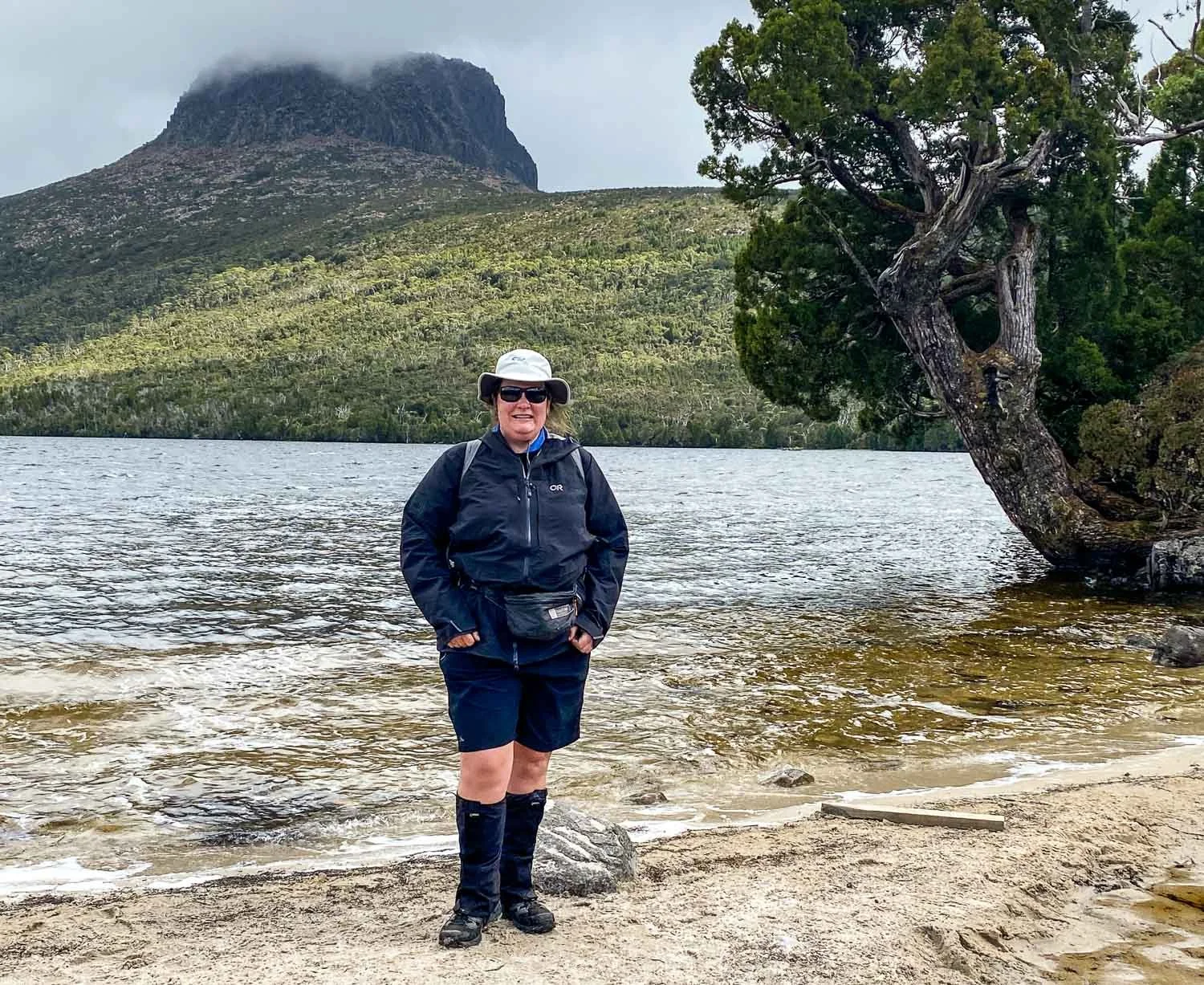
Comfortable, practical and effective clothing on a spur trail off the Overland Track.
Luckily, some brands are better than others at catering to different bodies. Outdoor Research (here in the US) is the brand that seems to have the most inclusive range at the moment. From what I’ve seen, they lead in providing technical hiking clothes for bigger people.
The Australian brand Mont also has some great technical gear, but it isn’t always easy to find. I was thrilled with the comfiest-ever pair of size 18 Mont Fleece pants for my recent Three Capes trip. MacPac has some great offerings up to a women’s size 24 and men’s 4XL. I’ve found comfy and stylish shorts, pants, jackets and hiking tops there. Most of their gear is excellent, but some of their merino is thin and doesn’t last, particularly on those of us who are harder on gear.
Mainstream sports stores like Decathlon and Anaconda carry limited stock of larger sizes. However, technical features vary and sizing only appears to go up to 3XL. My favourite thermals are Patagonia Capilene Air because they are super light, stretchy and comfortable. The men’s 2XL top was actually too big! Unfortunately, they are only sporadically available in Australia. Some great merino offerings are available from XTM and Merino Country.
Underwear
Underwear can be tricky too: ensure they don’t cut in or constrain you, because a multiday hike is not like wearing them to the office for a day. Quick-dry ones work for me but unfortunately my favourite Ex Officios are also discontinued [if readers have found a suitable plus-size replacement, please share in the comments – Ed].
Good alternatives include various microfibre/quick-dry department store styles from brands like Bonds, Jockey and Berlei, or merino ones from Macpac or Merino Country. Merino undies are warm,comfortable and stay fresher for longer, but they dry more slowly than synthetics. Avoid cotton, bamboo or tencel knits or blends, as they absorb too much moisture and take even longer to dry than merino.
Some hikers swear by bike-shorts or similar long underwear to prevent chafe, but I find them a little too hot. Try them if thigh-chafe is an issue for you (see also Part Two, coming soon).
Jackets and Shellwear
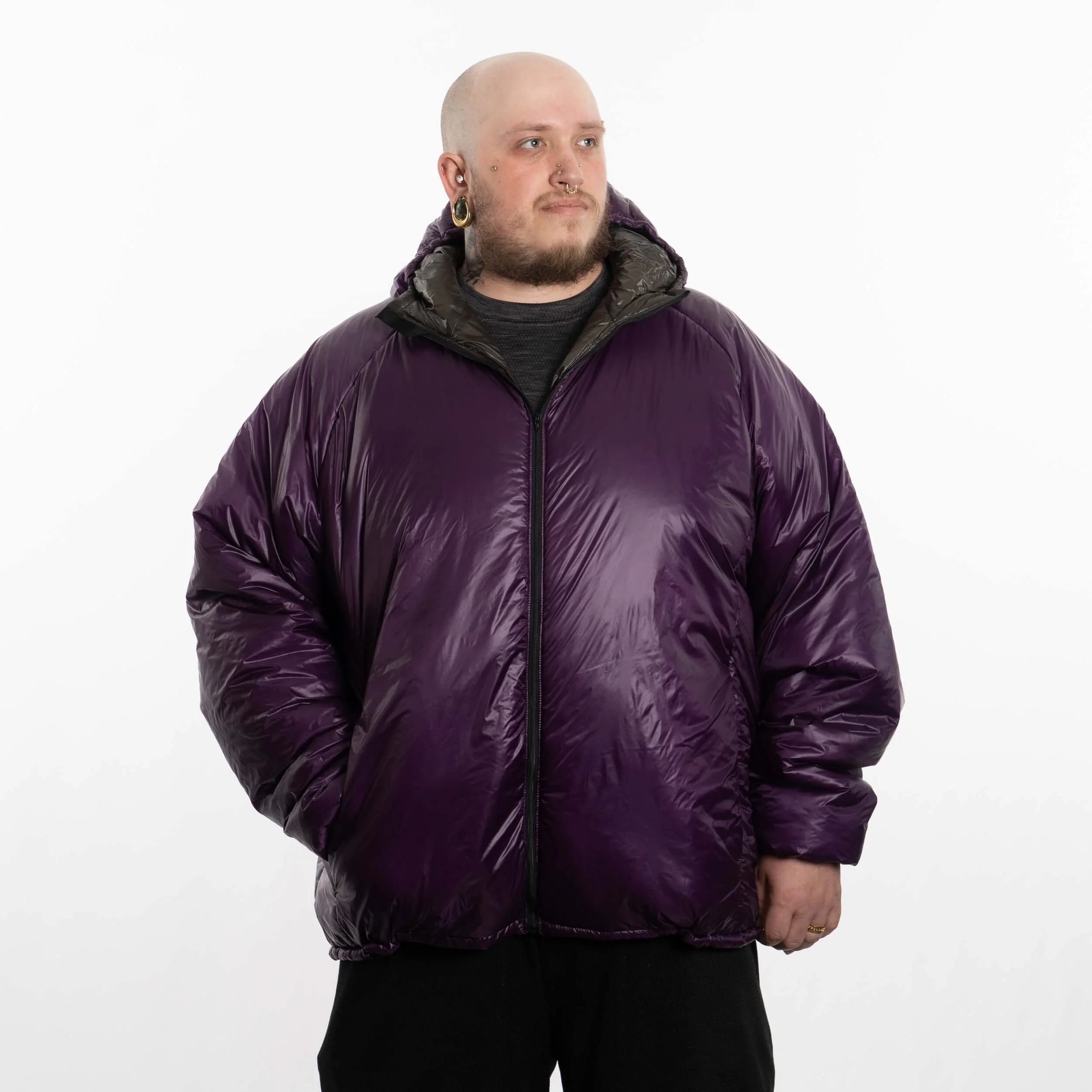
Enlightened Equipment has inclusive sizing (to 3XL) for their ultralight Torrid Apex synthetic down jackets, wind shirts and more. (Image Credit: Enlightened Equipment)
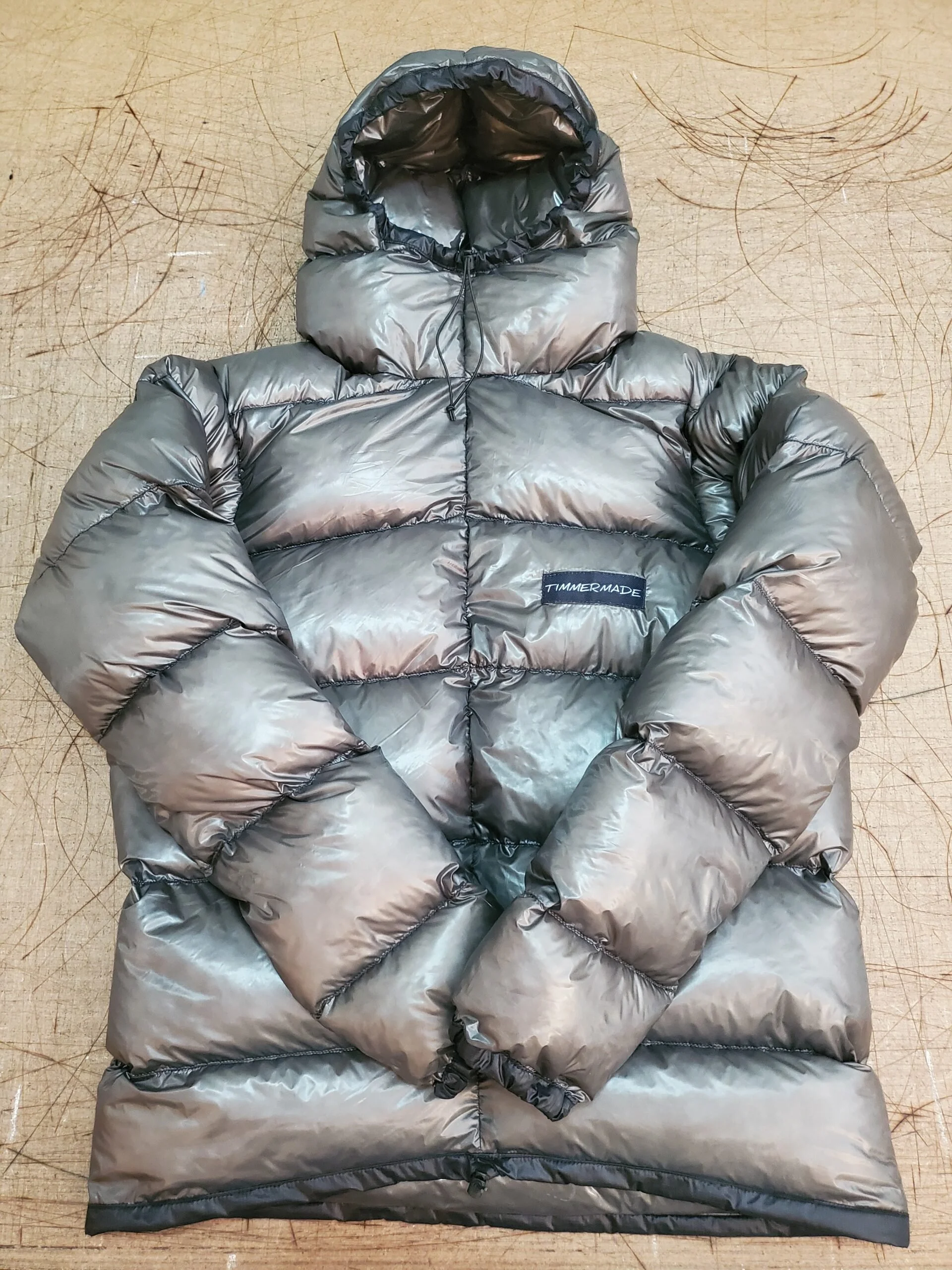
Timmermade have completely customisable jackets for chest, hip, torso, sleeve length, hood etc. so you can get quality ultralight gear to exactly fit you, at a price. They also have more demand than they can fill, so you need luck in their monthly customer lottery! (Image credit: Timmermade).
Plus Outdoor is the best Australian shop I’ve found for specialised outdoor clothing, with a diverse array of technical level hiking and skiing gear, and brands that really are the right size when you use their fitting guides.
More Clothing Shops and Sources:
In Canada:
In the UK:
In Europe:
In the US:
Treeline Review Plus Size Review lists different brands
Treeline Review Big and Tall Review lists different brands
Do you have any favourite pieces of clothing that work for you as a plus-size hiker? Please share in the comments for other plus-size folk!
Footwear
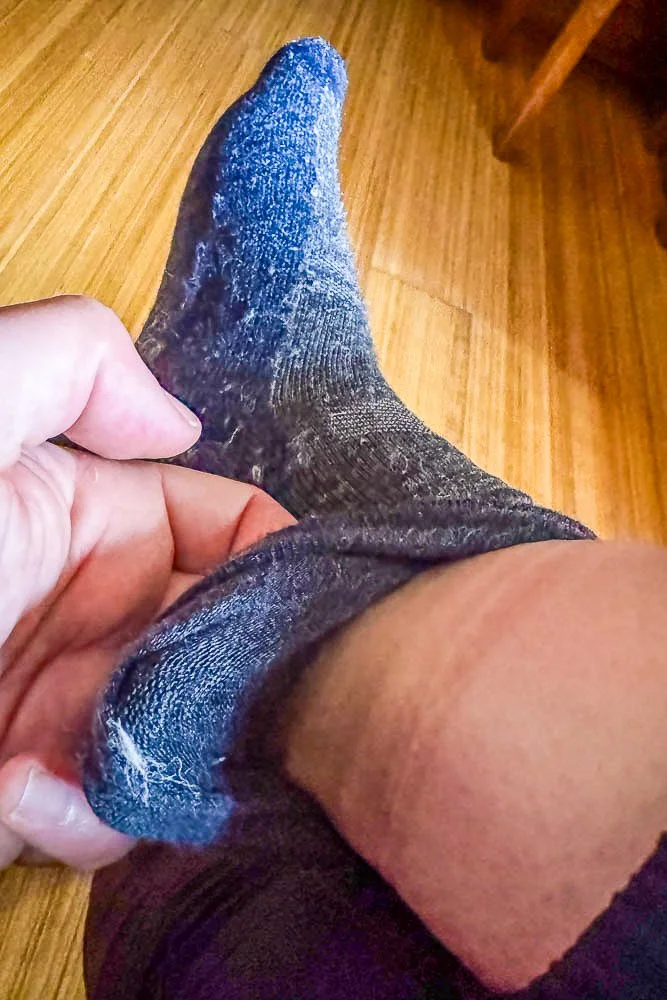
Socks can be problematic because manufacturers don’t allow for bigger calves and/or ankles, and overly tight socks can cause hikers’ rash.
I pre-stretch them before wearing and again after washing to help them fit better.
Always try on footwear with the socks you intend using, preferably in the afternoon after you’ve walked around for a while. If something doesn’t feel right, you’ll know pretty quickly. Ensure footwear is worn on several day hikes prior to multiday hiking to ensure it is comfortable and works well.
Fit matters to avoid problems! For plus-size hikers with feet that have more volume than average, slide your foot forward in the shoe while the shoes are unlaced: you should be able to get two fingers side by side down the back of your heel. The standard recommendation is just one but, if you cannot fit two, the boot will probably be too short.
Another tip is to take out the insole and then stand on it: you should have one finger width between the end of your longest toe and the end of the actual insole. If it’s shorter than that, you’ll probably get black toes on your hike. [For more hiking footwear tips, see How to Choose the Best Footwear for You – ED].
Like those of many plus-sized and tall women, my feet are too big to fit into women’s boots which stop at 42 or even 40, so I’ve had no choice but men’s shoes, which are a different shape. The extra width is fine as I also have wide feet but, like those of most women, the backs of my ankles are narrow. This is problematic when we wear men’s shoes because our heels aren’t held firmly, causing discomfort and blisters.
What works best for me is choosing European brands, double socks (eg Injinjis), hiker’s wool and using heel-lock lacing to prevent pistoning. My favourite boots at the moment are the Men’s la Sportiva ultra Raptor II Wide ; the standard LaSportiva women’s fitting is relatively narrow. Other boots that have worked for me include Oboz Bridger, Merrell Moab (beware, size up as they run small), Salomon x-ultra Wide, and non-waterproof Brooks.
Changing to New Footwear
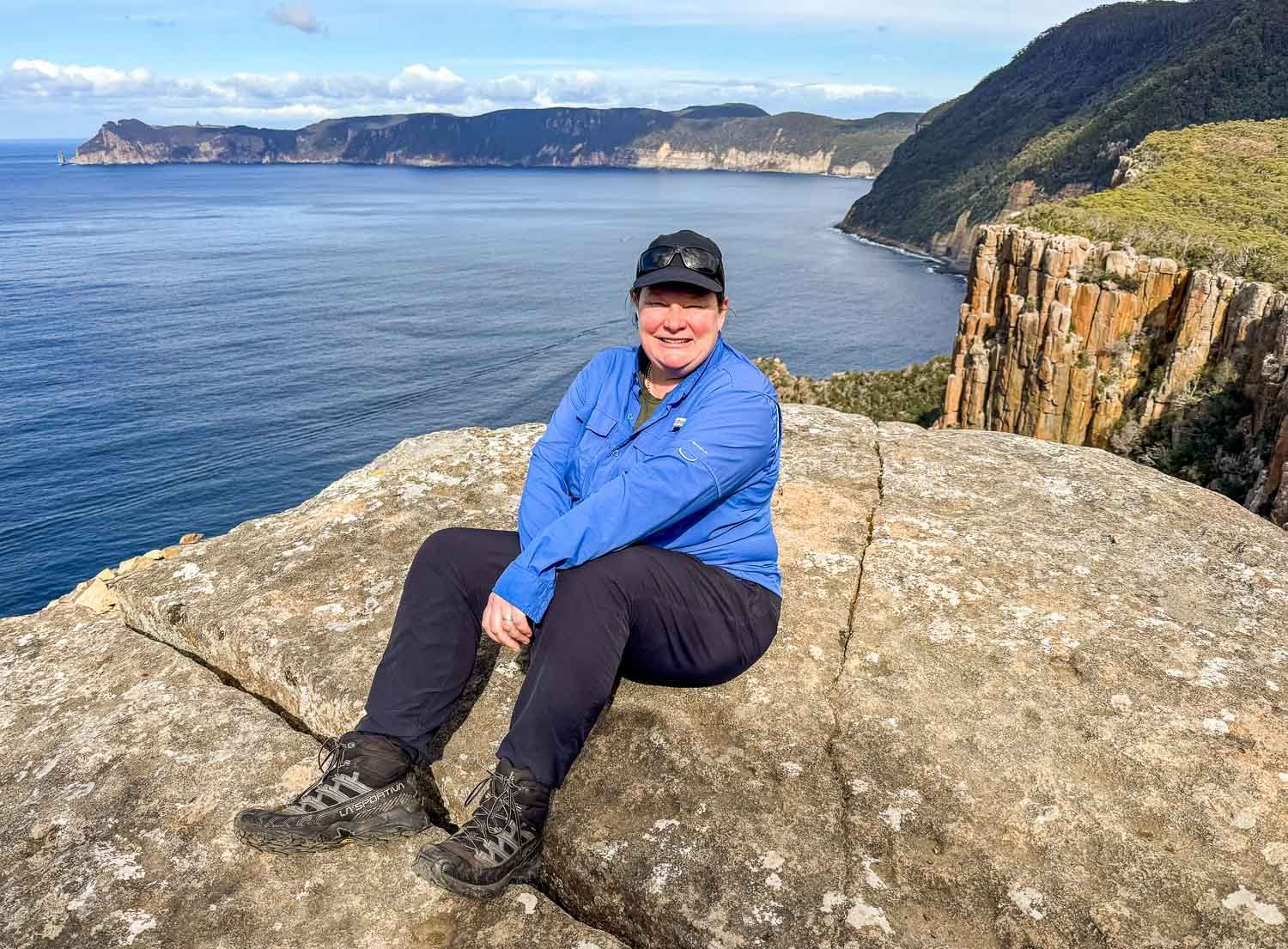
Ro in her favourite Men’s Sportivas on the Three Capes Track.
The stiffness of the boot or shoe, its padding and its rock plate make a difference because a physically heavier body imposes more load, and this affects the footwear’s longevity. Softer, lighter and/or trail shoes deform and wear out faster for heavier hikers. Buying an extra pair can be great if you find your unicorn footwear, or fear wearing out one pair during a long distance hike.
When changing footwear, first consider your existing footwear. How stiff is it? How much support does it offer? What is the drop in the shoe from heel to toe? Compare that to what you’re trying on because, the more different it is to what you’re accustomed to, the longer your body takes to adjust. One of the mistakes plus-size hikers are more vulnerable to because of the relatively higher loads on their feet, is the assumption that you can immediately do the same hike in your new shoes that you did in your old ones: the same distance, difficulty and time on trail. However, if new shoes are too different, your biomechanics change and you’re more prone to injury, just as when changing packs.
Ask yourself: what are my recreational shoes? Are they usually thongs? Do I spend a lot of time in bare feet? Do I have strong feet, am I on my feet a lot? If so, less structured, less supportive footwear might suit for hiking. However, if I’m a plus-size desk jockey who walks once or twice a week, more support is probably better.
Or if not more support, build up to it: respect your body and acclimatise by starting with shorter walks on easier terrain before building up to longer, tougher ones.
Trekking Poles
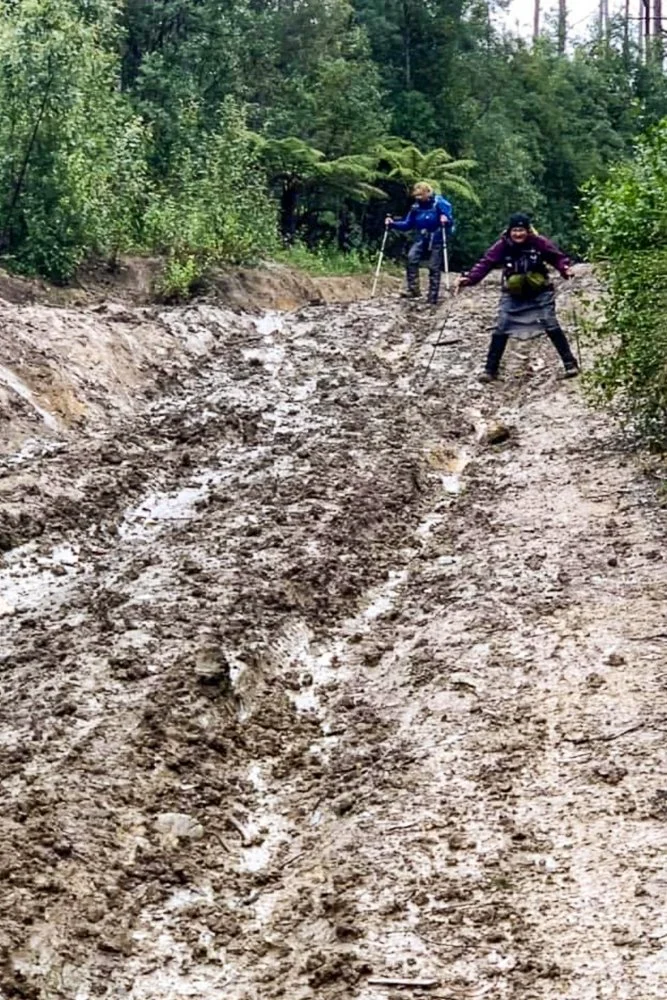
Poles can assist your uphill propulsion by as much as 30%, making it easier for plus-size hikers who are physically lifting heavier bodies. And on descents, stream crossings and slippery or uneven terrain, poles absorb stresses on knees and assist balance.
In my opinion, if you’re a heavier person, stronger poles hold up better.
I have carbon fibre poles and aluminium ones, but the carbon fibre ones are the relatively robust Black Diamonds with clips, rather than one of the more fragile ultralight brands such as Locus Gear CP3s or Gossamer Gear LT5s, the latter of which I’ve seen shatter.
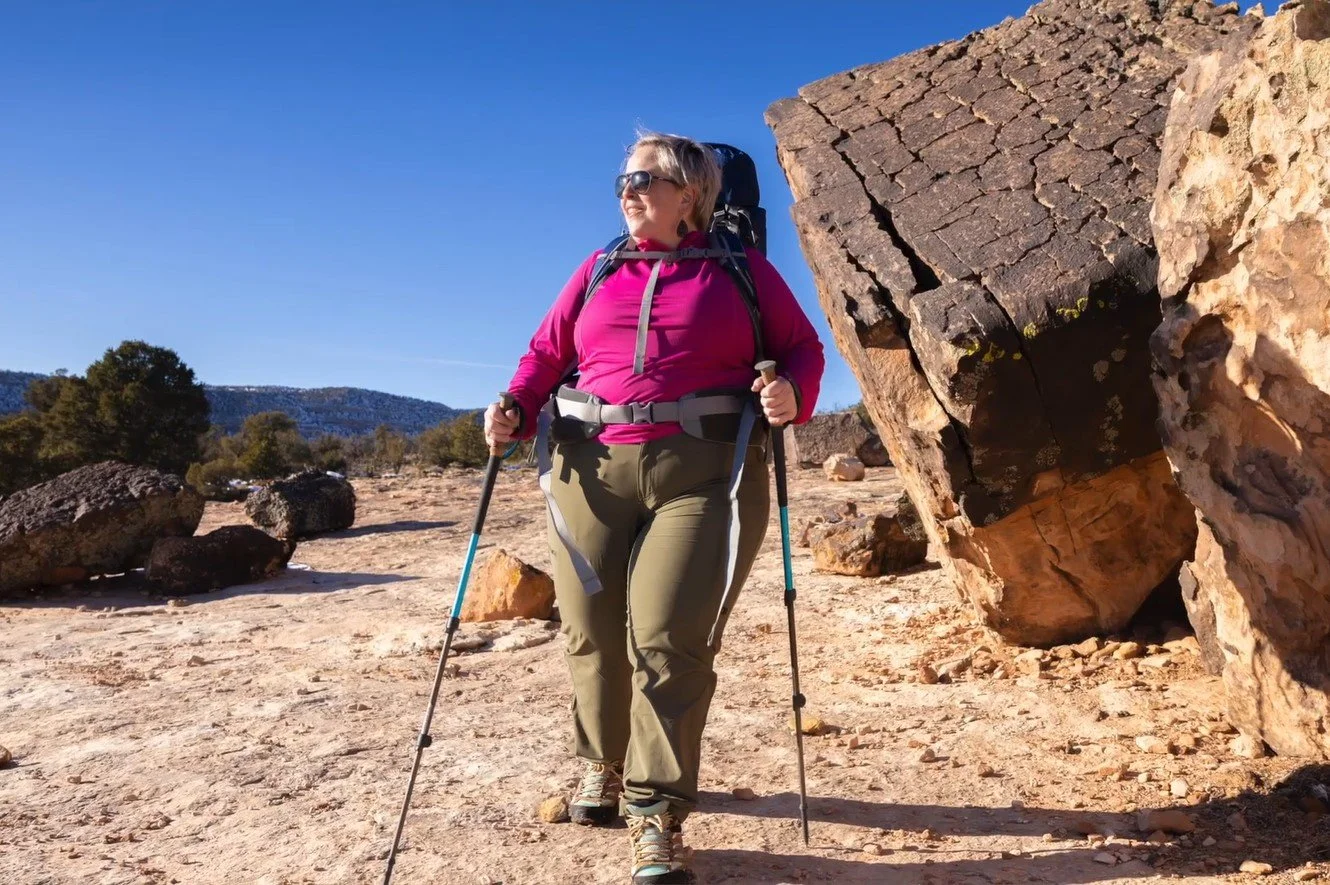
Osprey’s Extended Fit (EF) range incorporates a range of design changes to ensure packs better fit larger folk, although in what is likely adjustments for the photo shoot or due to an unloaded pack, the sternum strap and loose hip belt appear to be sitting a little high on this hiker. Be prepared to try on a range of different models. (Image Credit: Osprey).
Packs for Plus-Size Hikers
A pack must fit properly to reduce the risk of pressure areas and musculoskeletal injuries: lower and upper back, shoulders, neck and even hips. The pack must not only be the right dimensions to fit your body and carry your gear, it must also be adjusted properly, with the hip belt, shoulder straps, chest strap and load lifters all correctly placed and tightened. Always try packs on with weight in them at a shop with experienced fitters, and/or have an experienced hiking friend accompany you.
Don’t be afraid to try the opposite gender pack as we’re all different shapes. Many, such as my Aarn Featherlite Freedom, have interchangeable waist belts. Osprey has an extended fit range – goodonya, Osprey! Gregory packs also has a plus-sized range (2X - 6X) of slightly heavier bags.
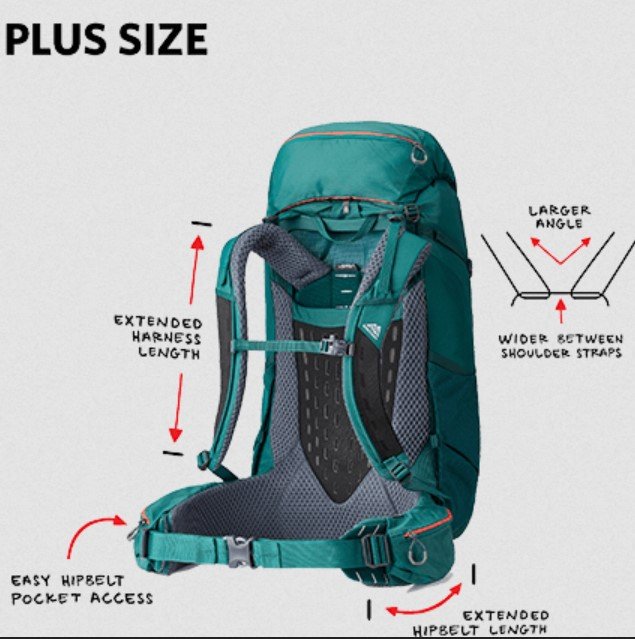
Gregory Packs Plus Fit design changes (Image Credit: Gregory Packs)
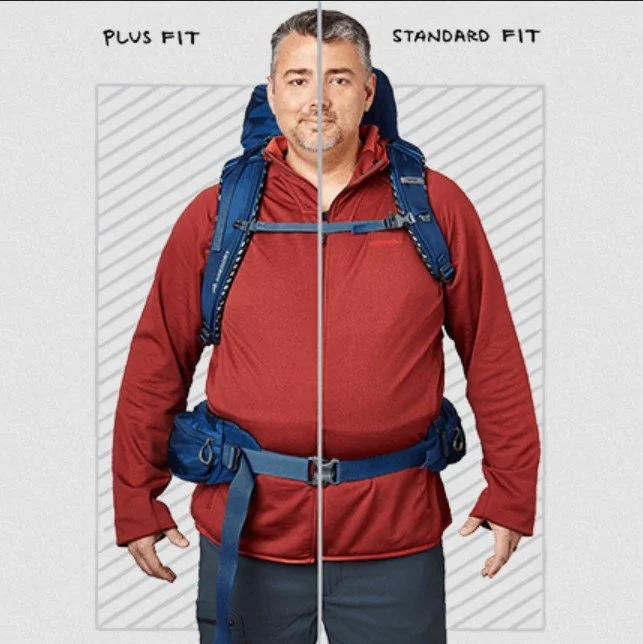
These design changes allow the pack to fit correctly around the shoulders, chest and arms, and sit comfortably on the hips. (Image Credit: Gregory Packs)
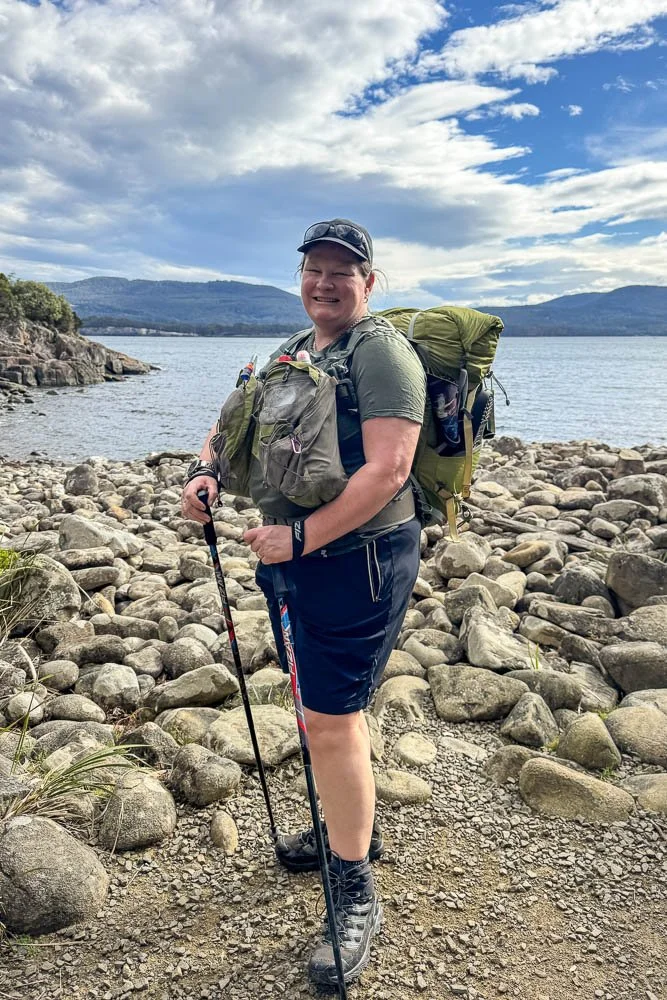
Consider unconventional packs such as Aarn , which carry a proportion of the weight in front pockets on the chest: mine stops me from feeling like I’m getting tipped over backwards.
Aarn packs can work even if you have a big tummy or larger breasts, but you need to try one on with weight to see if it is right for you.
My tips for plus size hikers when choosing a pack:
It’s essential to try on the pack.
Ensure the waist strap does up and that the padded section is long enough to cup your hip bones.
Balance weight of the empty pack with comfort: some heavier packs are kilos heavier than ultralight packs but much more comfortable because they have more padding. Bigger bodies are often a bit squishier, and narrow straps sink in and don’t spread the load efficiently.
Bigger-breasted plus-size women may find packs with S-straps more comfortable than packs with J-straps, which can cut in.
Pack size is often measured by torso length when fitting, but plus-size hikers are also thicker width- and depth-wise for their height. Shoulder straps can therefore be too short and compress the collarbone and neck, or force the hip belt up into the waist, even when the back measurement is correct. Try on the pack, don’t rely solely on torso length!
Ultralight Packs
Ultralight packs are increasingly popular and widely available, but plus-size hikers use plus-size gear: you’re carrying bigger sizes in pants, rainwear and sleeping gear. Your pack is heavier and bulkier for exactly the same gear of someone who’s 156cm (5’2”) and slim.
Therefore, assemble all your equipment before buying your pack so you know how big it needs to be, and whether your carried weight is within that recommended for the pack you are considering. Remember you have to fit in food and other consumables too!
Ultralight Custom-Made Packs
Several companies make custom packs to meet your specific measurements. As you might expect, these packs are expensive and, despite the custom fit, there is no guarantee that the pack will be comfortable on your body. Consider them after exhausting all other avenues, because a refund isn’t possible, and resale is difficult. Custom pack manufacturers generally vary torso length, hip belt and shoulder straps, plus extras (shoulder pockets, closures, strap width etc). They include:
Fiordland Packs (NZ)
Atom Packs (UK)
LiteAF (USA)
Alpine Luddites (USA climbing packs)
Hilltop Packs (USA)
ULA (USA)
McHale (USA)
Superior Wilderness Designs (USA)
Sleeping Bag/Quilt
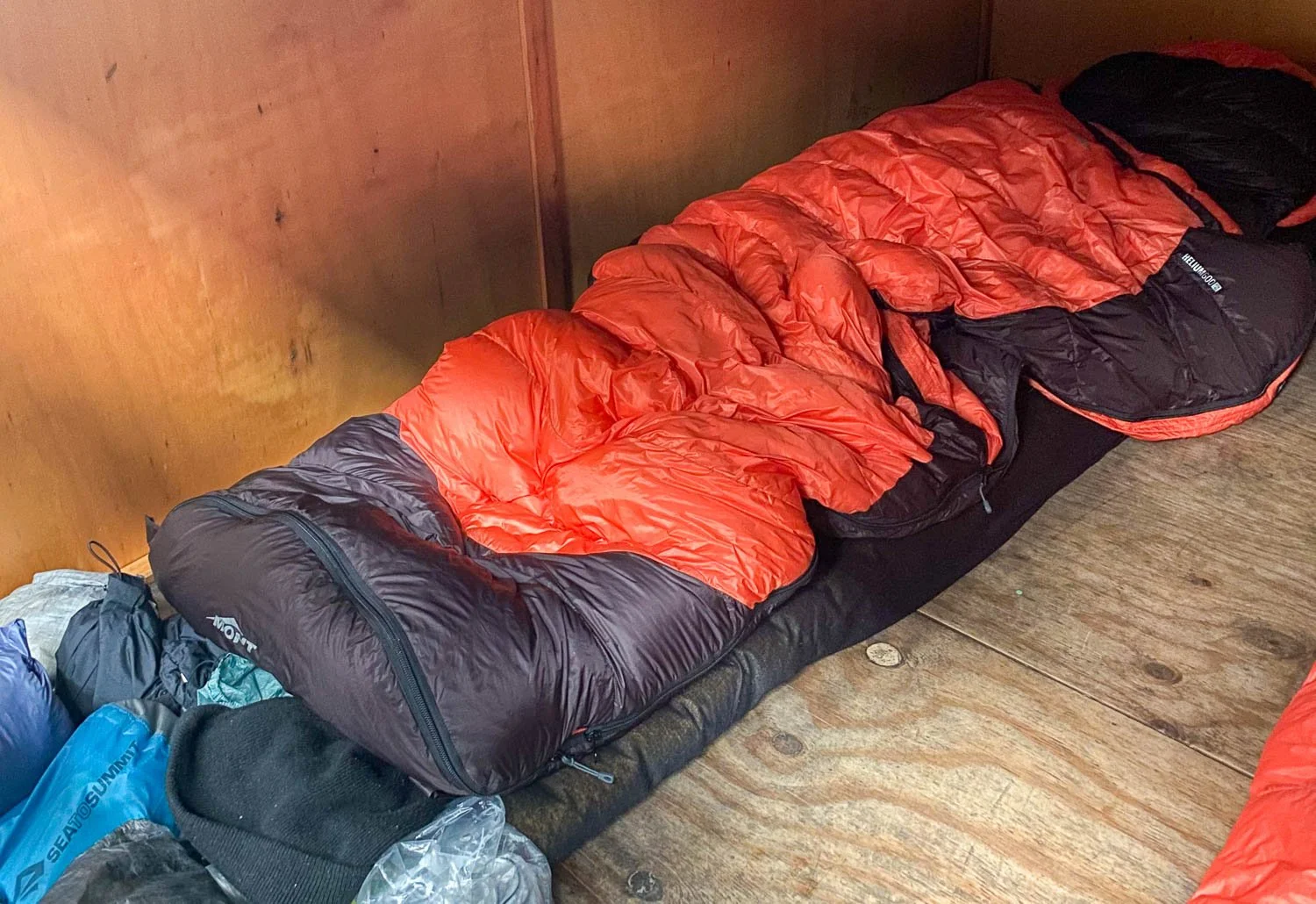
Ro’s warm, comfortable bag and mat in the old Kia Ora hut, Overland Track.
Finding the right one can be tricky. My tips are:
Check weight, down fill power, compressibility and comfort rather than survival rating, especially if you are a woman and/or a cold sleeper, because many larger bags are made with lower loft down, heavier materials, and are more suited to car camping in mild weather than multiday treks in cooler weather.
If you can, physically get into the sleeping bag in the store. Although manufacturer’s circumference measurements for shoulders/outer arms and hips are indicative, we plus-sized people aren’t just the hips, we’re the belly, the bum, the thighs, the whole big shebang! When I replaced my 1.3kg/2.9lbs Kathmandu bag, I tried an original Sea to Summit Spark: I couldn’t get out and had to get help, I was a salmon flopping around on the floor! Hilarious!
Rectangular bags usually fit wider bodies better than mummy-shaped ones, but the latter are lighter and warmer for weight. In Australia, One Planet sells a clever bag extension gusset that zips into their standard or wide mummy bags to make them even wider:
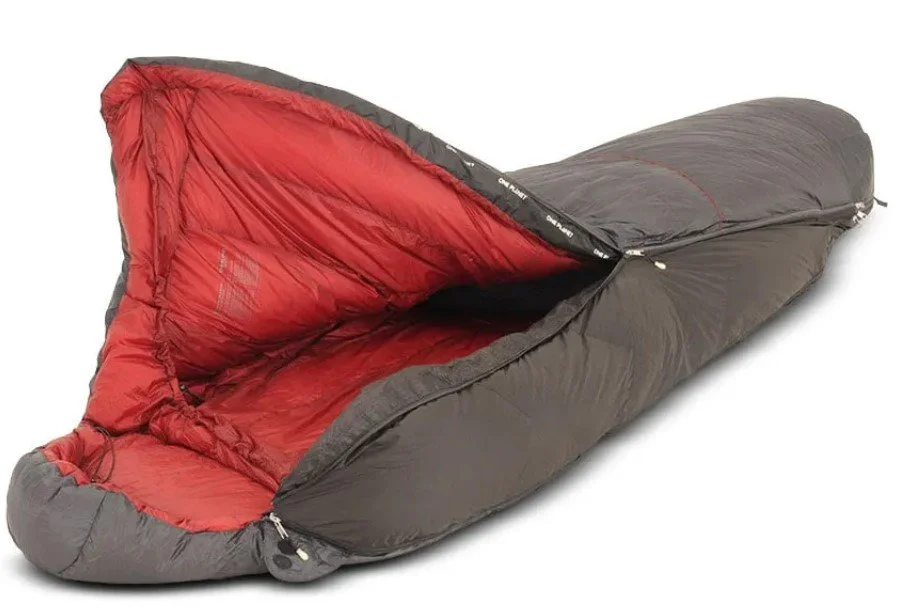
One Planet’s Expansion gusset (below zipper in image) adds 25cm/9.84” and fits most of their bags (Image Credit: One Planet)
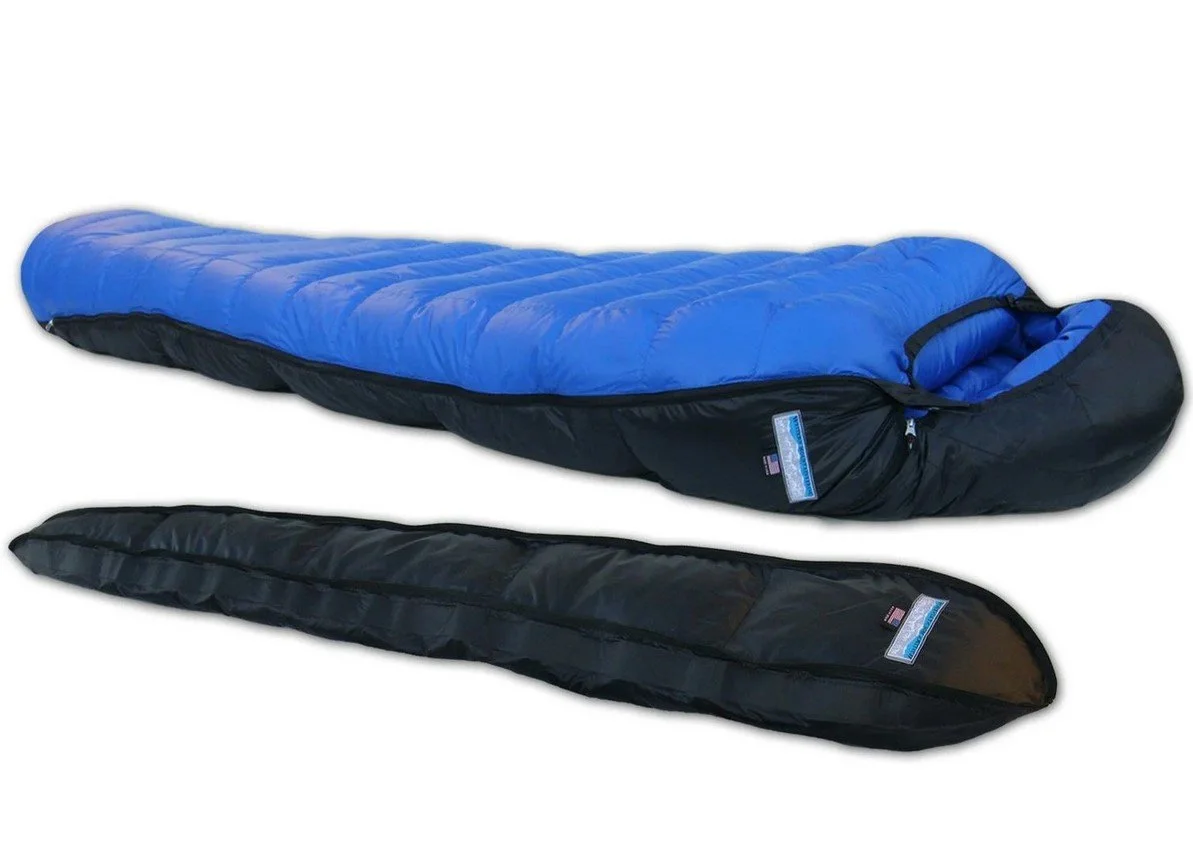
Western Mountaineering offers a similar bag-expander.
Look for bags within a brand range (eg Mont, Western Mountaineering) with left or right hand zips, allowing two bags to zip together.
Mont designs all bags to be roomier throughout to cater to side sleepers; the bags are slightly heavier but don’t sacrifice size and comfort for ultralight status. They have a range of larger bags: the Mont Zodiac XXL (shoulder circumference 176cm/69in) is the brand’s roomiest three season bag while still being light enough to carry. The women’s is fit-tested up to size 20 so you don’t lose extra warmth in the foot having to size up. Mont Zero UL in XL is a lighter two season bag (170cm/67in shoulder, 143cm/56in hip, 198cm/6ft 6in long). Mont Expedition is sized one up, so M/L is equivalent to a standard XL, but this bag is designed for Antarctic and Northern Hemisphere winters.

Mont Size Chart (Image credit: Mont)
Other brands design bags to suit back or side sleepers, so plus-size hikers should choose the latter, eg Western Mountaineering’s Terralite . Timmermade offers custom sizes of all their sleeping bag and quilt options but, as mentioned earlier, they are a small company with a customer lottery system due to demand.
When these cottage manufacturers offer custom sizes eg regular wide, long wide etc., you have to be sure of your measurements because you’re paying upfront for something you can’t first try. Some examples include zpacks’ sleeping bag and Neve Gear’s Bandicoot .
Consider a quilt. These better suit side sleepers and are often available in extra wide: regular fit won’t work for plus size hikers. My first was a Sea to Summit which was disastrous. Cold drafts snuck in every time I moved, whereas the strap system on my Neve Gear quilt allows the edges to tuck underneath you: no cold drafts!
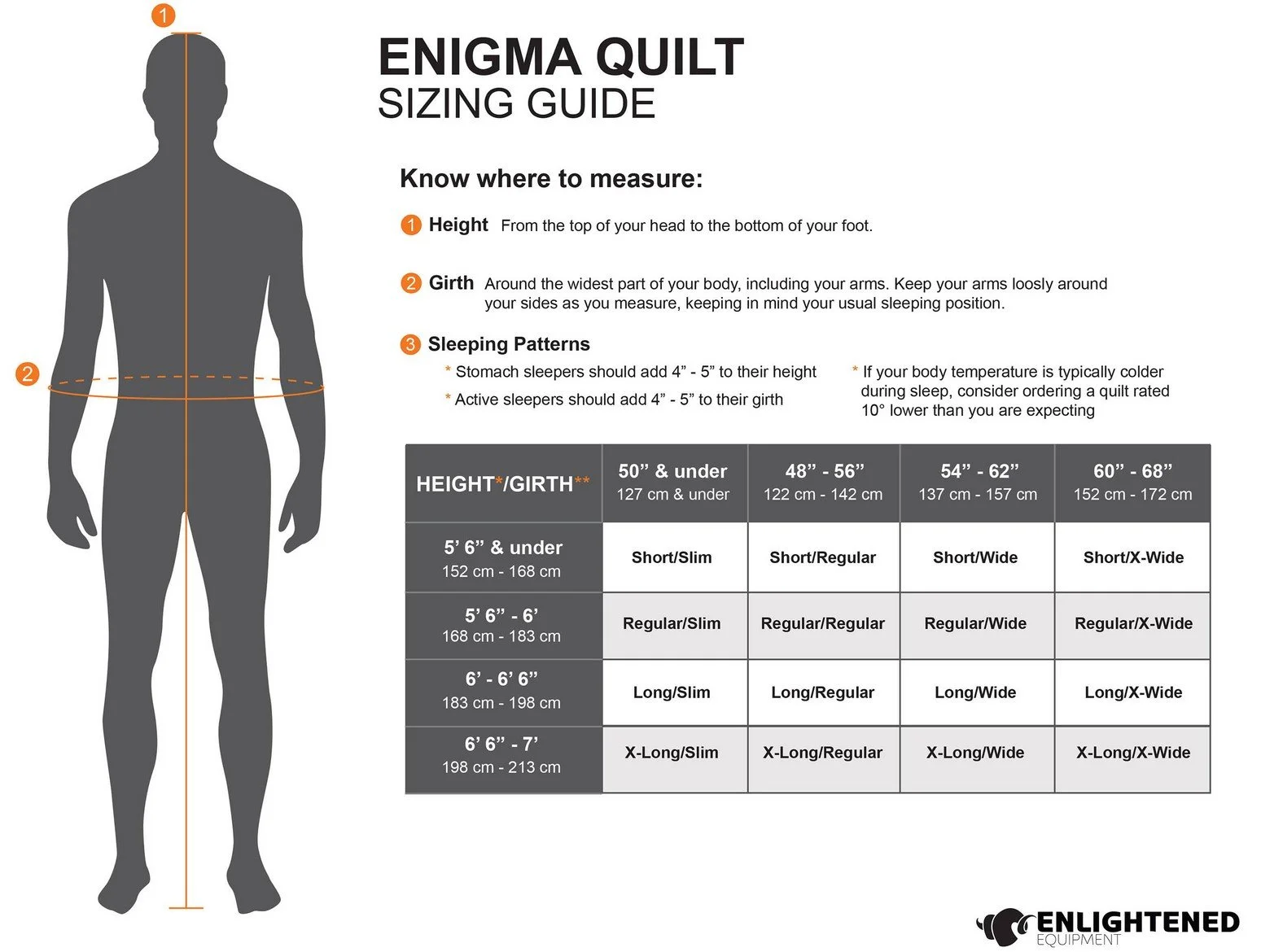
Enlightened Equipment’s Quilt Measurement Guide (Image Credit: Enlightened Equipment).
Once you know your own measurements, you then order a quilt to suit:
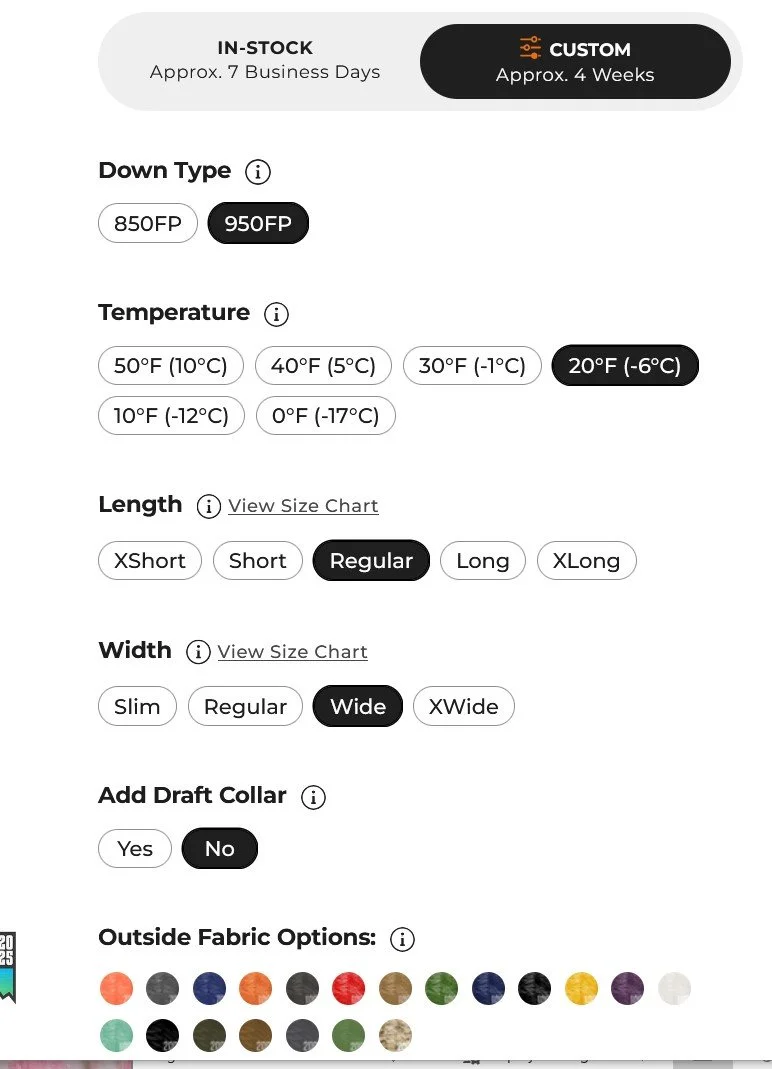
(Image Credit: Enlightened Equipment)
Consider a double/twin quilt or bag such as those made by cottage manufacturers such as Neve Gear, Zpacks , and Enlightened Equipment . Feathered Friend’s 1086g Spoonbill — 264cm (104”) shoulder, 229cm (90”) hip, 172cm (68”) footbox — is an interesting hybrid between a sleeping bag and a quilt; although it has two head openings, with 900fp down this model could potentially work for a plus sized hiker looking to cut weight.
Double sleeping bags offered by the major brands are almost always aimed at car campers and are usually too heavy and insufficiently warm for backpacking.
It’s also possible to double up on bags in cold conditions. I used a STS long Flame 0C inside a Mont Helium because I had to increase the warmth for a specific hike. That worked, but there has to be sufficient room inside the outer bag for the inner to loft. Check carefully.
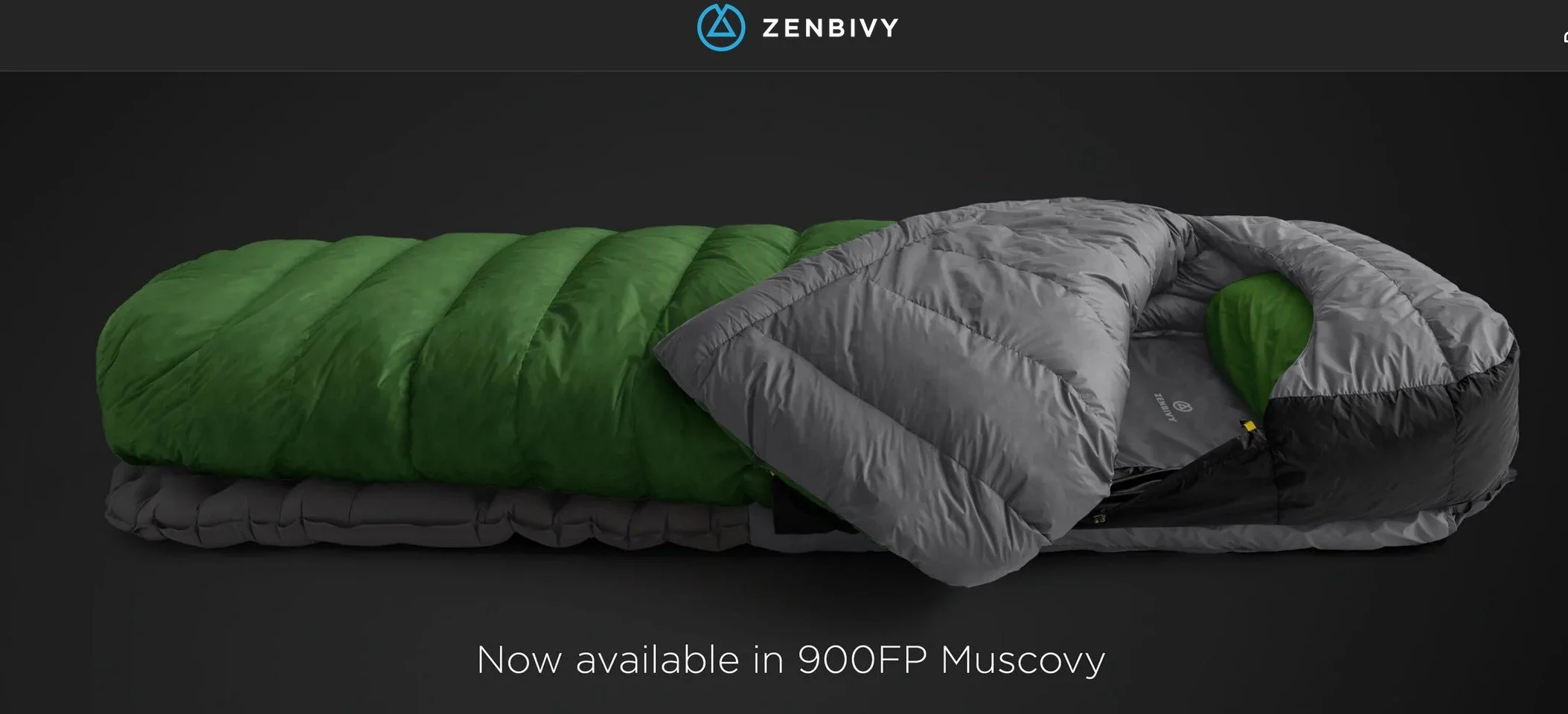
Some hikers swear by the Zen Bivy system because it’s most like sleeping in a bed at home, but it is relatively heavy for multiday backpacking. Check weights to see whether it is within your capacity to carry once all the essentials have been accounted for! (Image Credit: Zen Bivy).
Sleeping Mats
Mats can be a real challenge for plus size hikers because mainstream gear is not rated for our weight, so you have a higher risk of punctures and blow-outs, especially in the ultralight range. Many mats that sound great at first glance are very heavy for their warmth, more suited to car camping than backpacking, so check specifications, particularly the R-rating (minimum 4.5) if hiking in cool conditions. Other do’s and don’ts:
Avoid self inflating mats: they are too thin for plus-sized hikers, and heavy for backpacking.
Avoid mummy-shaped mats – standard ones are invariably too narrow for plus sized female hikers with wider hips and thighs, unless you sleep like a literal log.
Don’t over-inflate your mat: expect your elbow or hip to bottom out when you raise yourself up. Instead, inflate your mat, lie on it, then let a little air escape. Test again. [This advice applies to all hikers – ED].
Do choose a thicker mat. Comfort-wise, some mats don’t have sufficient thickness for your shoulders and your hips to sink in, particularly for curvy women. Sea to Summit mats don’t work for me, for example, but Nemo mats do, particularly the 8.9cm/3.5in thick Tensor Extreme , and it’s light enough to carry year-round. The Tensor Ultralite All Season is slightly lighter if you only hike in warmer climates. Another brand with models that plus-size hikers have found comfortable with good depth is ExPed; conversely, the popular Thermarest XLites are usually too thin for us.
Do consider carrying a closed-cell 1/8in foam or z-fold mat for under your inflatable if the latter is too thin, slipping or noisy on your tent floor.
Hikers who consistently experience hip pain may benefit from excavating a slight depression under the tent in the relevant spot, being aware that this won’t work everywhere, and also potentially breaches LNT principles.
Tents
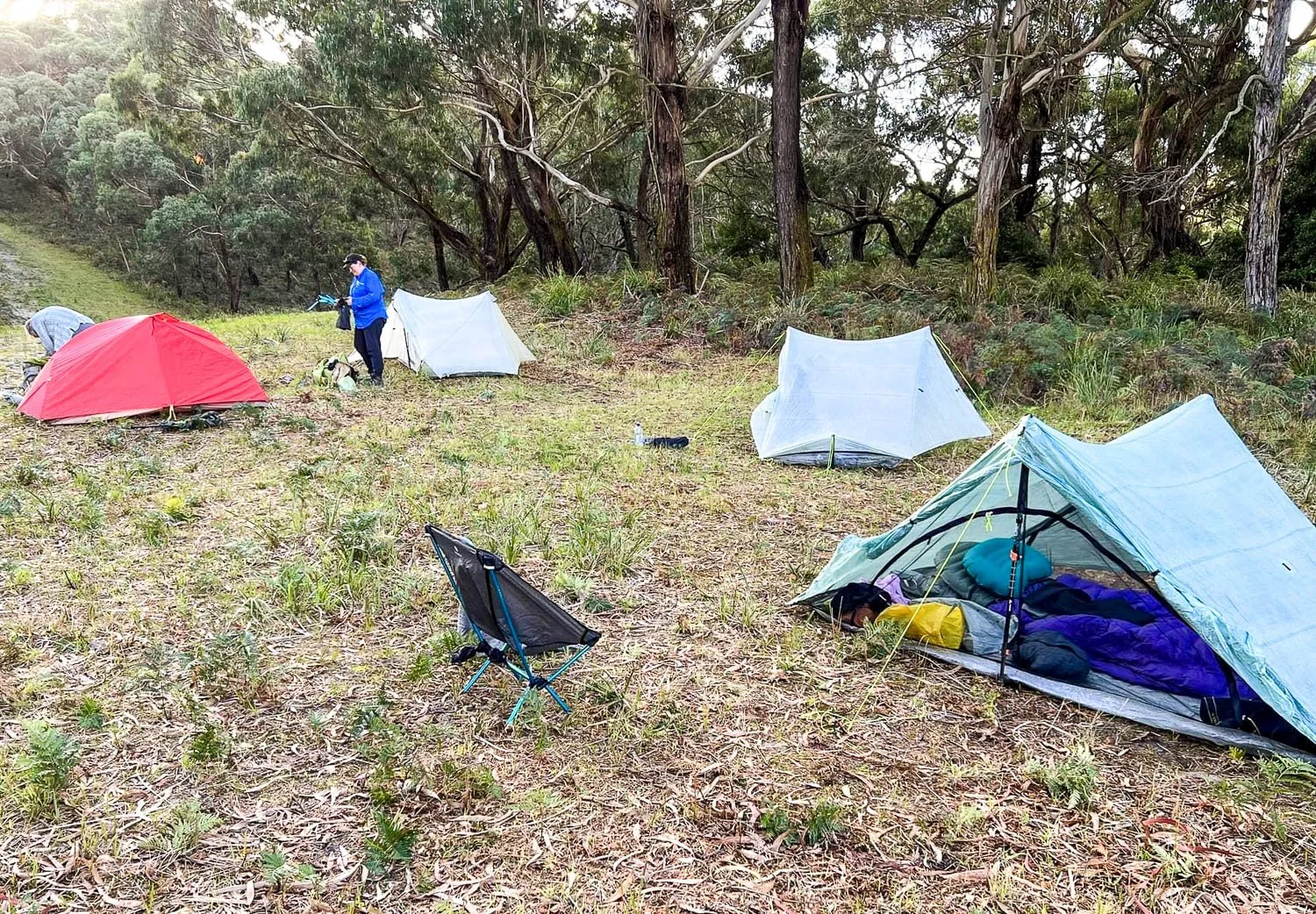
Tents left to right: freestanding dome, and non-freestanding trekking pole tents Tarptent Stratospite Li, Tarptent Dipole and zpacks Duplex.
Fortunately tents today are finally being made wider to accommodate wider people and mats (ie, two wide long mats in two person tents eg. Tarptent dipole 2 ). Some manufacturers are particularly responsive to customer feedback: the Durston XMid 1 is now wider and less ‘coffin-like’; Tarptent has widened their two person models, and Zpacks also offers wider, longer tents.
Backpacking tents reported as suitable for tall people over 198cm/6’5in include Tarptent’s Dipole and Double Rainbow, Zpacks’ Offset Duo and Duplex XL, Seek Outside’s Guardian and Sunlight, Durston’s Pro2+ or XMid 2, LightheartGear’s Solong and Lunar Duo, Yama’s Cirriform, and Big Agnes’ Copper Spur HV. Many of these tents are two person, and extremely tall solo hikers sleep diagonally in them. Floor length alone is not indicative of suitability, because tents with steeply sloped walls have less useable area.
Many two person lightweight tents are just 200-300g heavier than their one person equivalents: at around 1100g (lighter for ultralight DCF and trekking pole models), they are often chosen over 1 person tents even by countless average-sized solo hikers.
Hikers with less mobility or with chronic injuries do better in tents with side entries, rather than those where you have to crawl over your pillow, especially if you’re sharing a tent with someone.
Look also for bigger doors, or tents with offset poles rather than poles that are in the middle of doorways: suitable examples include the Zpacks Offset series, Tarptent Stratospire and Dipole, Durston XMid series, and freestanding options like the Big Agnes Copper Spur HV series, Durston x-dome etc.
However, you can’t have everything, so prioritise. For me, functionality comes first. Gear must do what I need it to do in the conditions that I encounter. For example, I love my Dipole 1: it’s a fabulous tent that fits a very specific need in my hiking subset, that is, a single wall tent for reasonable weather with a small footprint, that fits horizontally in my pack, and that is big enough for me to fit all my gear inside. As a plus-size person, I occasionally hit the trekking poles when I roll over but get around it by angling the poles slightly. This makes the setup a bit more fiddly, but it’s doable. I also have a Stratospire Lithium which is an outstanding 2p tent, but double wall; only a bit heavier at 951g/33.55oz and absolutely bomber in bad weather. I used it on Tasmania’s notoriously inclement South Coast Track. I have both the solid and mesh inners, so it’s really versatile. [Tarptent now sell wide inners in solid or mesh to fit two wide mats for their tents including the Stratospire Li; the inners are 52in/132cm cf the standard 45in/114cm -ED].
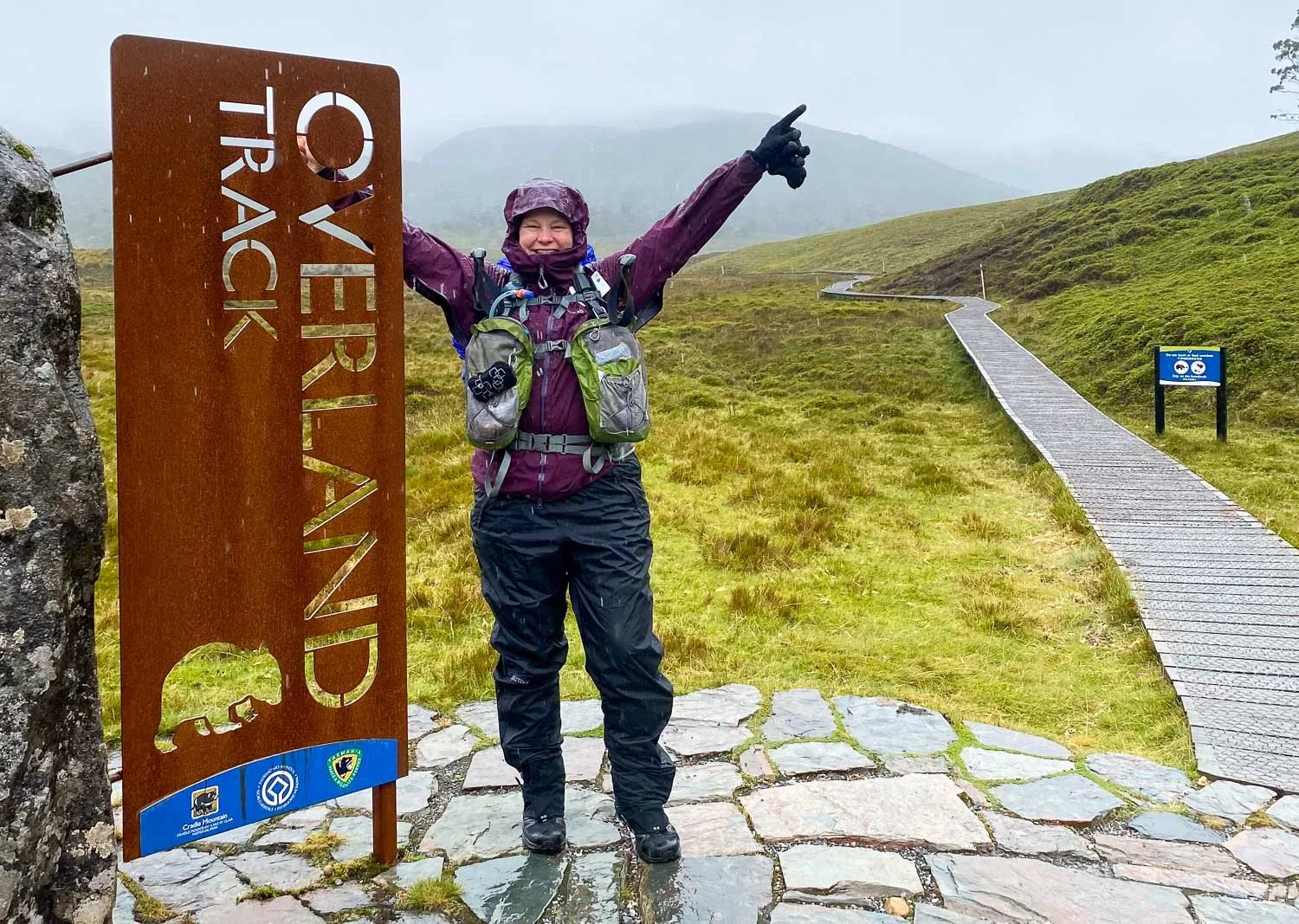
As you can see, equipment for plus-size hikers may be trickier to find but everything you need is definitely out there, so you too can enjoy multiday hiking! Stay tuned for Part 2: Training for Multiday Hikes and Staying Healthy on Trail.
“Hiking has been one of the best parts of my life. It gives me a reason to exercise and makes me take better care of myself. It improves my health and quality of life. And it’s not only given me some of my funniest and most precious moments, but also many of my best friendships. Ignore the naysayers!” – Ro Kew, The Hiking Physio.