Day 5: Grassdale to Kelly Hill Caves (and Admiral’s Arch*)
An exciting cave inland, then a spectacular geological arch and seal colony on the coast
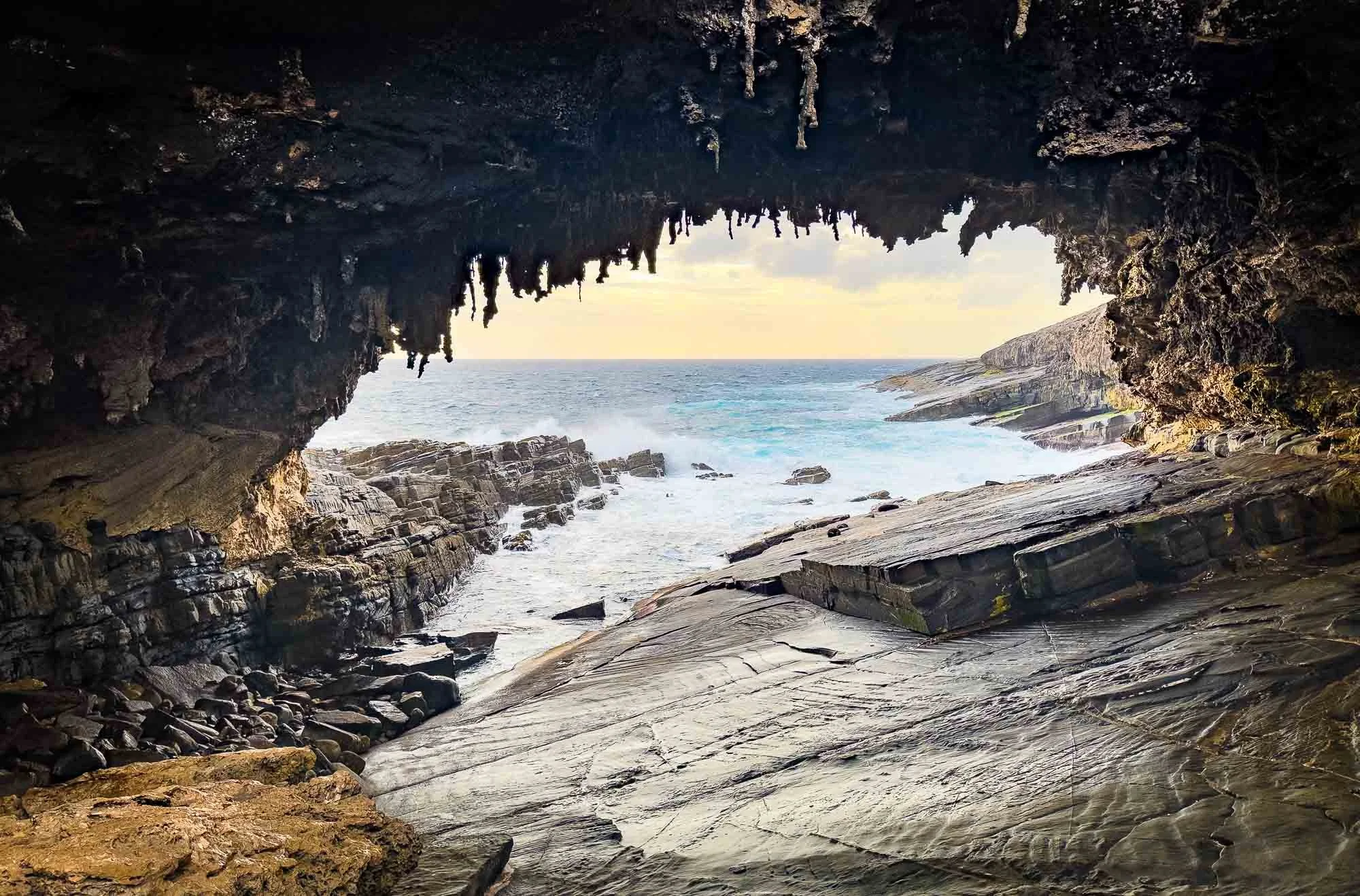
*Our recommended itinerary for slower hikers includes Admiral’s Arch this afternoon rather than during the hike.
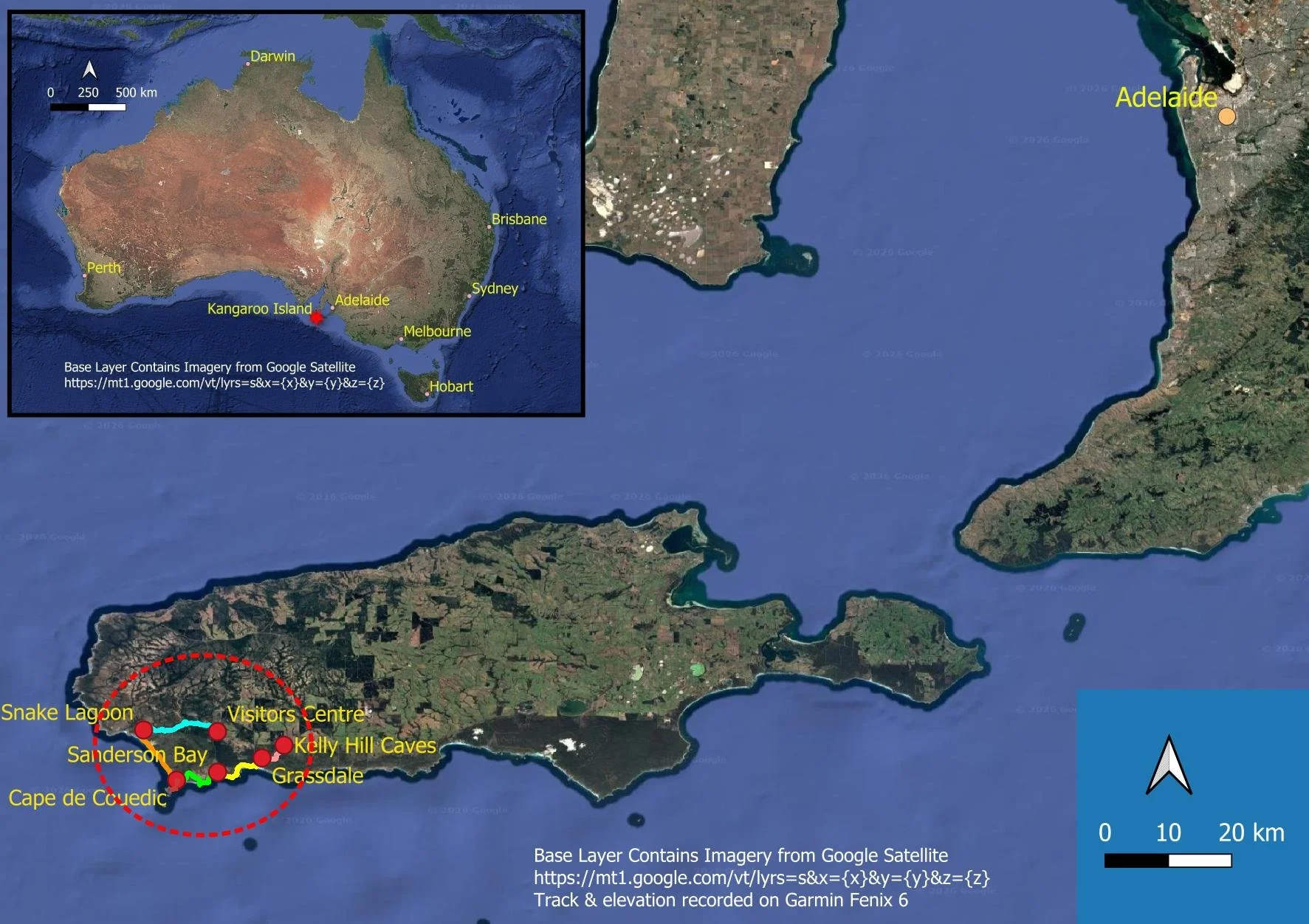
Hike Locality Map
Today’s Hike
Day 5: Tea Tree Hut to Kelly Hill Caves (Kelly Hill Section, 7.5km, 2.5 hrs**). Plus short walks (500m) to Admiral’s Arch and Weir Cove from their respective Car Parks
**NPWS suggested hike time; we took a leisurely 3.5 hours.
Slower hikers, start early, no later than 7am. You’ll pass the small Wilderness Lagoon and then the much bigger Grassdale Lagoon — twitchers, schedule time with binoculars — and tall timber country, a small area of unburnt terrain. After this, it’s a short hop to Kelly Hill Cave Car Park and the terminus of the trail. Do the 10:30am Cave Tour; it leaves from the car park and you will have confirmed your place when doing your induction at the Visitor Centre before your hike.
From Kelly Hill Car Park, use the 11:30am shuttle transfer to the Visitor Centre to pick up your car.
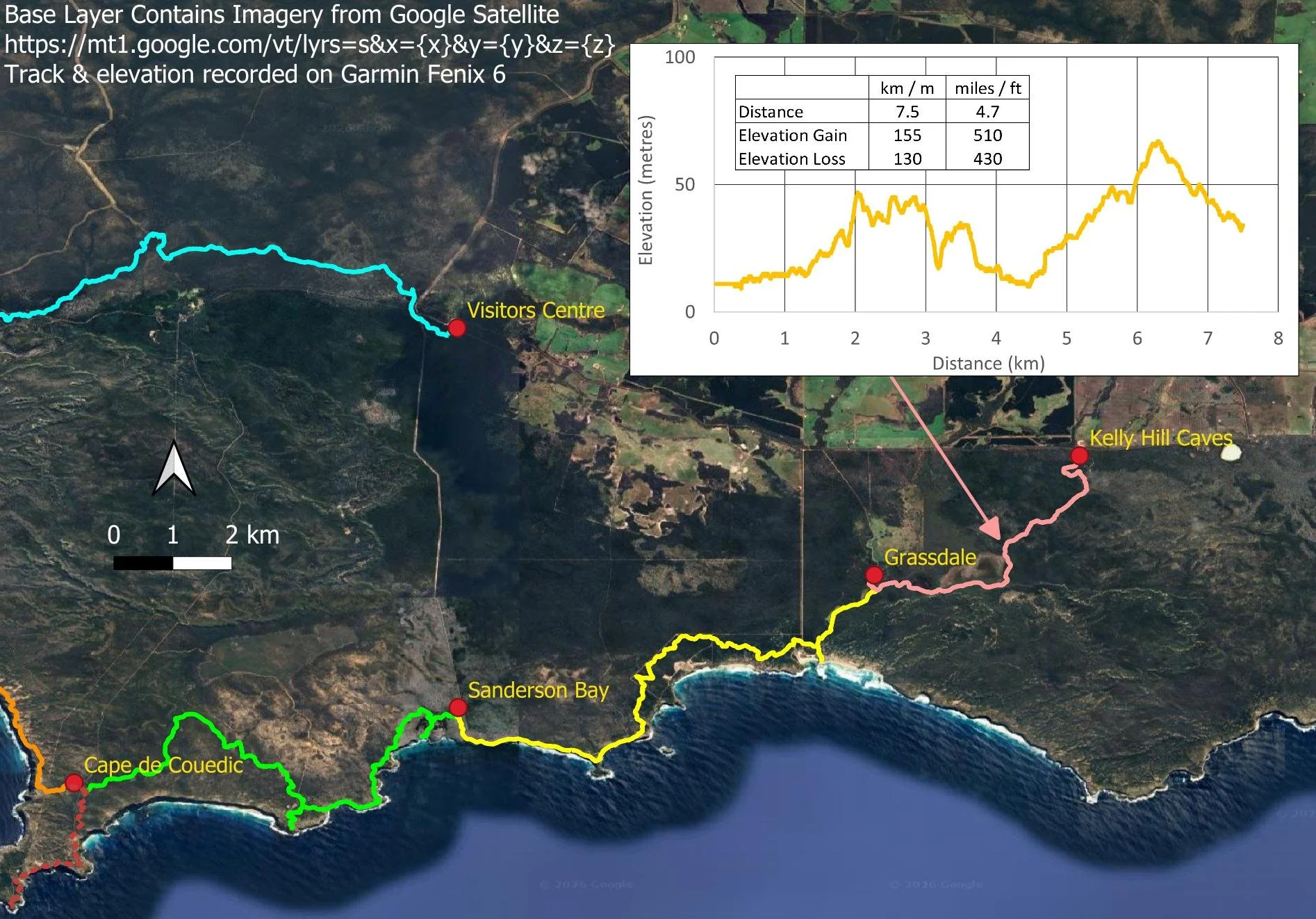
Day 5 hike details
Once you have your car, collect your resupply box from Hakea Hut and visit Admiral’s Arch, Weir Cove and Cape de Couedic Lighthouse. We recommend you drive to the car parks and explore from there, but faster purists could hike the official 9km/5.6mi return spur trail from the main KIWT just east of Cape de Couedic Rd.
Drive to Kingscote, Penneshaw or your accommodation.
Slower hikers without a car can be picked up from Kelly Hill car park or the Visitor Centre by their track transfer company and returned to Penneshaw or Kingscote accommodation. You’ll miss out on Admiral’s Arch, but we think the distance and terrain are too far for slower hikers to complete on Day 2, and even Day 3 of the hike proper. Pushing to visit them is likely to spoil the day’s hike as you struggle to make the distances.
Walk with Us:
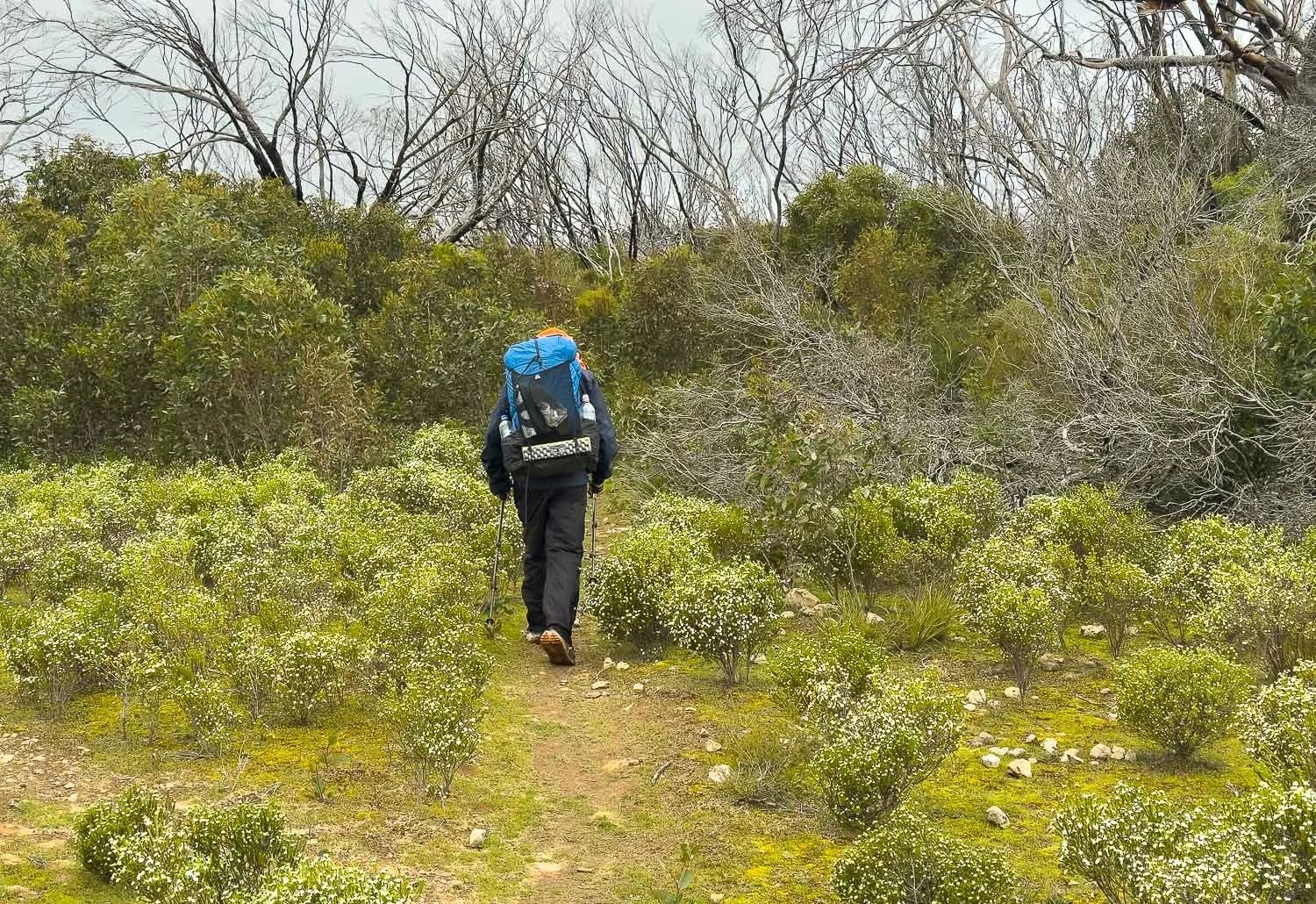
Back through the ti-tree and flowering shrubs.
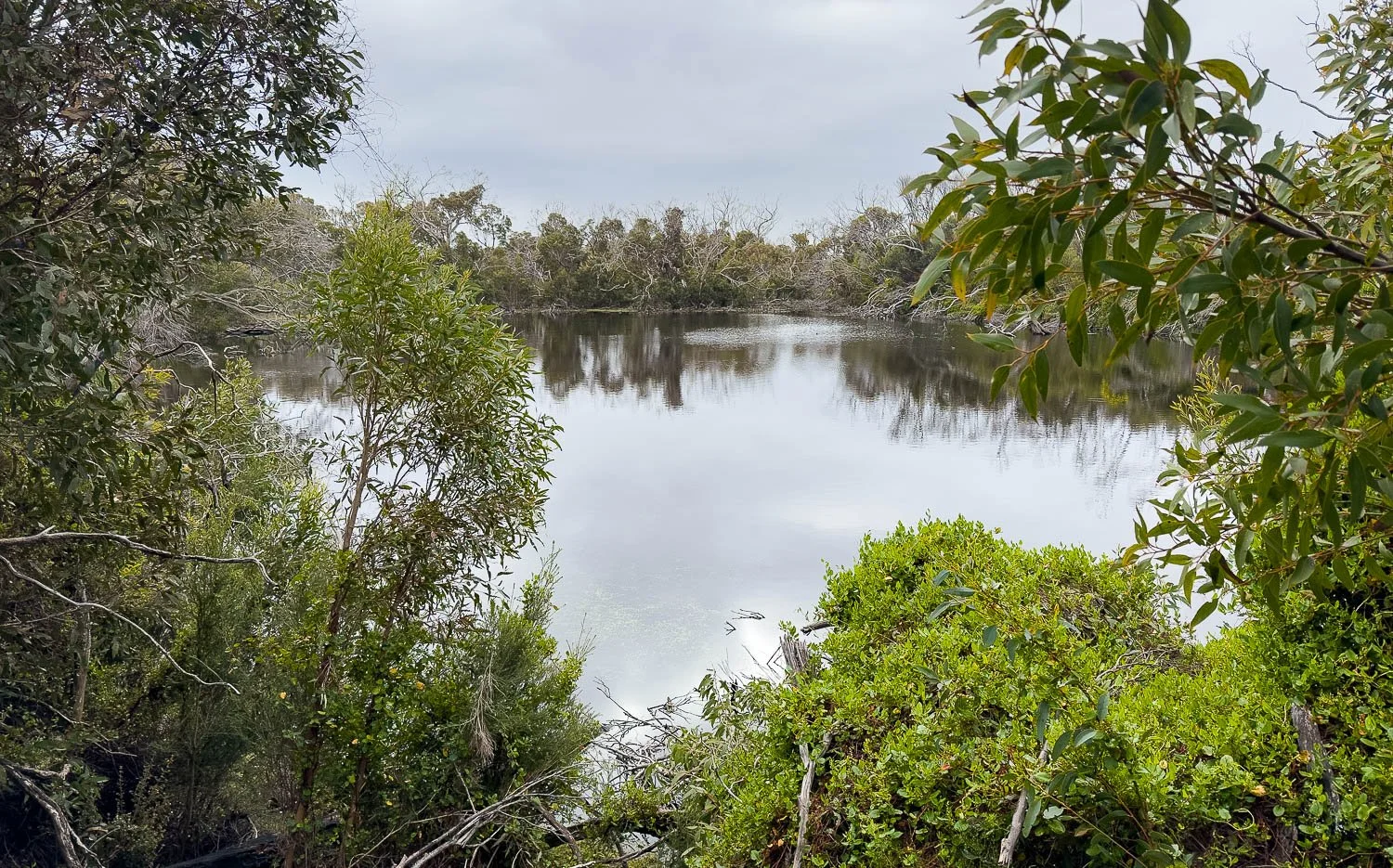
In less than a kilometre, you’ll reach Wilderness Lagoon. It’s screened by dense regrowth but you’ll have glimpses of the water through breaks in the vegetation.
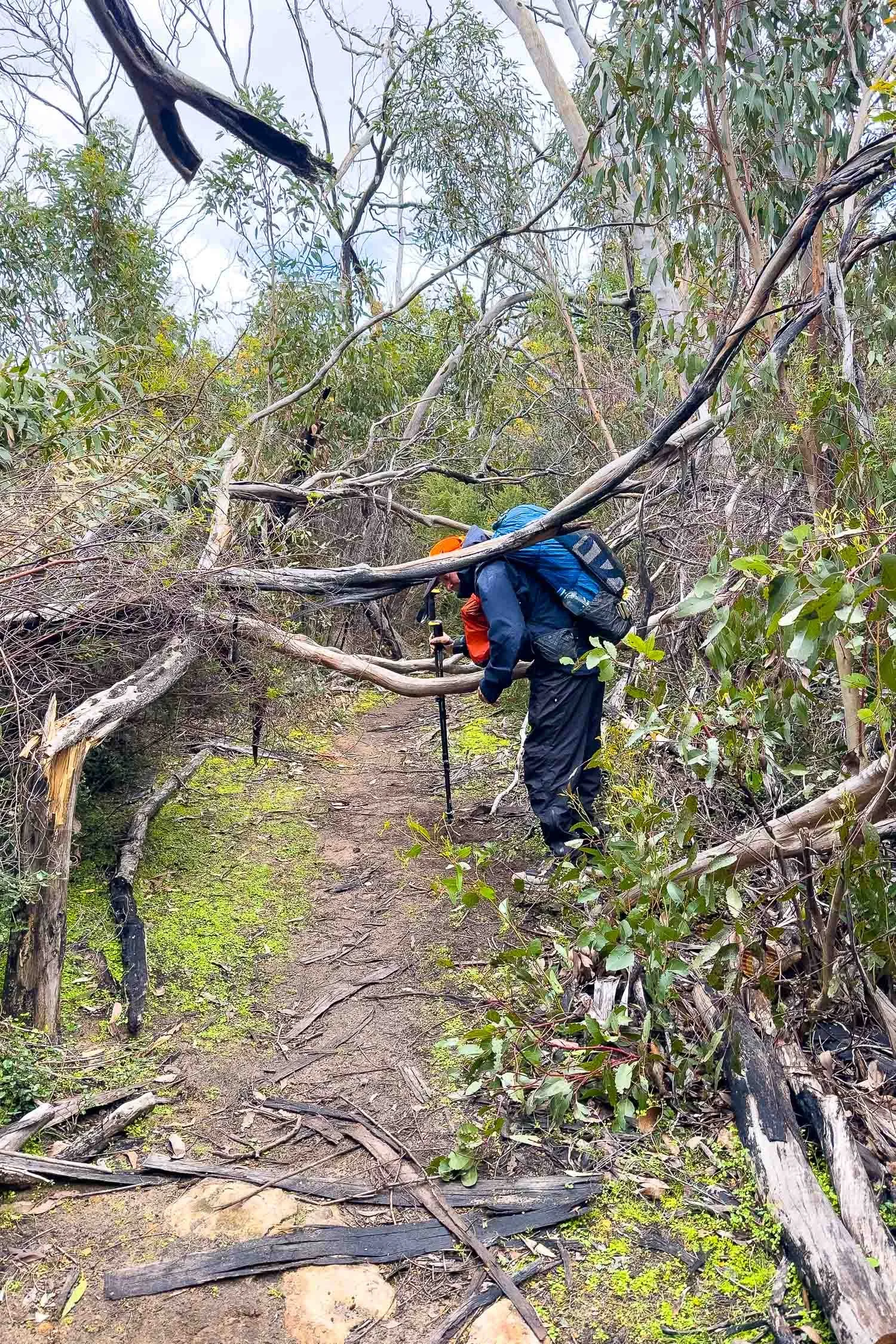
This section of trail is easy underfoot — no limestone! — but, at the time we hiked, sported a lot of deadfall.
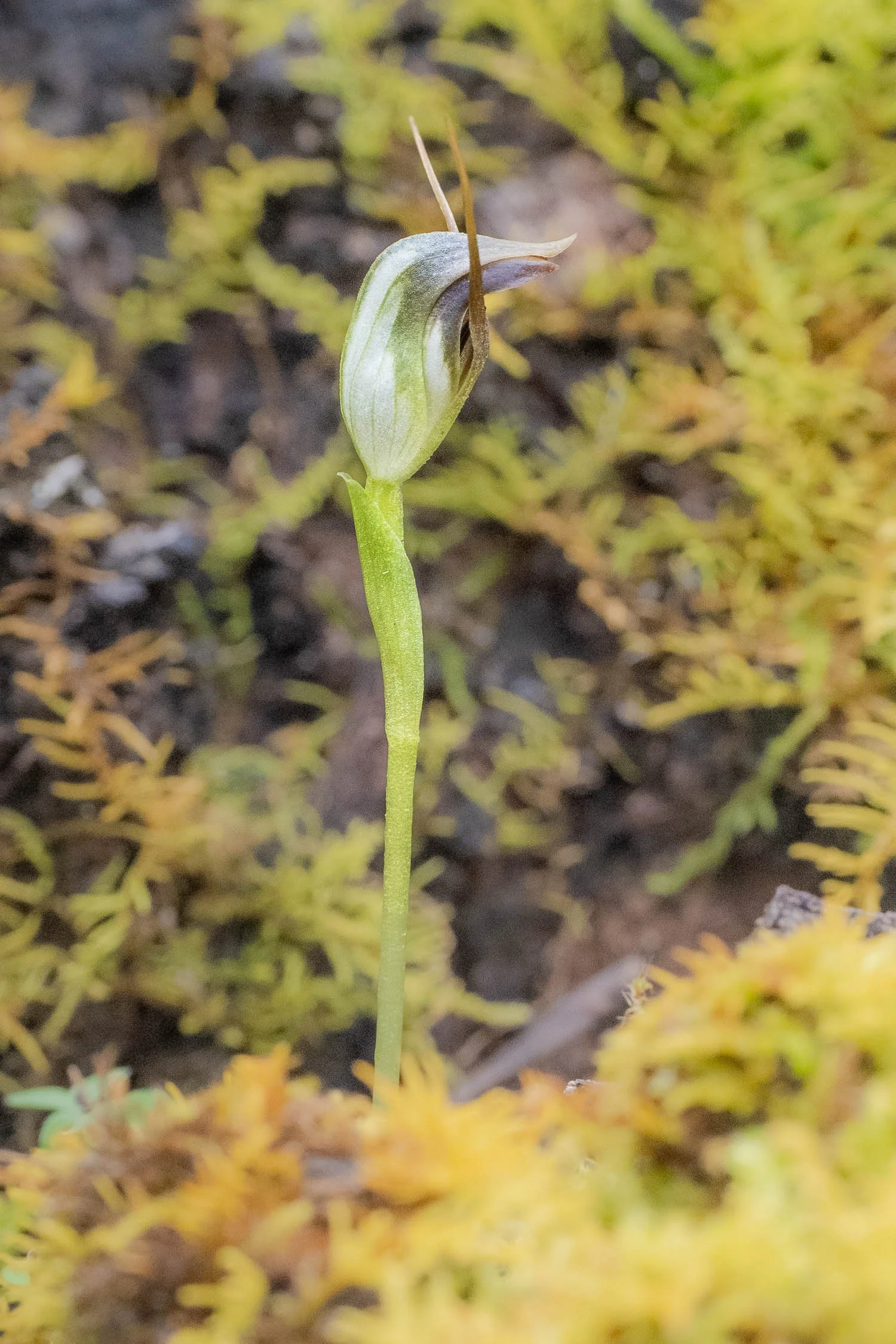
Maroon Greenhood (Pterostylis pedunculata).
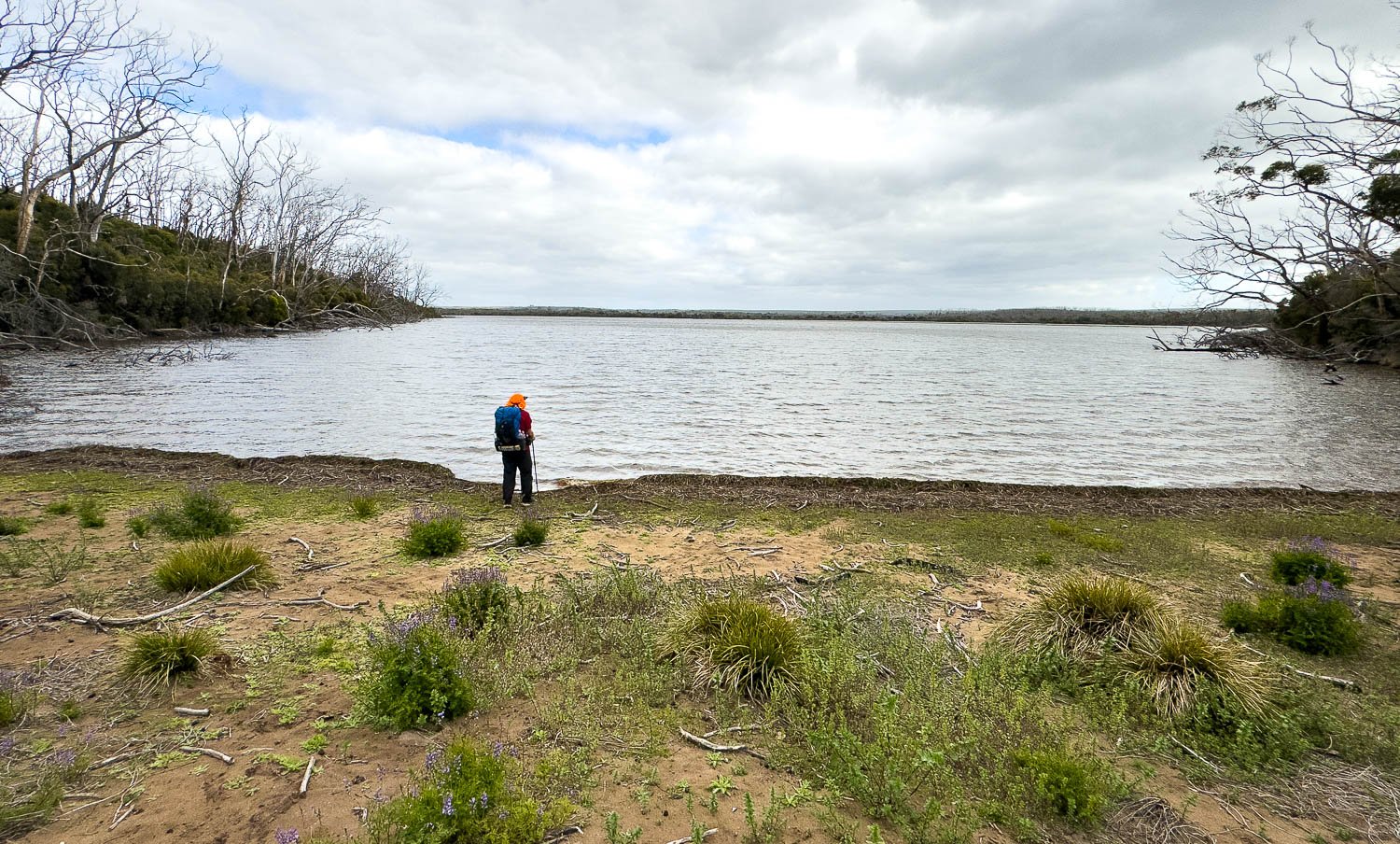
Grassdale Lagoon is huge, with countless waterfowl of many species in the distance. Twitchers should creep quietly along the trail to this point and take advantage of the small windows in the vegetation.
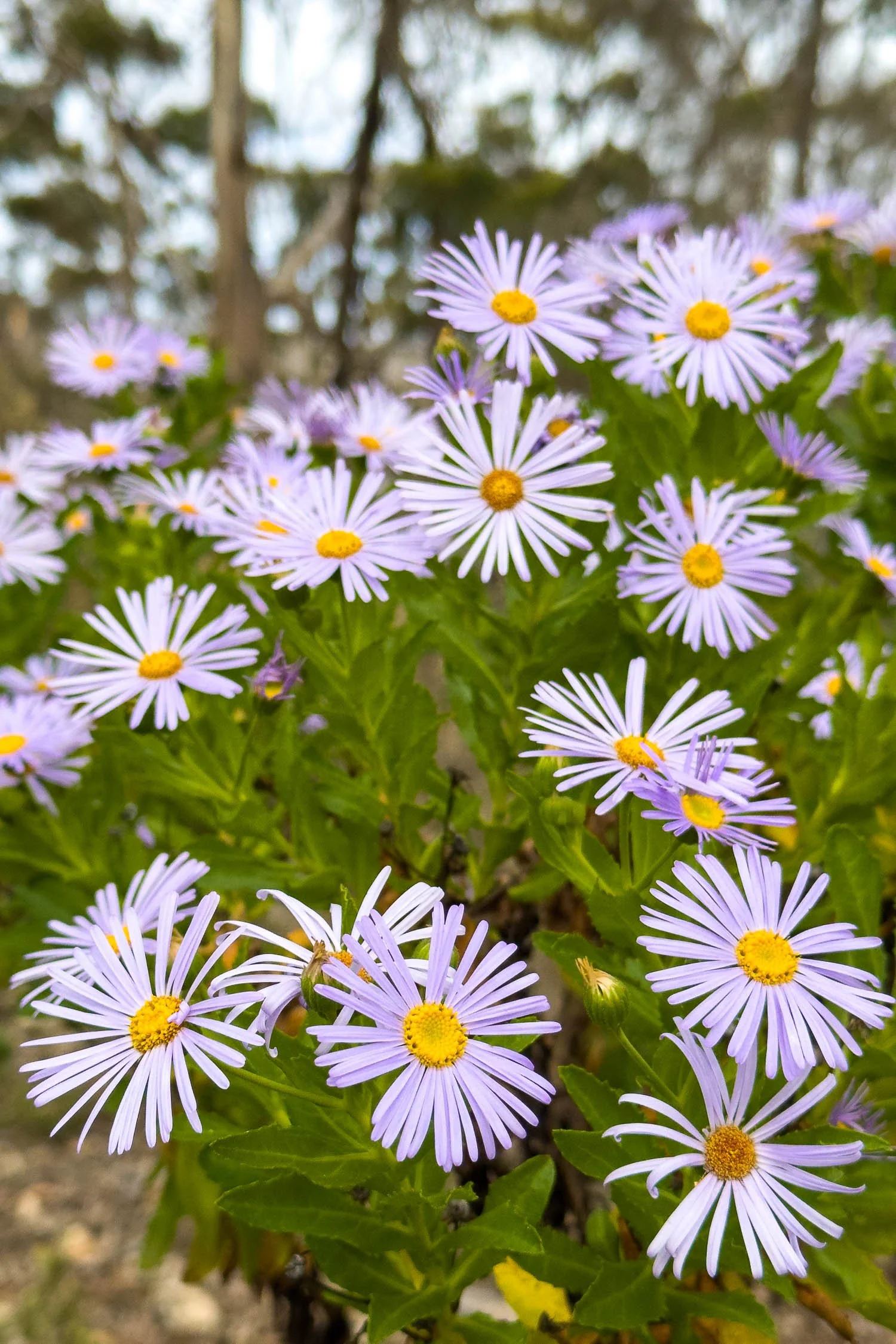
Spectacular Azure Daisy bush (Olearia rudis)
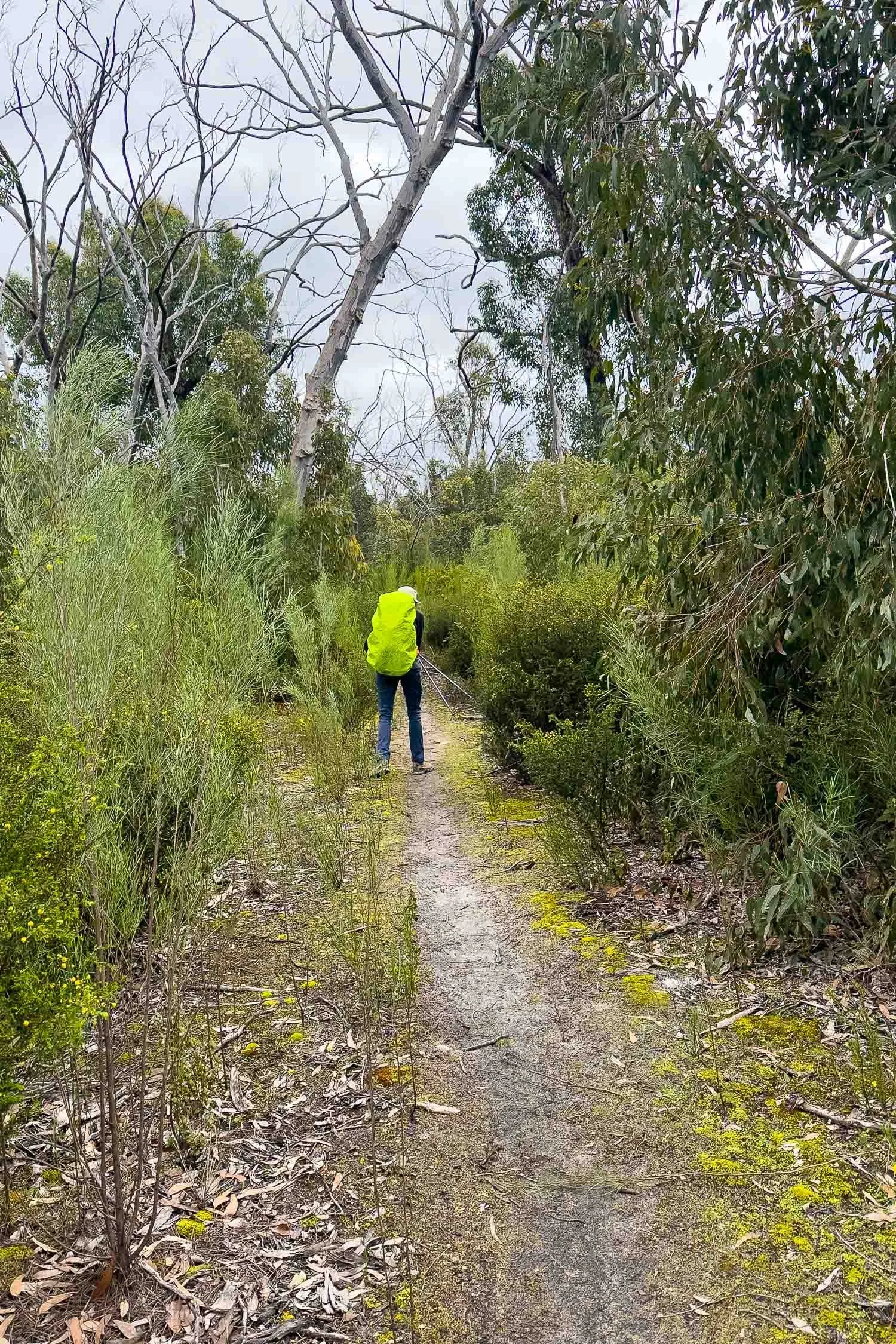
You only have 7.5km to the Caves, and the trail is smooth going the entire way. You will likely make good time!
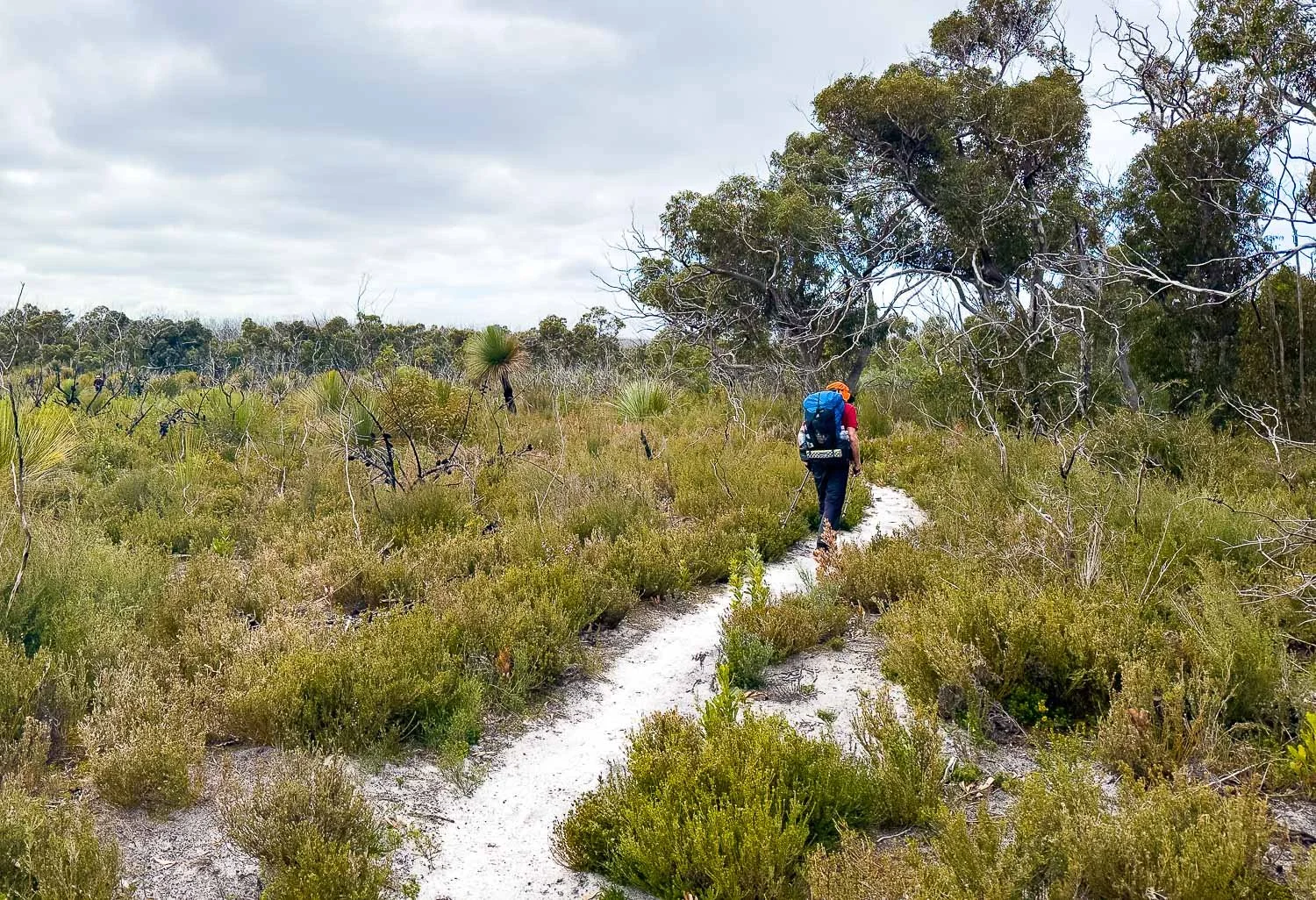
Into taller timber and heath as you go further inland: note trail surface!
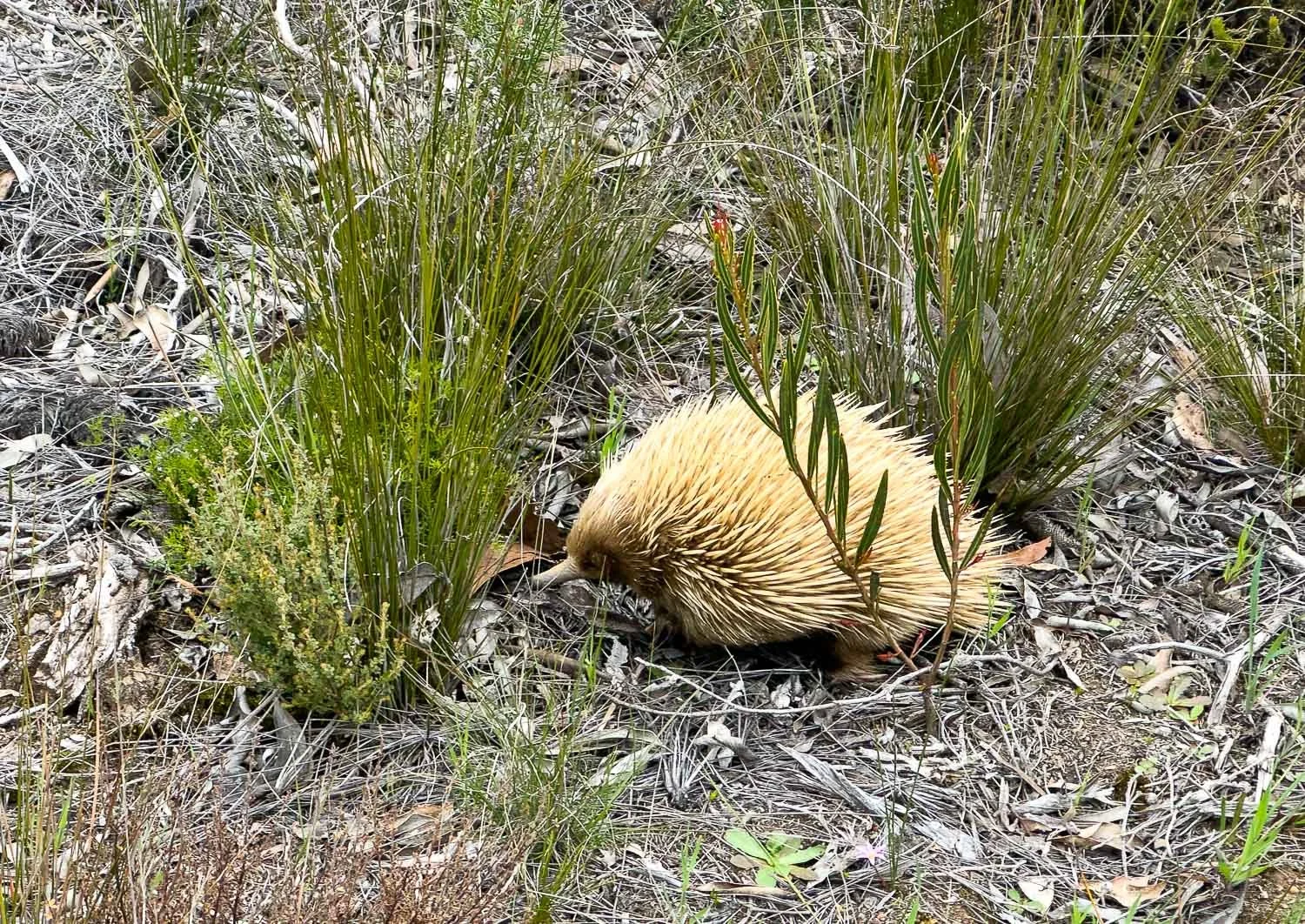
A little blonde echidna — most are much darker than this. Here in dry South Australia, echidnas are spiny with short fur, but those in Central Tasmania look quite different, with shorter, sparser spines and long, thick fur to handle the cold and rain.
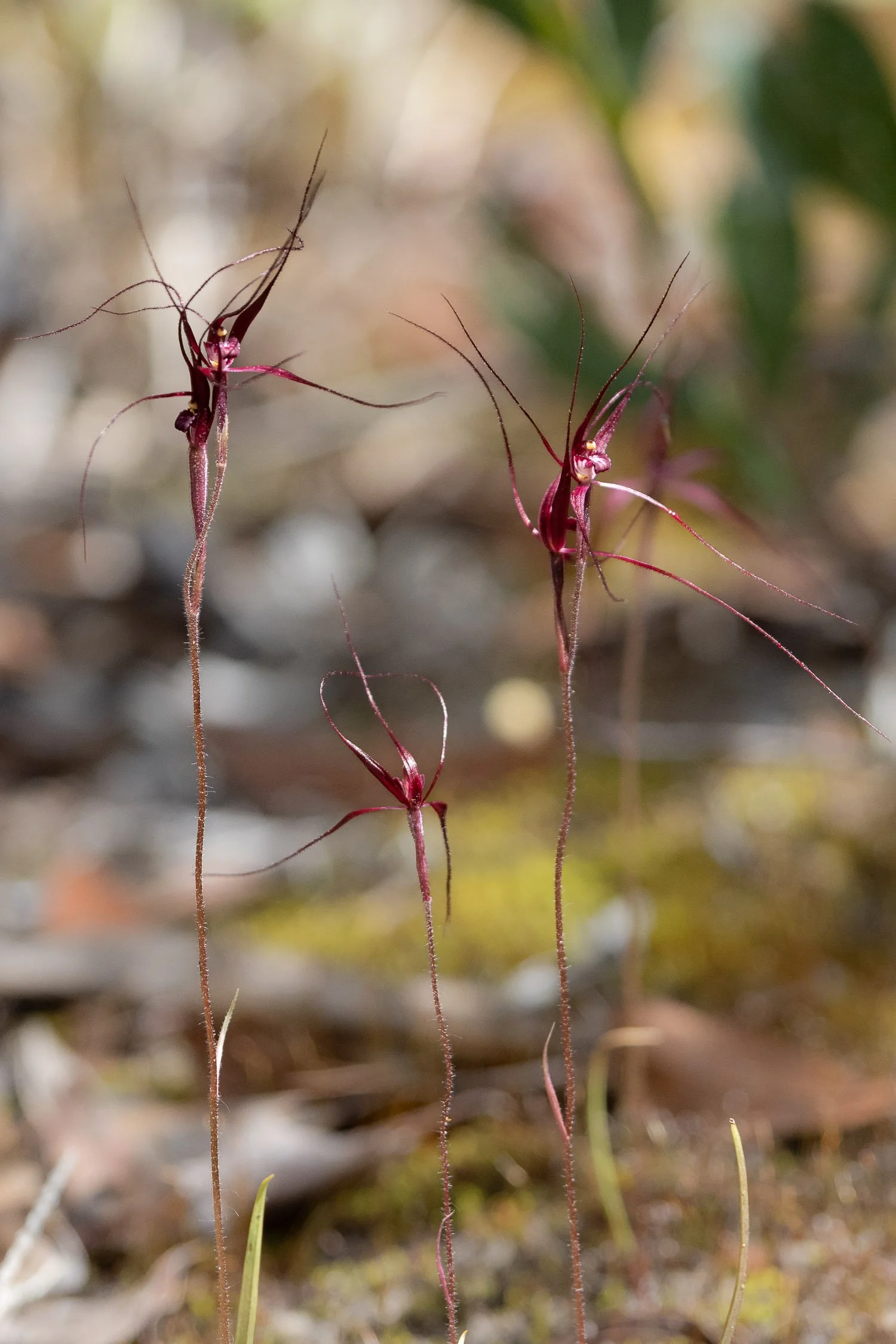
Plenty of wildflowers on this last day, so keep your eyes peeled. Blood spider orchid (Caladenia sanguinea),
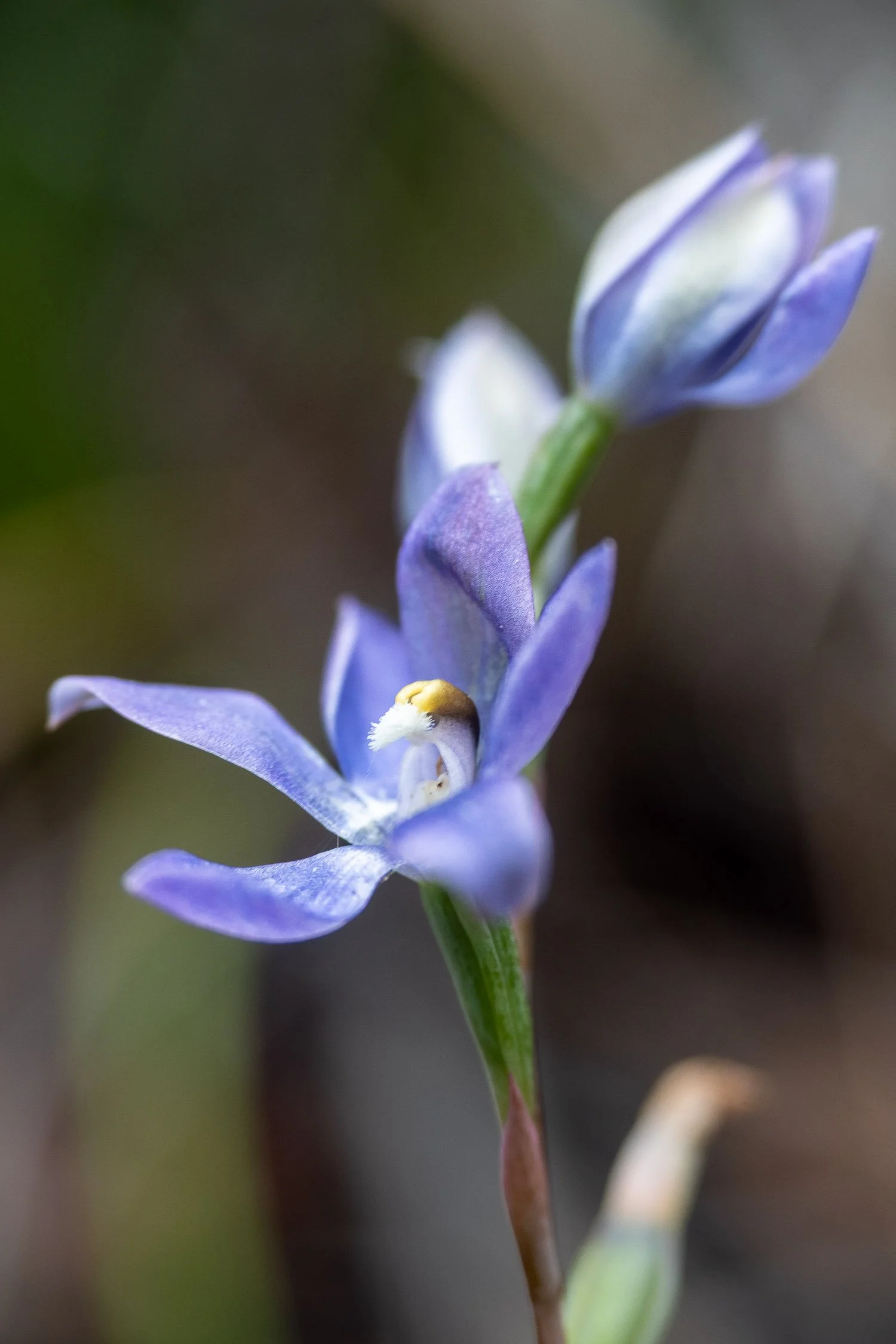
a sun orchid, Thelymitra sp., possibly T. pauciflora
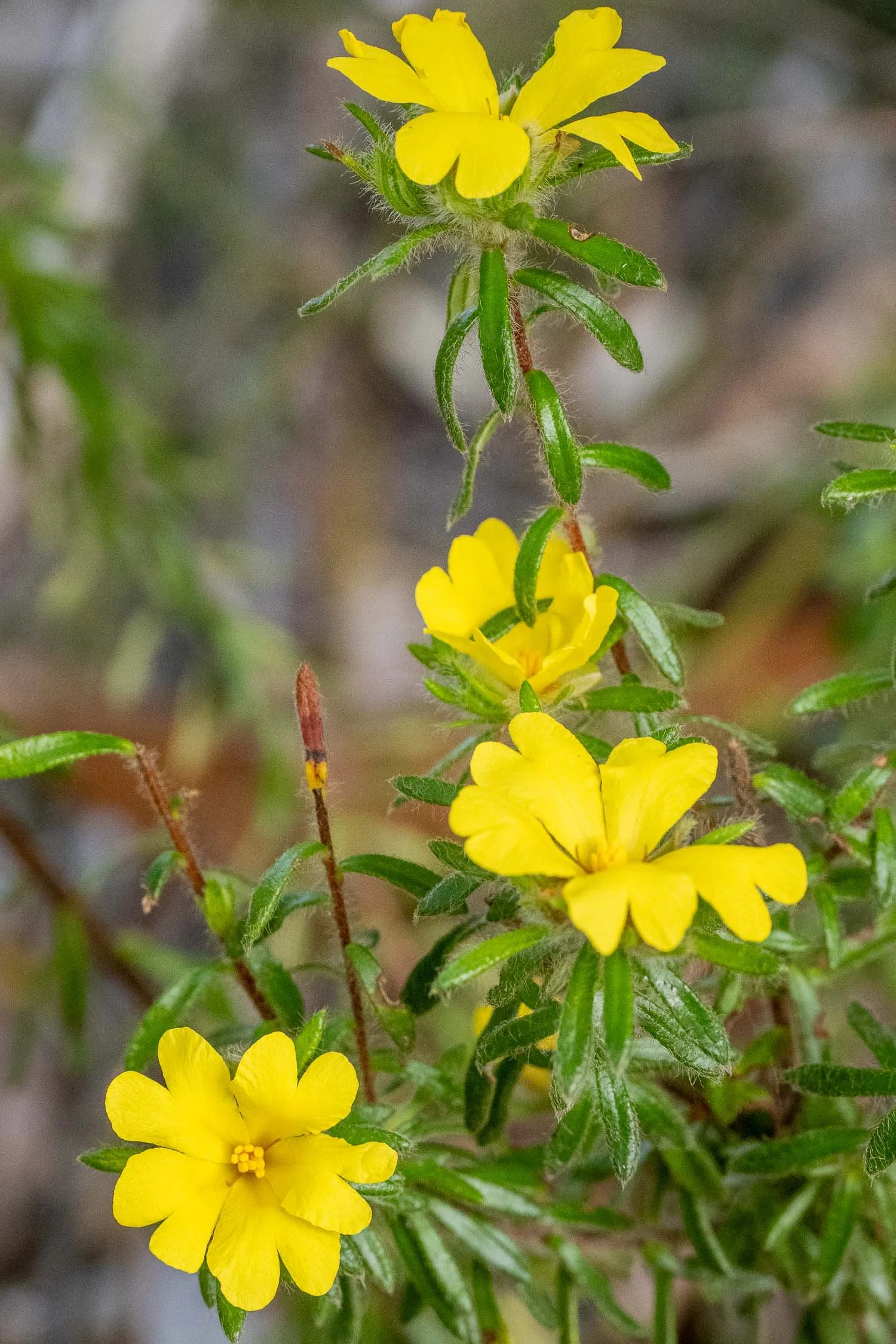
… and Guinea Flower, Hibbertia villifera.
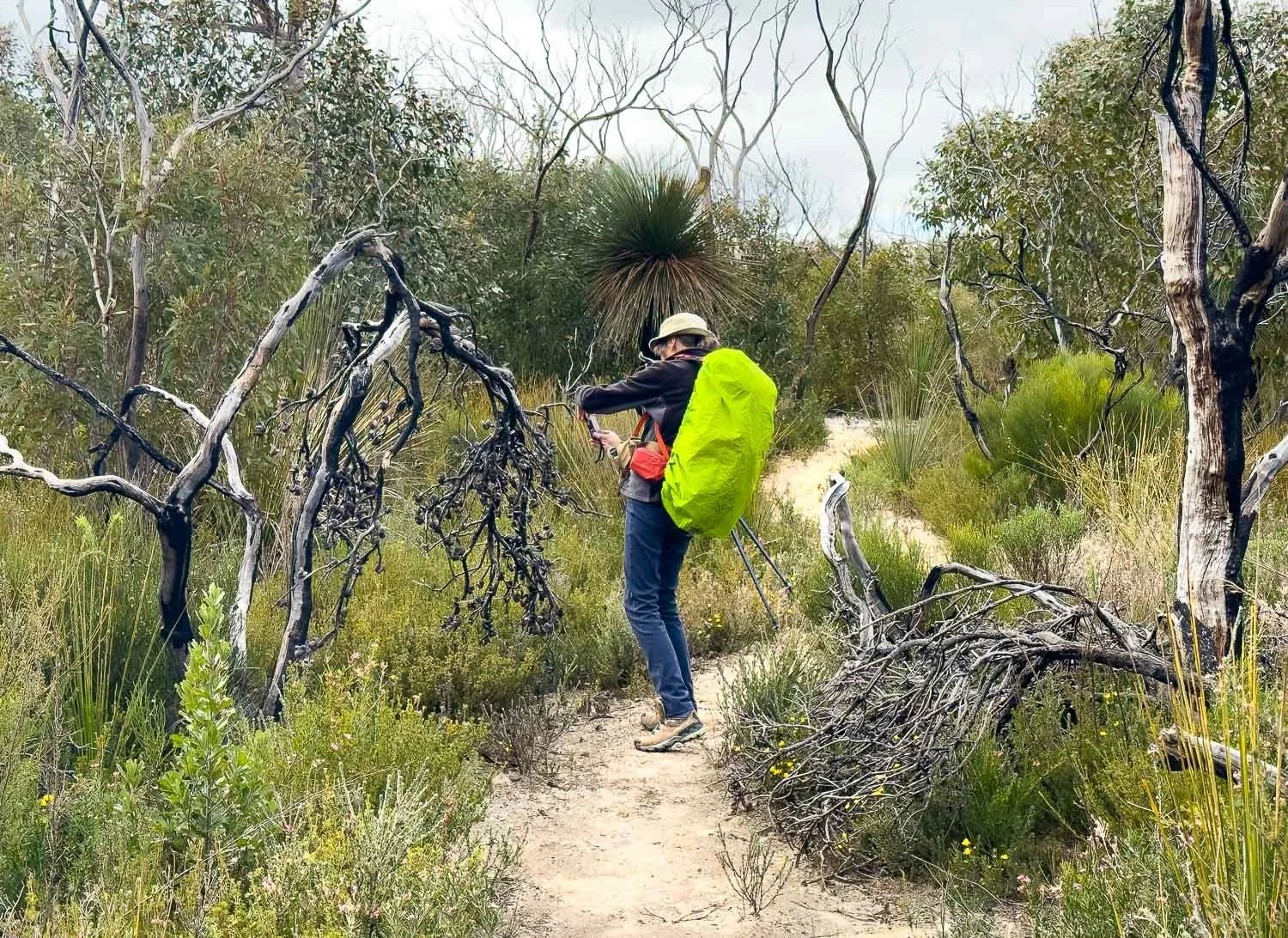
Our friend is photographing Hakea pods. They are adapted to fire, with the woody pods protecting the seeds inside, then opening to let them fall and germinate on the rich, open ash field, without competition for light and nutrients. A clever strategy!
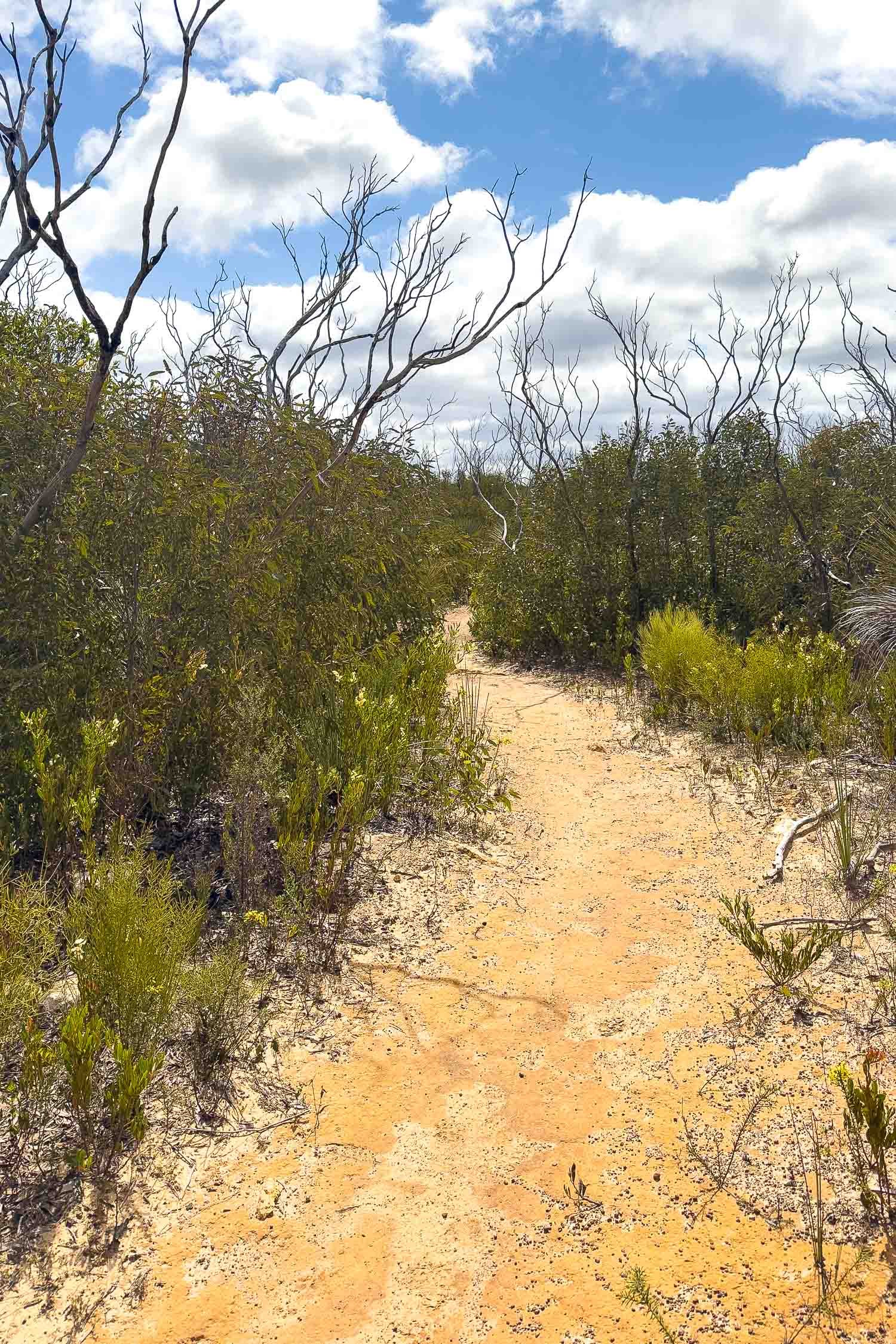
We haven’t seen much ironstone in the last few days, and the vegetation changes with it. So much variety!
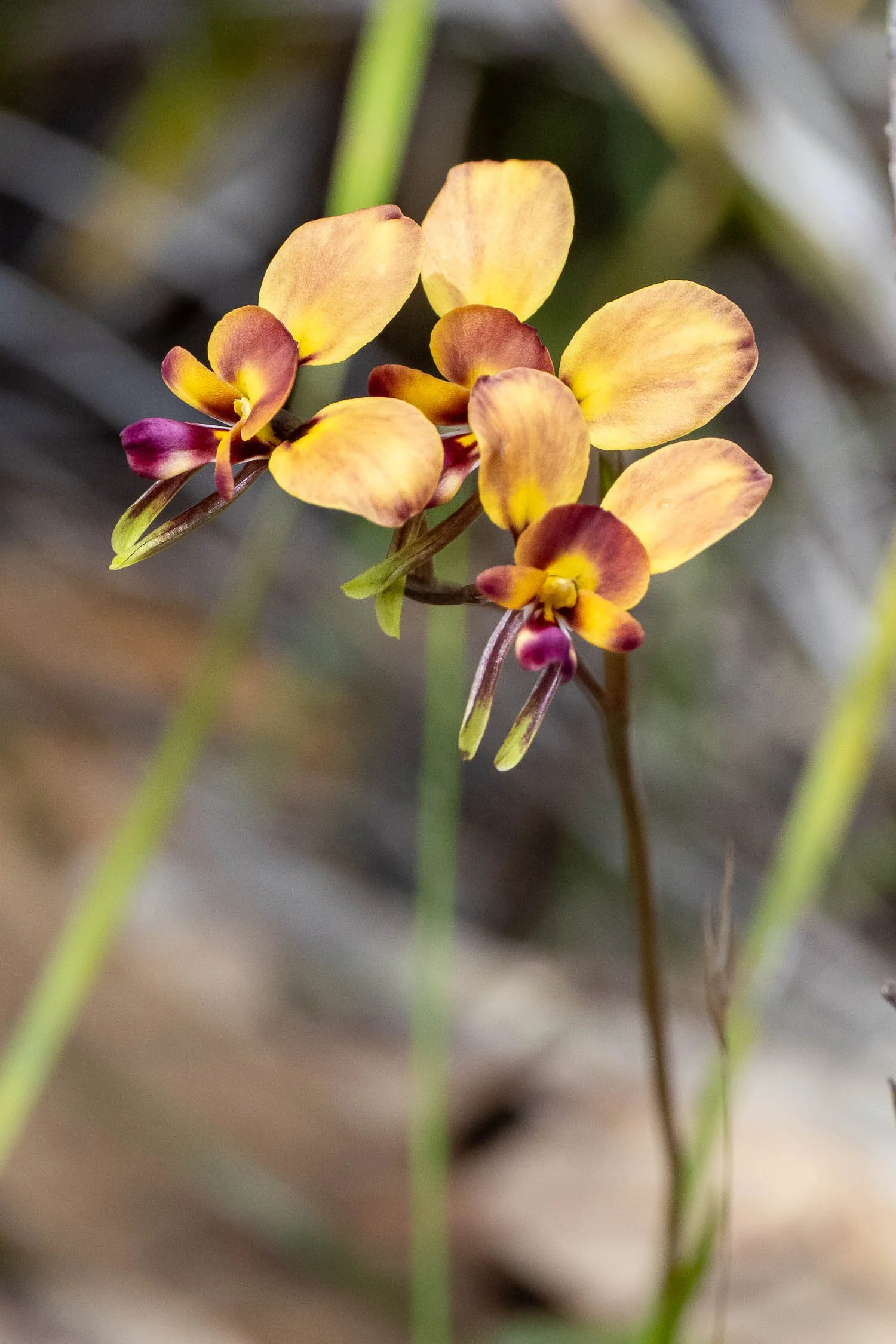
Wallflower Orchid, Diuris orientis.
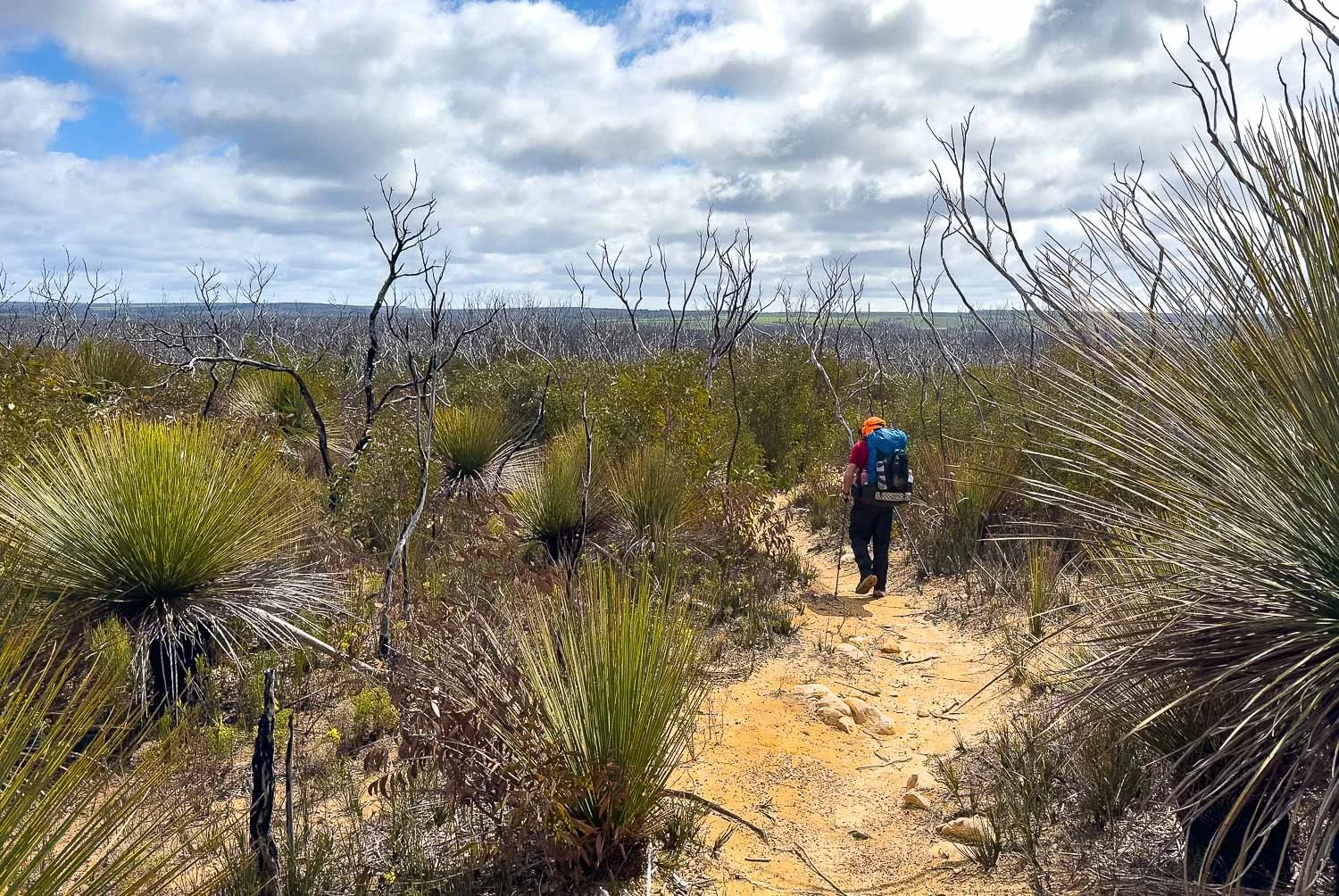
Head downhill to the Kelly Hill Cave Car Park, enjoying your last expansive views.
If you’ve followed our itinerary, you should arrive in plenty of time for the 10.30am cave tour. You’ll climb back up to the cave entrance, and then head in:
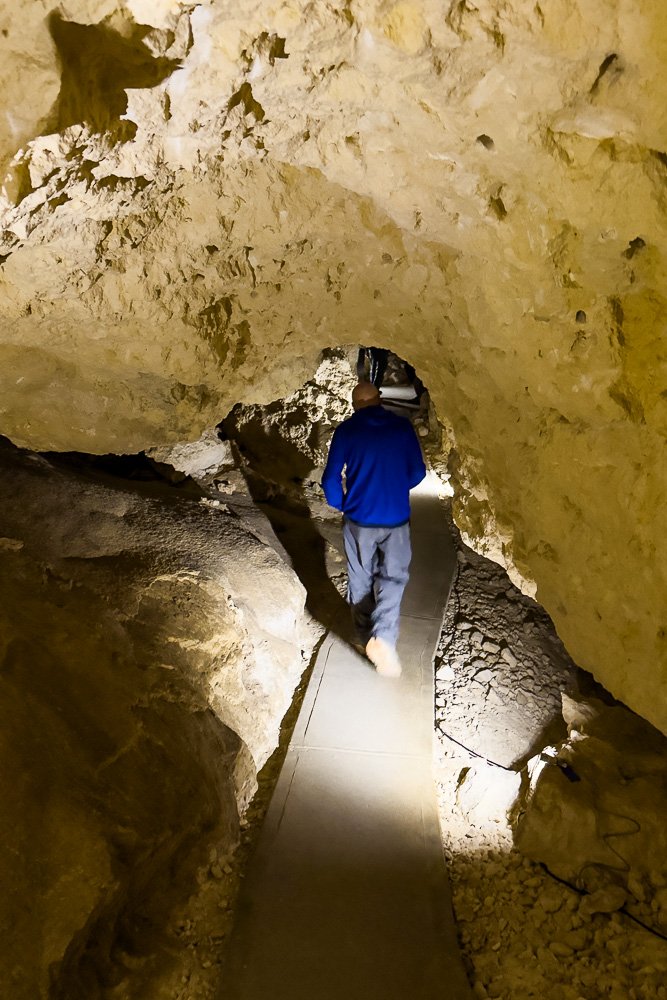
The surfaces are good, but those with claustrophobia need not enter!
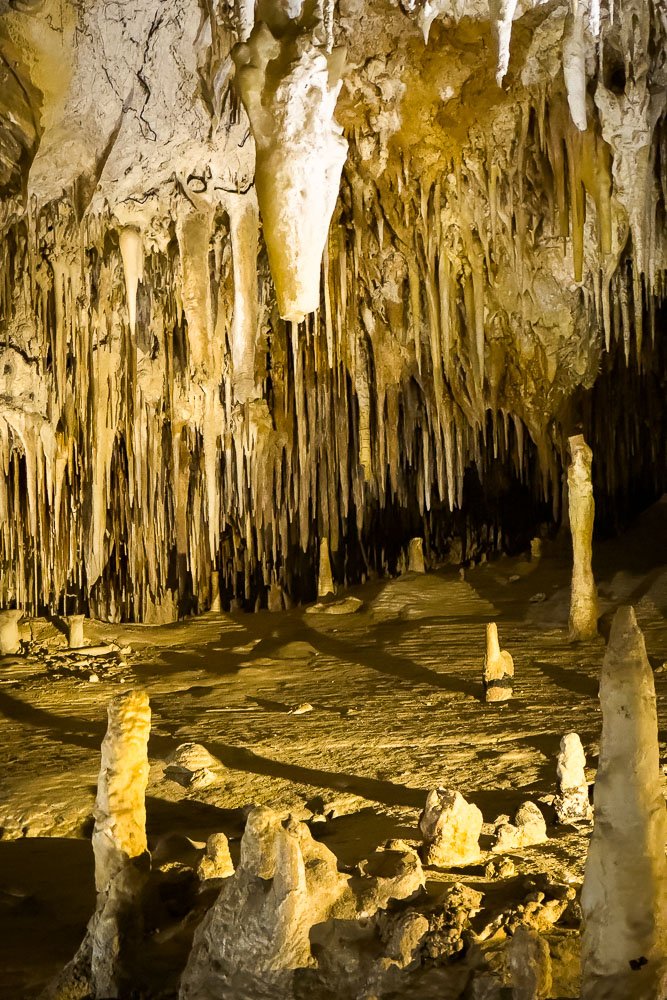
This cave is dry and has finished growing, with spectacular rock formations wherever you look.
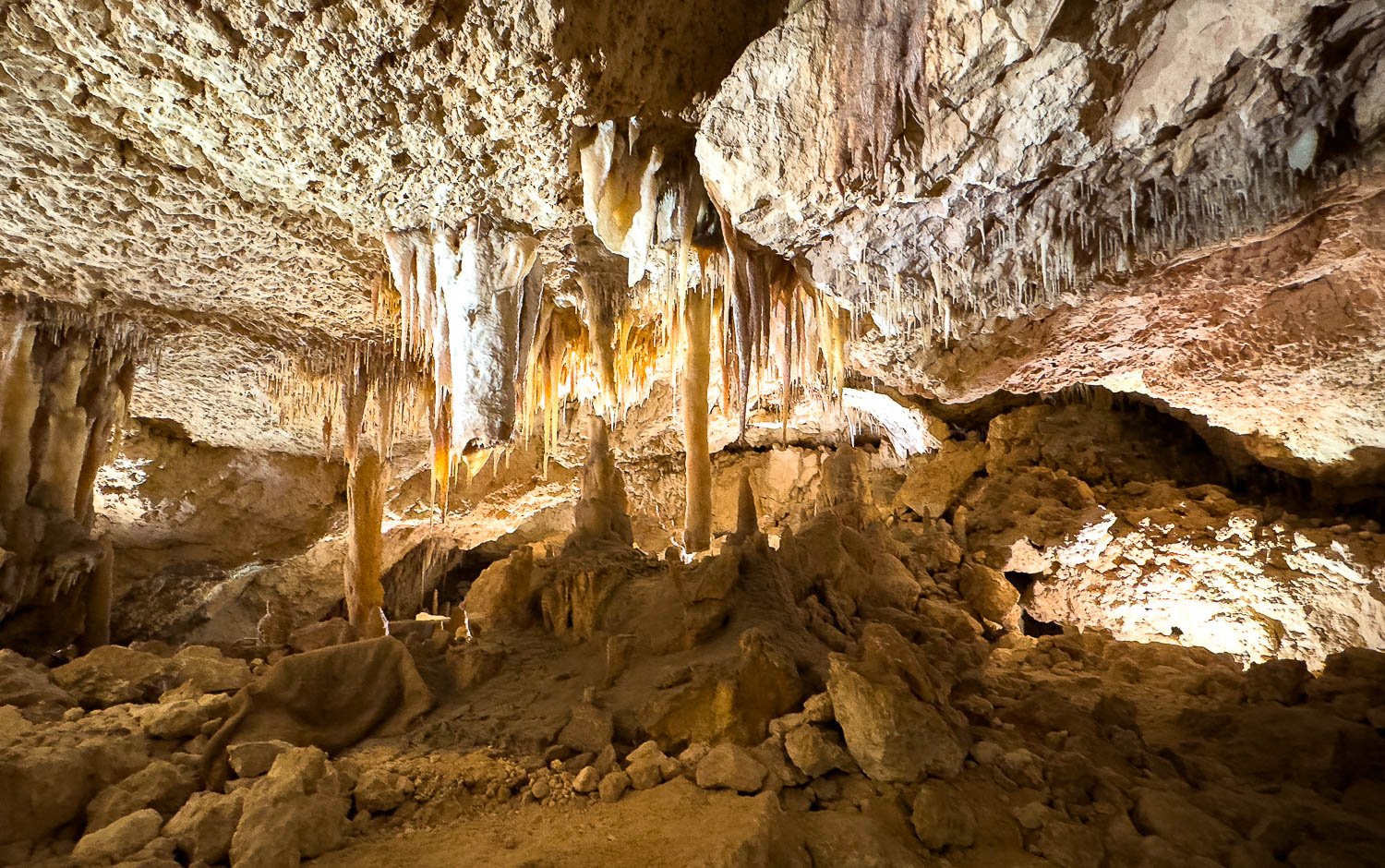
The tour ends with a presentation and light show that children especially will enjoy. In fact, the whole hike is great for younger folk.
Next, return to the car park and take the shuttle back to the Visitor Centre. Have a yummy Bucket of Yellow Lunch at the Cafe, hop in your car and drive to Cape de Couedic/Admiral’s Arch, picking up your resupply box on the way past Hakea Hut. Visit historic Weir’s Cove first and take the trail from the car park, then continue to Admiral’s Arch, which we think is a fitting climax to the hike.
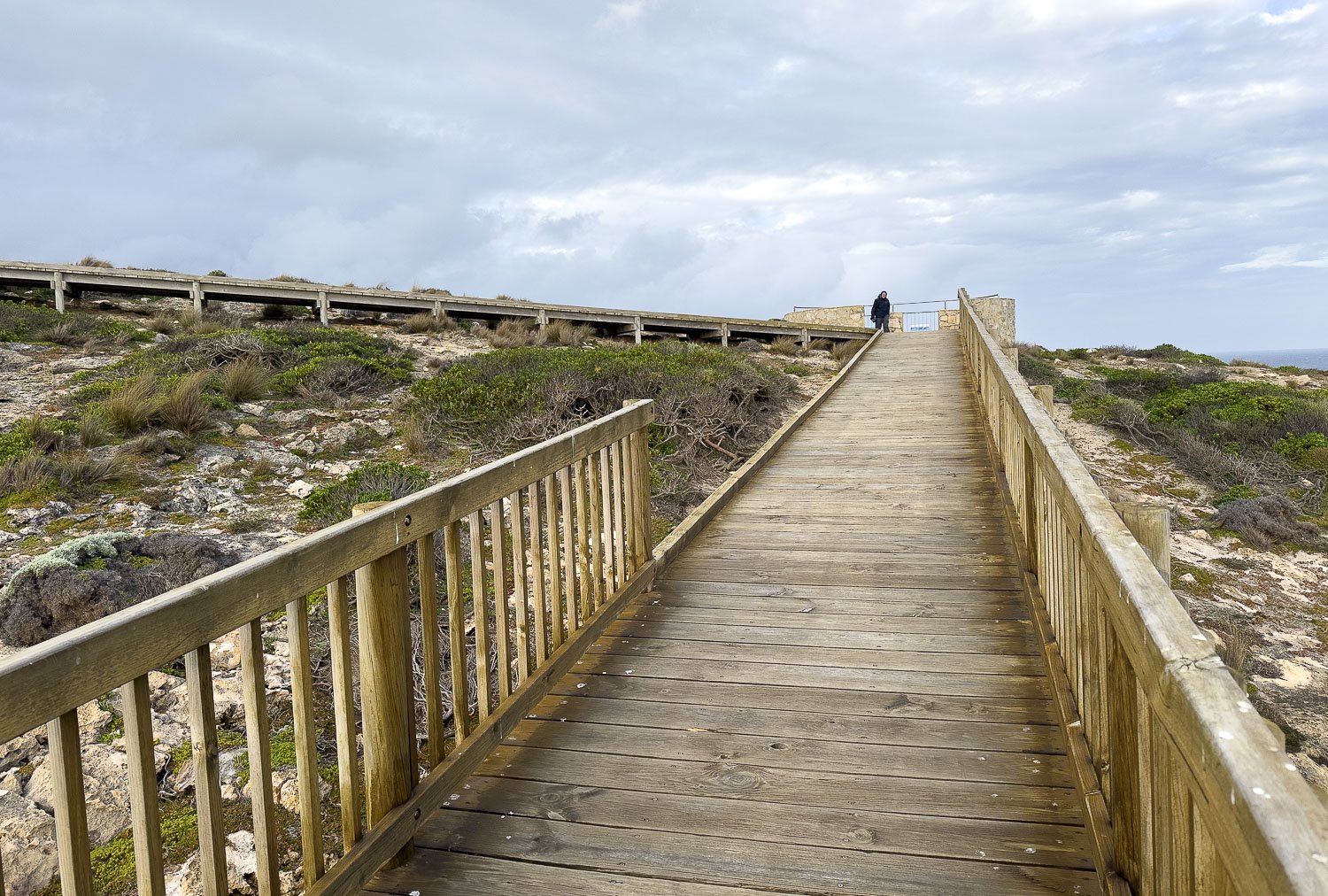
From Cape de Couedic car park, take the boardwalk all the way to the Arch viewing platform; you won’t need an extra ticket because you have paid for park entry via your Trail Pass.
The board walk is extremely exposed and, in strong winds, you will come close to being blown off your feet, as we were. But it’s worth it:
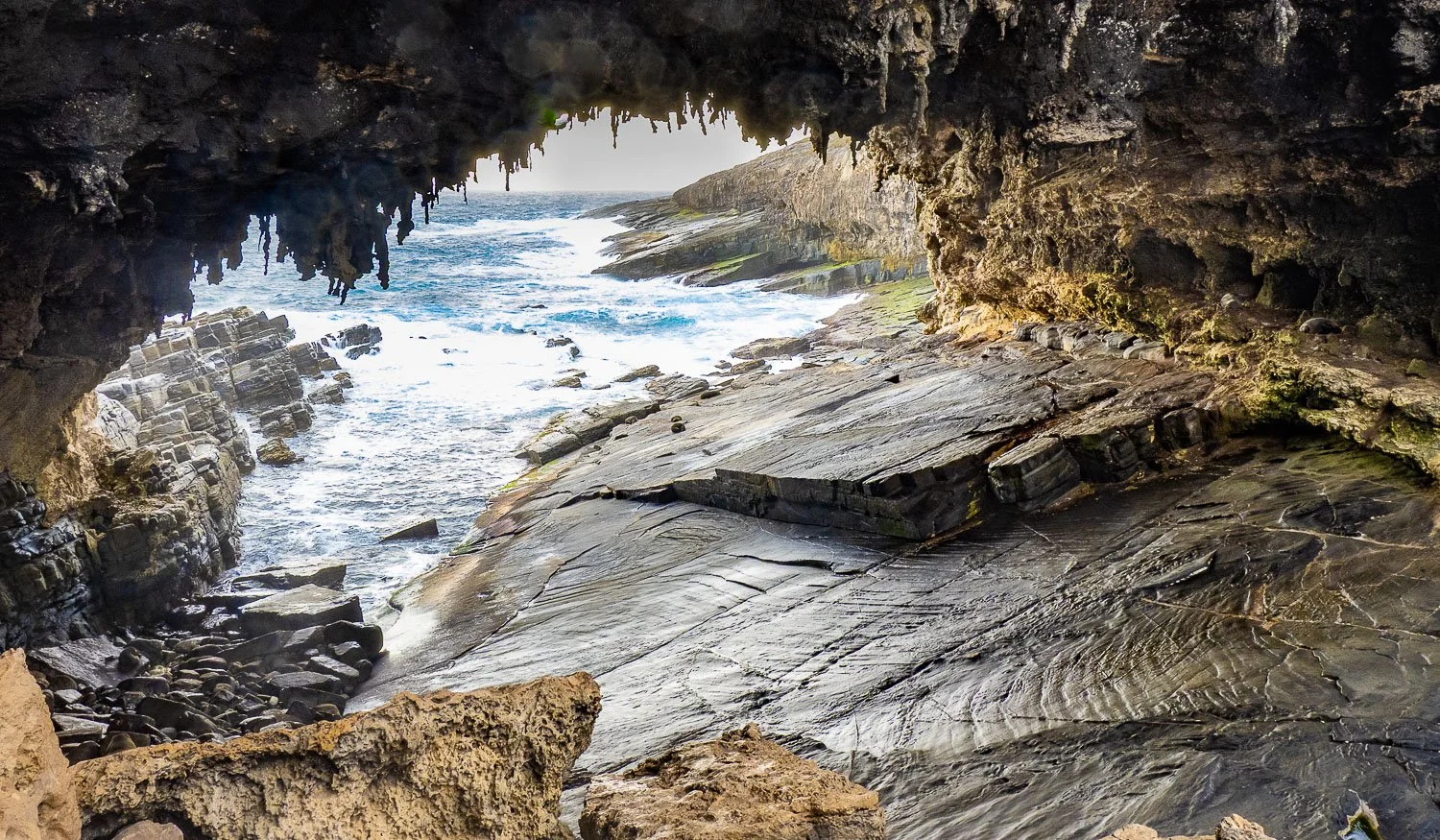
Wow. You’ll likely see two or three species of seals/ sea lions: Australian Fur Seals, Long-nosed Fur Seals, and biggest of all, Australian Sea Lions. Sea lions “walk” using their front flippers from side to side, but seals “hop” using both at once. There are seven resting on the rocks above but, because they are so well camouflaged, it’s like Where’s Wally!
Long-Nosed Fur Seals were previously called New Zealand Fur Seals, until scientists realised by far the biggest populations were in Australia. They have been in Australia for about 100,000 years, whereas the Australian Fur Seals arrived much more recently, about 10,000 years ago. Go figure.
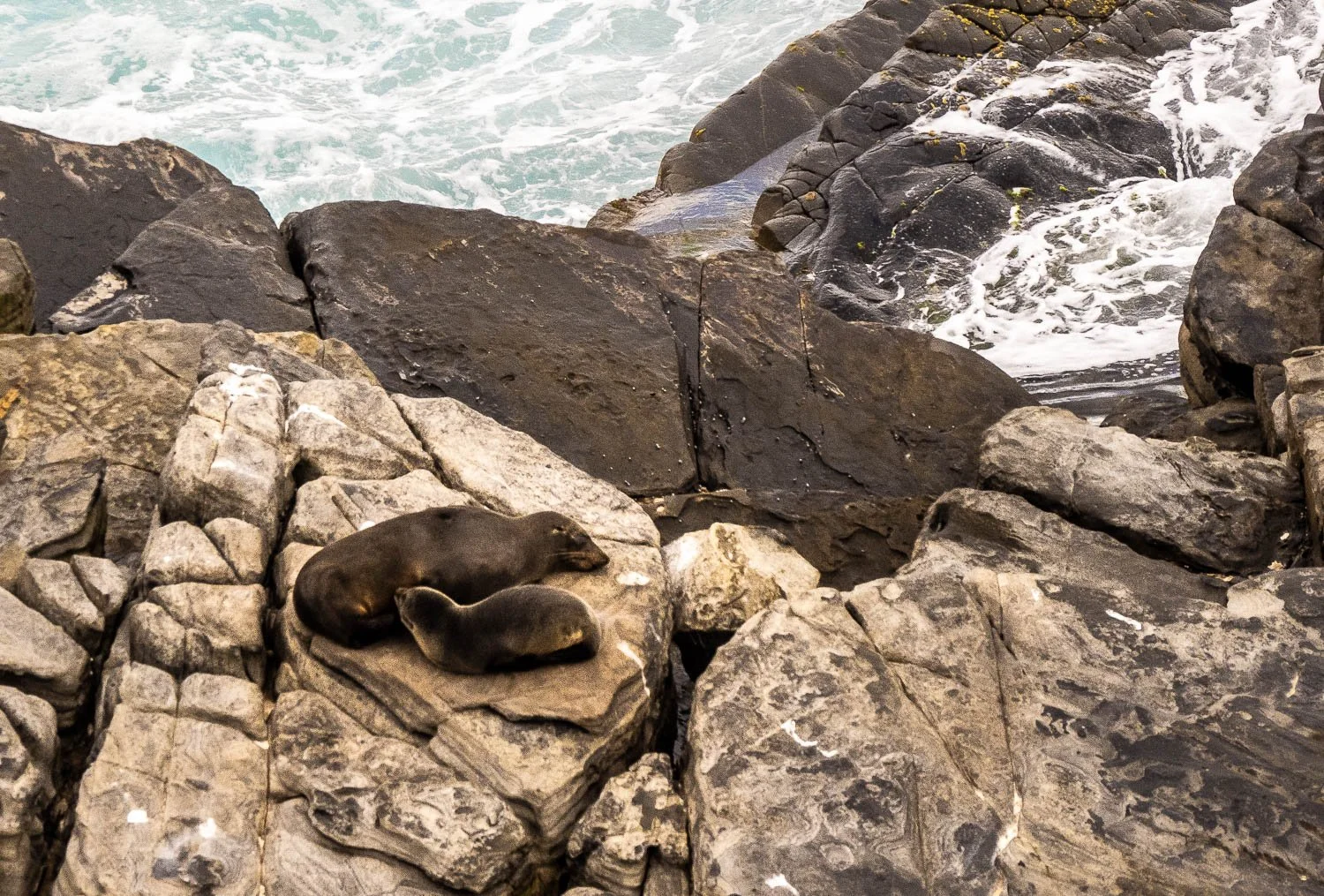
Remember to check out the eastern side of the headland as well: you’ll see more seals there, although look at that incredible camouflage colouring! In spring, there are plenty of cute pups.
Many hikers see whales and dolphins on their hike; people hiking the day before we did saw both, but they had moved on by the time we came through, or perhaps we were less observant. Nevertheless, the amount of wildlife on this hike — on the entire island — has been extraordinary.
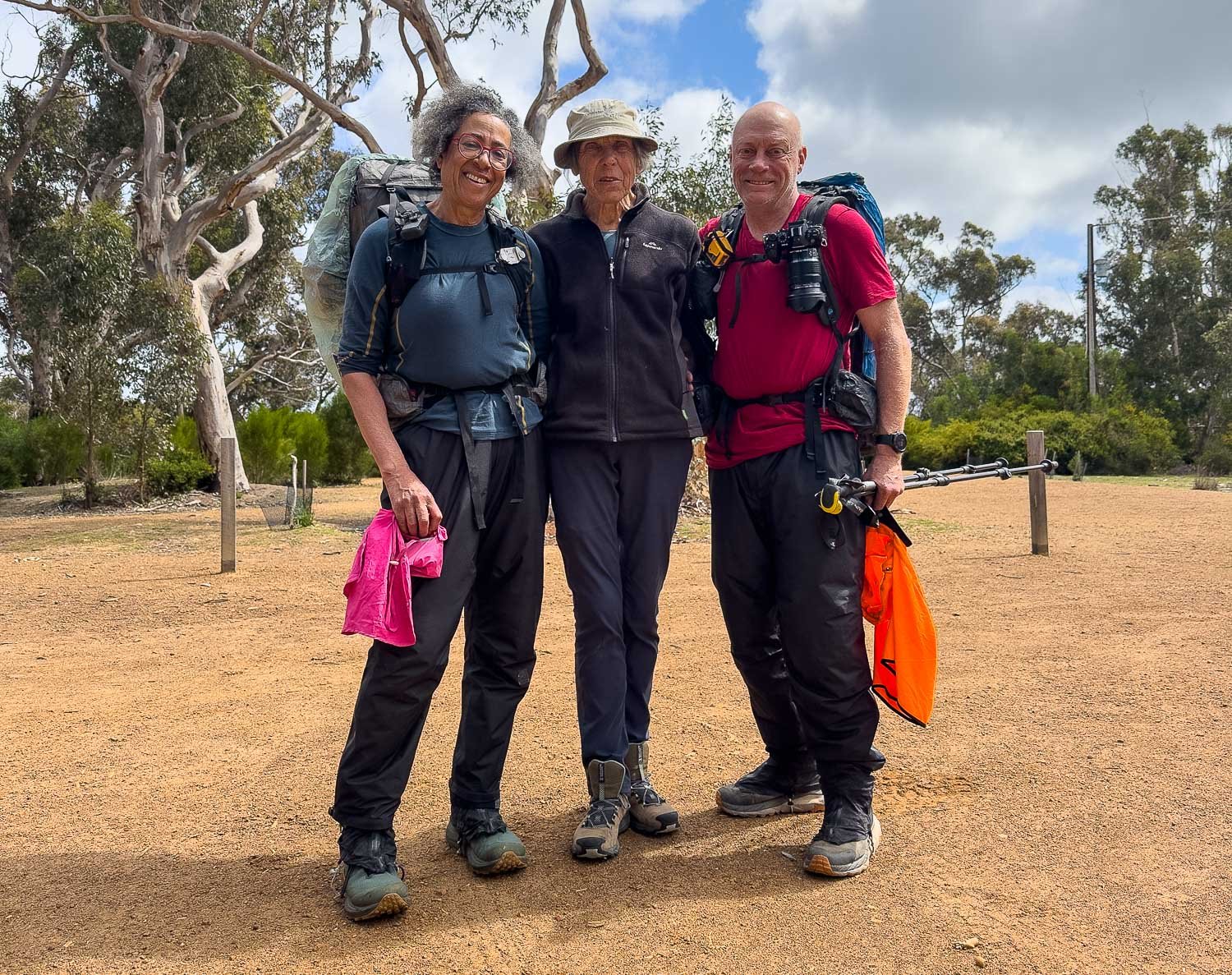
Grotty and happy at the end of a wonderful hike with our friend.
The Kangaroo Island Wilderness Trail is exceptional for its comfortable facilities each night, its expansive daily views, its variety from rivers to beaches to cliffs to caves to forests, its unique wildflowers and its rich wildlife. Overseas readers: this is the perfect hike to experience so much of Australia in a very compact location. And Aussie readers, Kangaroo Island’s terrain is unique. Start planning!