Sanderson Bay to Grassdale (Day 4)
Expansive views, plentiful wildlife and a fun ferry crossing
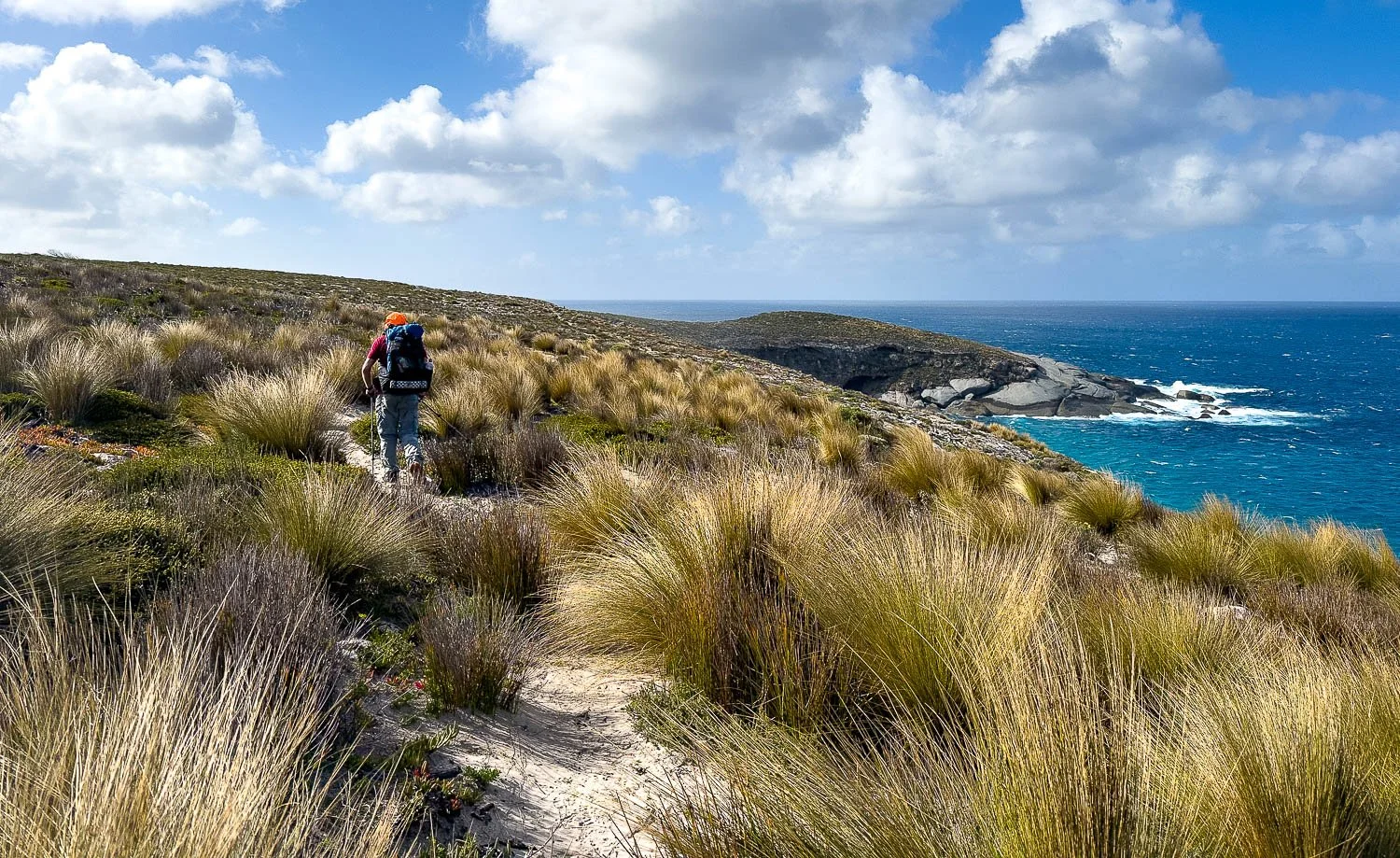
More of that glorious coastline today before you head inland
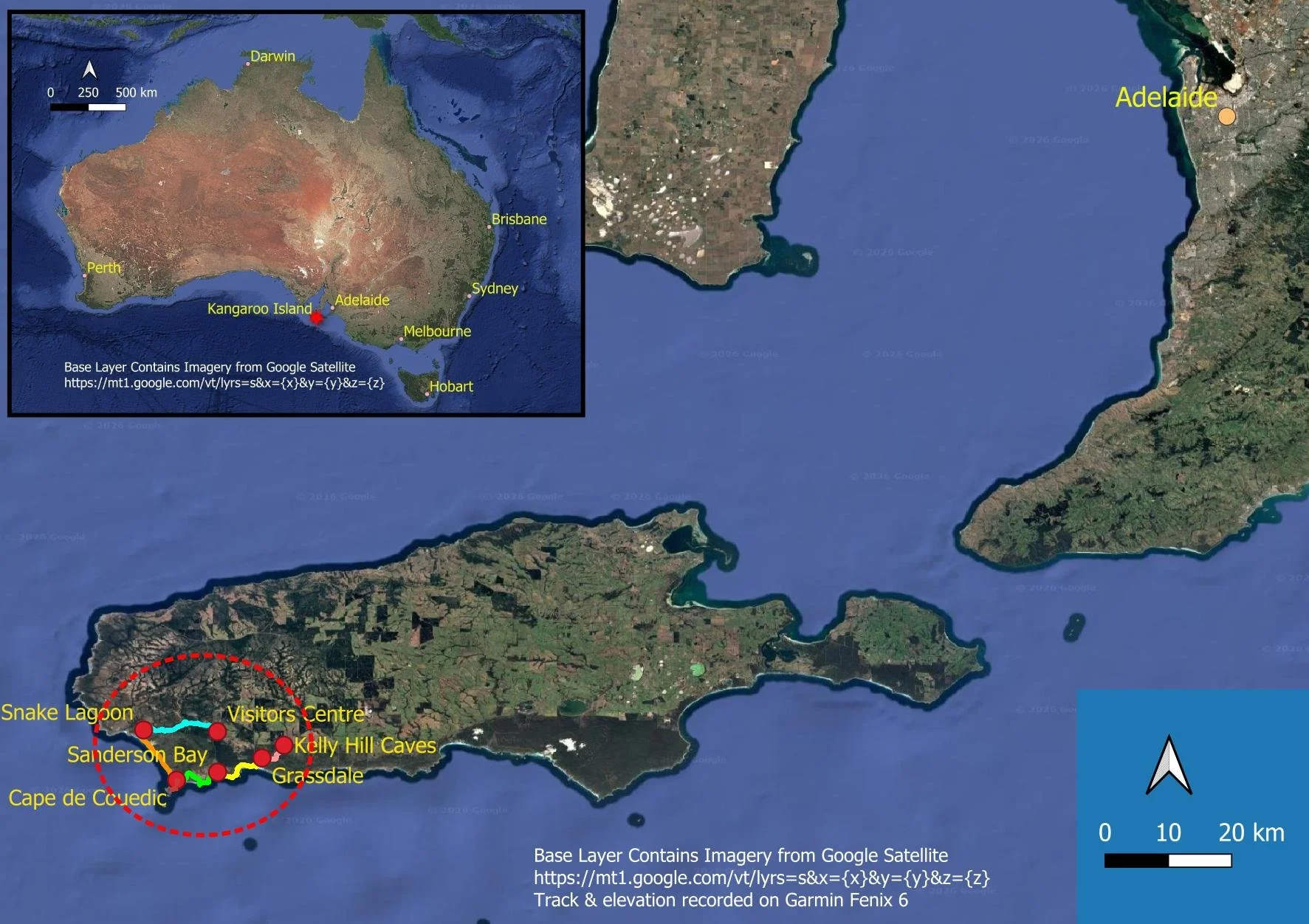
Hike Locality Map
Today’s Hike
Day 4 KIWT: Banksia to Tea Tree (Grassdale Section, 13.5km, 6.5 hrs*)
*NPWS suggested hike time; we took 6.5 hours including our side trip.
More spectacular cliffs today before you head inland into taller forest and sandier terrain, with boronias scenting the air and goannas lazing in sunny patches along the track. Cross the Southwest River on the fun little ferry and take the spur trail to Hansen Bay. Once you return, follow the trail beside the river all the way to Tea Tree. Nearby is the old homestead, with grazing Tammar wallabies and kangaroos.
Unusually, on this hike we have had similar time estimates to those given by National Parks; it’s possible that they have made their estimates more conservative due to the limestone, which slows all hikers!
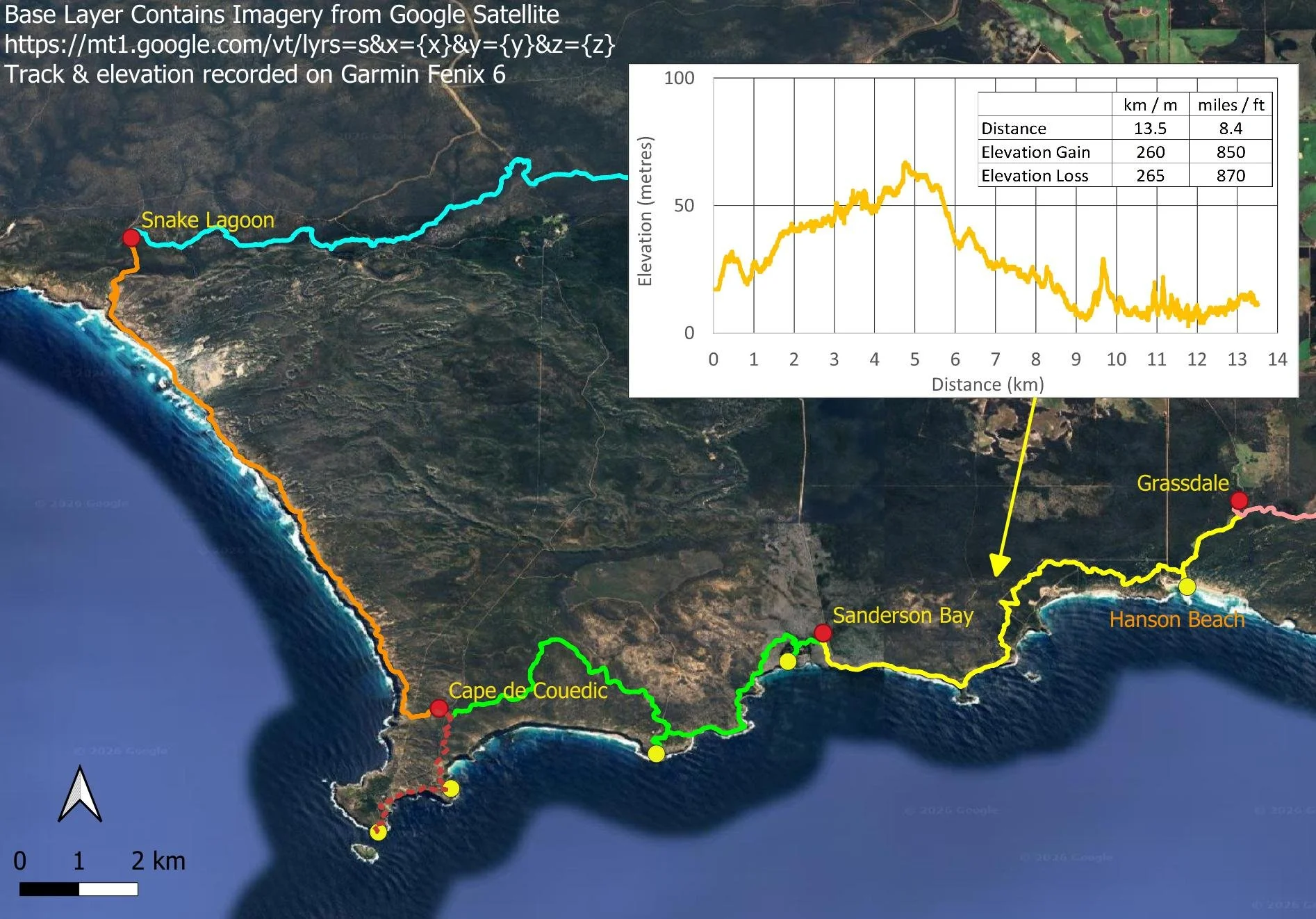
Day 4 hike details
Walk with Us:
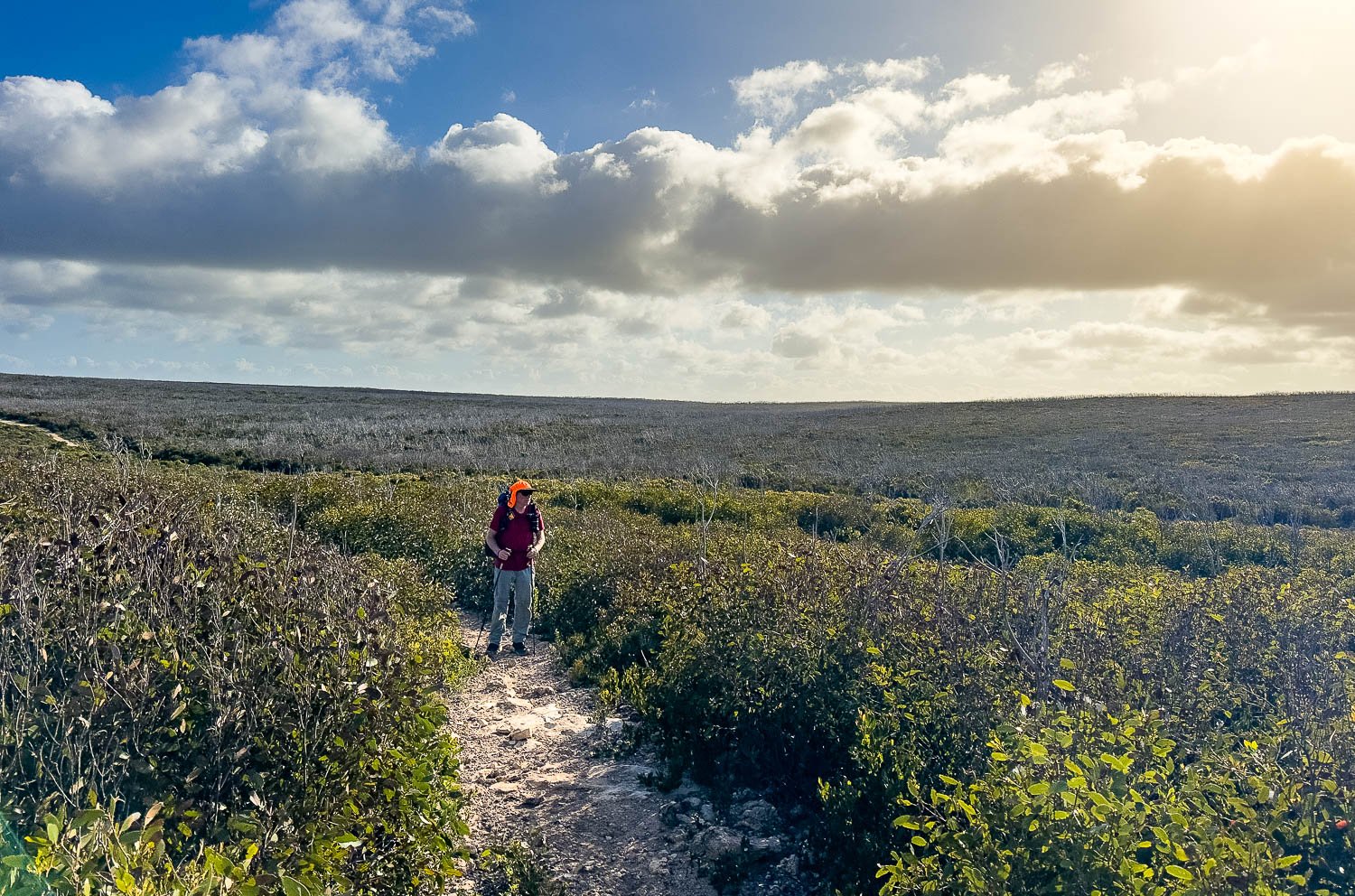
Leaving Banksia Hut. You can see the Sanderson Fire Access Track in the background, which is used by tour group companies shuttling clients hiking the KIWT as a series of day walks.
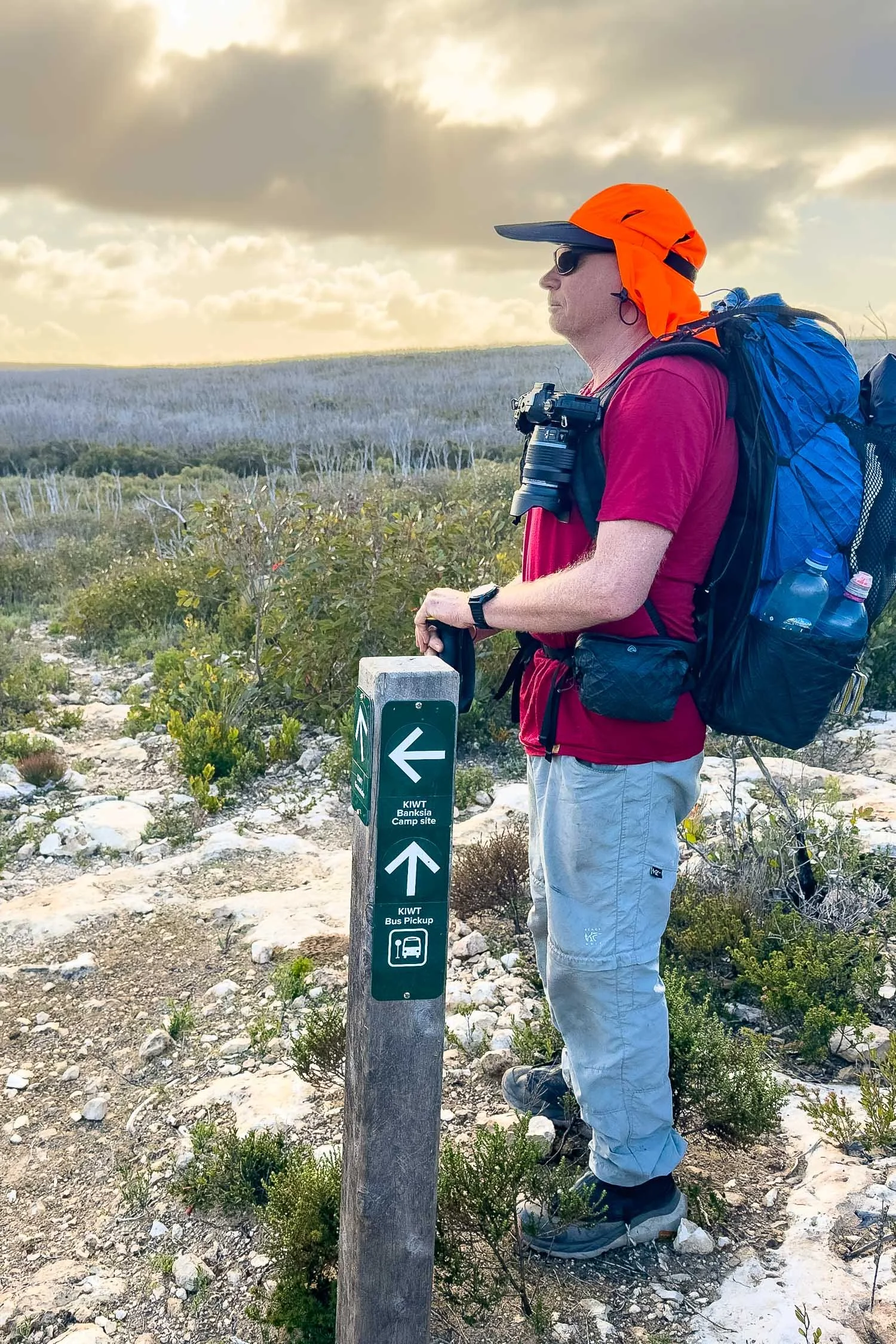
Geoff ‘waiting’ for the bus.
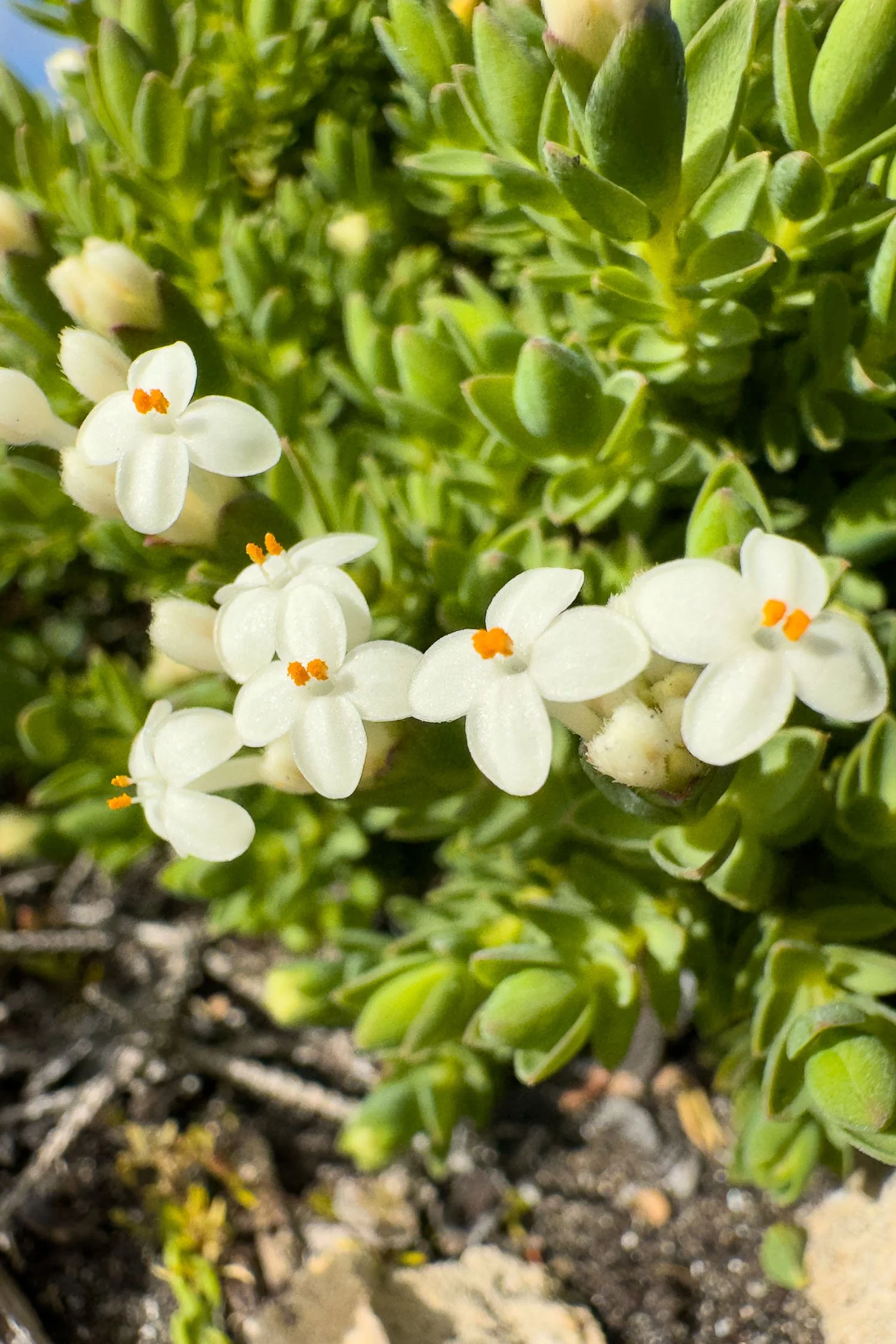
Smooth Riceflower, Pimelea glauca
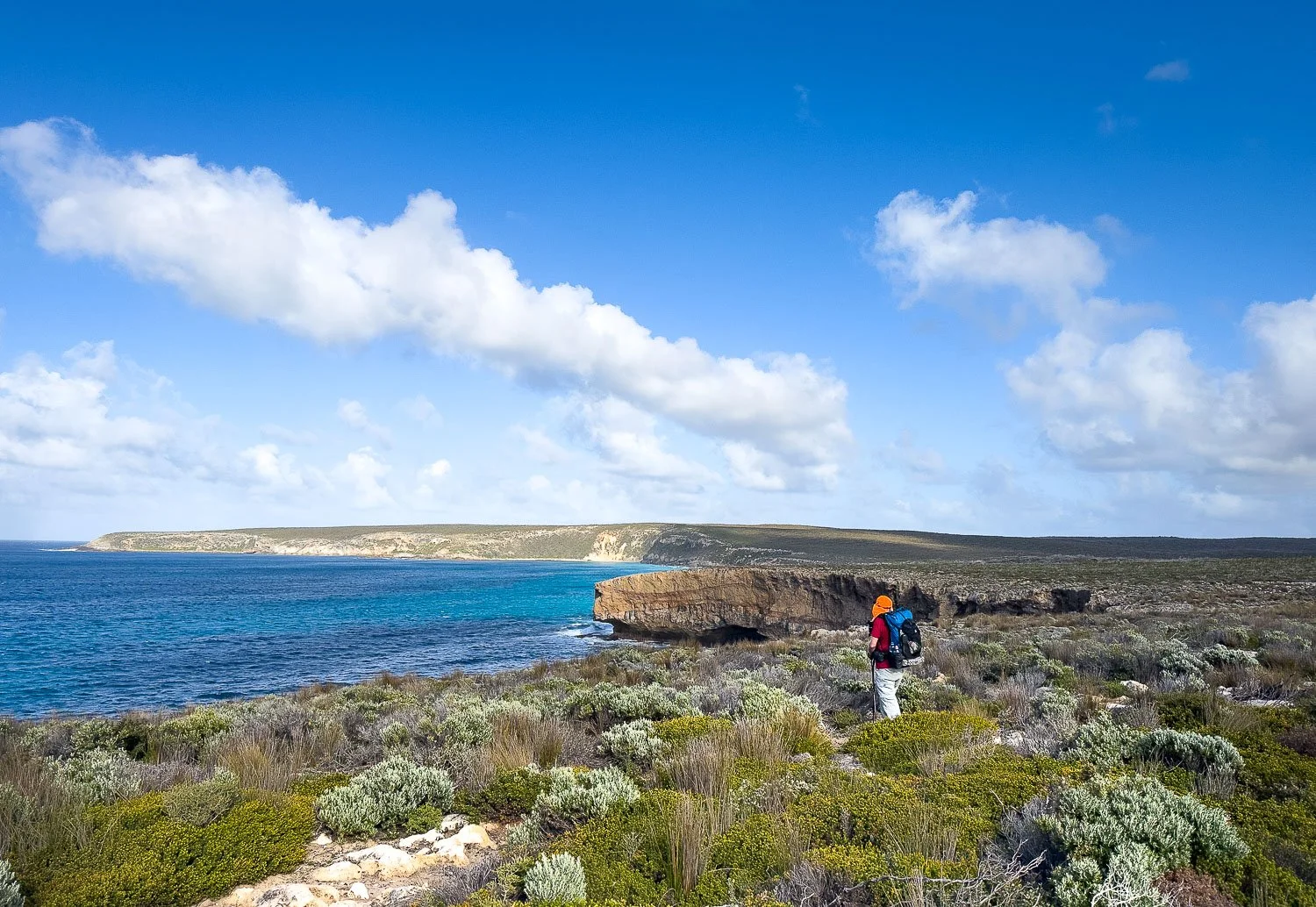
You’ll experience some of the most beautiful seascapes on the entire trail today.
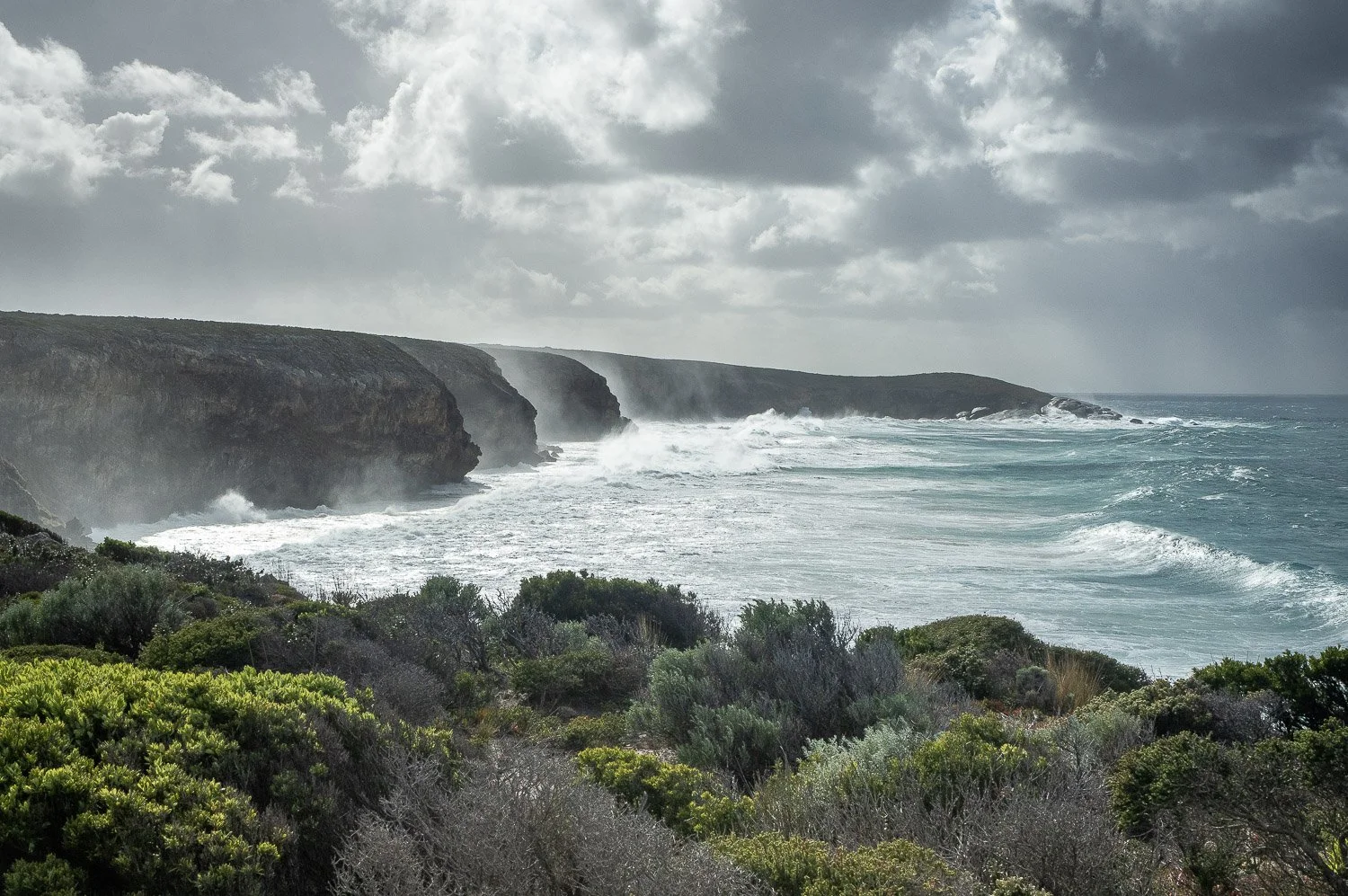
Spectacular wild skies and sea spray in 2017: you have to prepare for all kinds of weather on such an exposed trail.
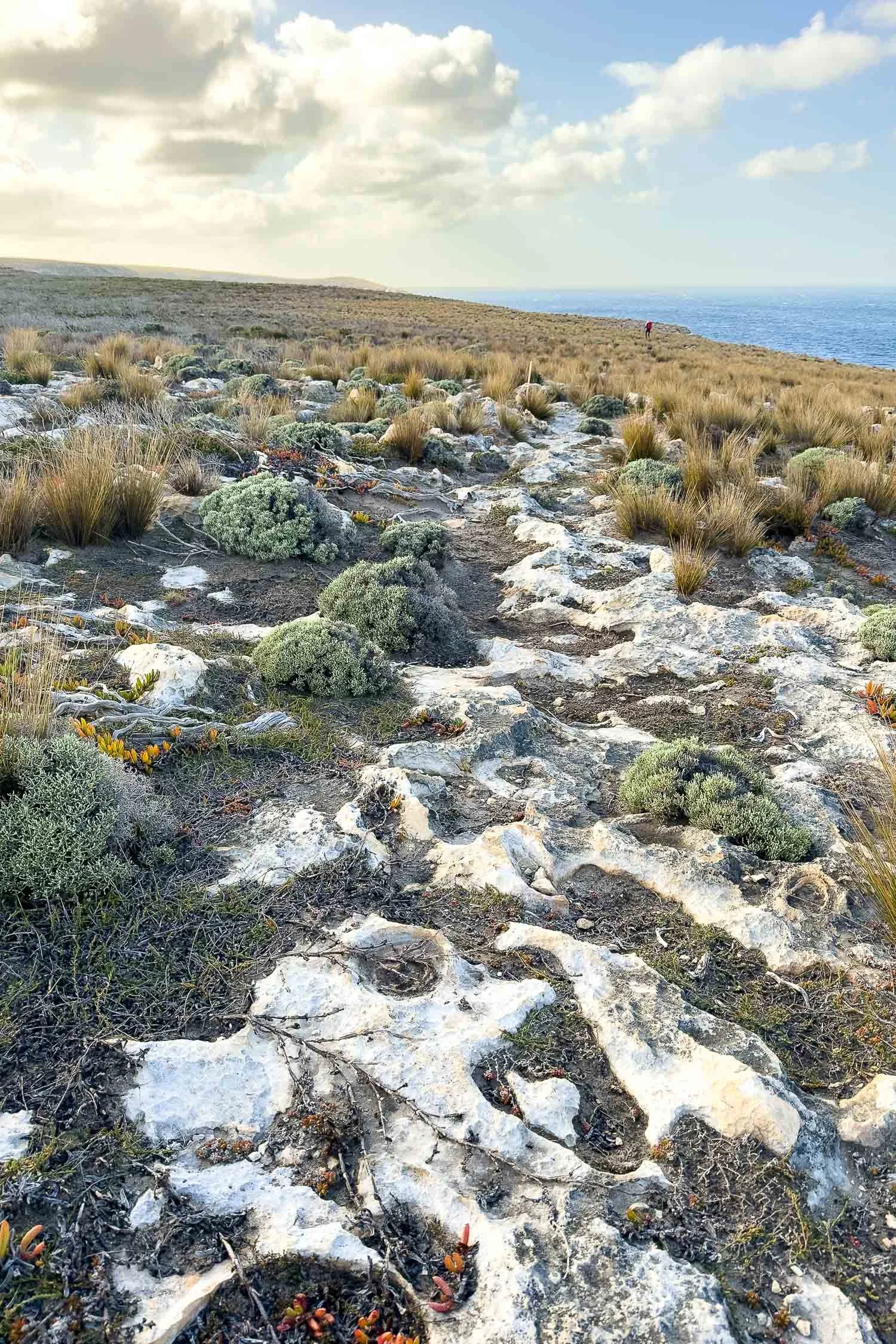
But not today, just more limestone!
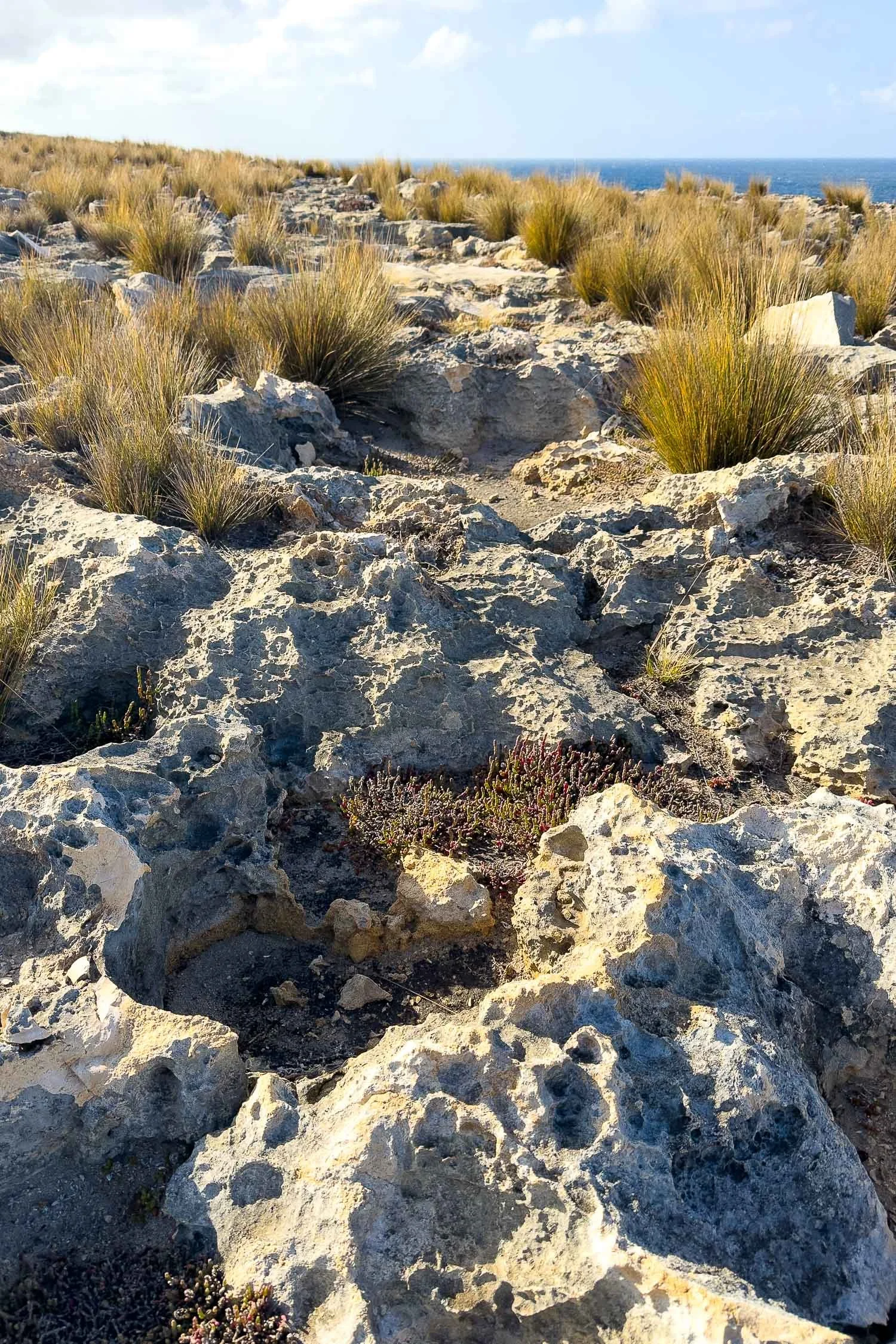
And more!
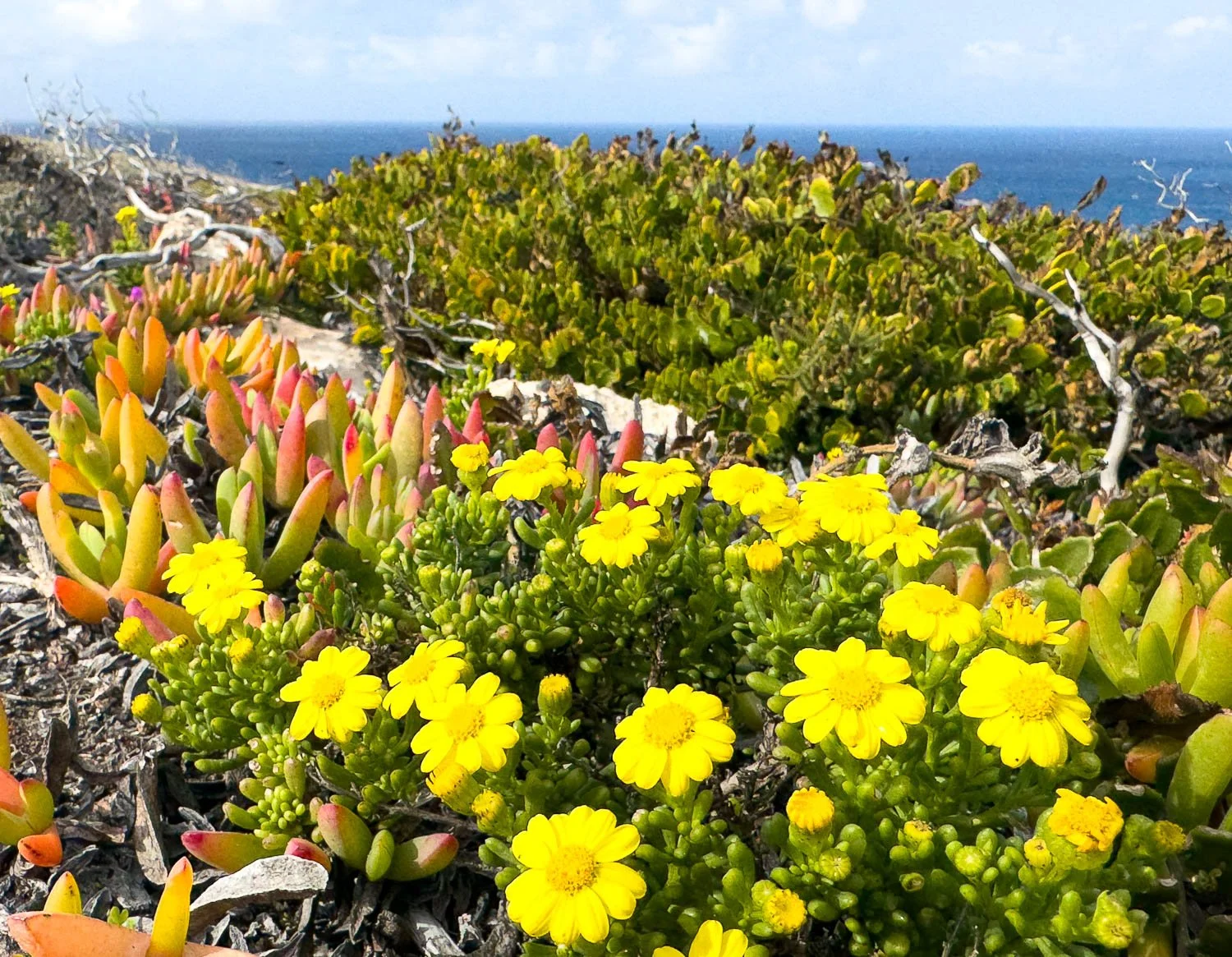
Variable Groundsel (Senecio spanomerus) is aptly named, its leaves varying from feathery and pinnate in sheltered locations, to fleshy as here on the exposed coastal limestone.
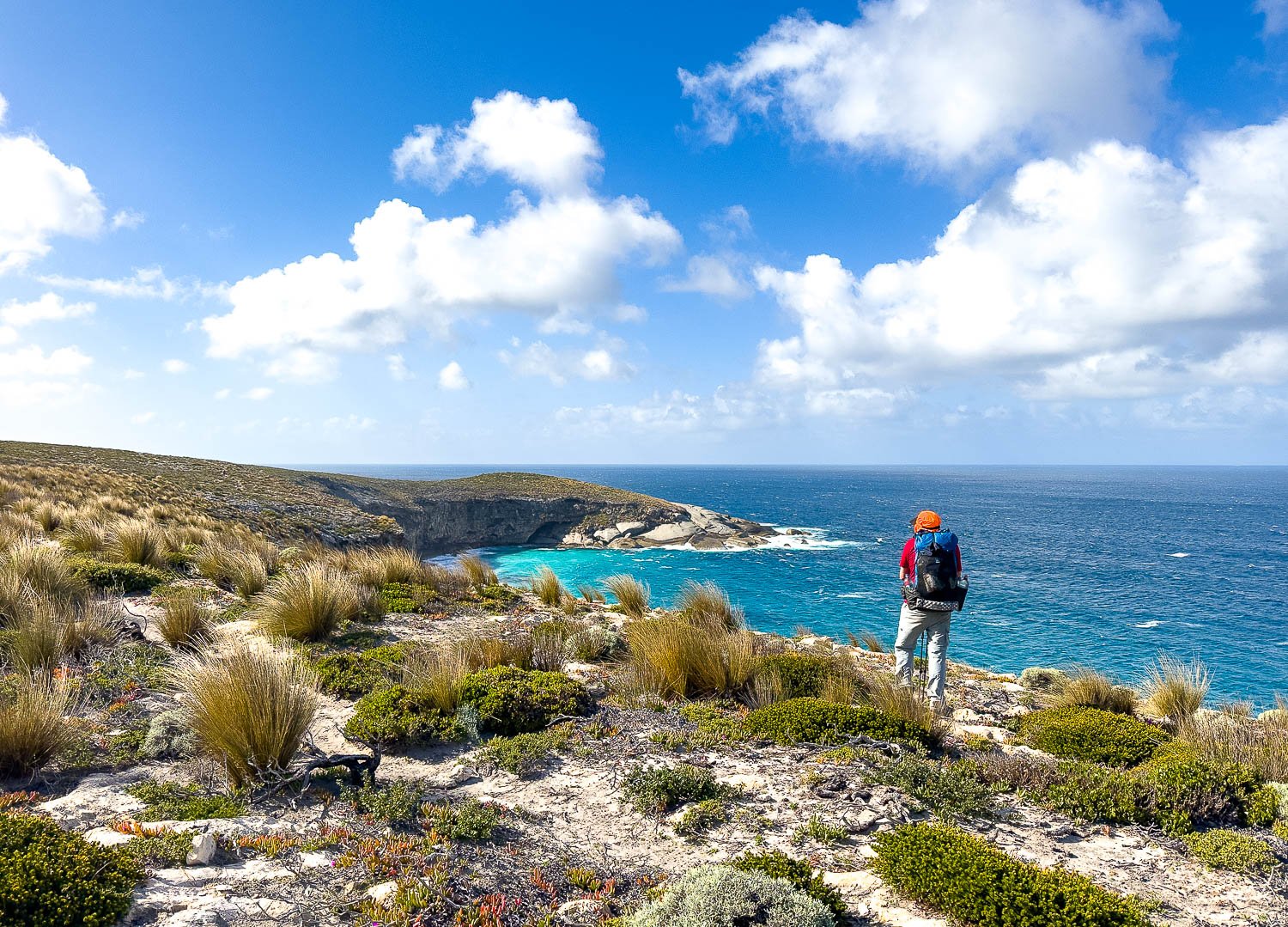
Exceptional views.
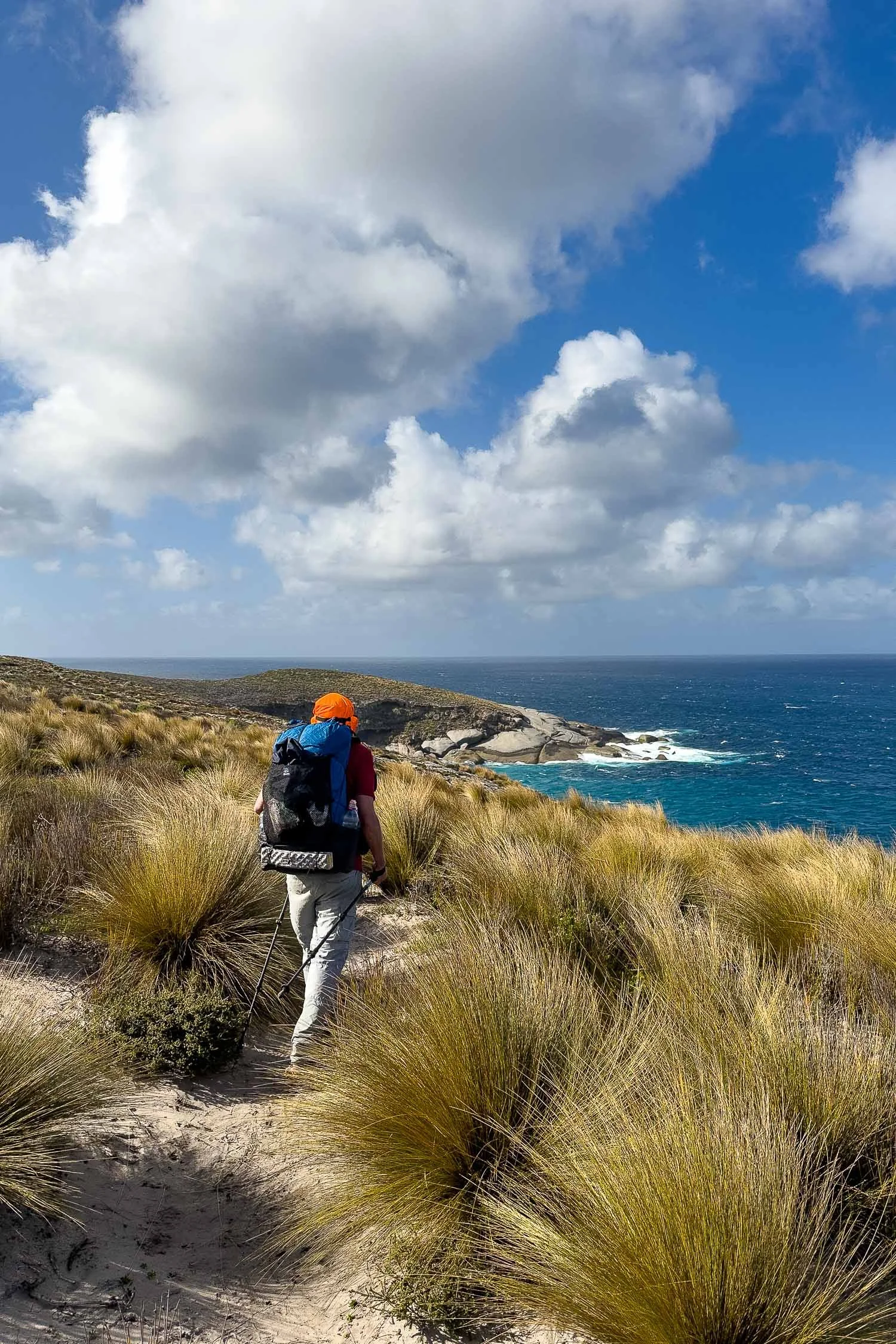
Through a grassy section towards the headland, which has a spur trail going to it.
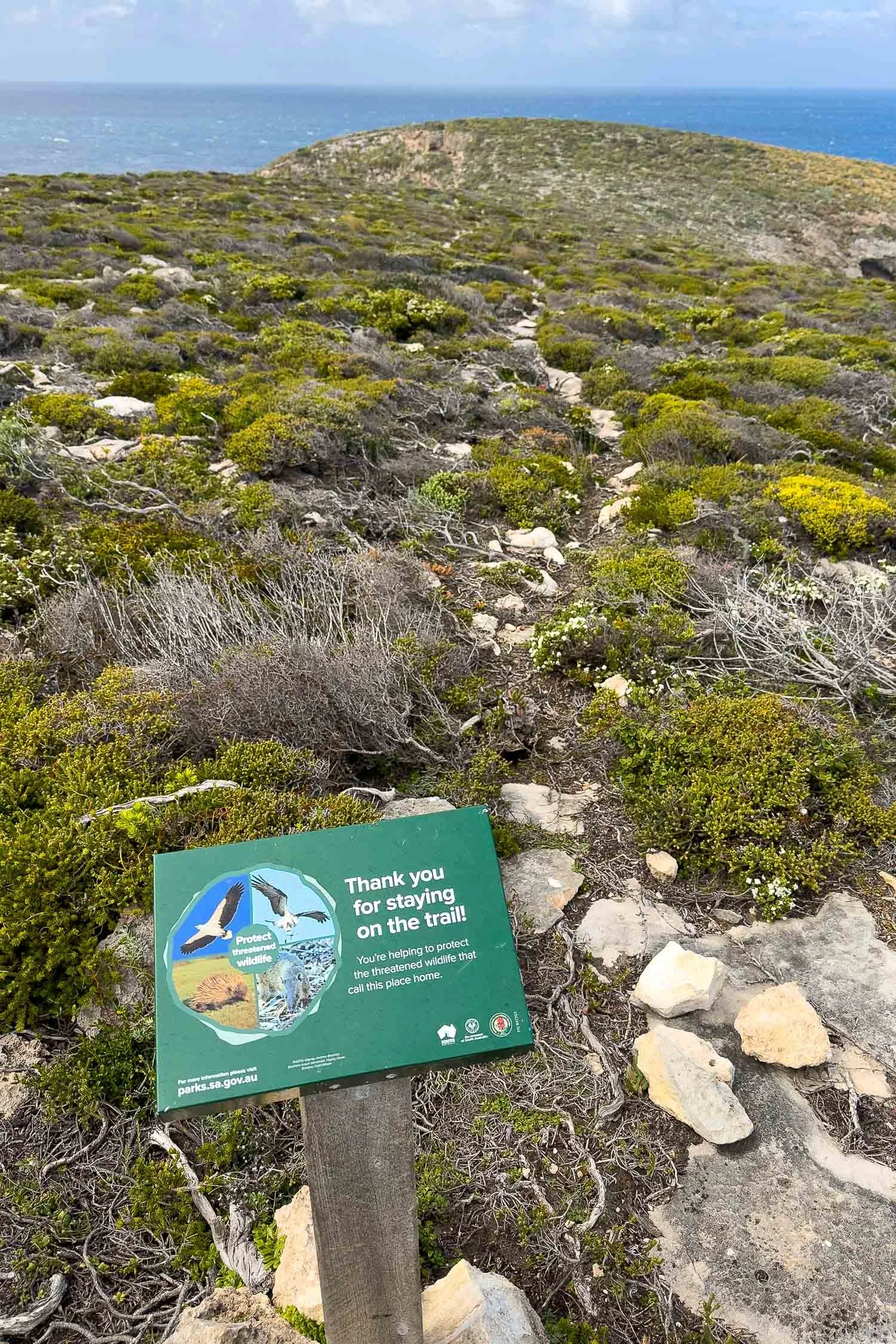
However, it’s not an official trail, and rocks were lined across it, so please respect signage.
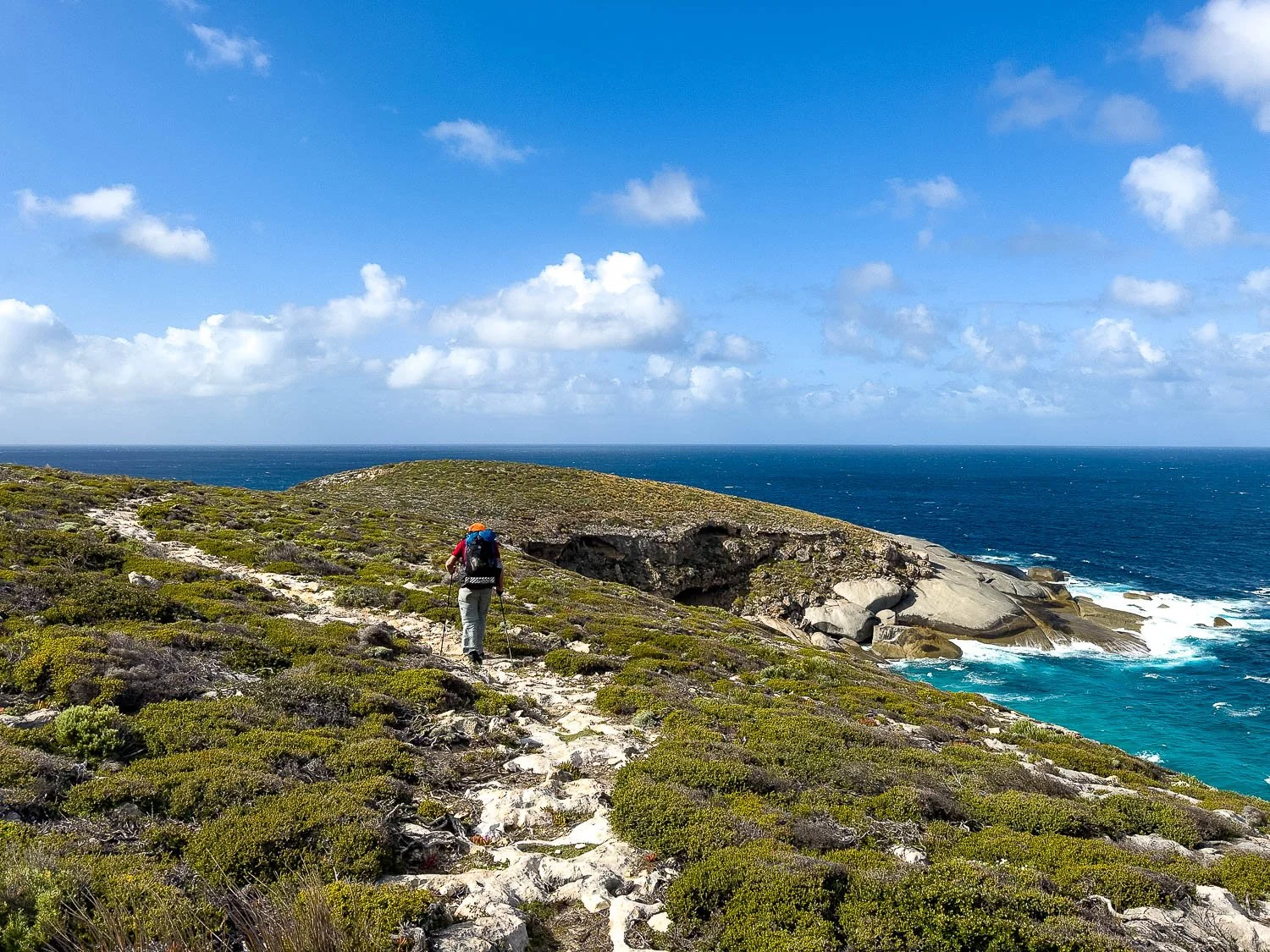
You get an excellent view from the official trail in any case. It’s easy to disregard signage, because we see only ourselves on trail, or perhaps just the few who hike on the same day, but multiply the impact by hundreds and even thousands of hikers, and you realise that disturbing wildlife every day throughout their breeding seasons has significant impact.
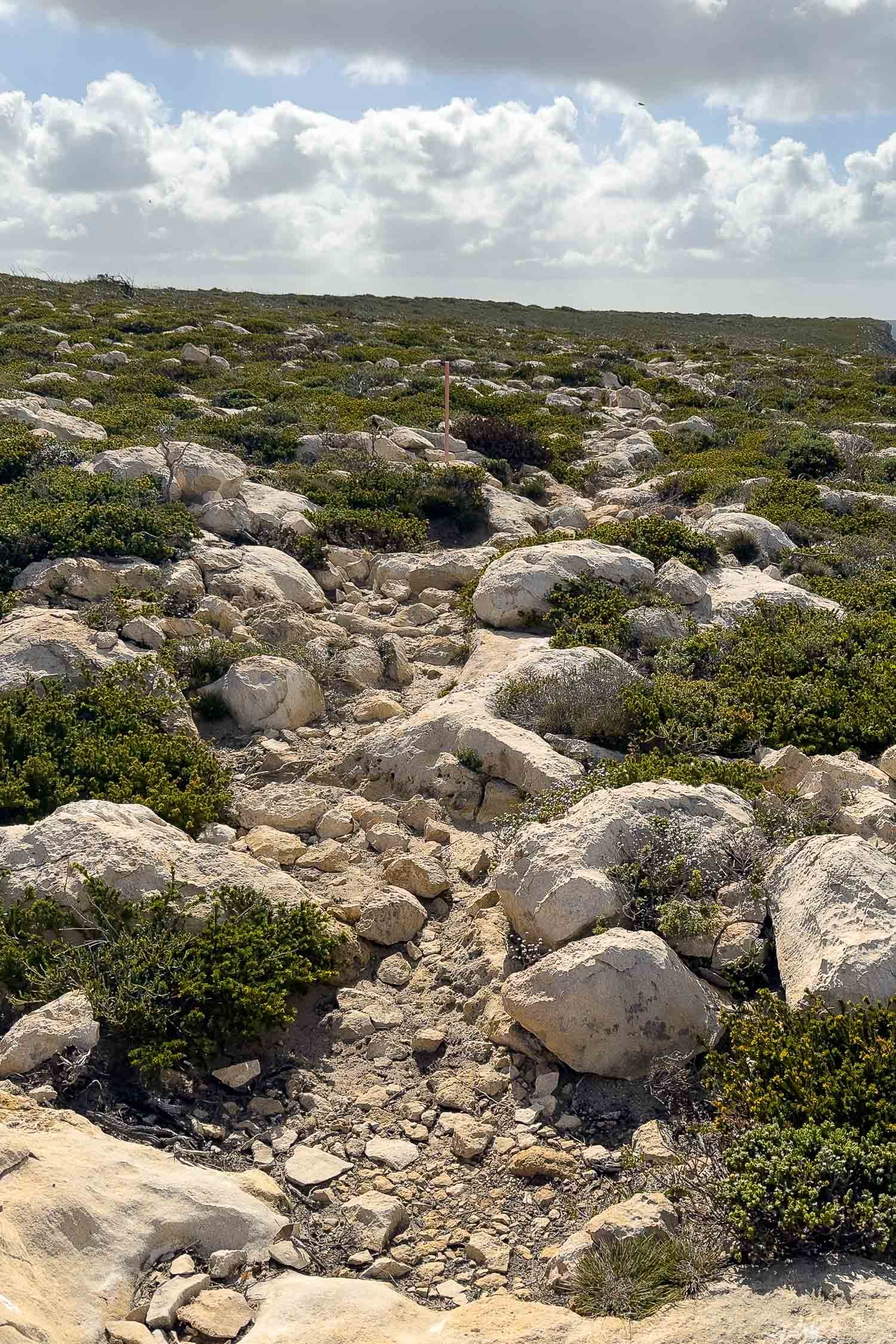
I must confess I said a bad word when I saw yet more limestone. Will it ever end?
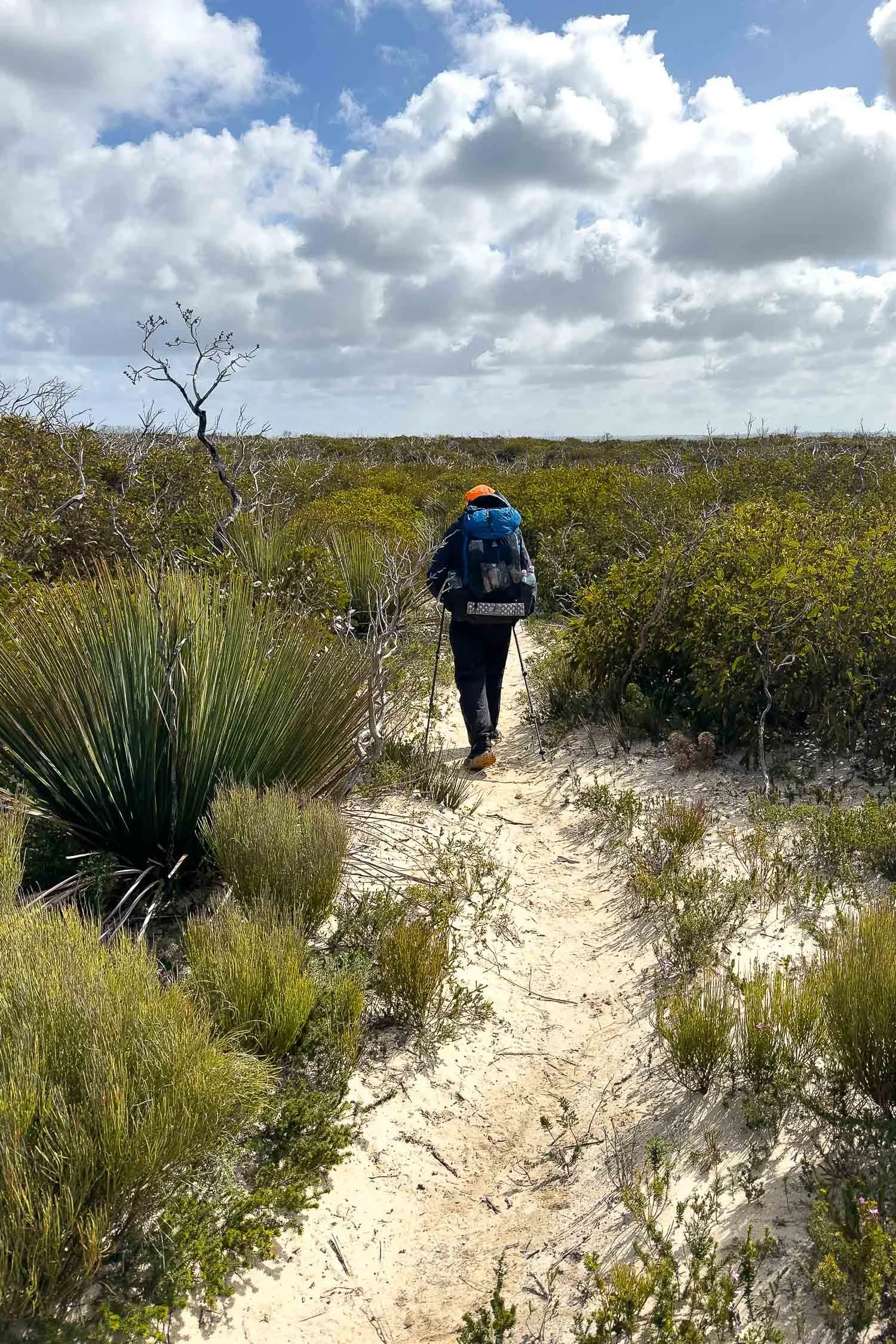
Hooray!
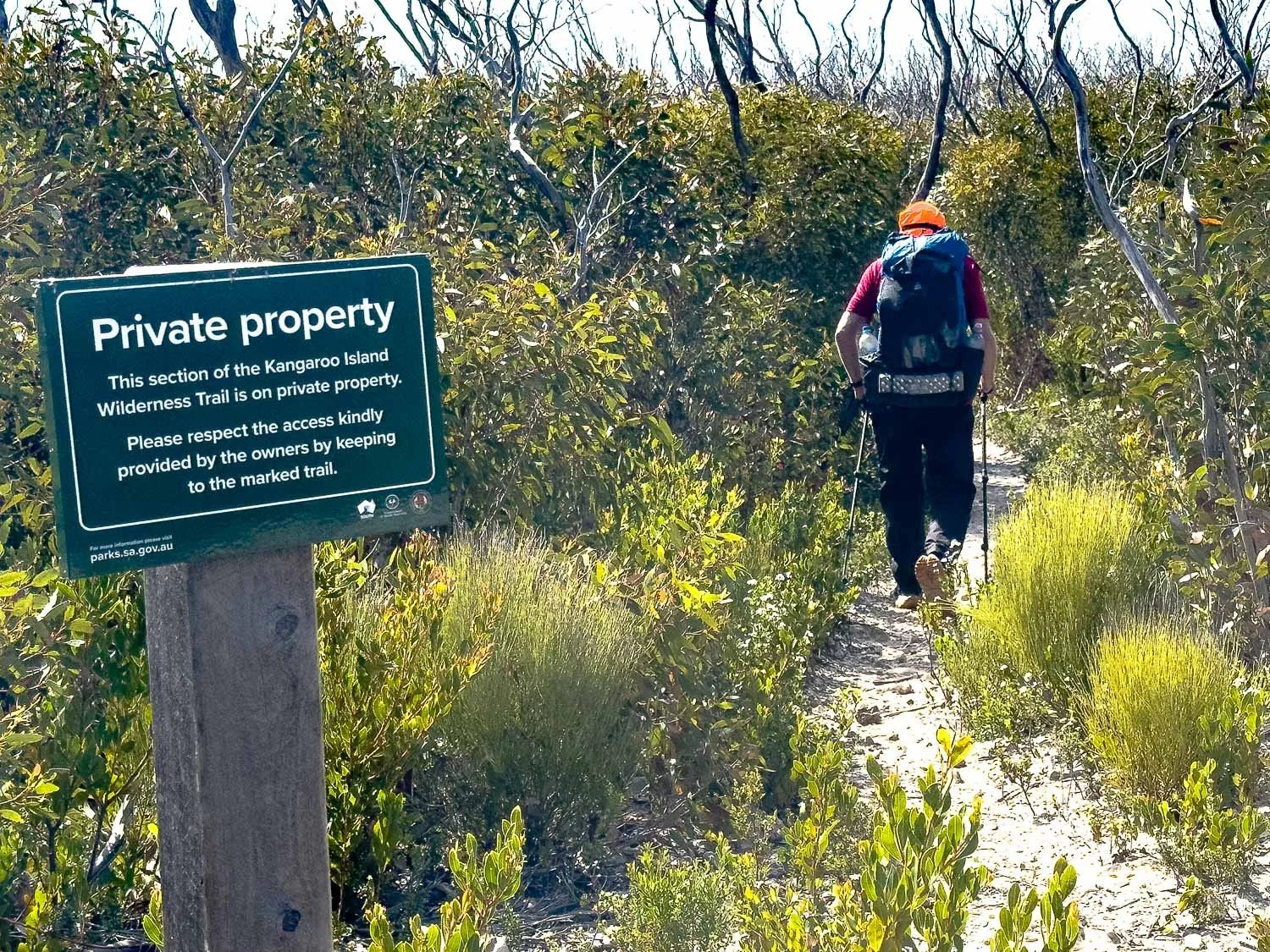
You enter the grounds of the Southern Ocean Lodge which, during the 2019 bushfires, was completely destroyed other than staff quarters, where someone turned on the bushfire sprinkler system (the same could not be said for the main building, whose system had insufficient water in reserve).
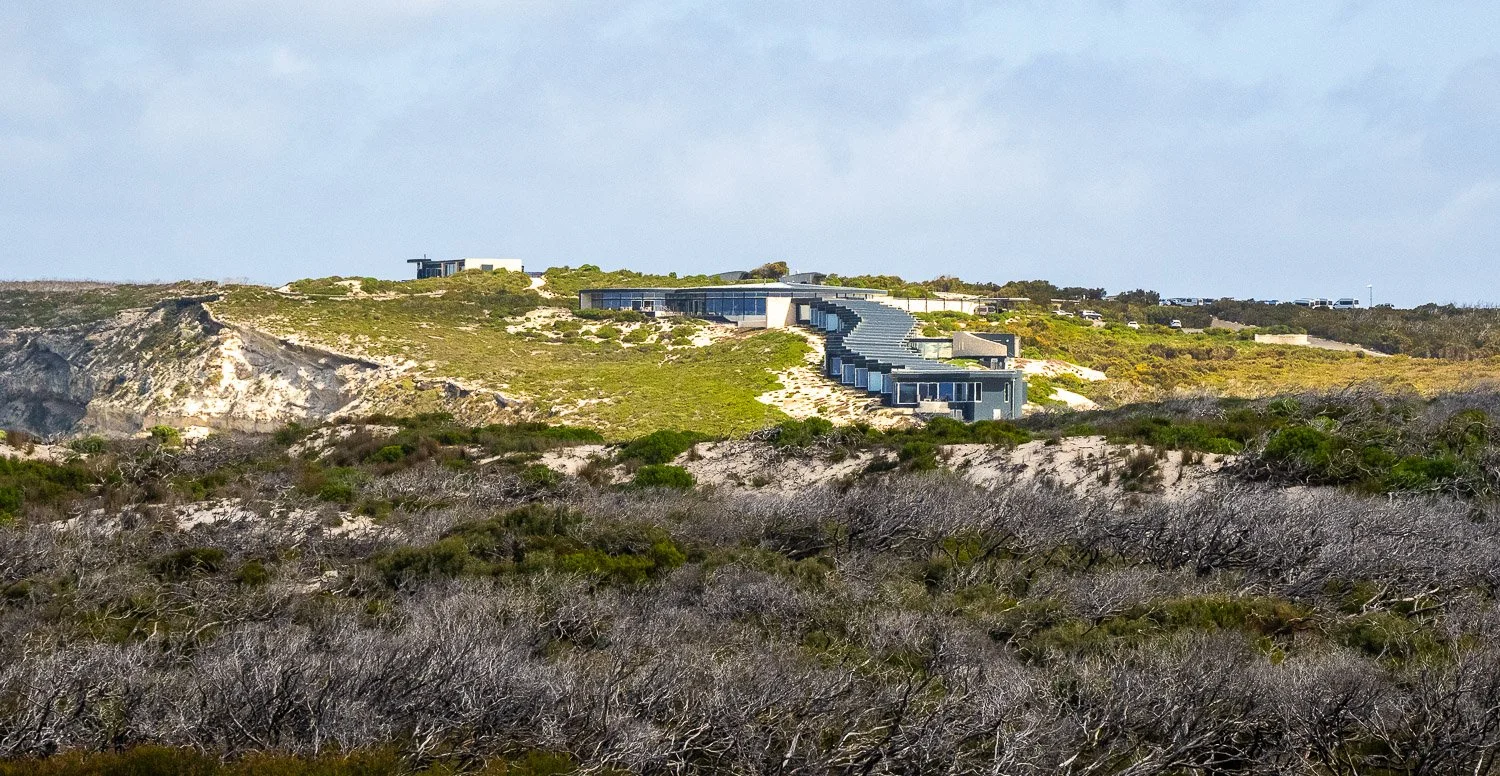
We often look for alternative accommodation on trails for a bit of a treat, but don’t bother for the newly rebuilt Southern Lodge. Unless, that is, you have a lazy AUD3600-6000 to spare per night, with a minimum 2 night stay!!!
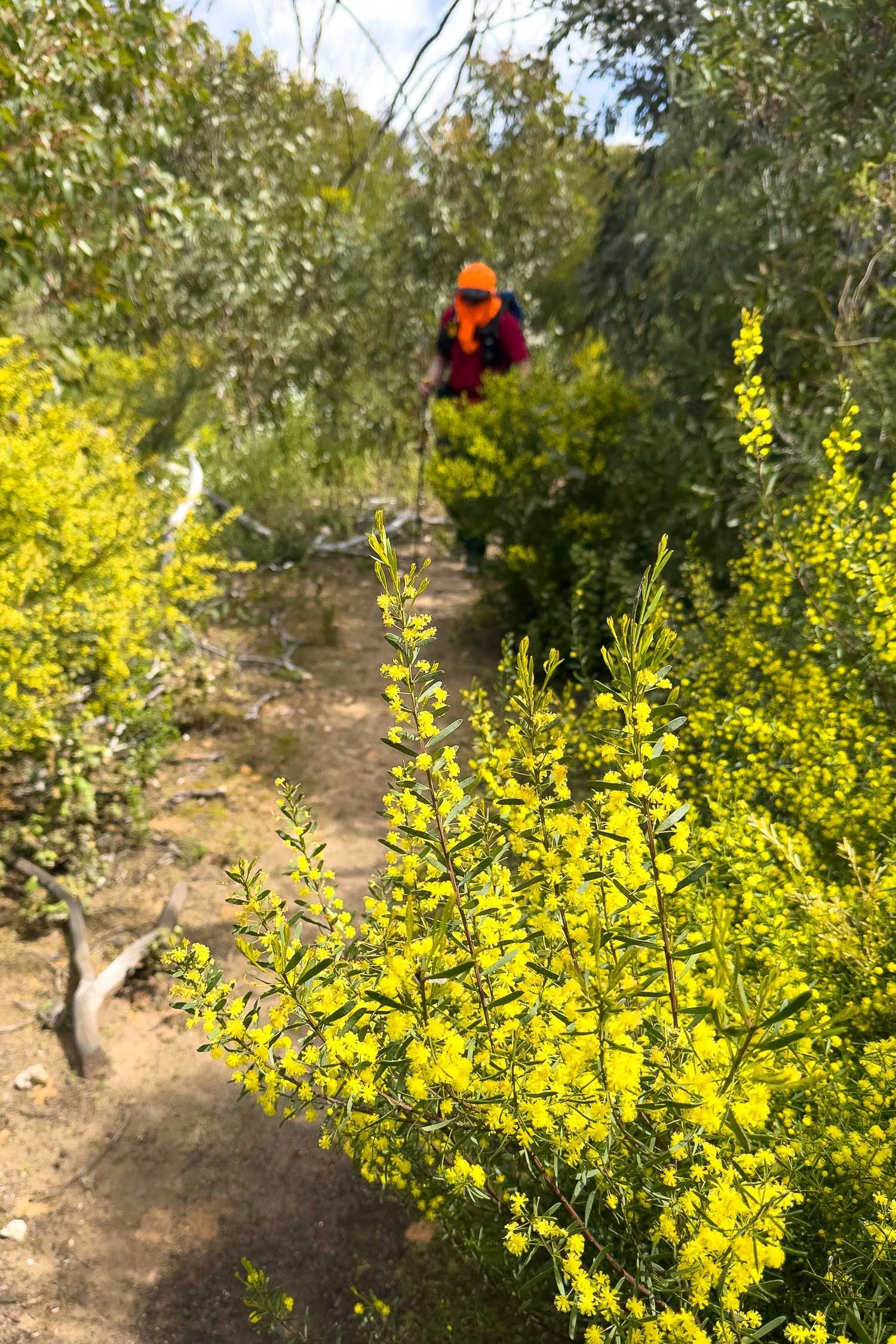
Brilliant Acacia and smooth trail.
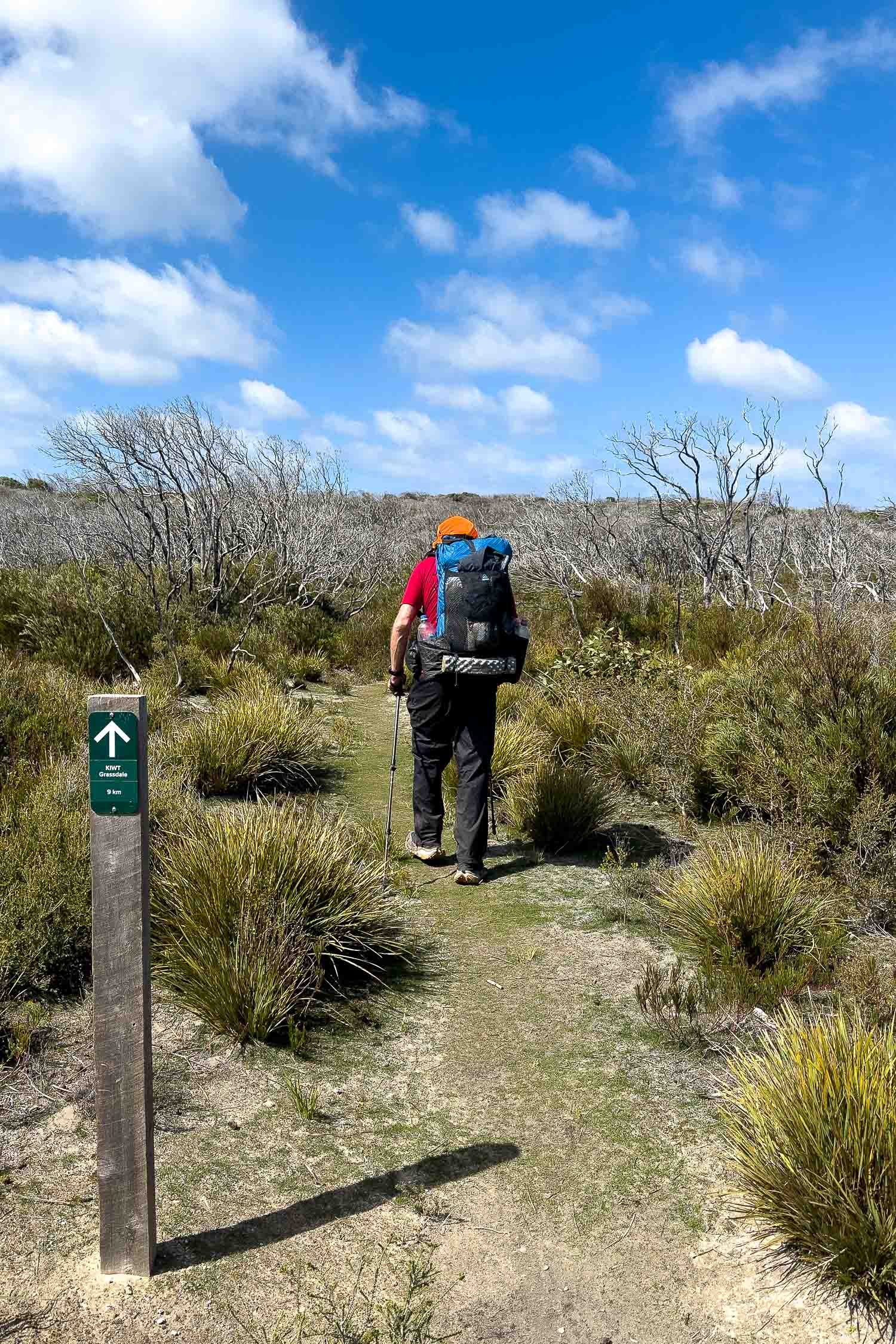
Delightful walking.
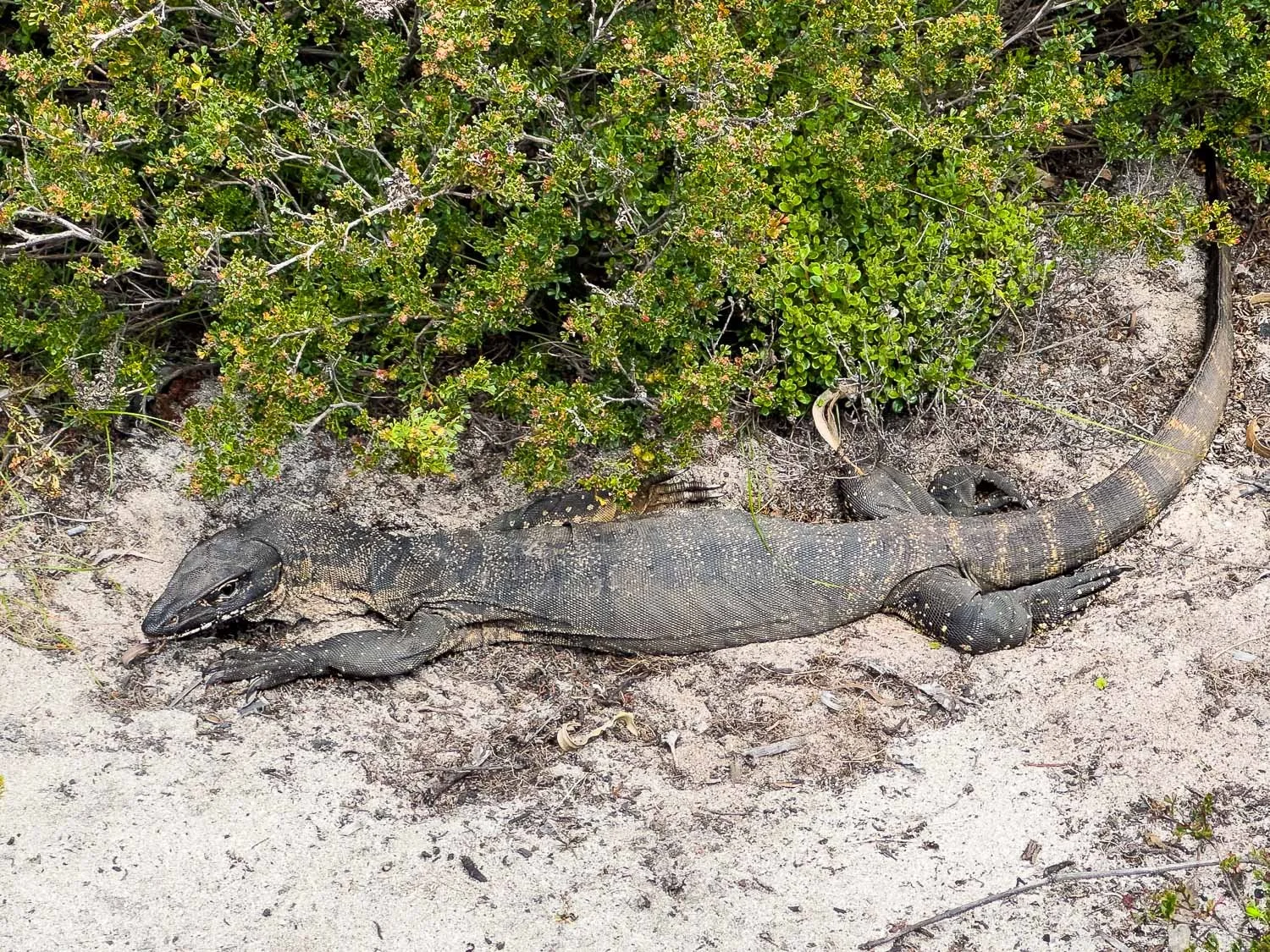
Rosenberg’s Goannas are accustomed to hikers and continue sunning themselves as you pass. They are the apex ground predator on the island so not much fazes them! They’re big, but completely harmless to us humans.
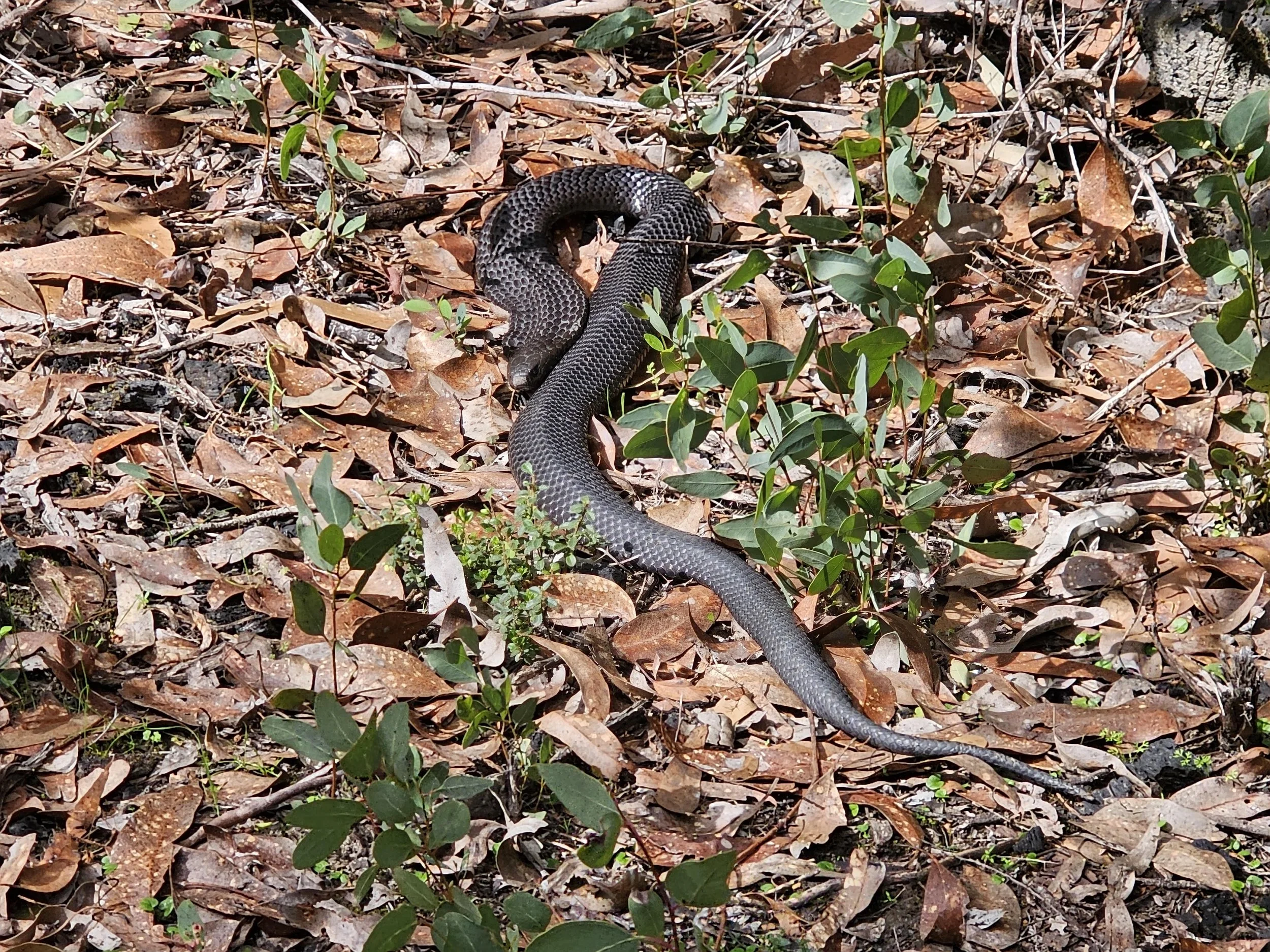
The people hiking at the same time as us were lucky enough to see this Black Tiger Snake (Notechis scutatus), not quite as harmless! They flatten to absorb more sun, but this one has probably done so to express its disapproval. (Image Credit: Robyn Liddle).
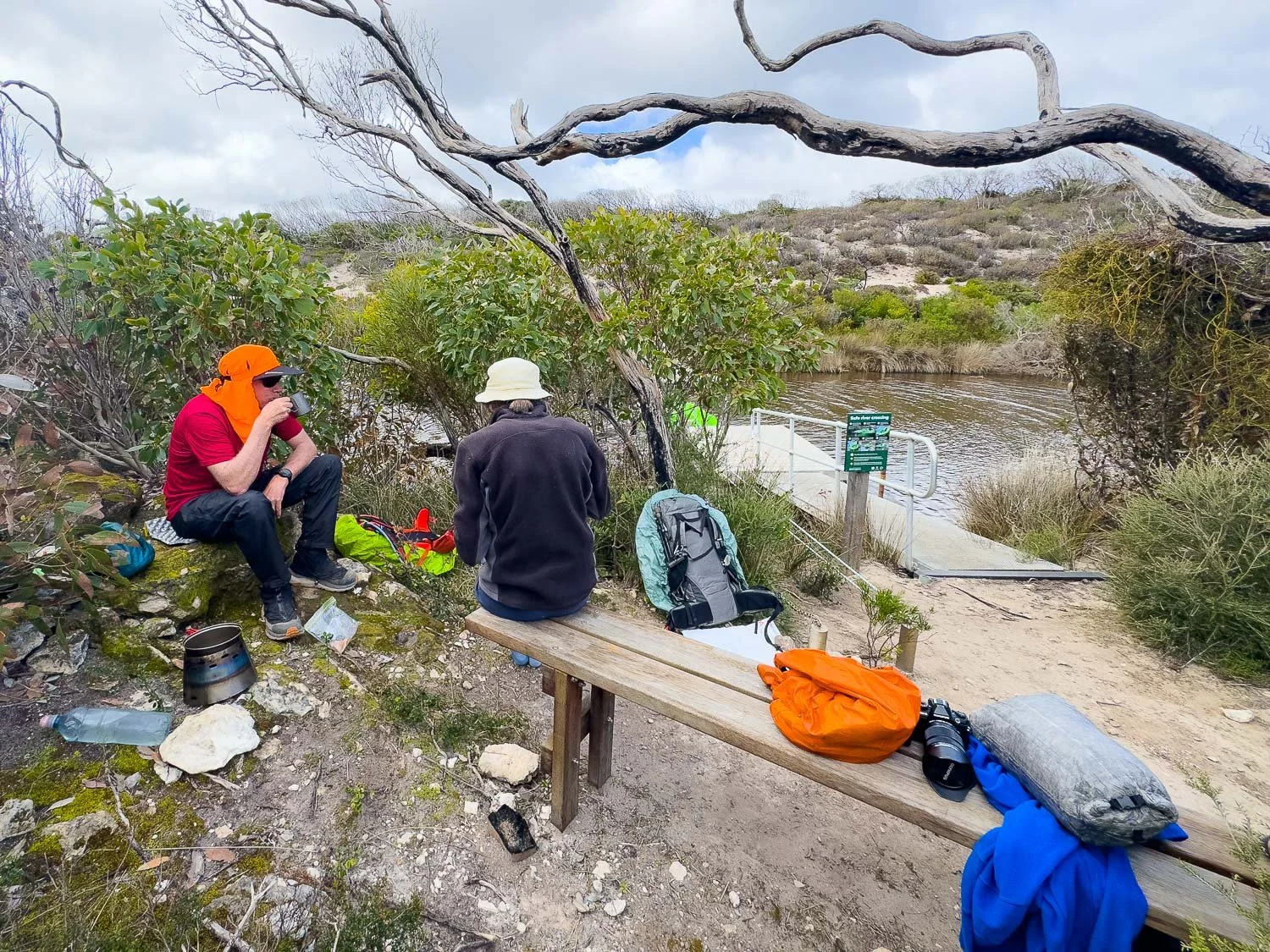
A home-made instant hot cup-a-soup lunch at the ferry crossing.
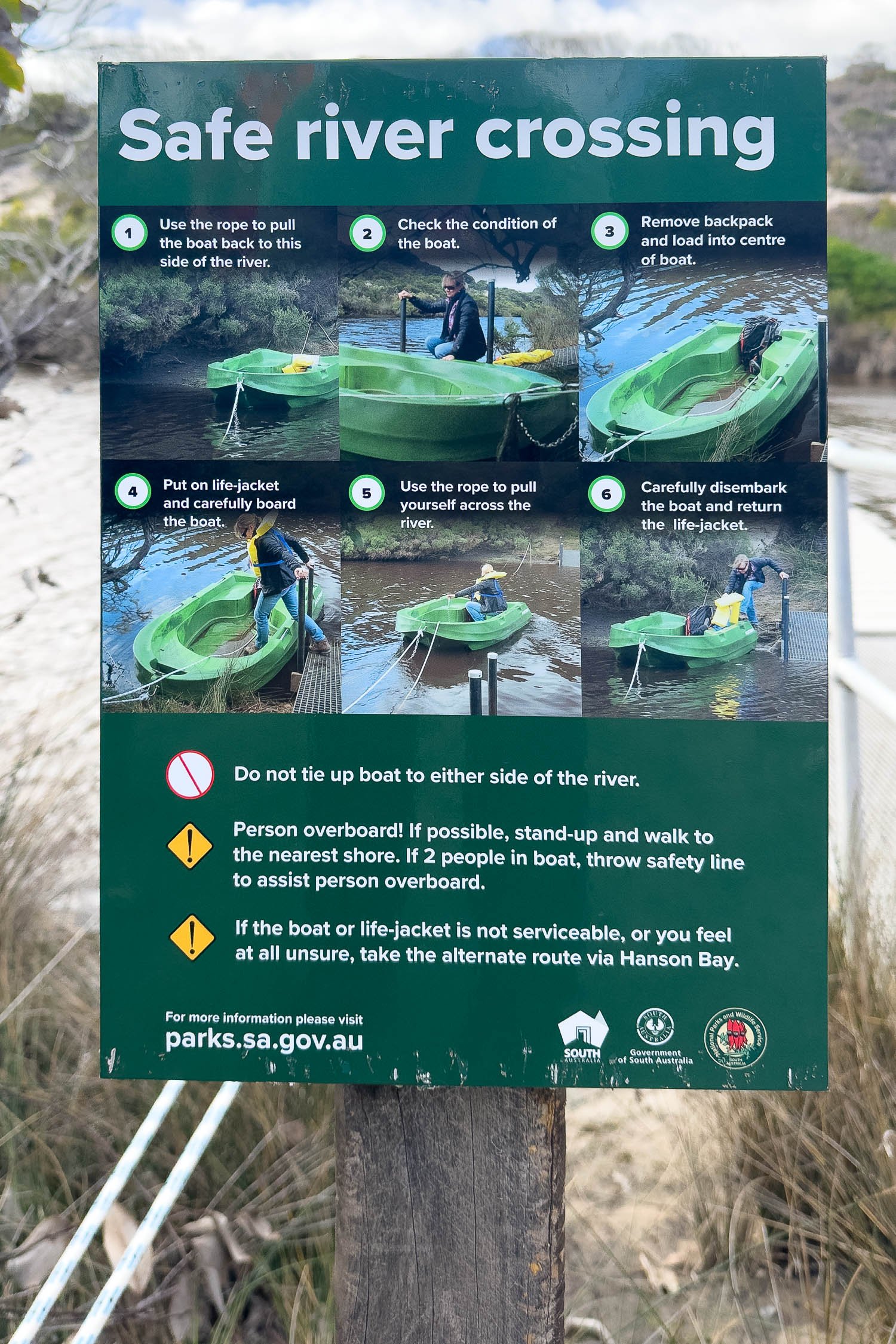
When we crossed in 2017, there were no floating piers and it looked like the images above. The advice to stand up if you fall overboard suggests that the water is shallow for much of the year at least!
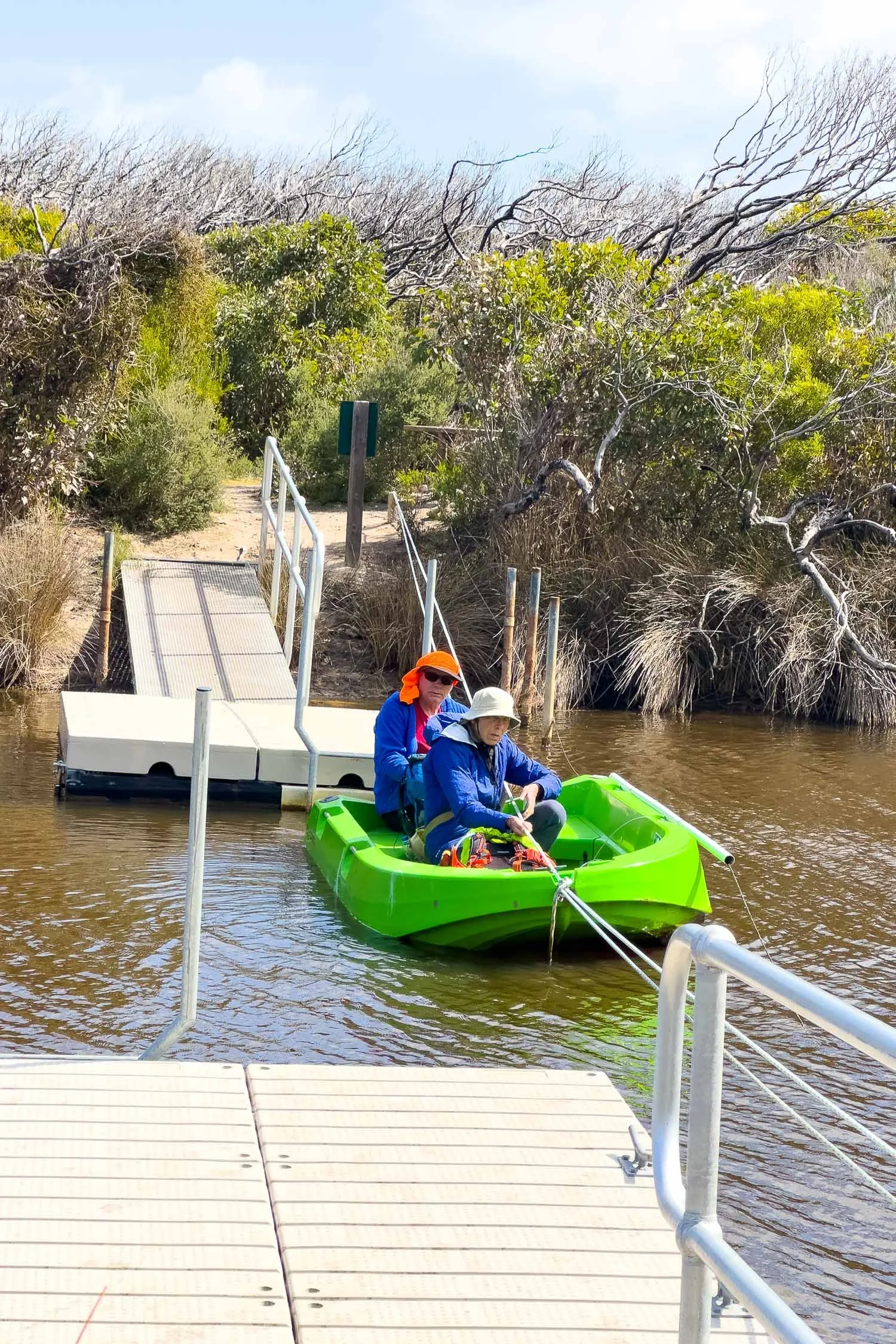
The new piers mean you can cross without getting your feet wet. It’s now ridiculously narrow and a bit of fun, much less daunting and no need for special strategies as on our more exciting crossings on the South Coast Track and the Bibbulmun!
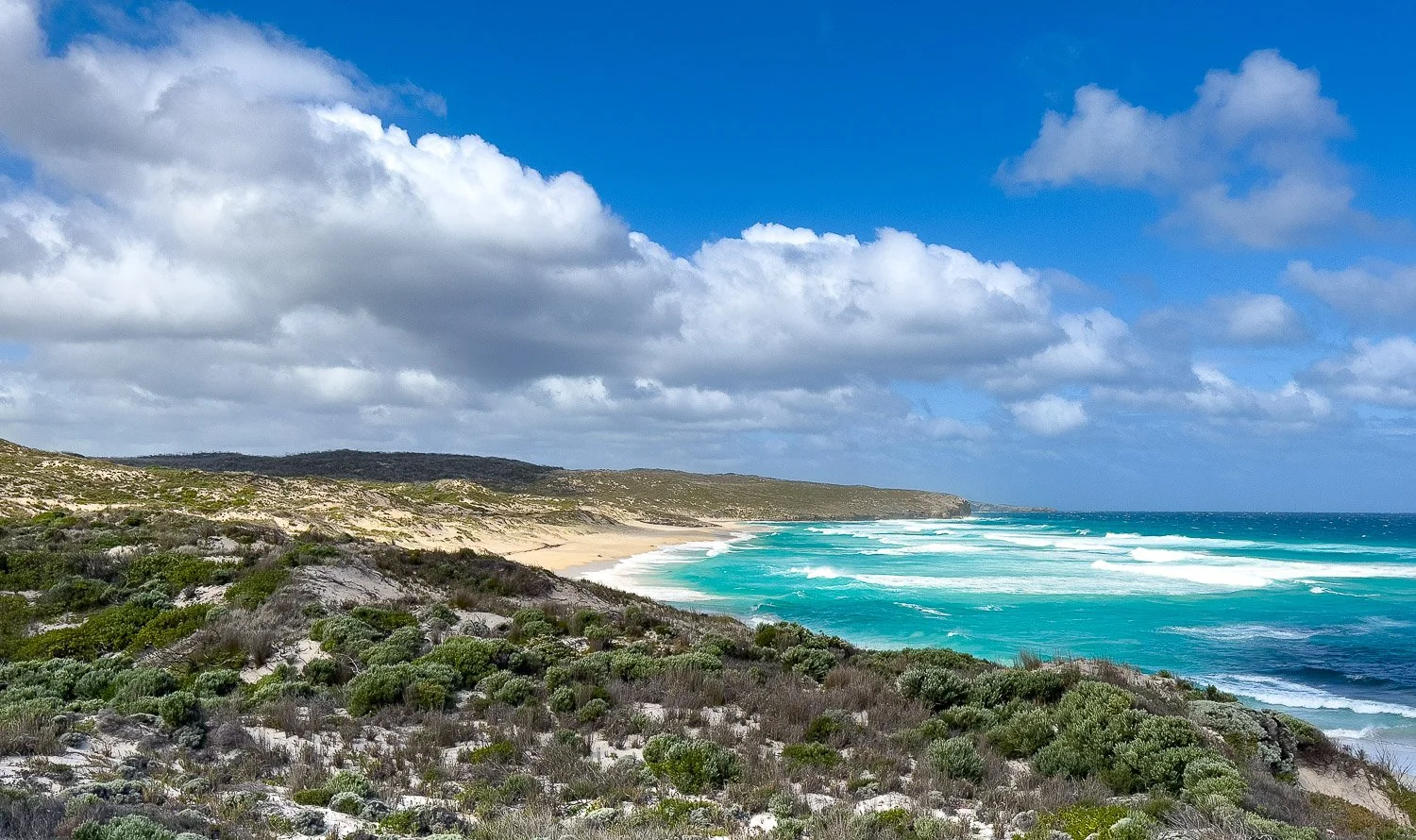
The spur trail takes you to beautiful Hansen Bay.
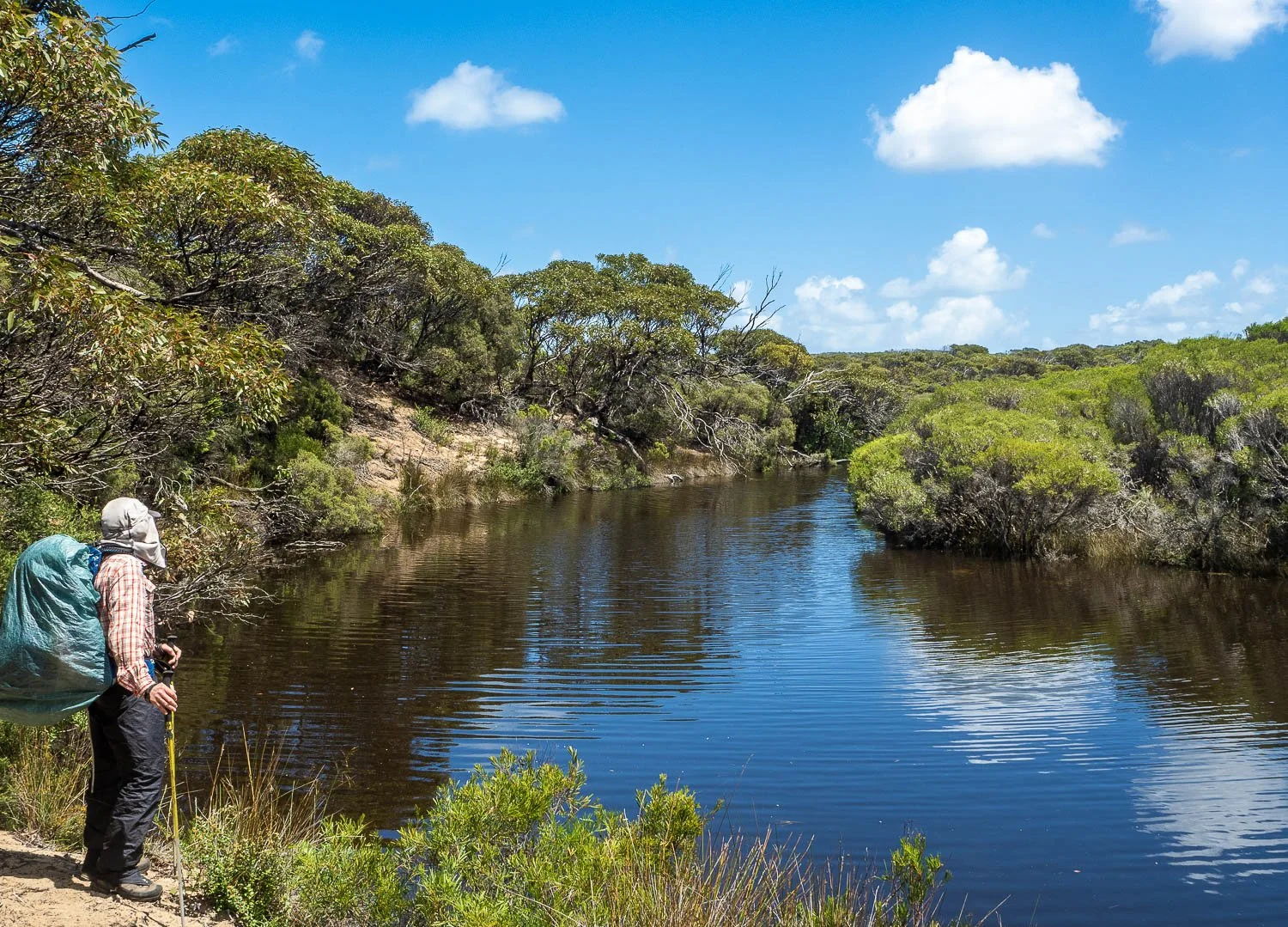
Next, follow the Southwest River inland — here before the fire — into…
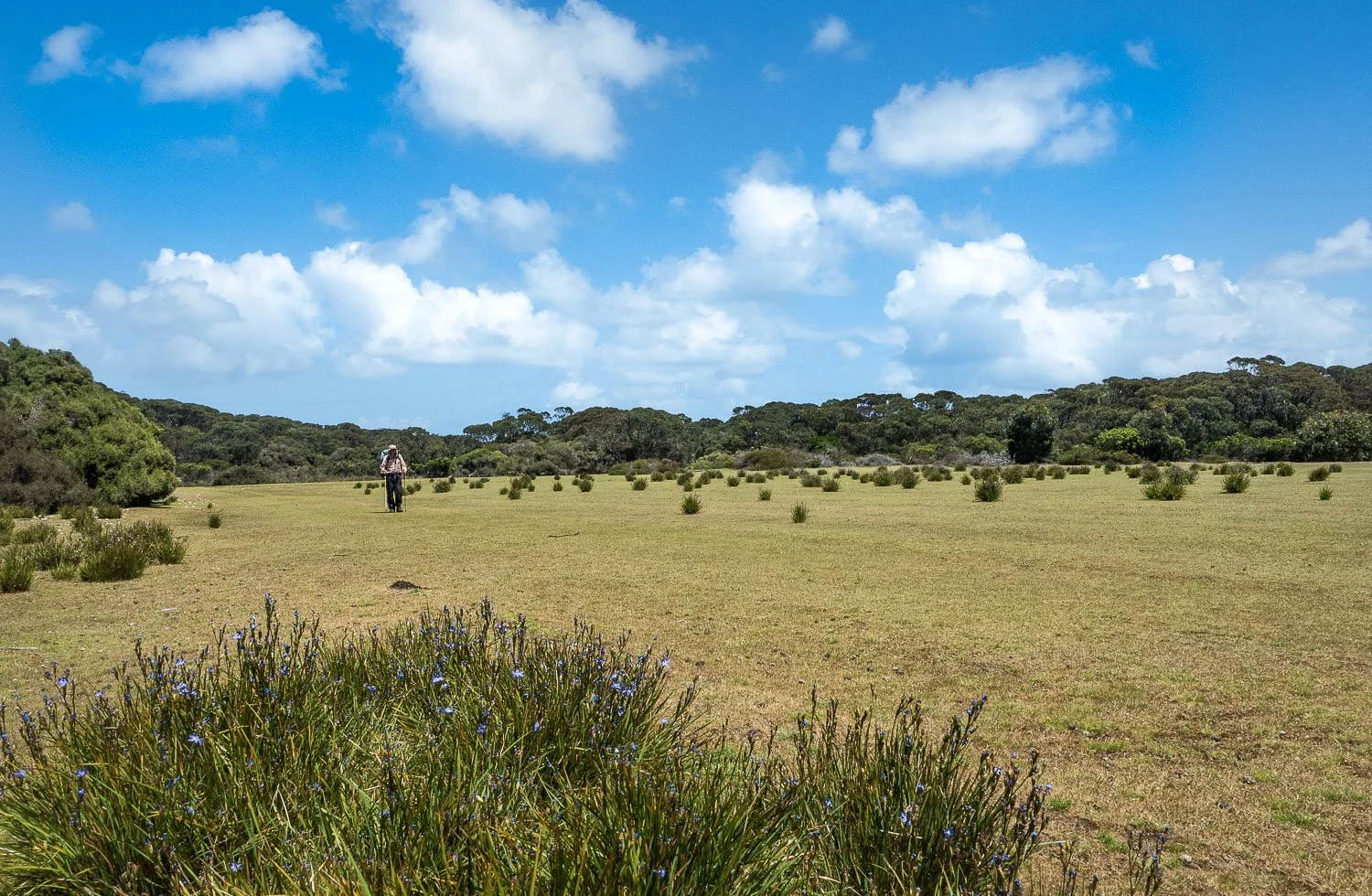
…the Grassdale area. This was once a grazing property, with the old homestead a short walk from tonight’s hut.
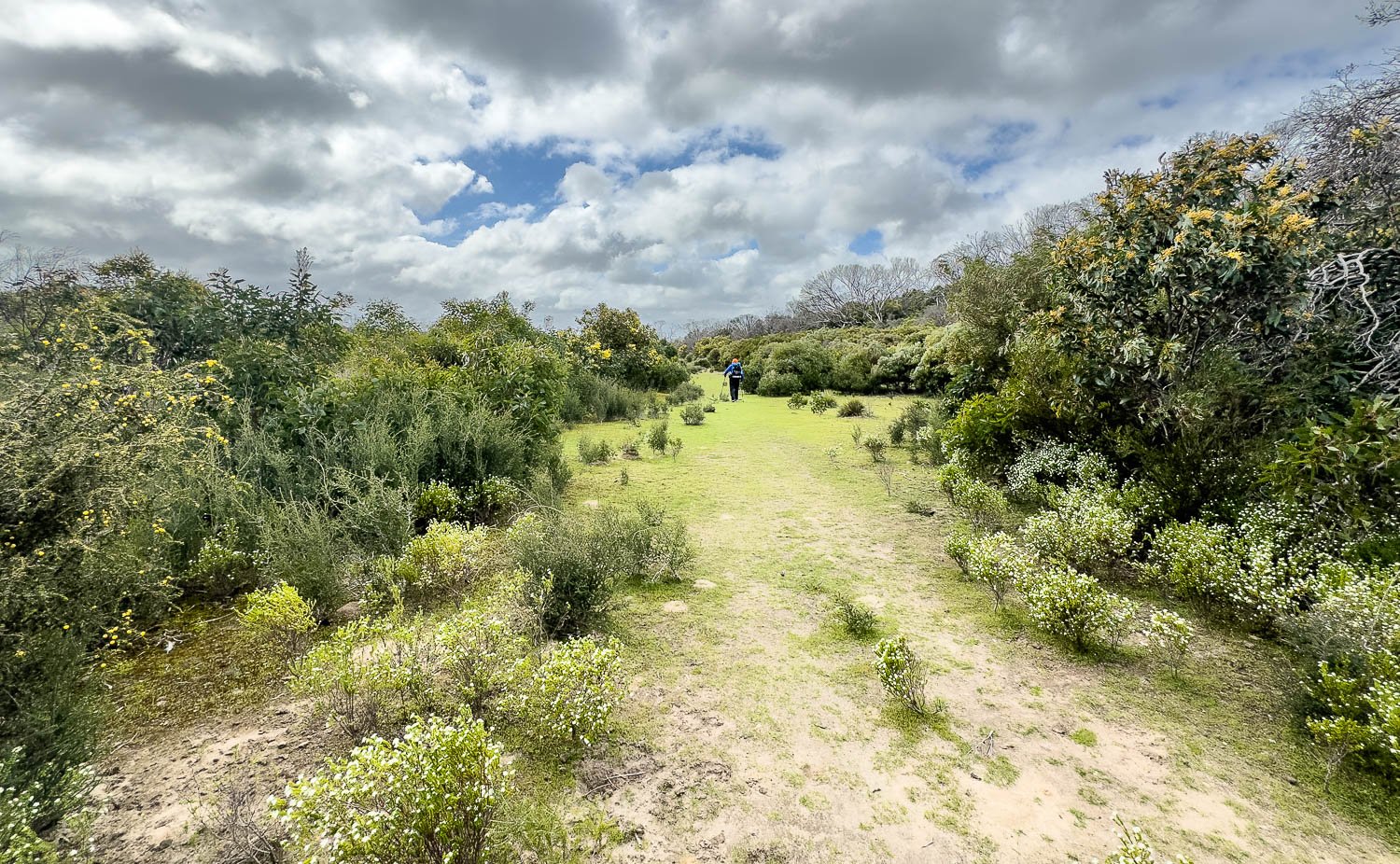
We saw pig diggings near this area. If you too see any, mark the location on your phone mapping app with a screenshot to notify staff at the Visitor Centre: after the fire killed so many of these incredibly damaging pests, it’s the perfect opportunity to eliminate them completely from the park.
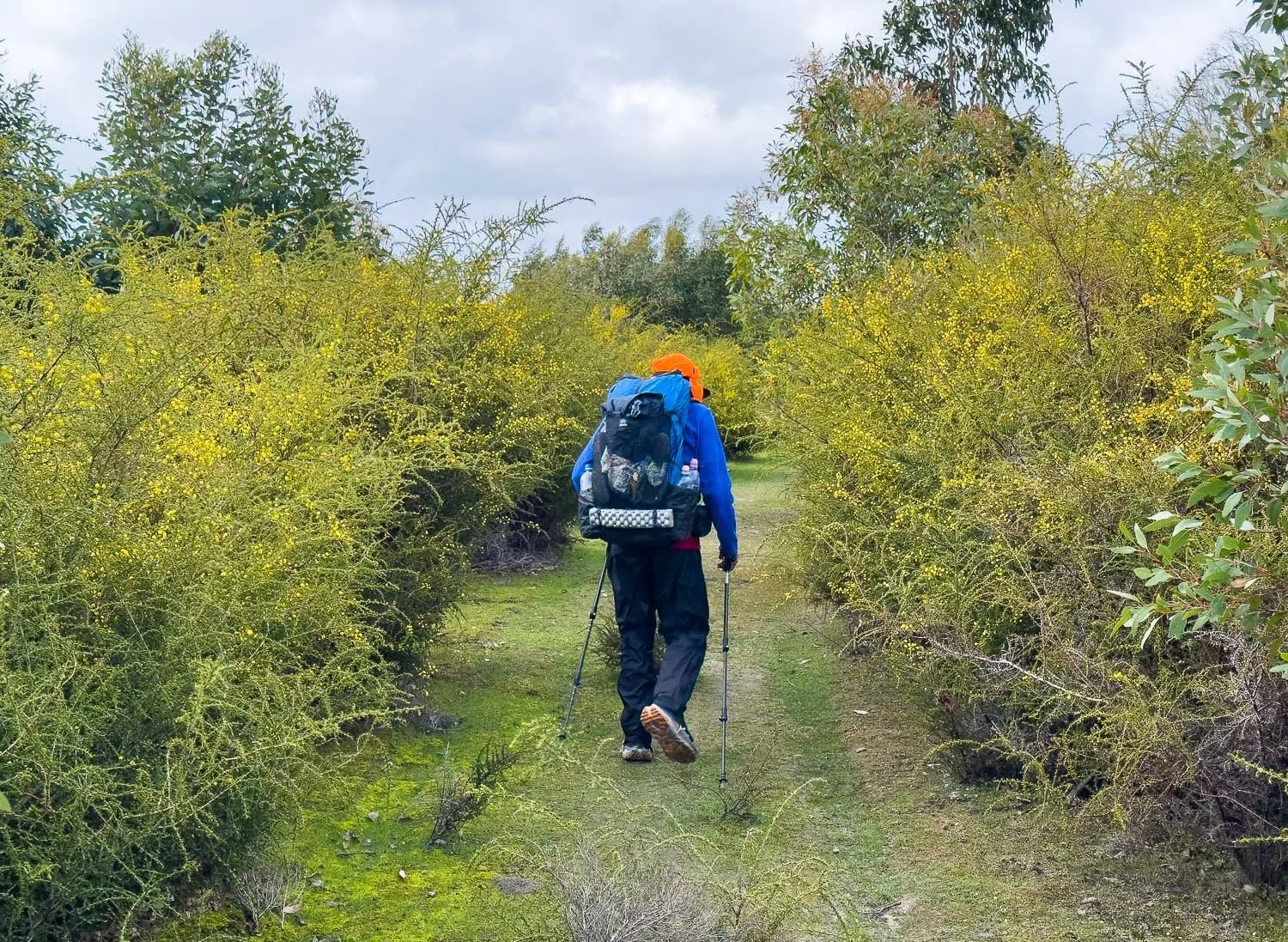
A corridor of prickly yellow Kangaroo Thorn (Acacia paradoxa).
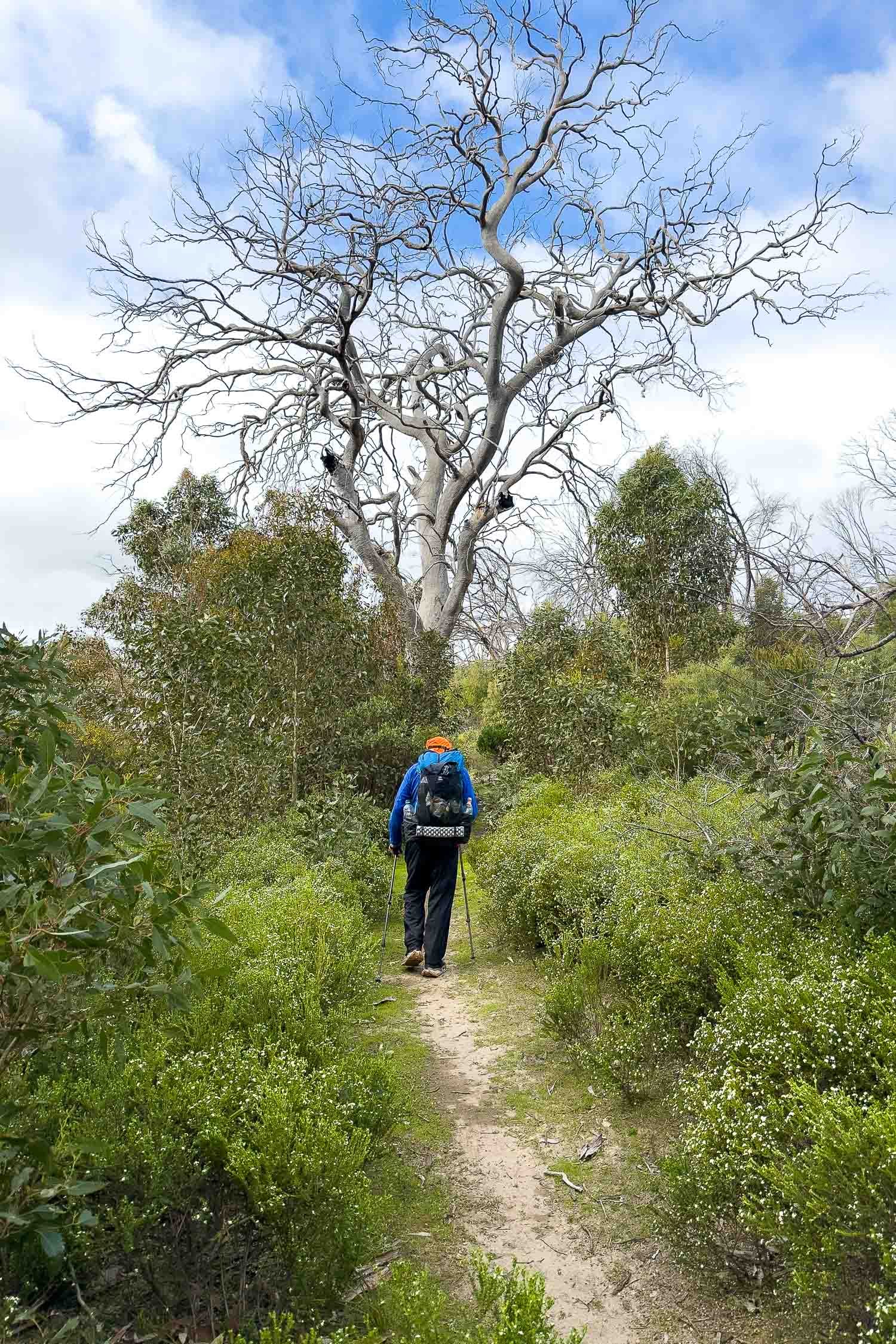
A magnificent River Red Gum (E. camaldulensis) bushfire casualty, still important habitat with hollows for birds and marsupials.
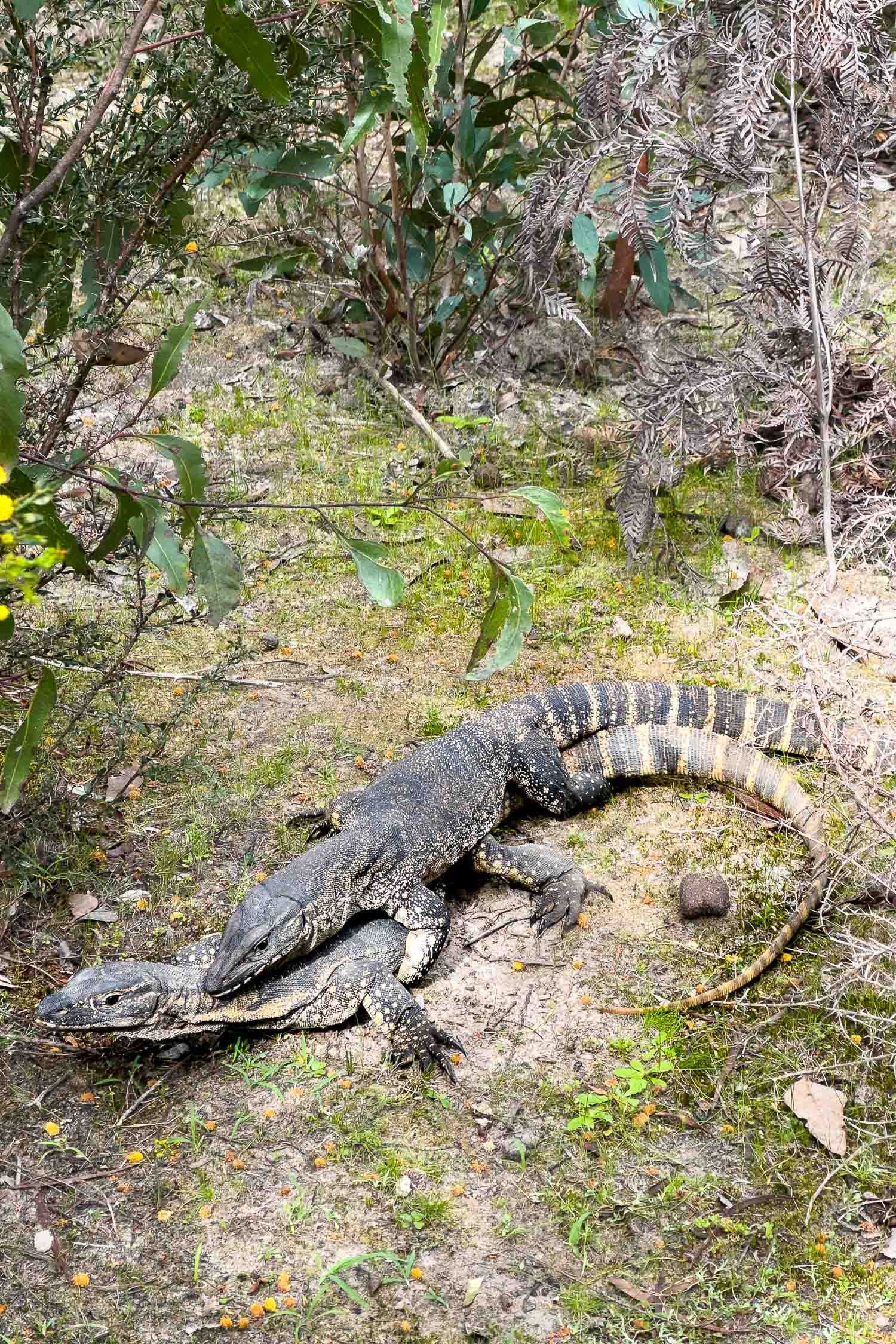
Reptile humpy-rumpy!
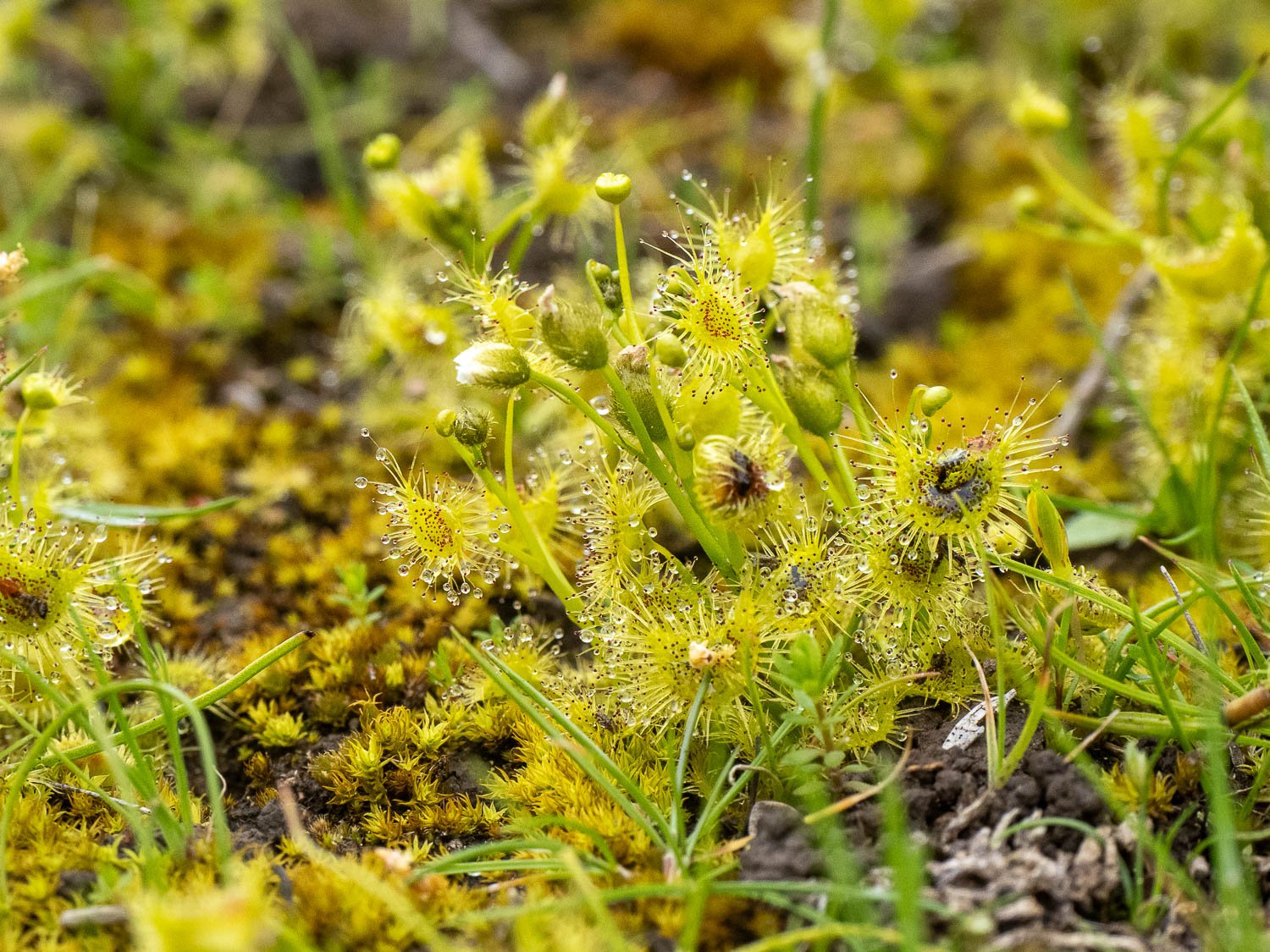
Swathes of the tiny Grassland Sundew (Drosera hookeri).
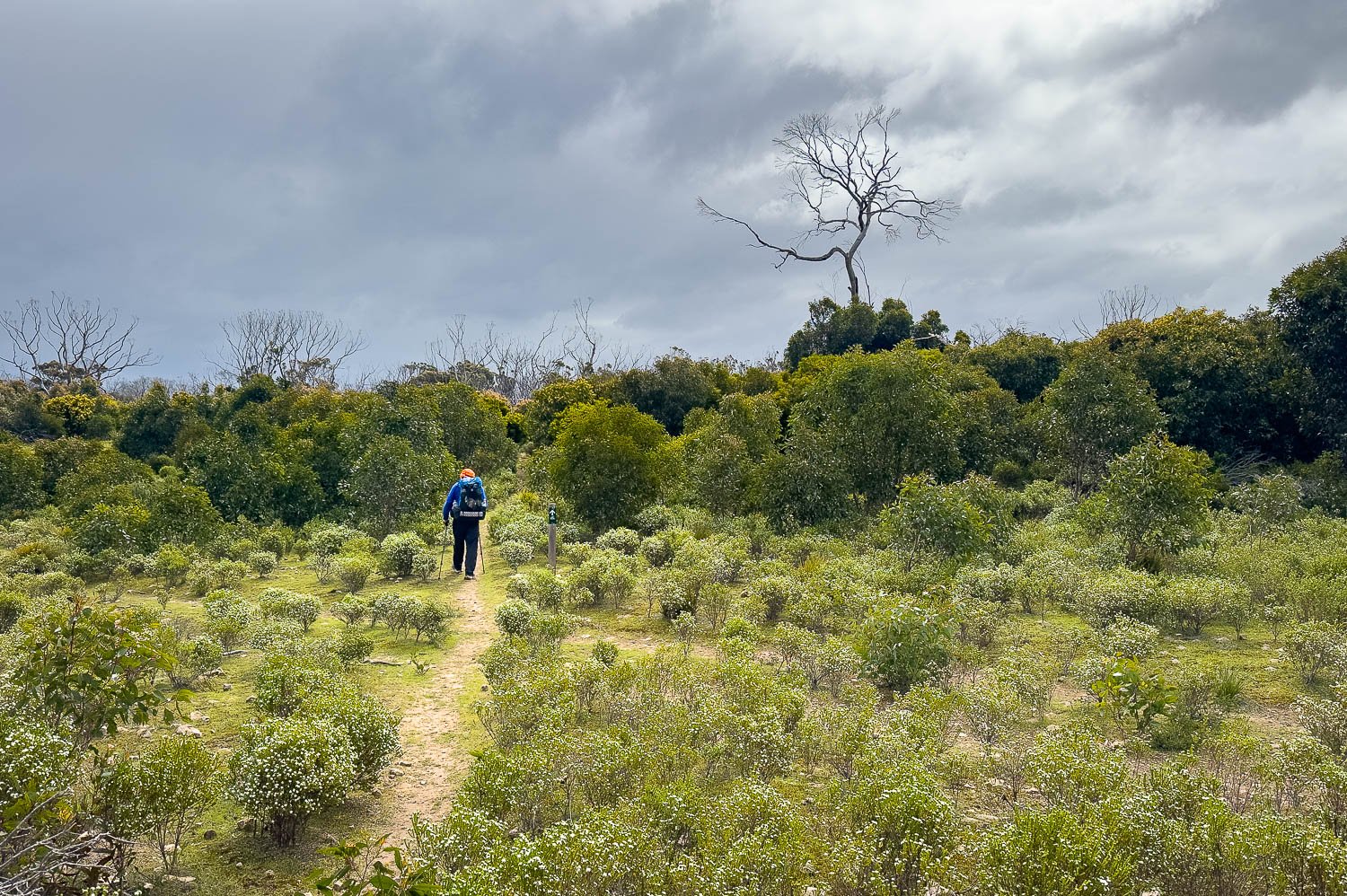
Threatening skies: it’s going to rain, but nearly at camp!
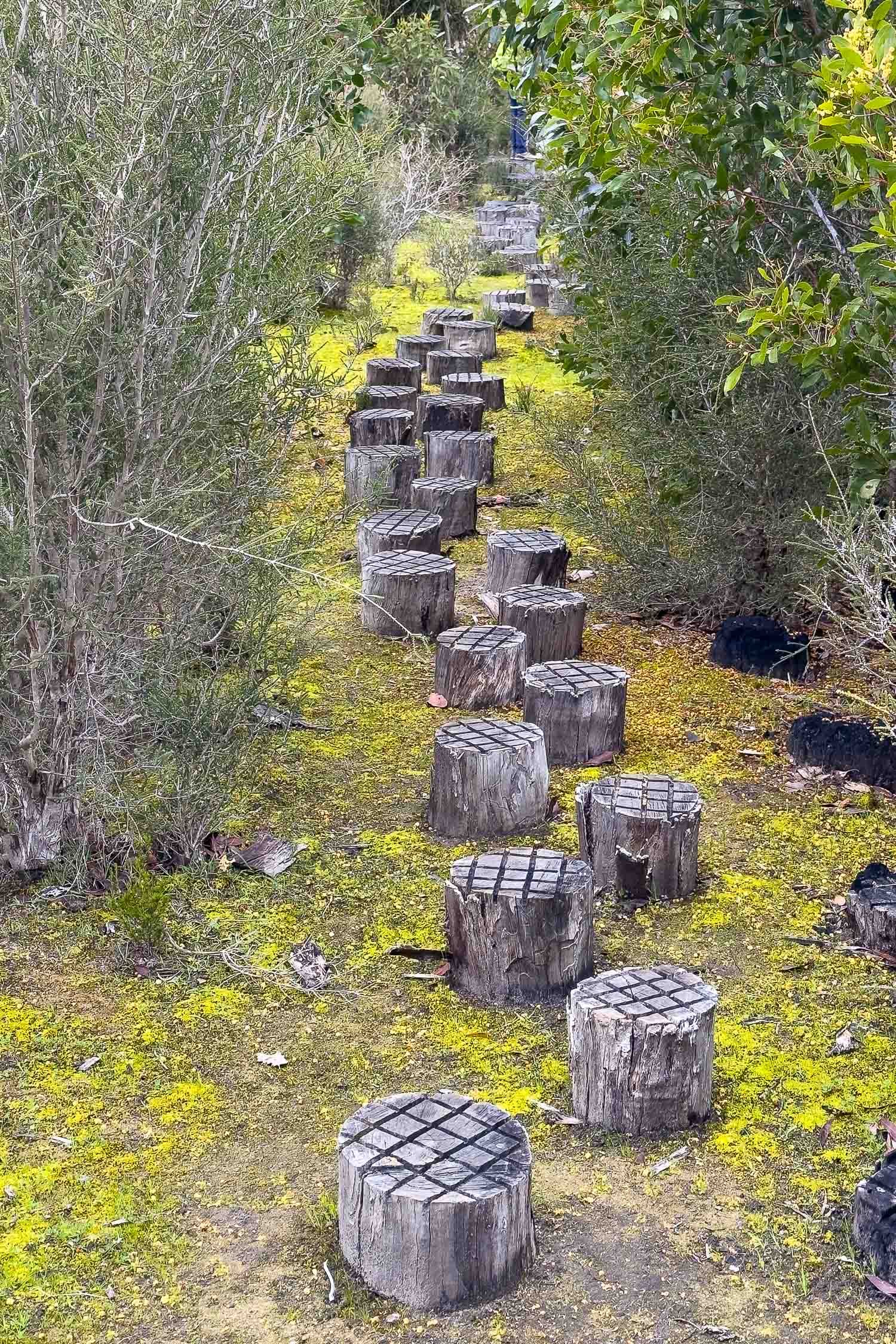
Stepping logs for wetter times: this area is regularly inundated.
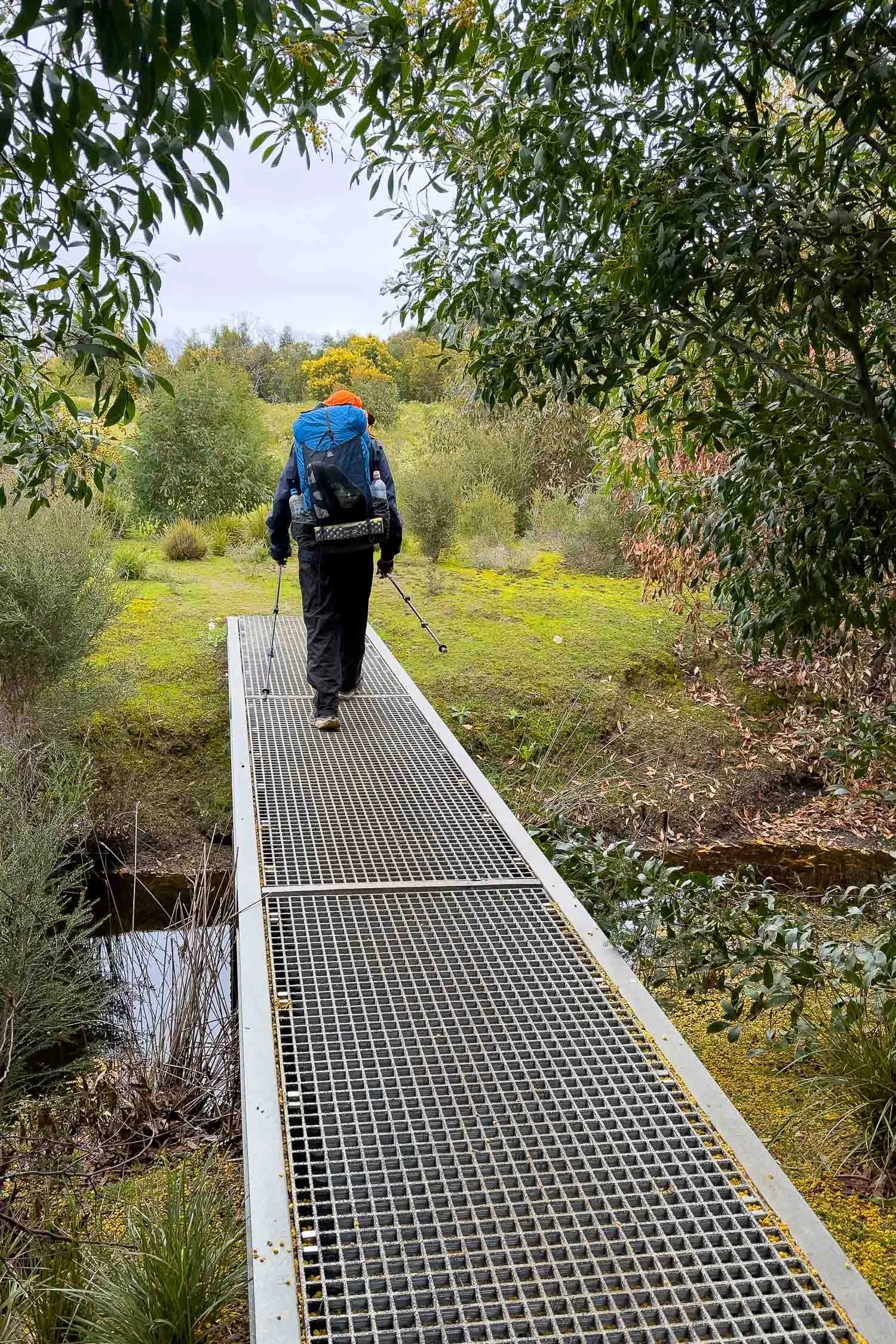
Over the bridge…
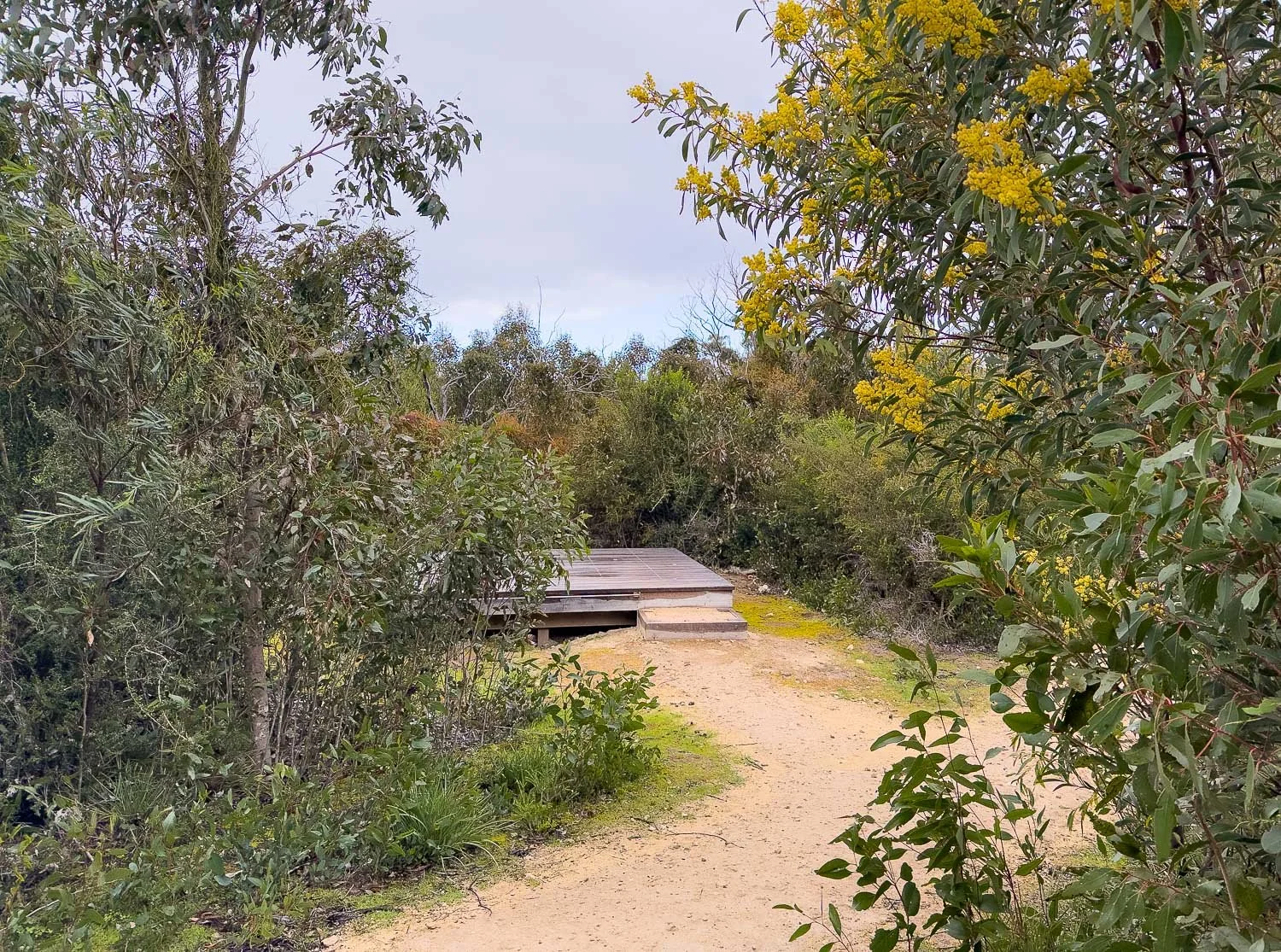
…to the sheltered campsites on the other side of the creek. We raced the rain and just had time to finish before running back to the shelter of the hut before the heavens opened. I took this photo of another platform later after the skies cleared, but forgot to shoot our tents!
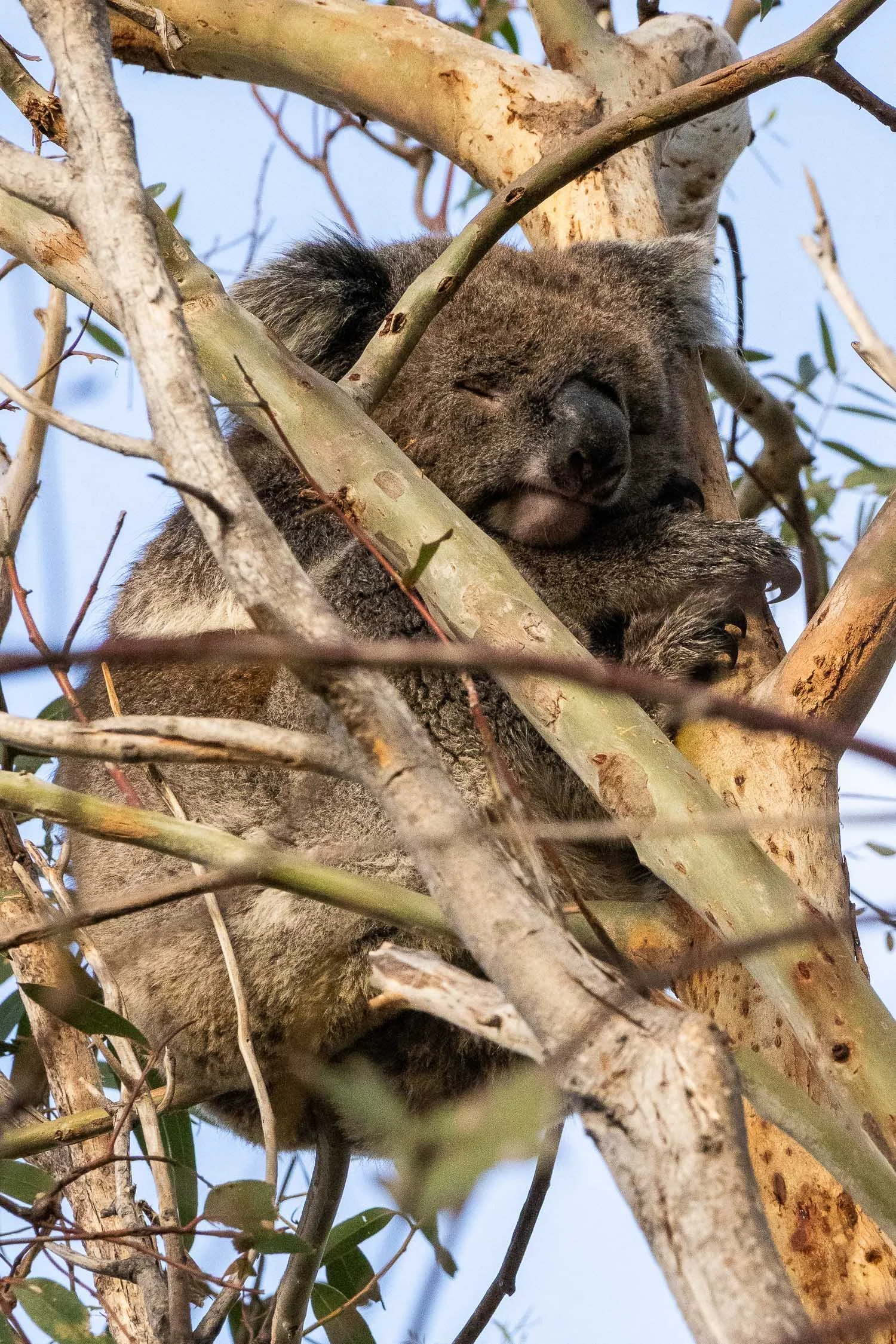
A koala dozes in a tree beside the hut. Although they are badly inbred, they are also the only koalas in all of Australia to be chlamydia-free. This makes them an important ark population should, for example, a particularly virulent strain decimate the mainland animals.
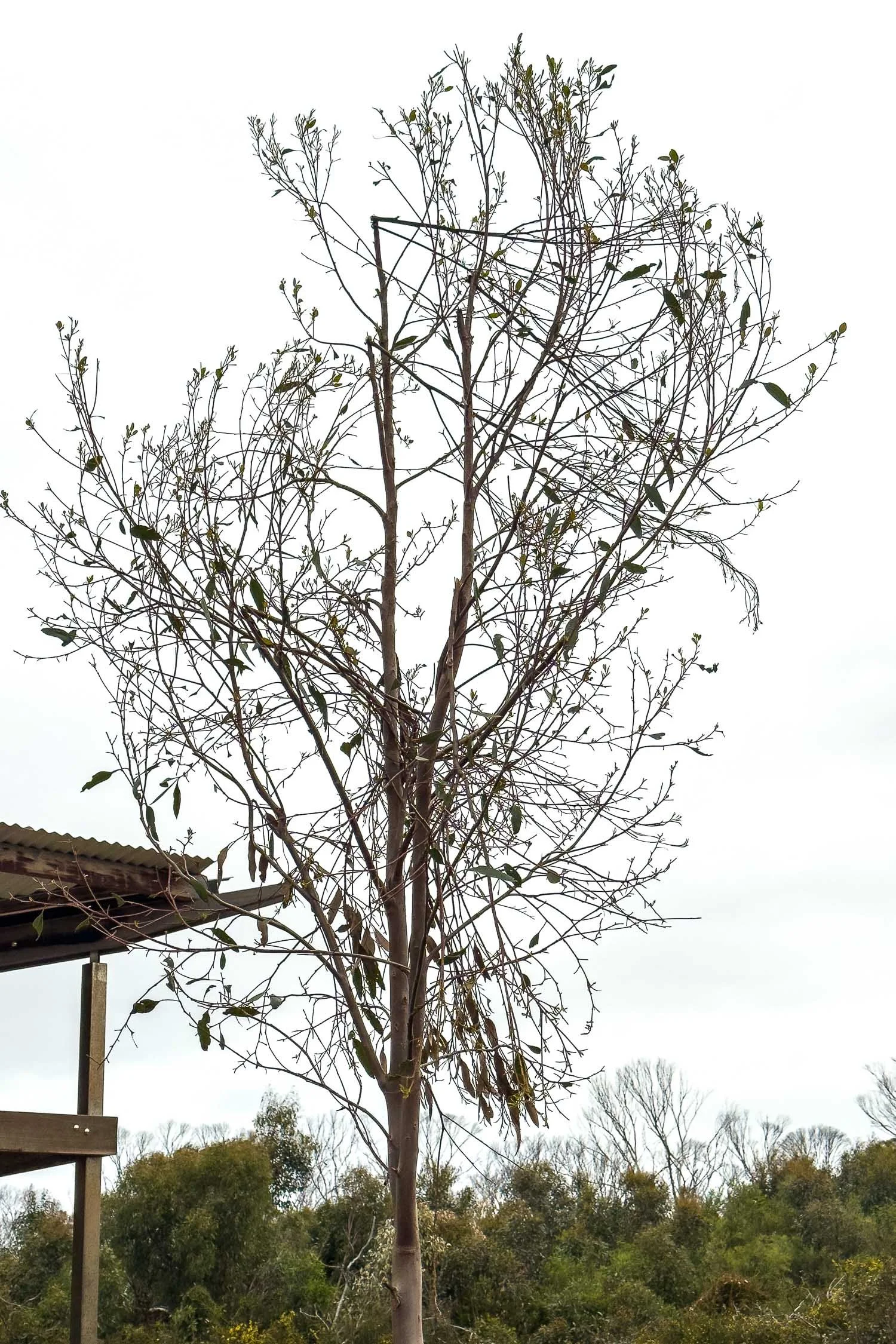
However, they are in an environment with insufficient trees to support them. Overgrazing causes tree defoliation and death, followed by population decreases in all the other animals and birds that rely on those same trees. Management strategies aren’t straightforward.
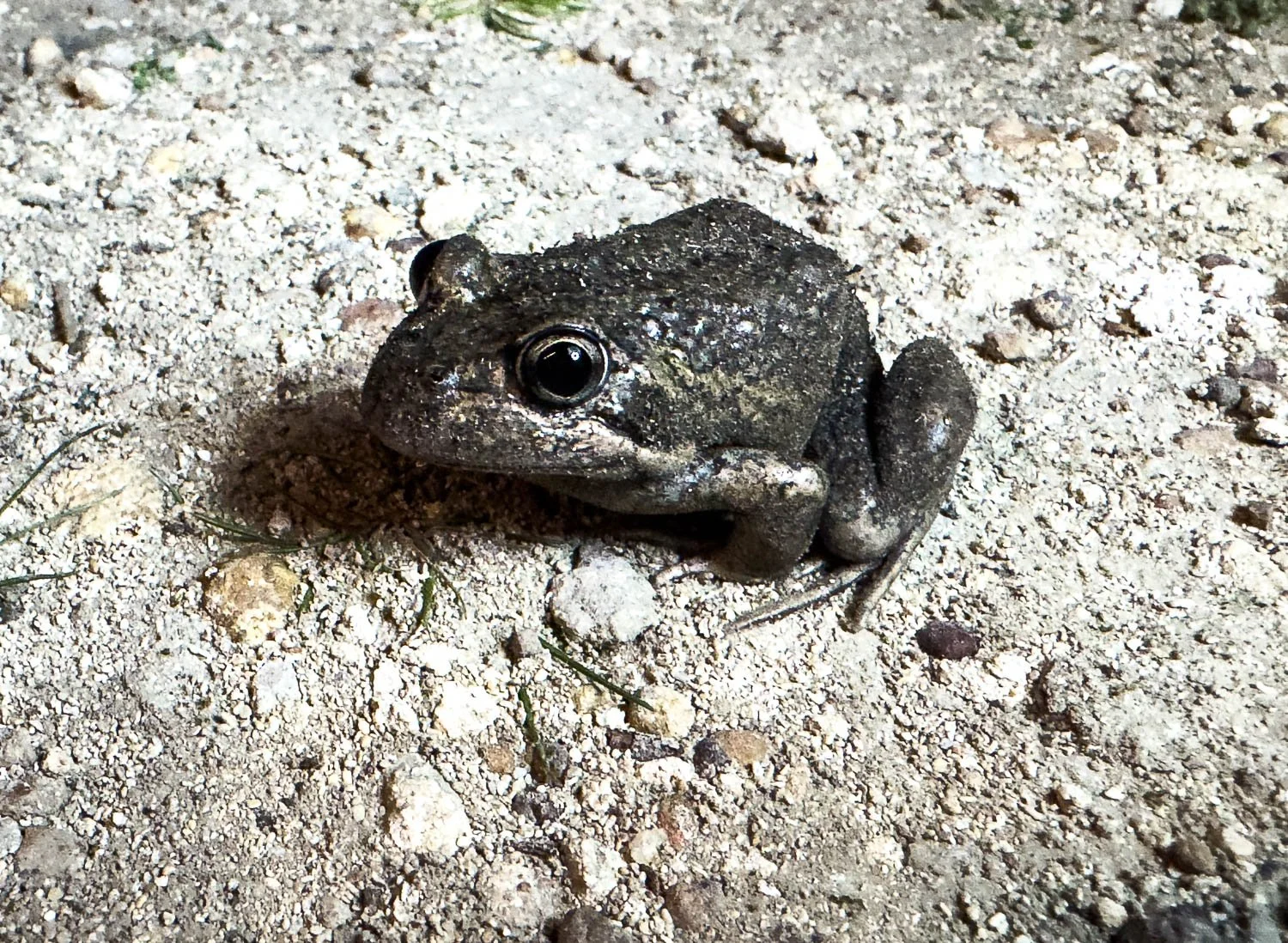
A Pobblebonk frog (Limnodynastes dumerii) — you’ll hear their distinctive call! — emerges to inspect us after the rain.
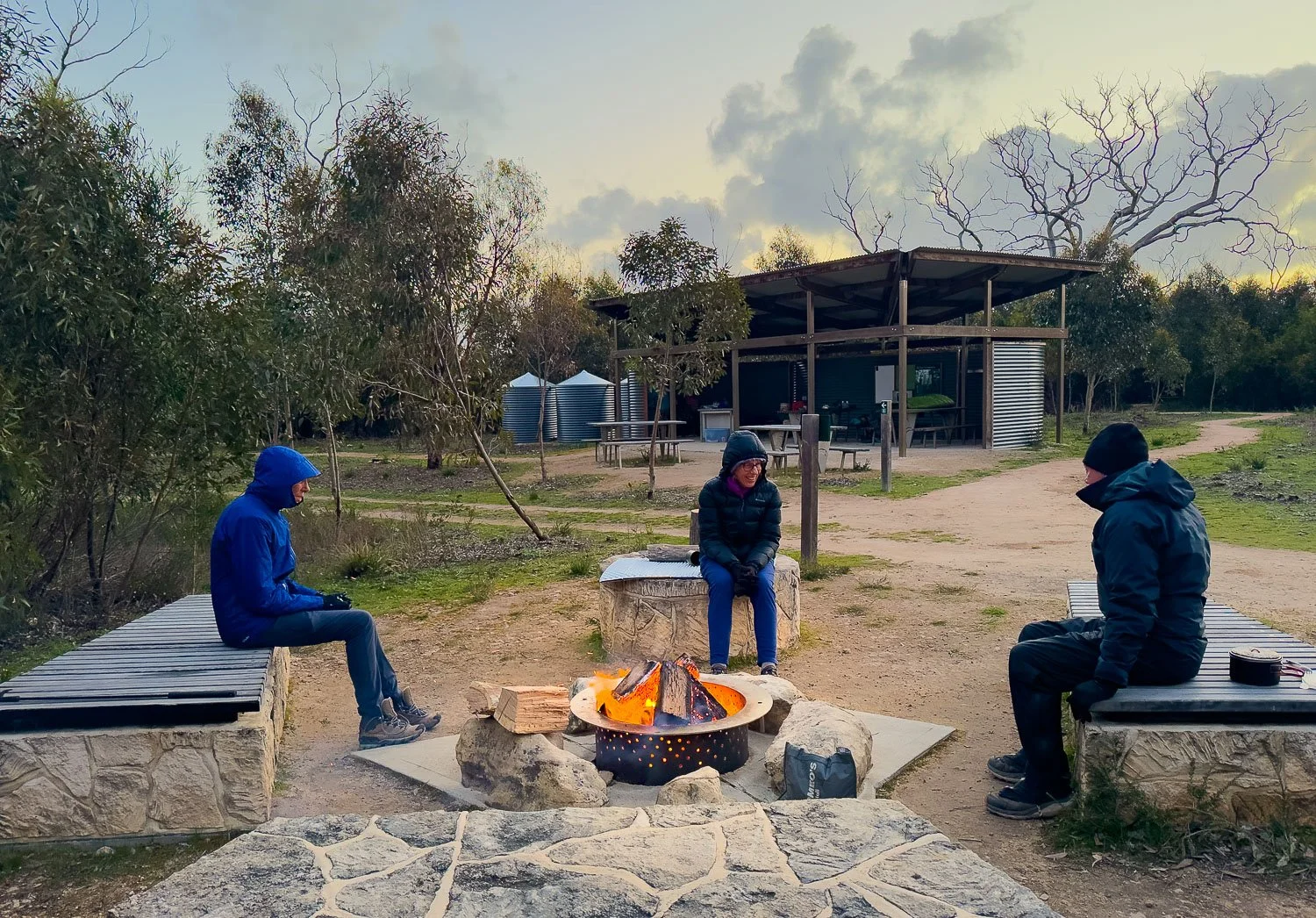
It is bitterly cold — note gloves, beanies and shells — but the open fireplace provides a congenial spot to gather on the last night. The KIWT is beautifully routed and thoughtfully considered to the last detail. It will be your last day tomorrow, with more highlights to come!