Flinders Chase Visitor Centre to Snake Lagoon (Day 1)
Cascades, platypus pools, a lunette, lagoon and wildflowers along the Rocky River
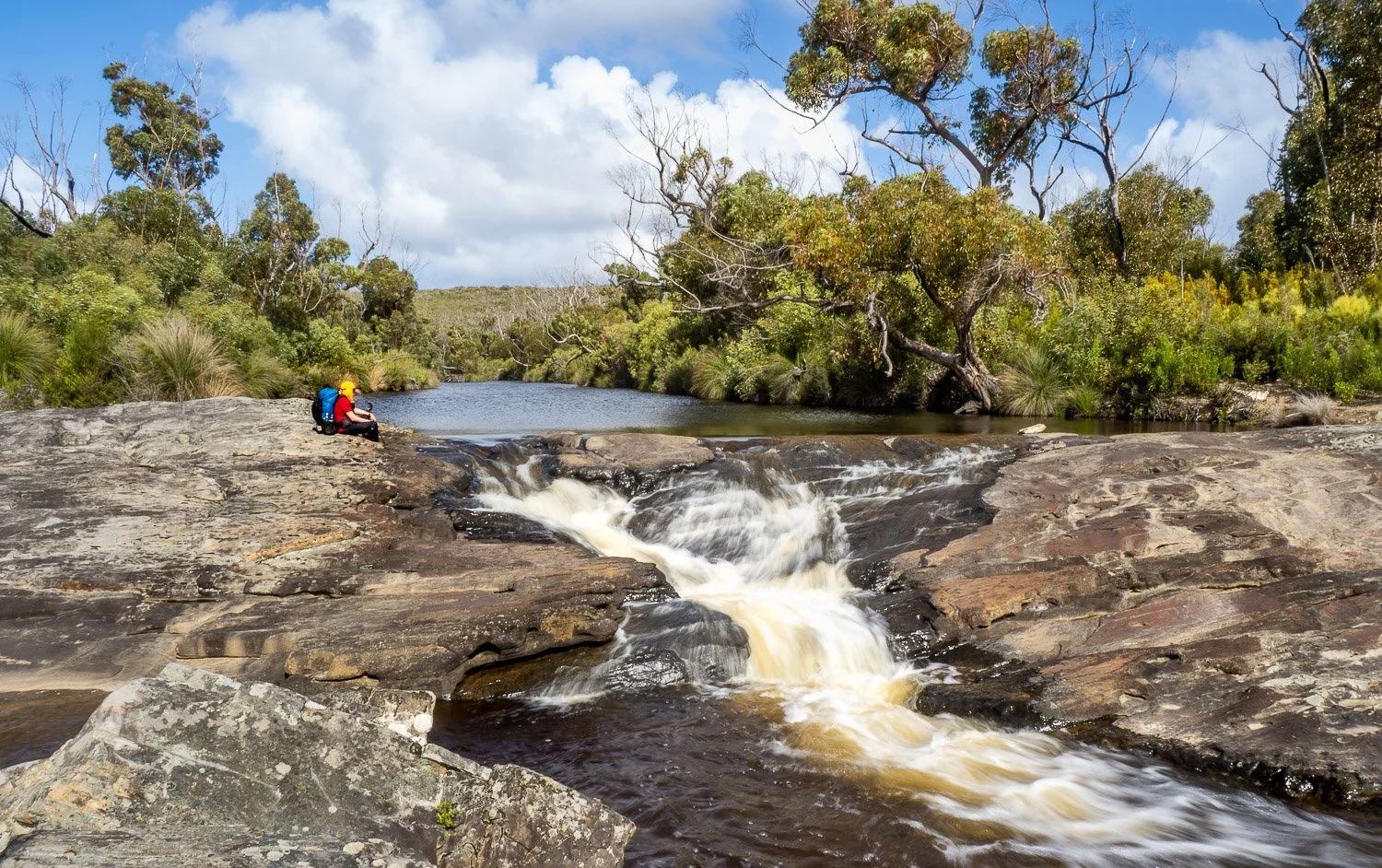
Enjoying cascades along Rocky River
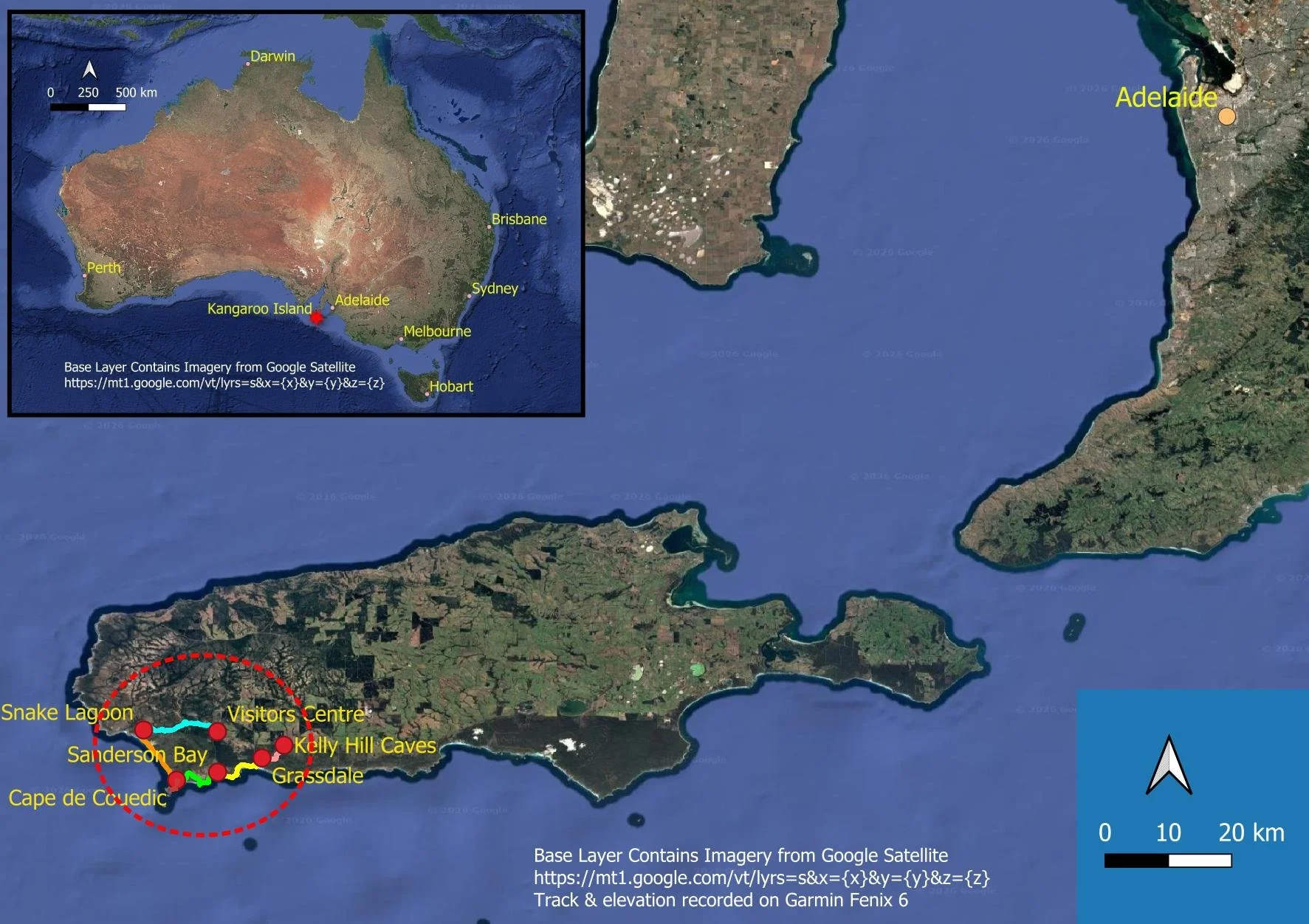
Hike Locality Map
Today’s Hike: Rocky River Section
With an elevation gain of just 190m (620ft) and smooth, firm sand almost the entire way, today’s 18km/11.2mi distance will fly by even for slower hikers like us. Add the early start if you did the induction yesterday as we recommend, and you have plenty of time to reach camp even in shoulder seasons with shorter daylight hours.
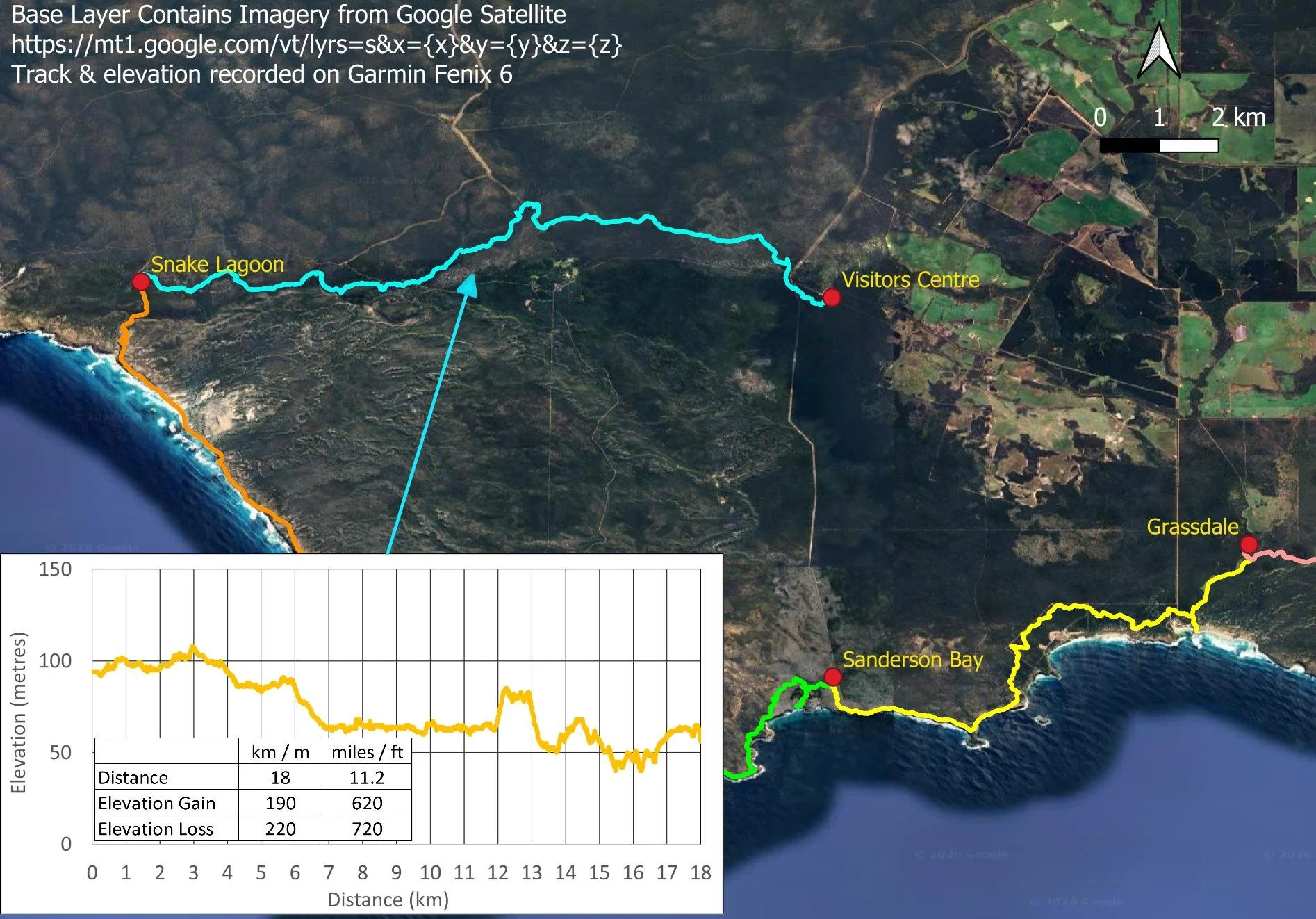
Details for Day 1
Once you reach Rocky River, you follow its banks for most of the day. Ppass a beautiful lagoon, the platypus pools, a creek with picnic table for second breakfast, skirt a lunette, climb a lookout, and sit on sun-warmed rocks beside rushing cascades. The wildflowers and variety are superb, varying from forest to mallee, tea tree and heath. At the campground, watch wallabies while you eat dinner at one of the outdoor tables, and listen to the eerie cries of bush stone curlews into the night.
You could choose to stay at Rocky River Campground halfway, and view the platypus in the evening. However, if you feel that you need to split this day because of distance, subsequent days will likely be too demanding for you despite the shorter distances because track surfaces are far more challenging.
Walk with Us
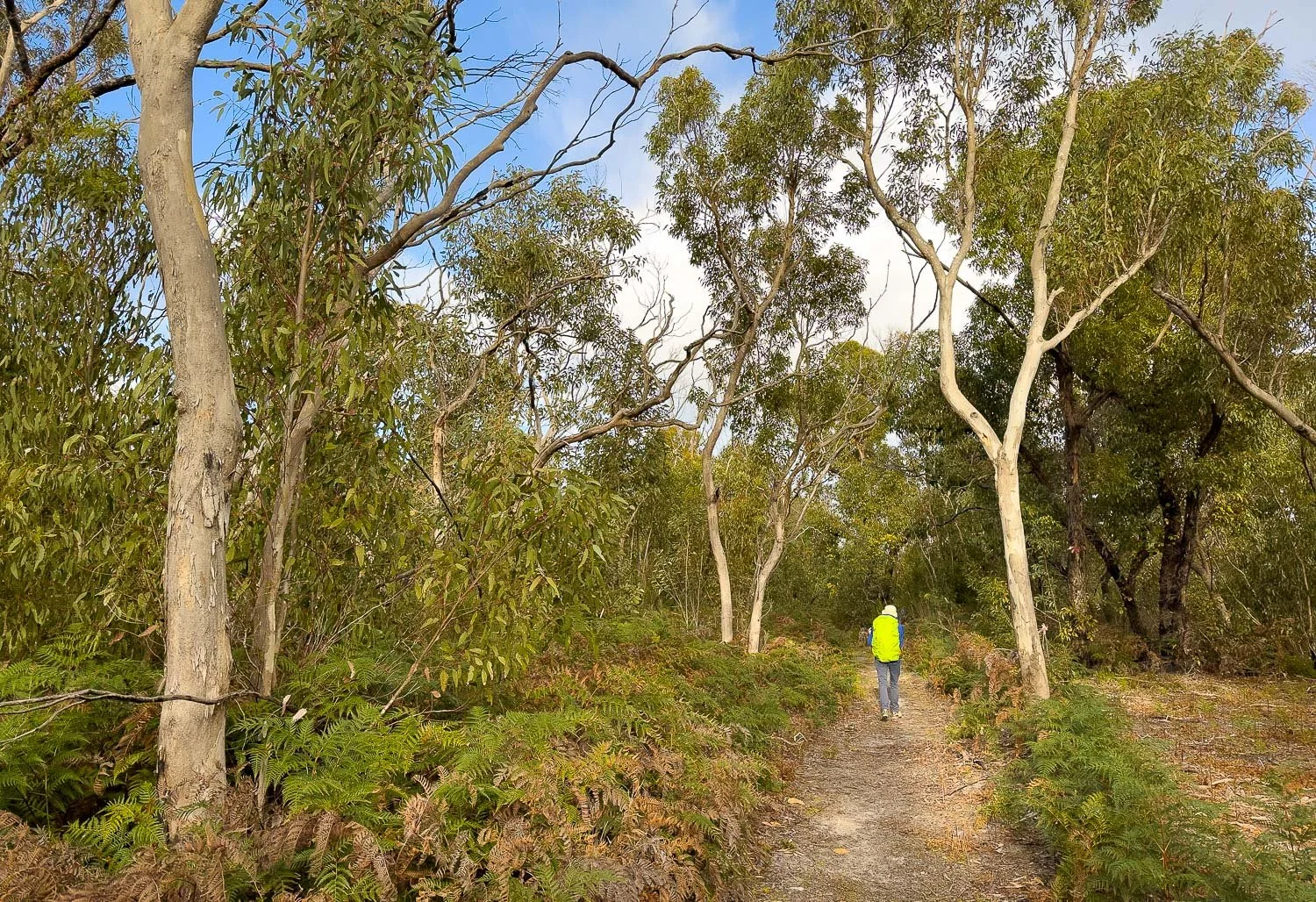
The hike begins behind the Visitor Centre through tall stringybark forest with a lush understorey of bracken and shrubs.
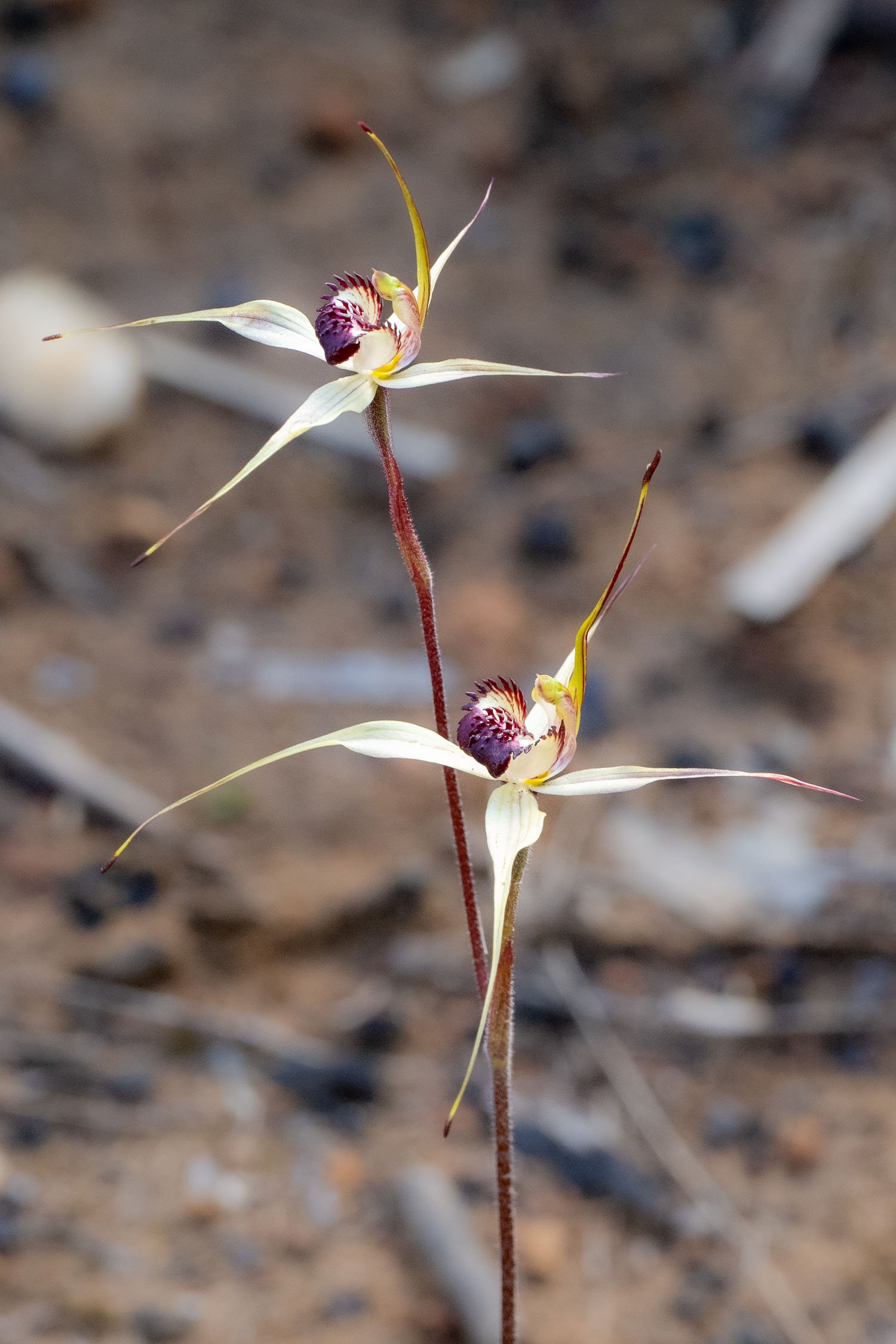
Keep your eyes peeled for rare orchids — here, Caladenia valida — in spring.
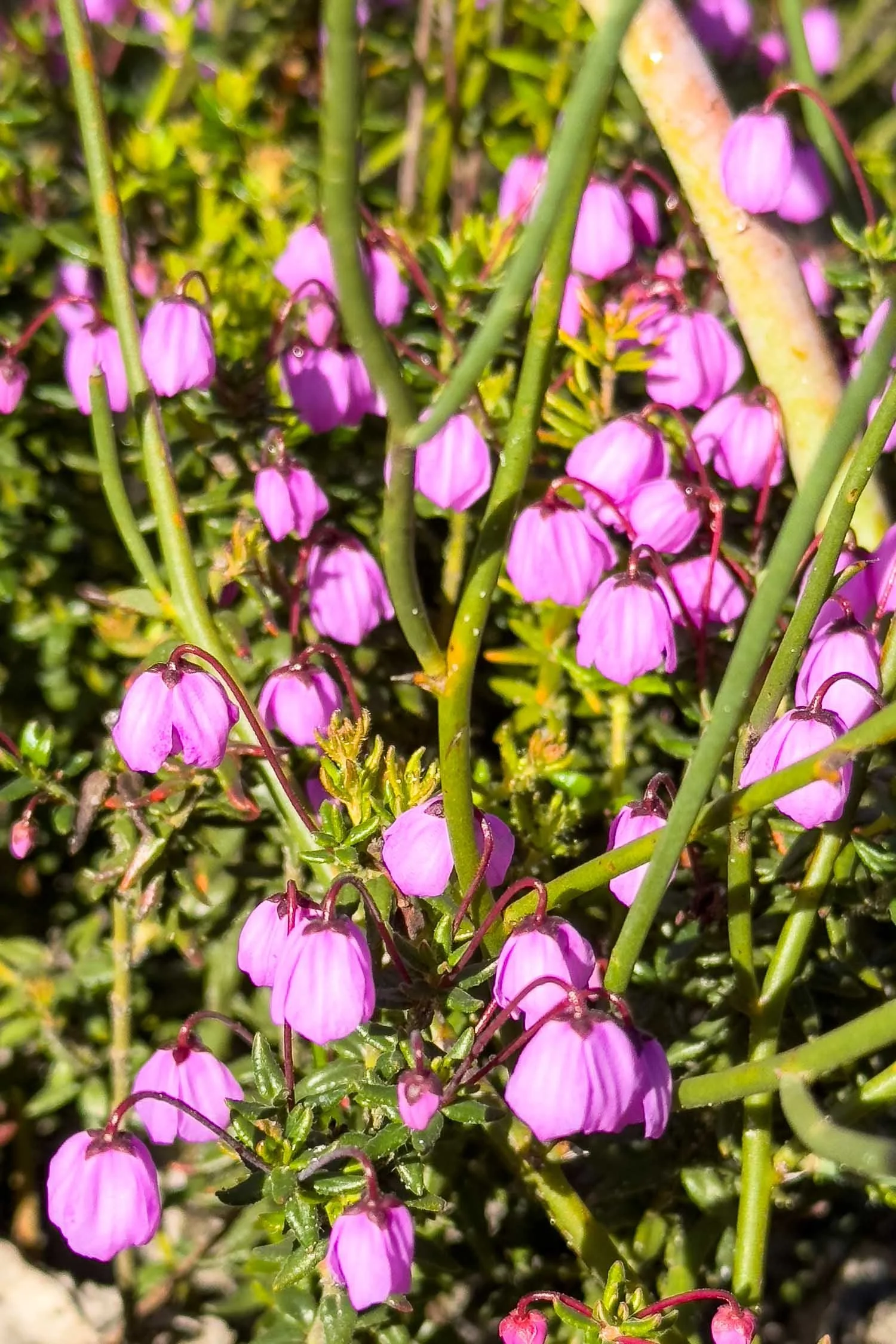
Black-eyed Susan (Tetratheca insularis)
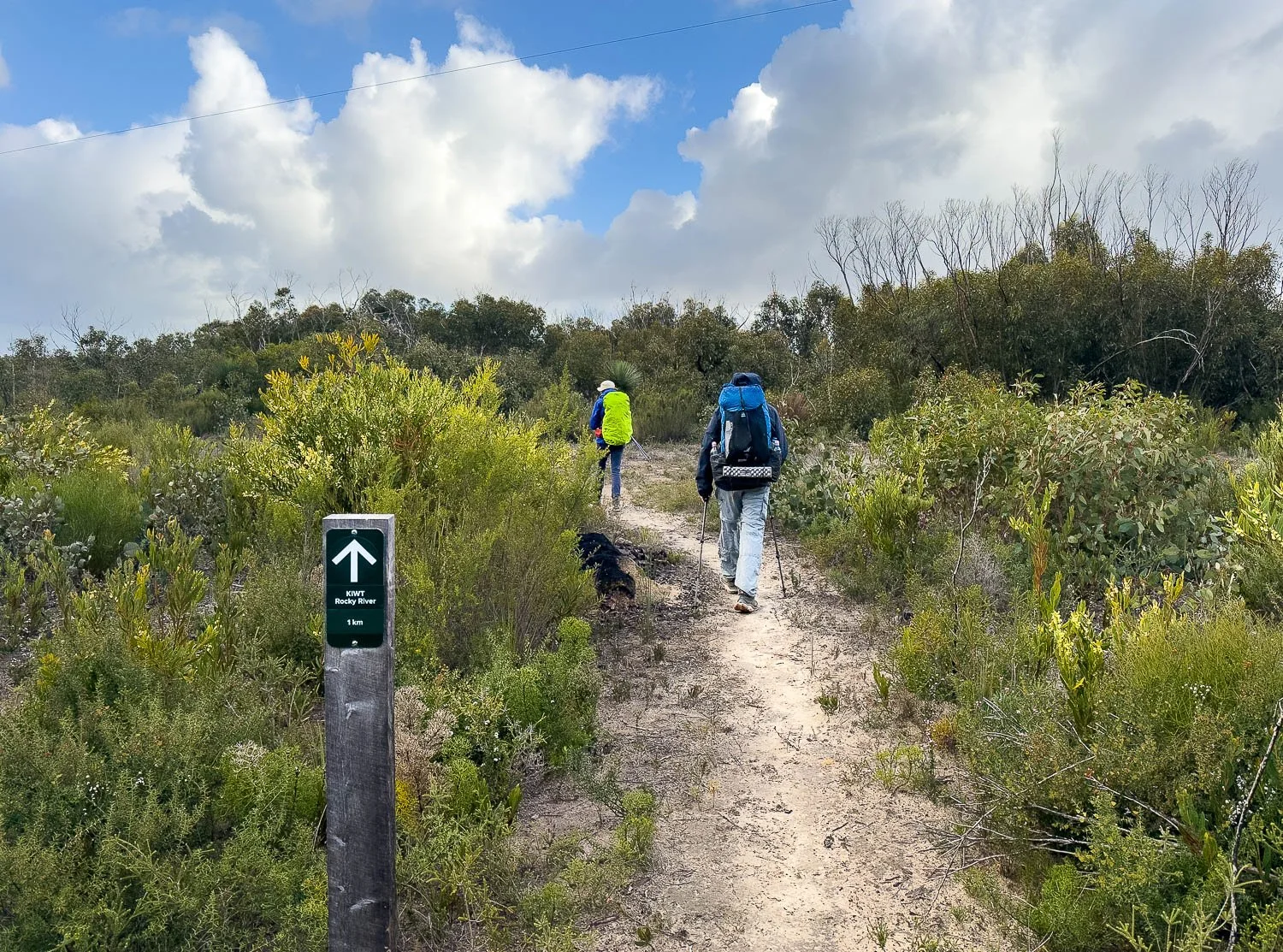
The trail is well-marked. Of course carry your map, but intersections are signposted.
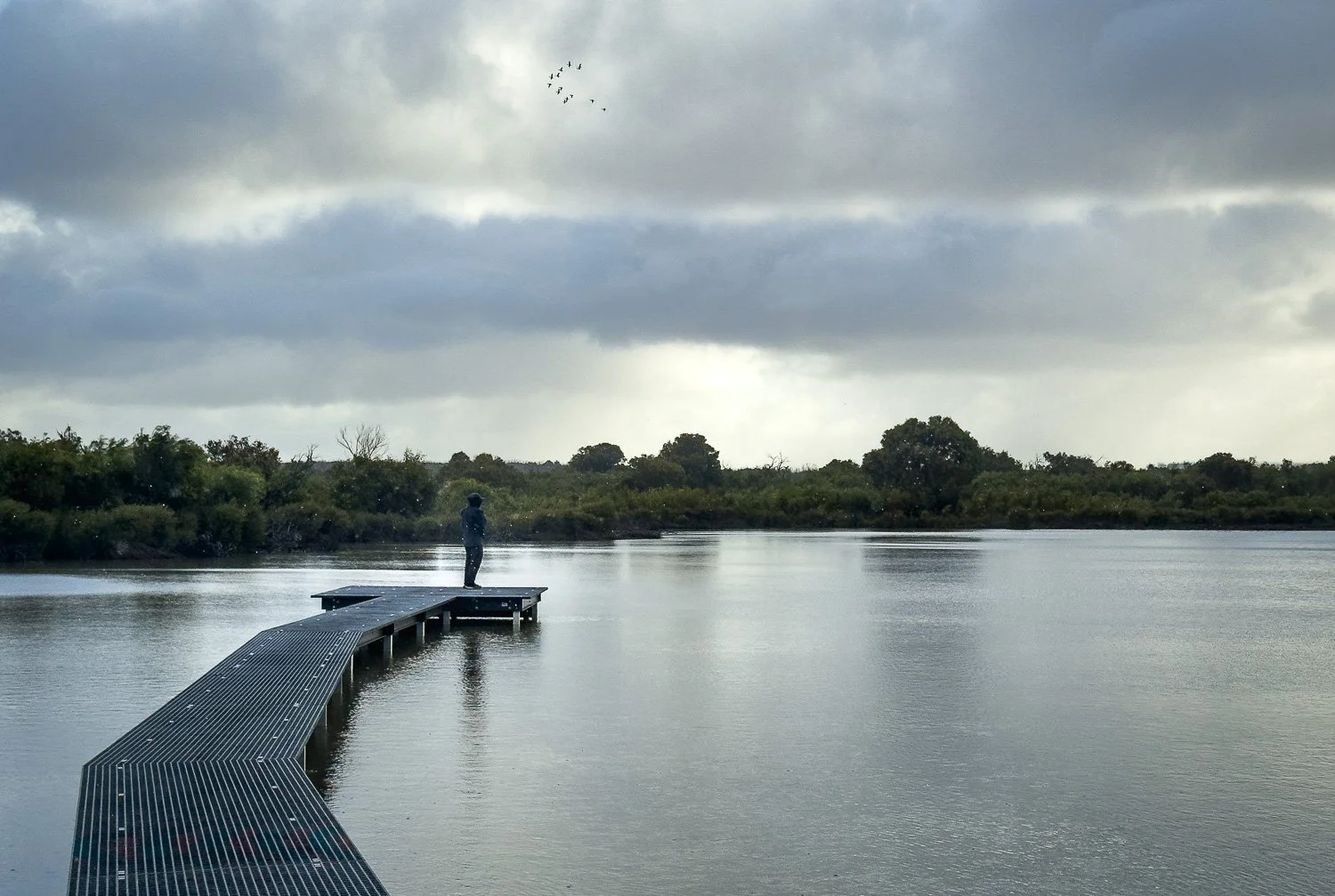
Be prepared for all weather. It has lightened off now but, just moments before this photo, rain was bucketing down. We have chosen quality rain shell jackets and rain pants and recommend you do so also even in shoulder seasons. Nights are cool and rain shells double as an additional warm layer.
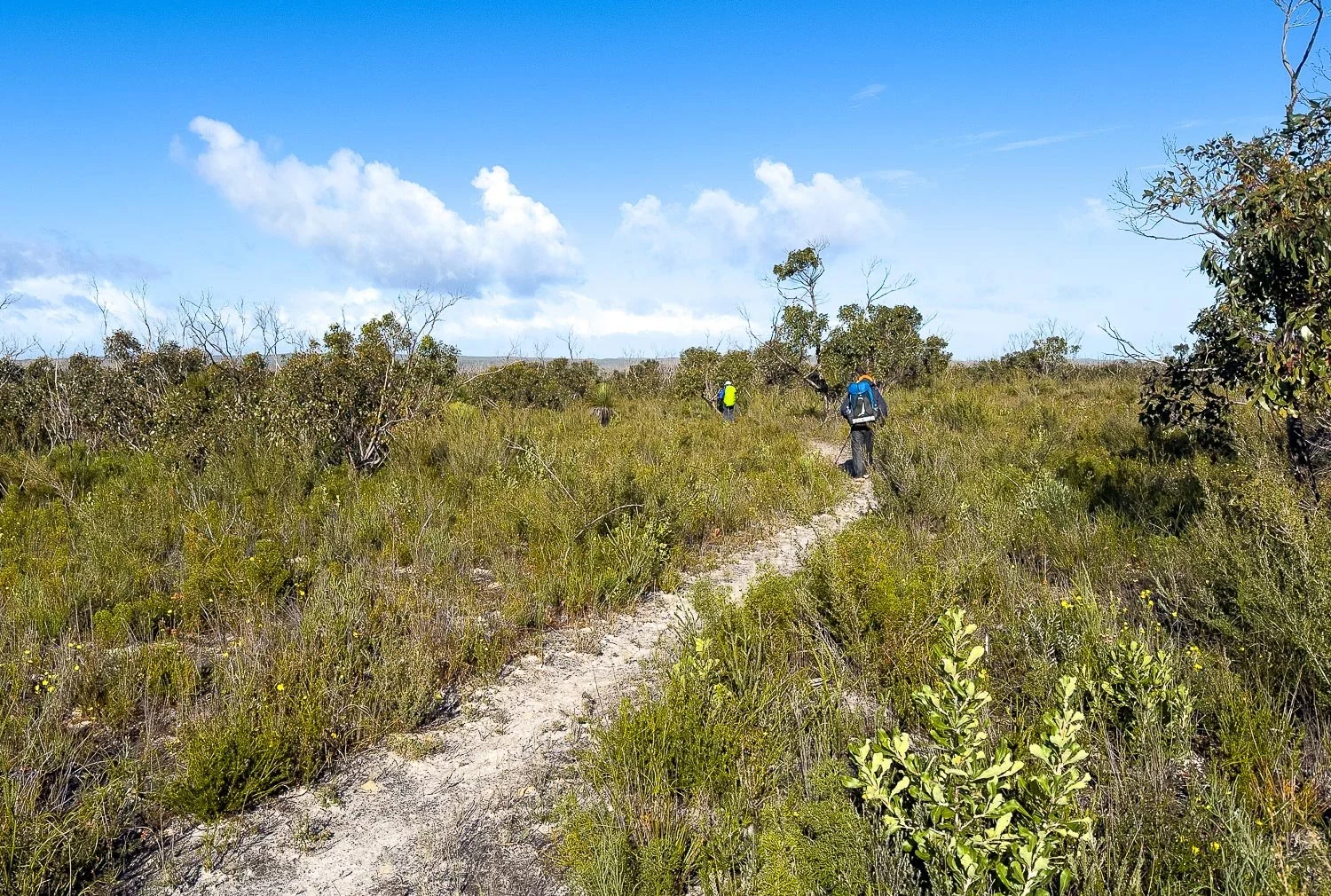
After the forest earlier, the terrain opens up with low heath dotted with scattered mallee, re-shooting from the 2019-2020 bush fire that devastated so much of the island. However, as you can see, the native vegetation has bounced back. The circular lunette that was discovered after the bushfire, and whose crest you partially traverse, is now scarcely visible through the regrowth.
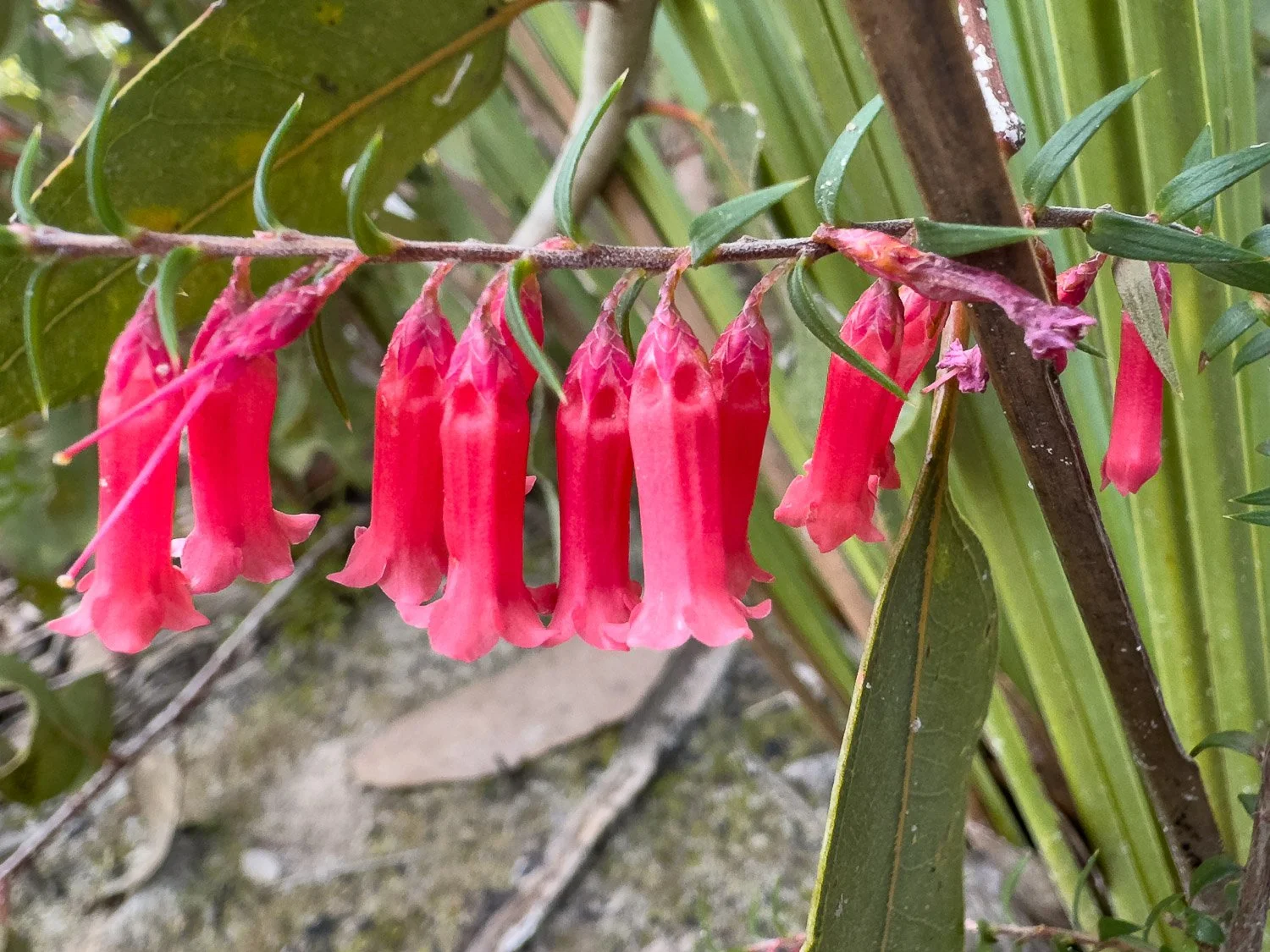
The red splashes of colour are Common heath (Epacris impressa)
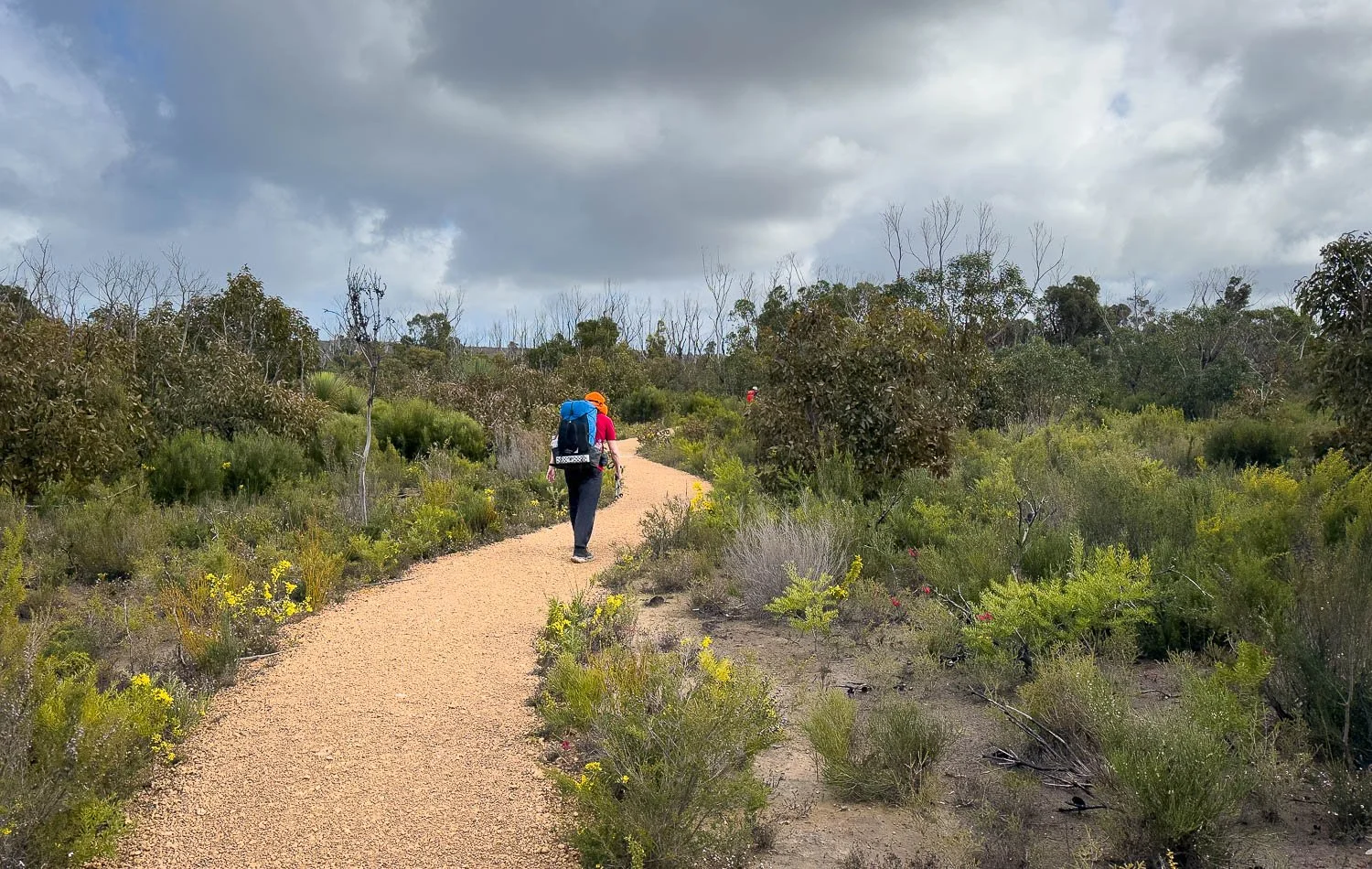
When you near Rocky River Campground, the trail joins the Platypus Trail loop: excellent underfoot as you can see.
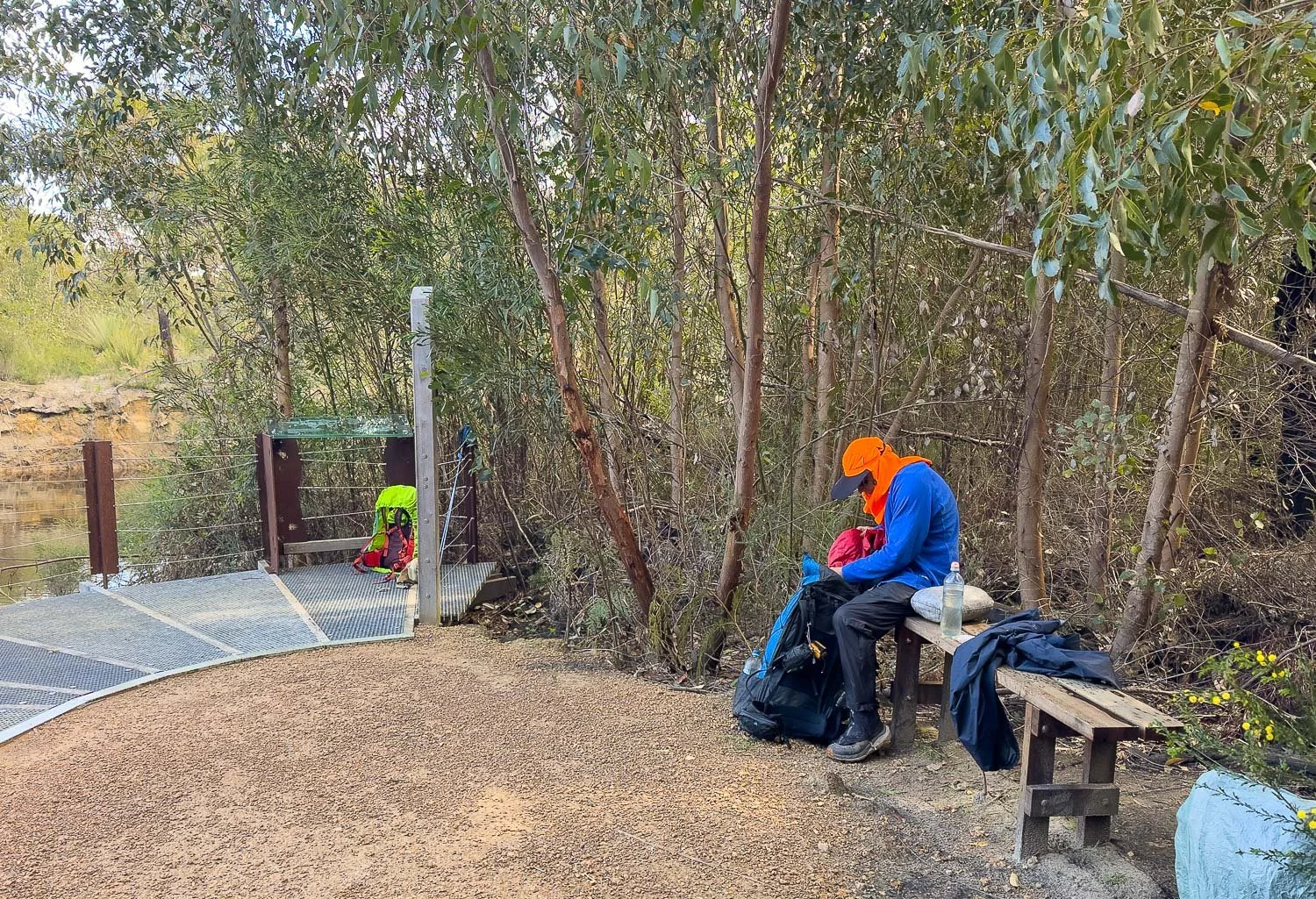
Viewing platforms are scattered around the pools, but you’re more likely to see platypus at dusk.
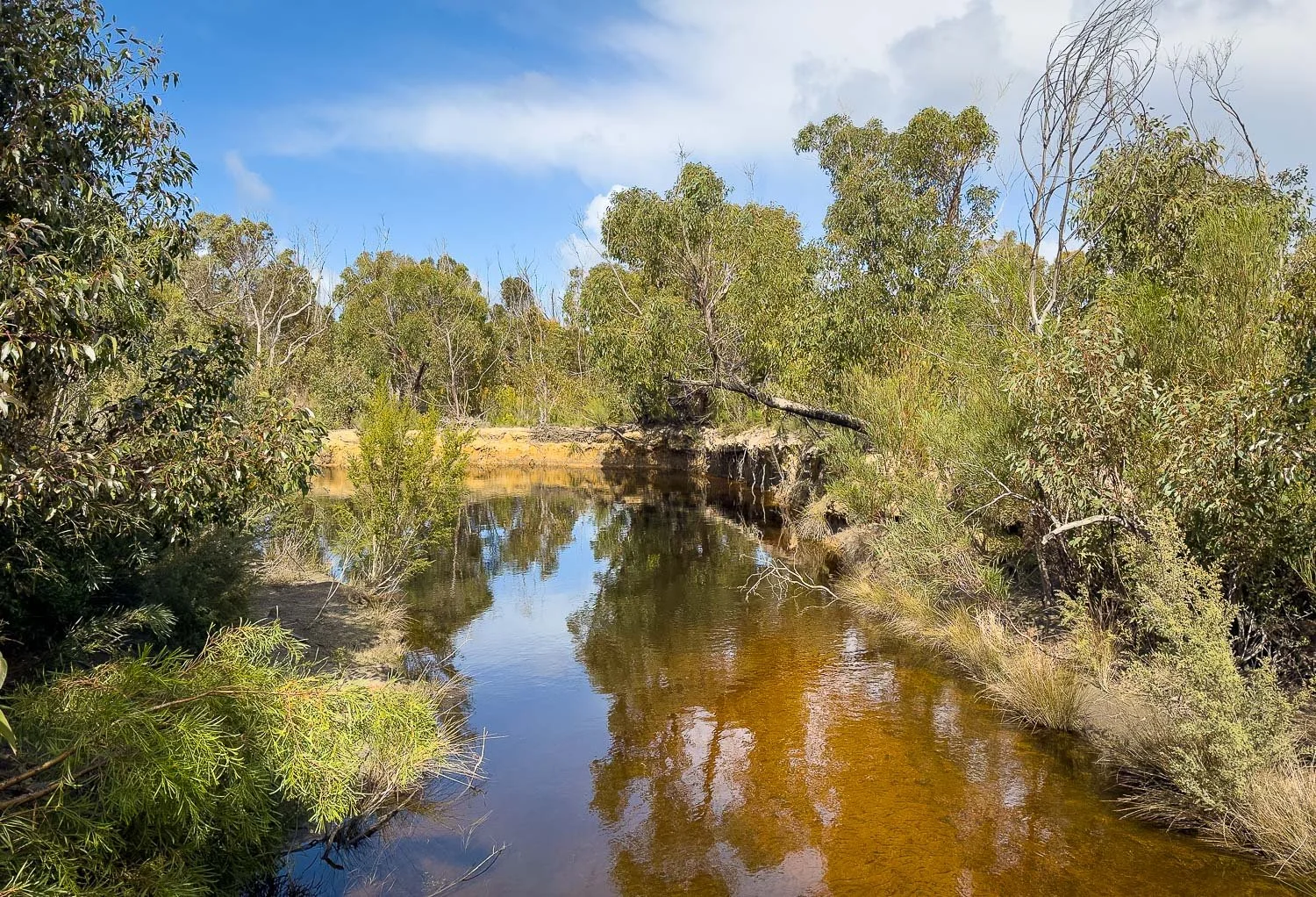
Platypus were introduced to Kangaroo Island and appear to be a success story, unlike the koalas that were too successful and which have been enormously damaging to the native eucalypts and the locally endemic wildlife that depends on them. Worse, the animals are unhealthily inbred with poor genetic variation. Culling has been attempted many times but, because koalas are so cute and popular, the government has had problems effecting control, even though the animals are as detrimental as other exotic pest species.
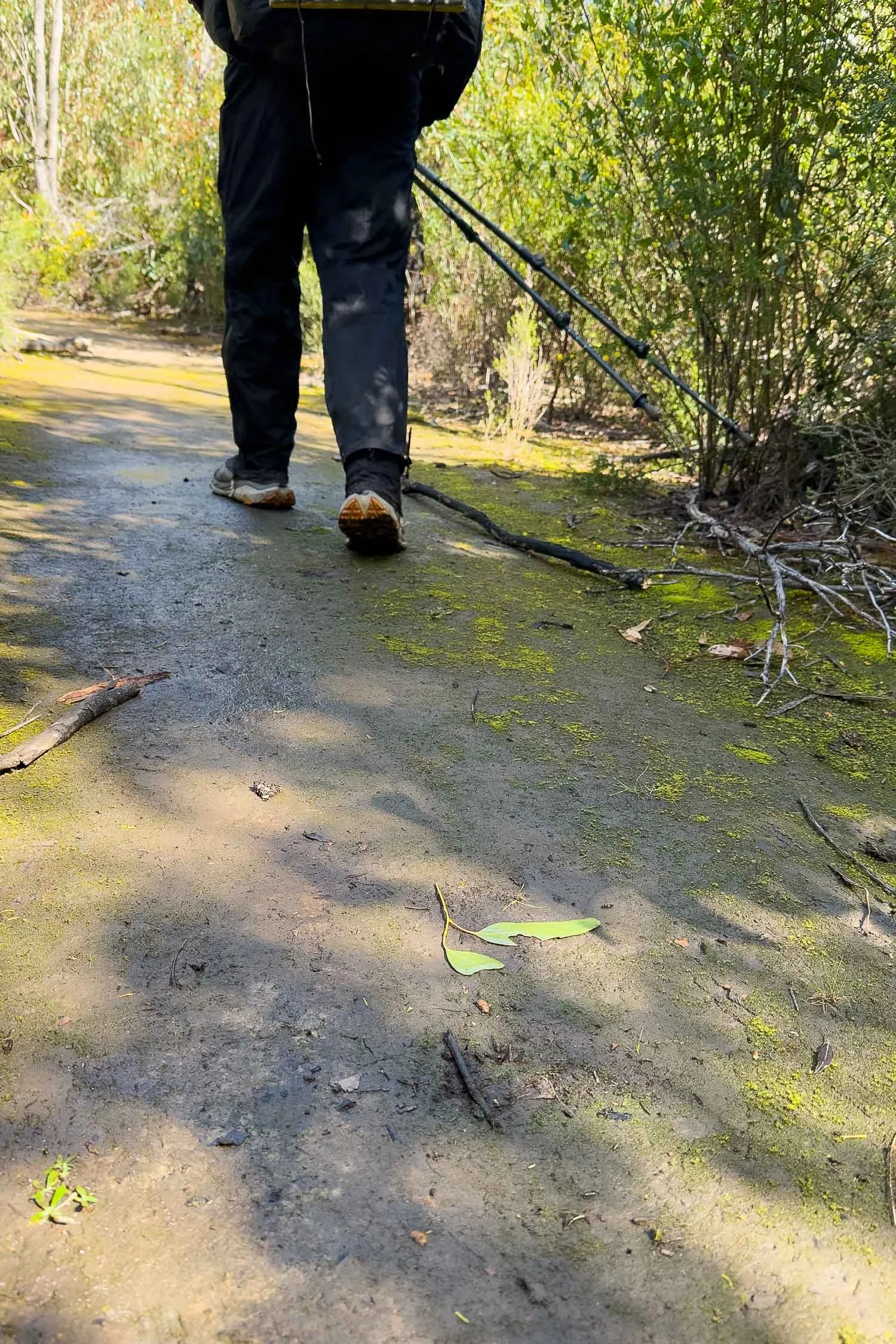
The only truly slippery section of track after the showers earlier; we could see evidence that even kangaroos had skidded!
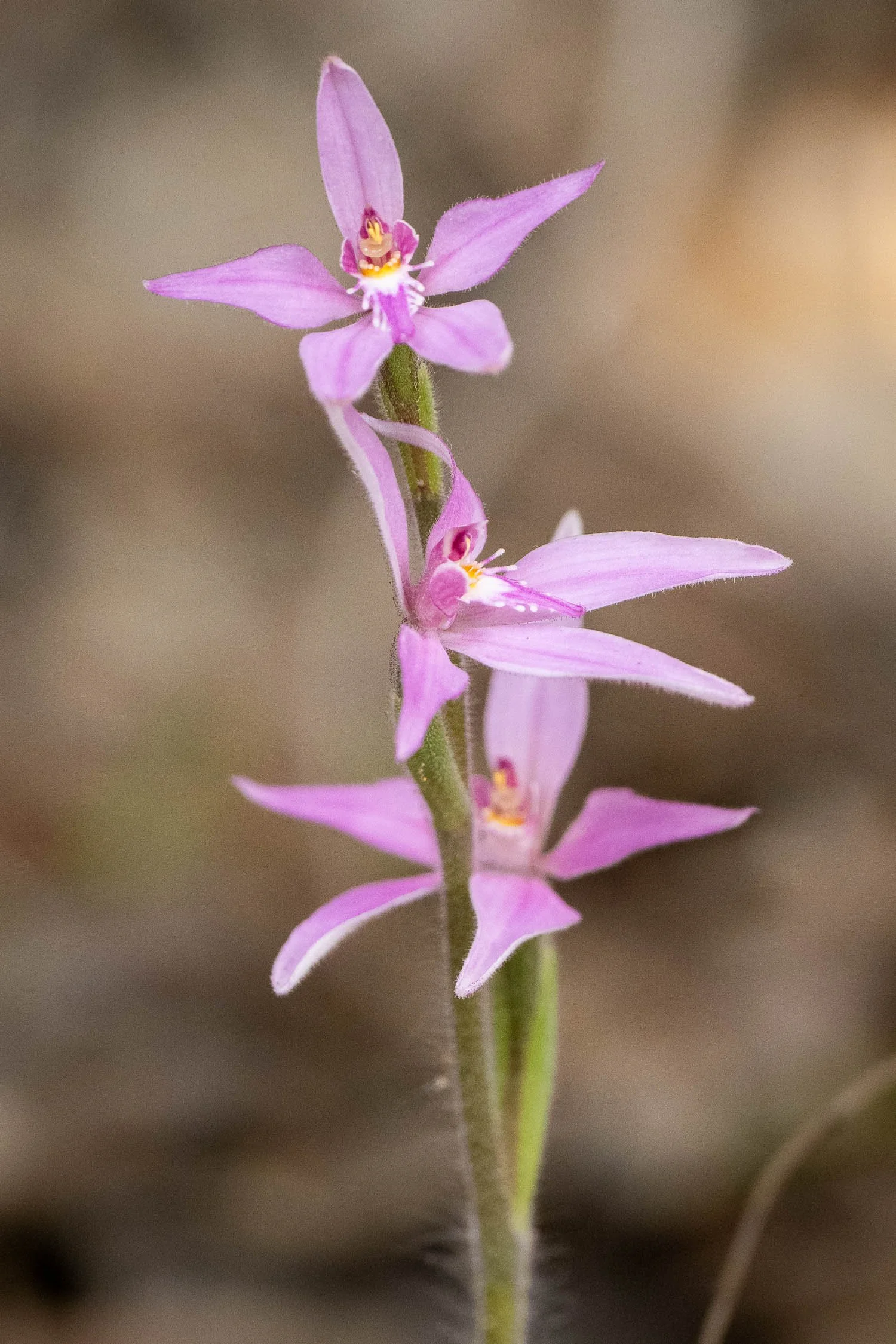
Pink Fairy (Caladenia latifolia).
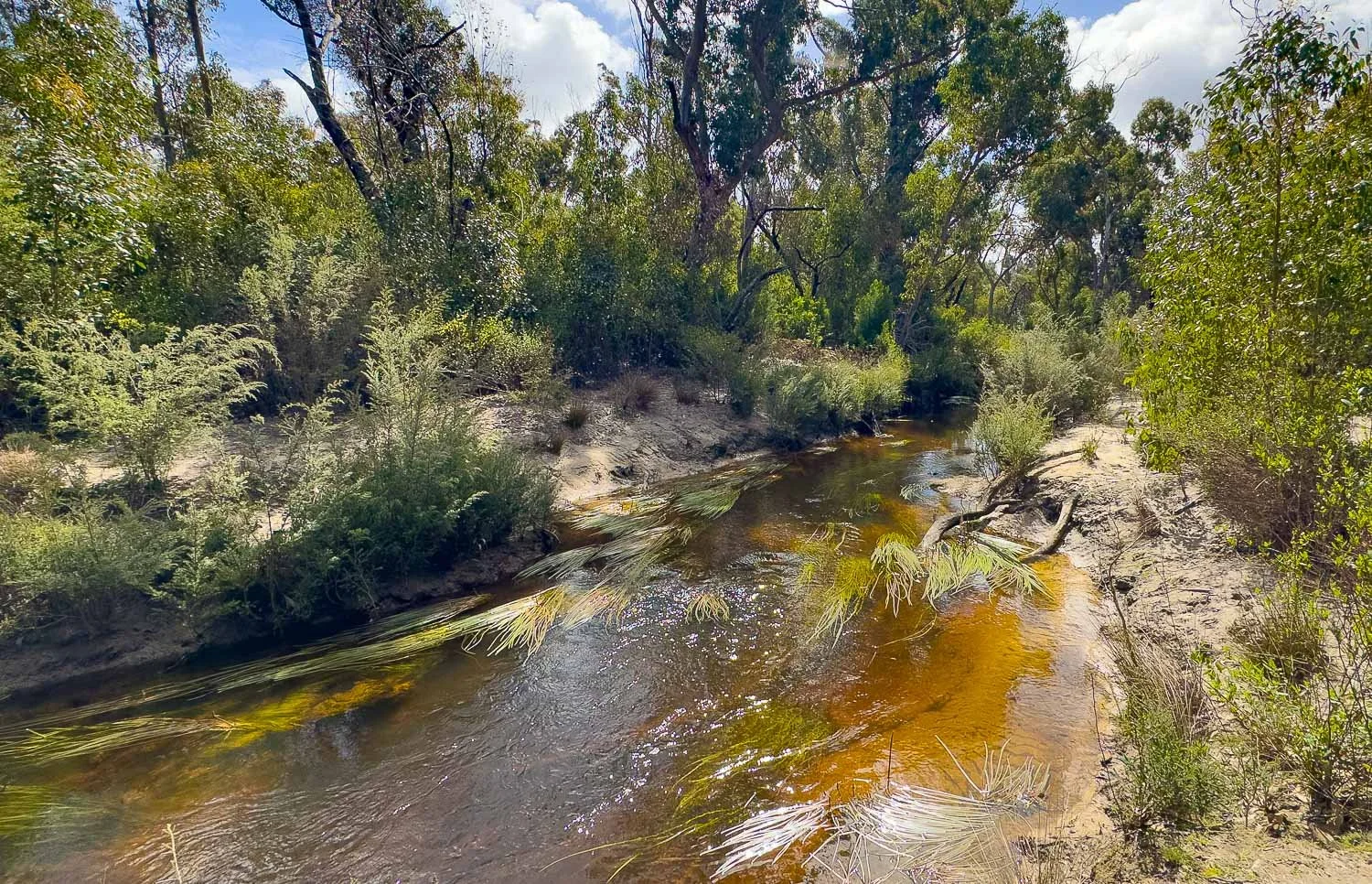
Just before the trail intersects Wool Bay Road, you’ll find a little picnic table with lovely views over the river.
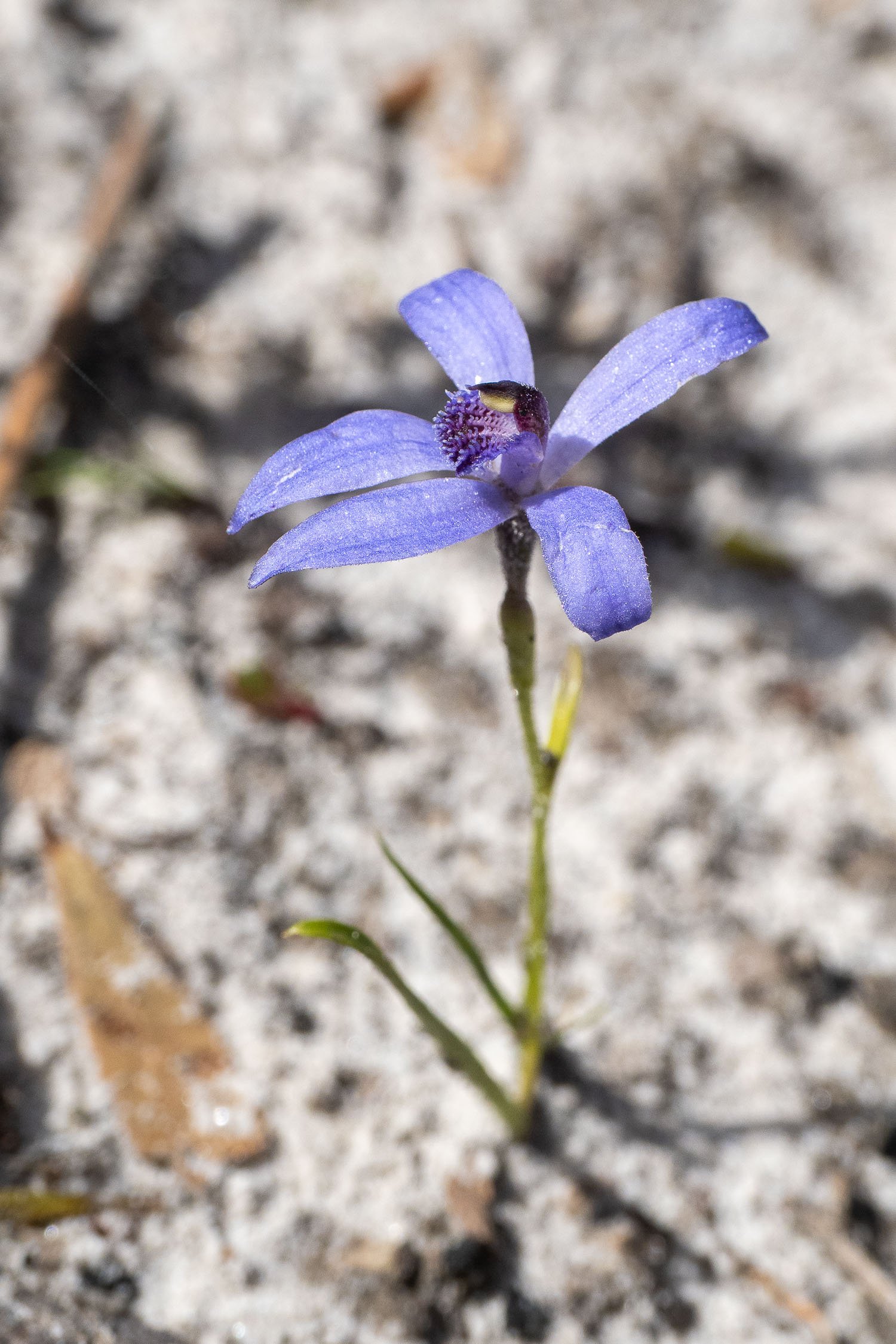
Blue Fairy Orchid (Pheladenia deformis); they grow only along a few kilometres of track today and nowhere else that we could see.
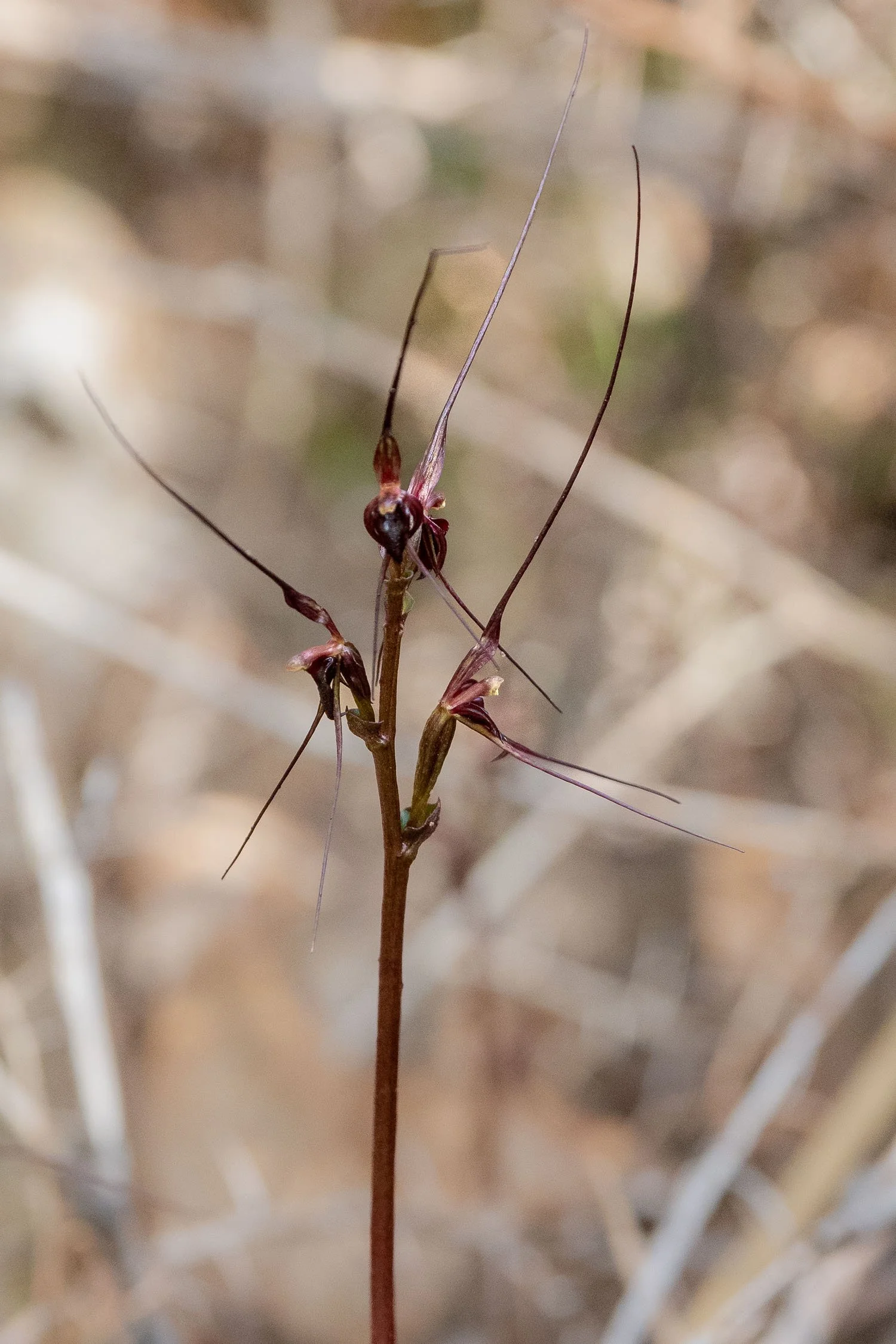
Mayfly orchids (Acianthus caudatus) in this section too: they usually grow in dappled shade and their colour makes them tricky to spot.
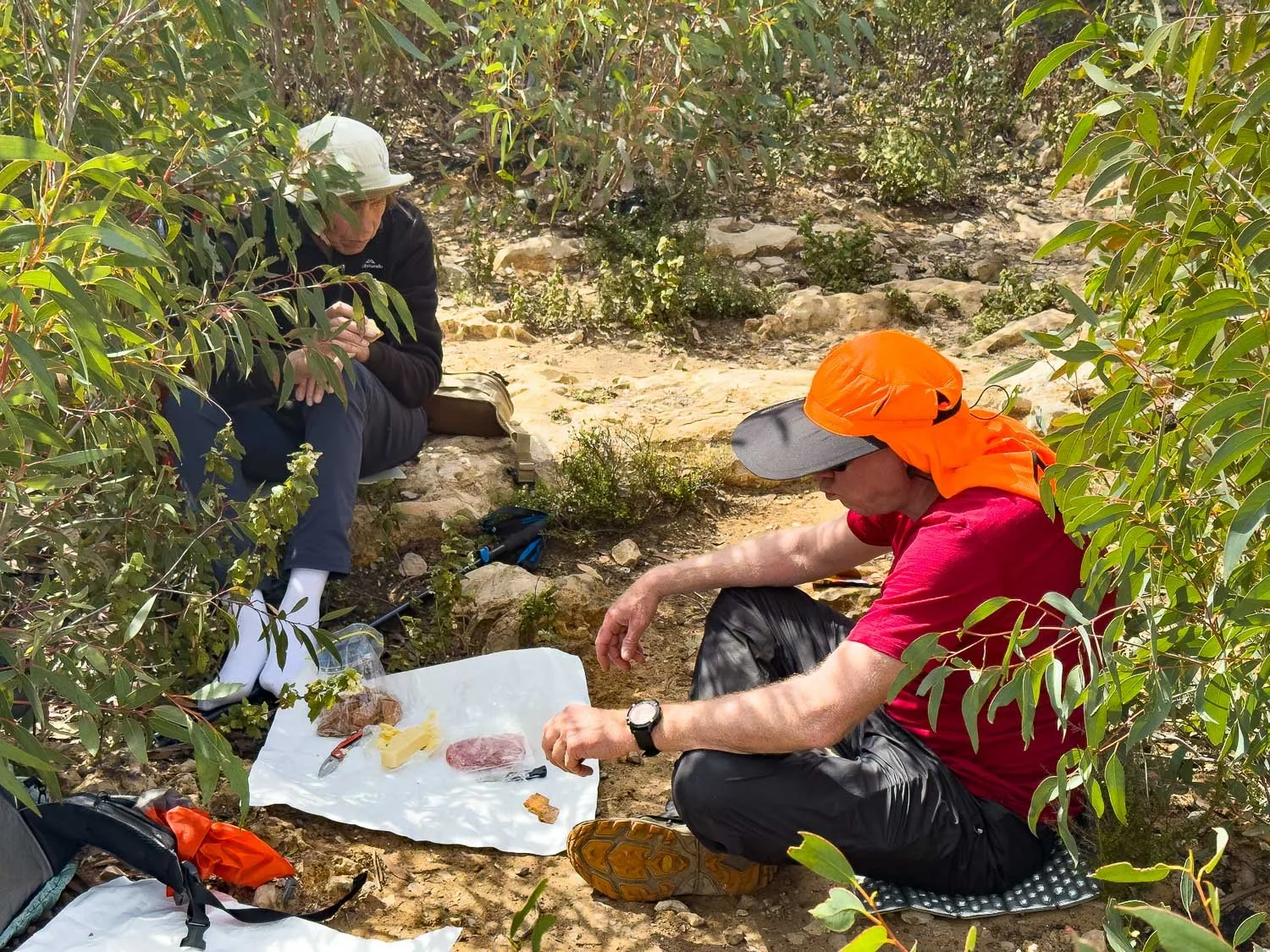
Lunch at Pardalote Lookout. Dehydrated lunches are light, but the first day is often a good time to indulge in cheese and salami, here with Geoff’s homemade sourdough crackers. Small, light pocket knives are, in our opinion, essential on trail. Many people carry Swiss Army knives but I never used 95% of the attachments so chose a plain knife instead.
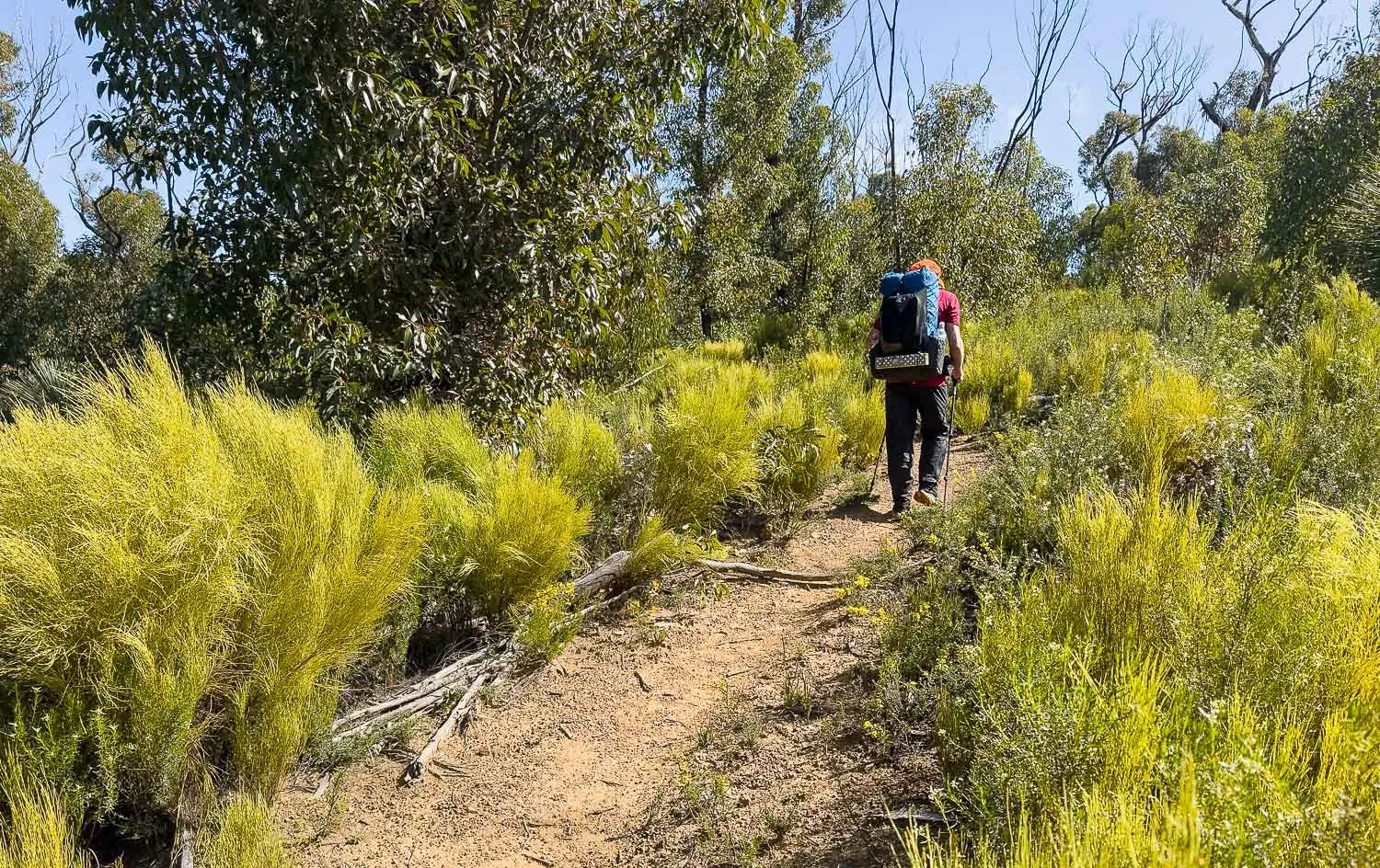
More smooth, solid path through re-shooting Cherry Ballart (Exocarpos cupressiformis)
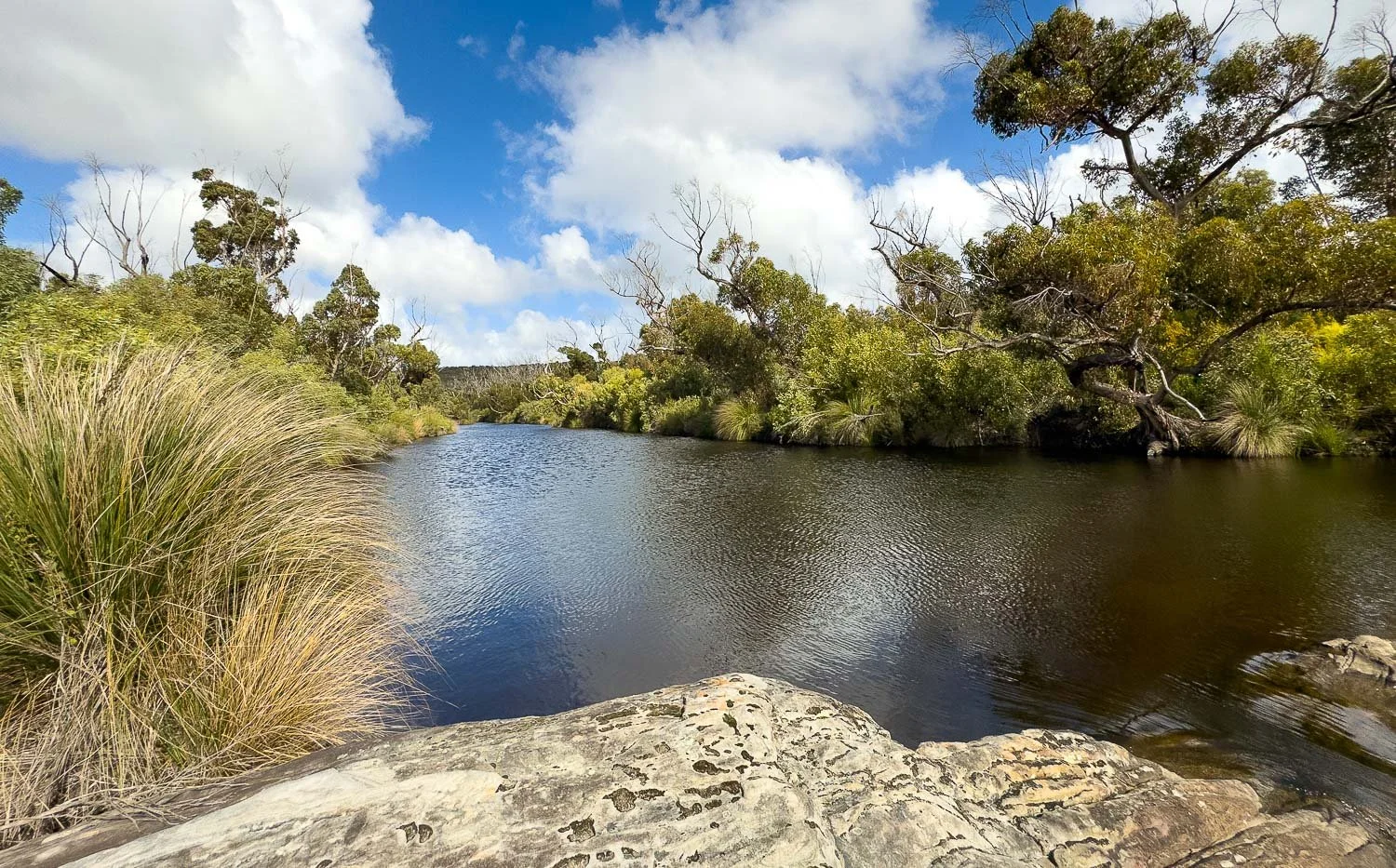
The Cascades: a great spot for a swim on a hot day.
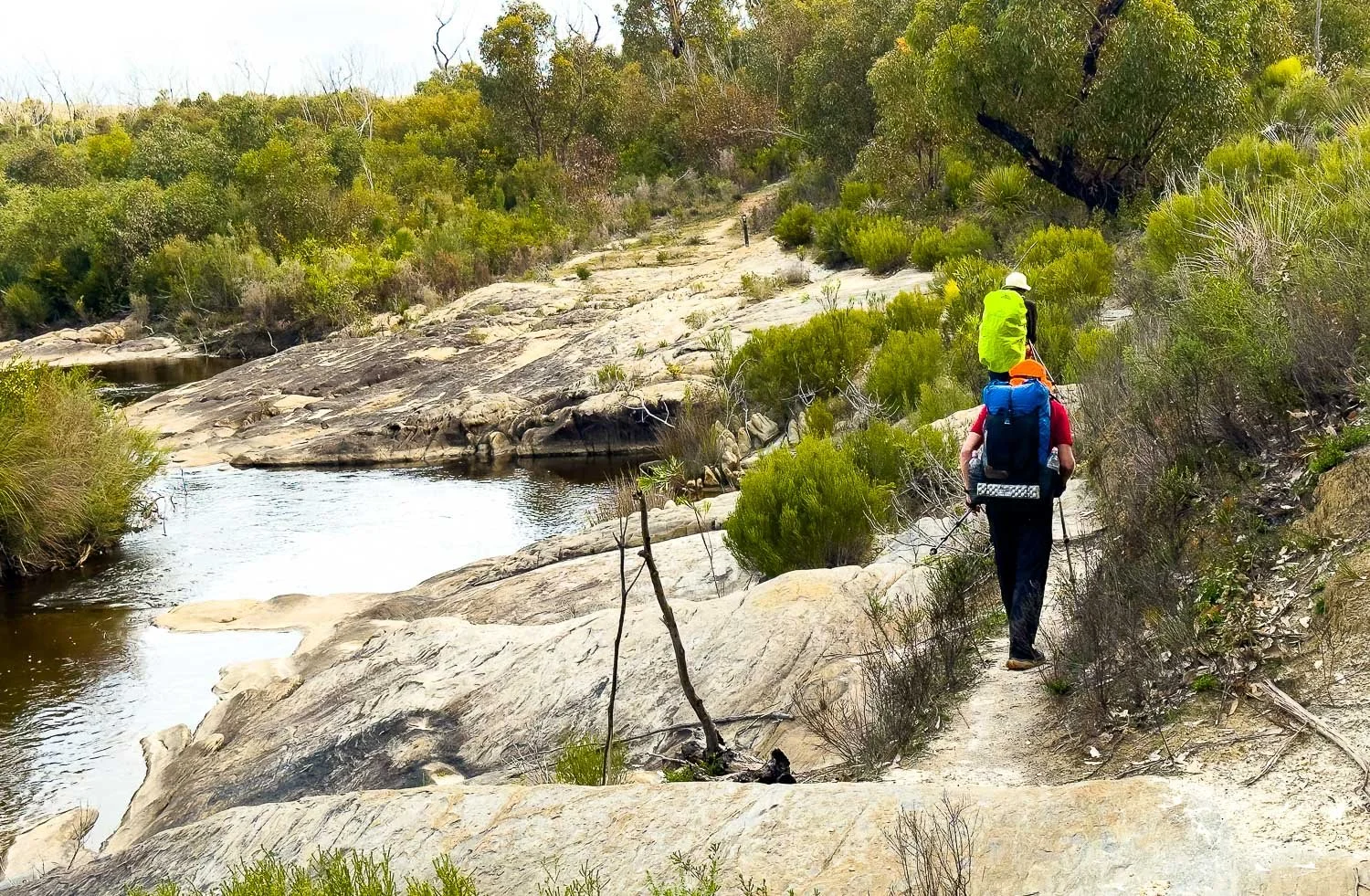
The trail continues along the river; use the high alternate route if it’s been very wet to avoid creating muddy runoff.
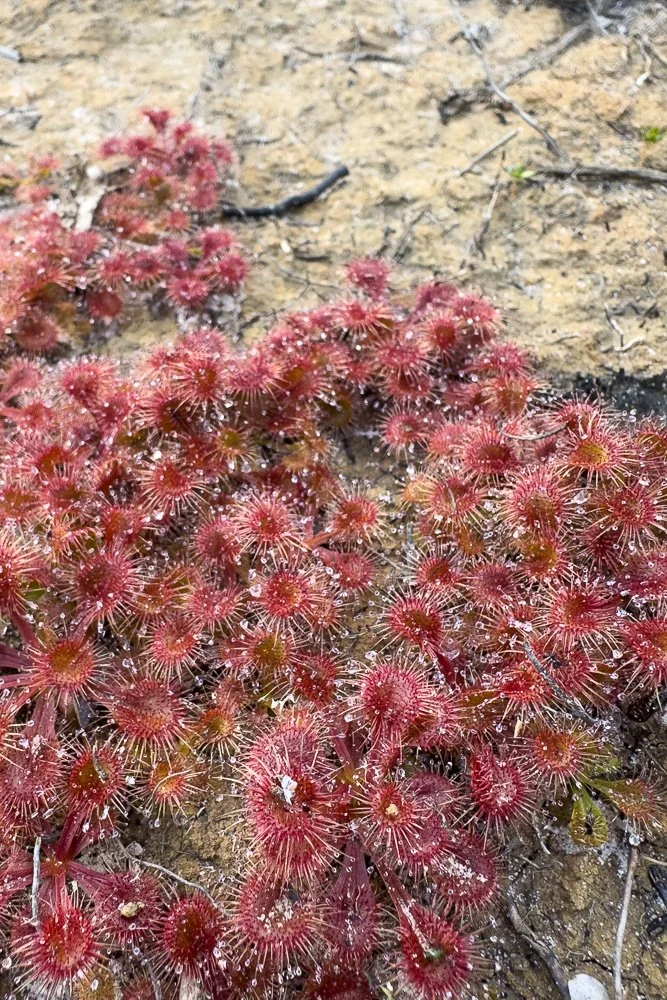
Schmutz’s sundew (Drosera schmutzii) is found only on Kangaroo Island; it is an amazing thought, really: the only place on the entire planet. The sticky droplets trap and kill insects, which then fall to the ground below the plant to provide extra nutrients.
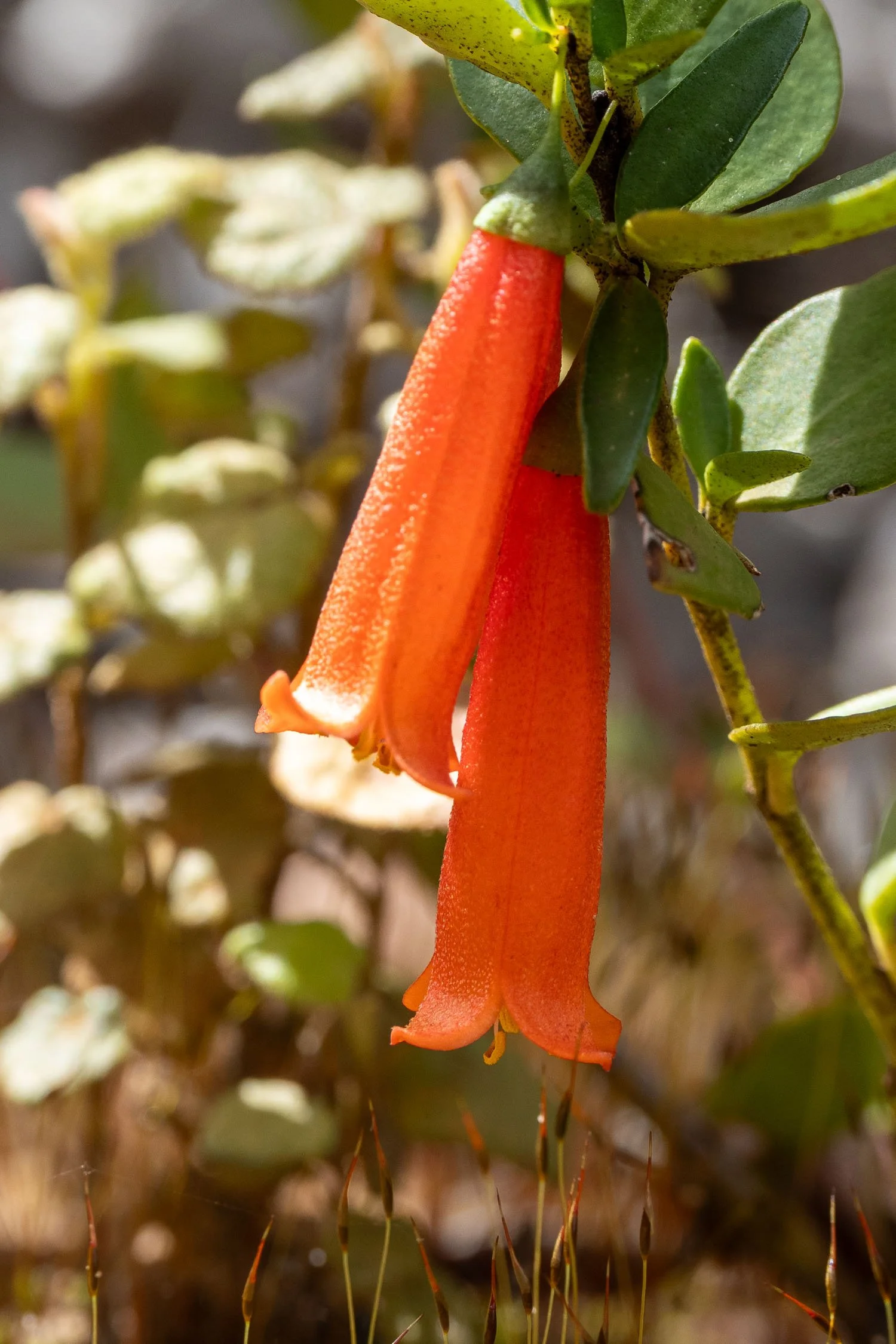
Salmon correa (C. pulchella)
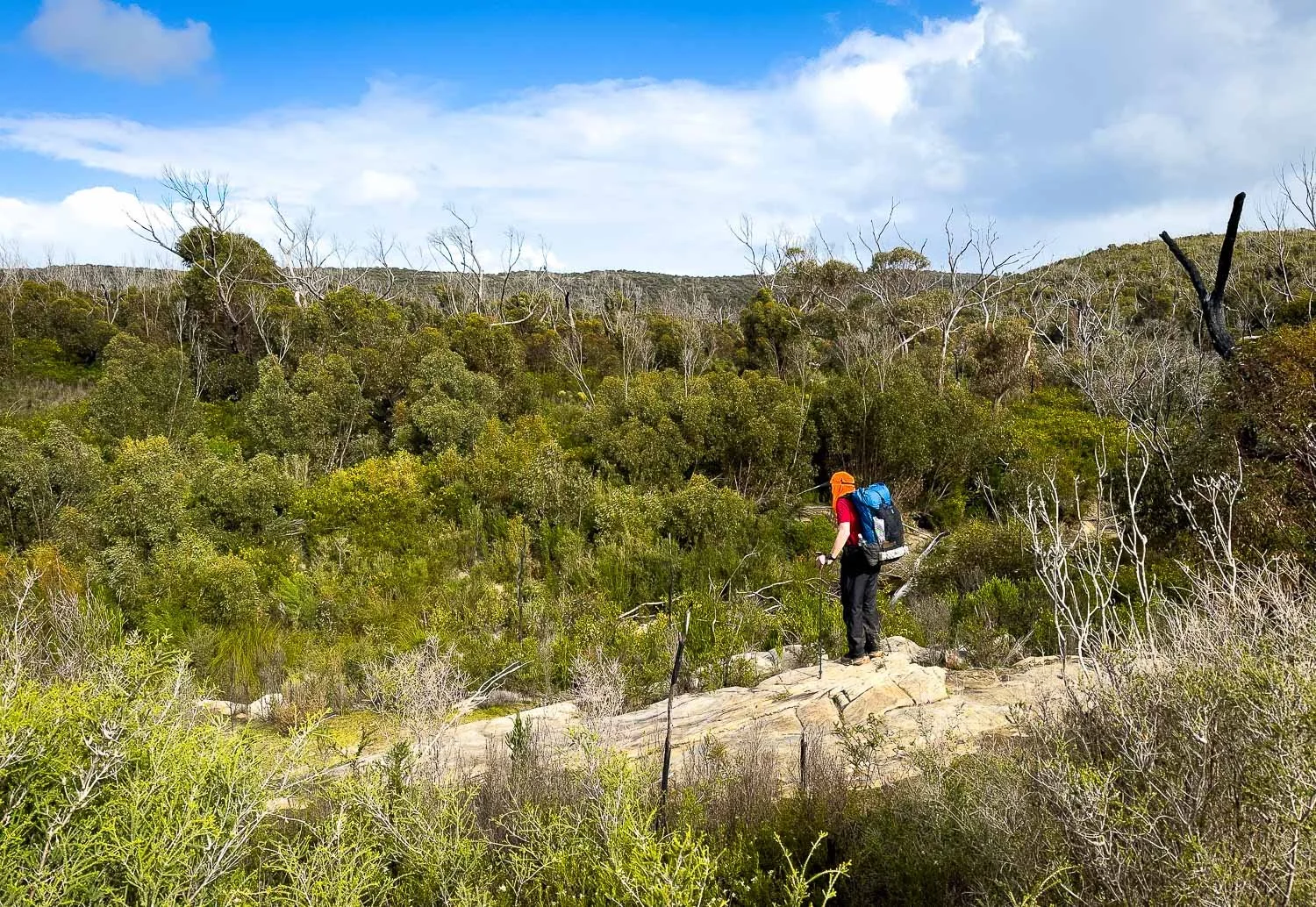
Every now and then the terrain opens up, but it is mostly too forested for expansive views (these come on subsequent days). A little further on we climb the lookout tower, but regrowth means that the views aren’t spectacular; winter when the swamp is full would be fantastic for birds.
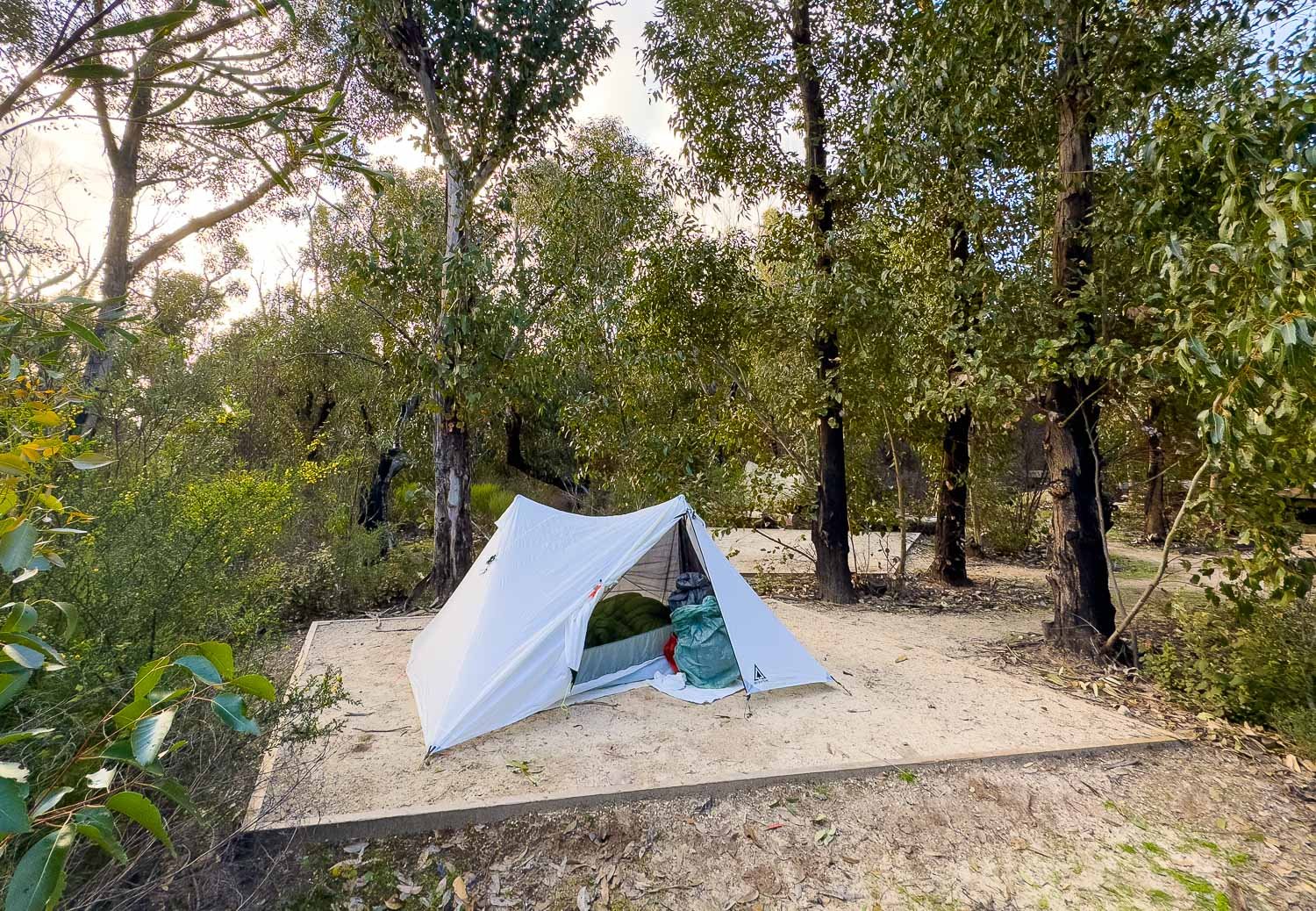
The campground happily has both tent platforms and tent pads. The latter are much easier to use for those of us who have non-freestanding (trekking pole) tents; pads are also warmer than platforms. We are using a prototype double wall Durston Gear XMid 2 in a new material.
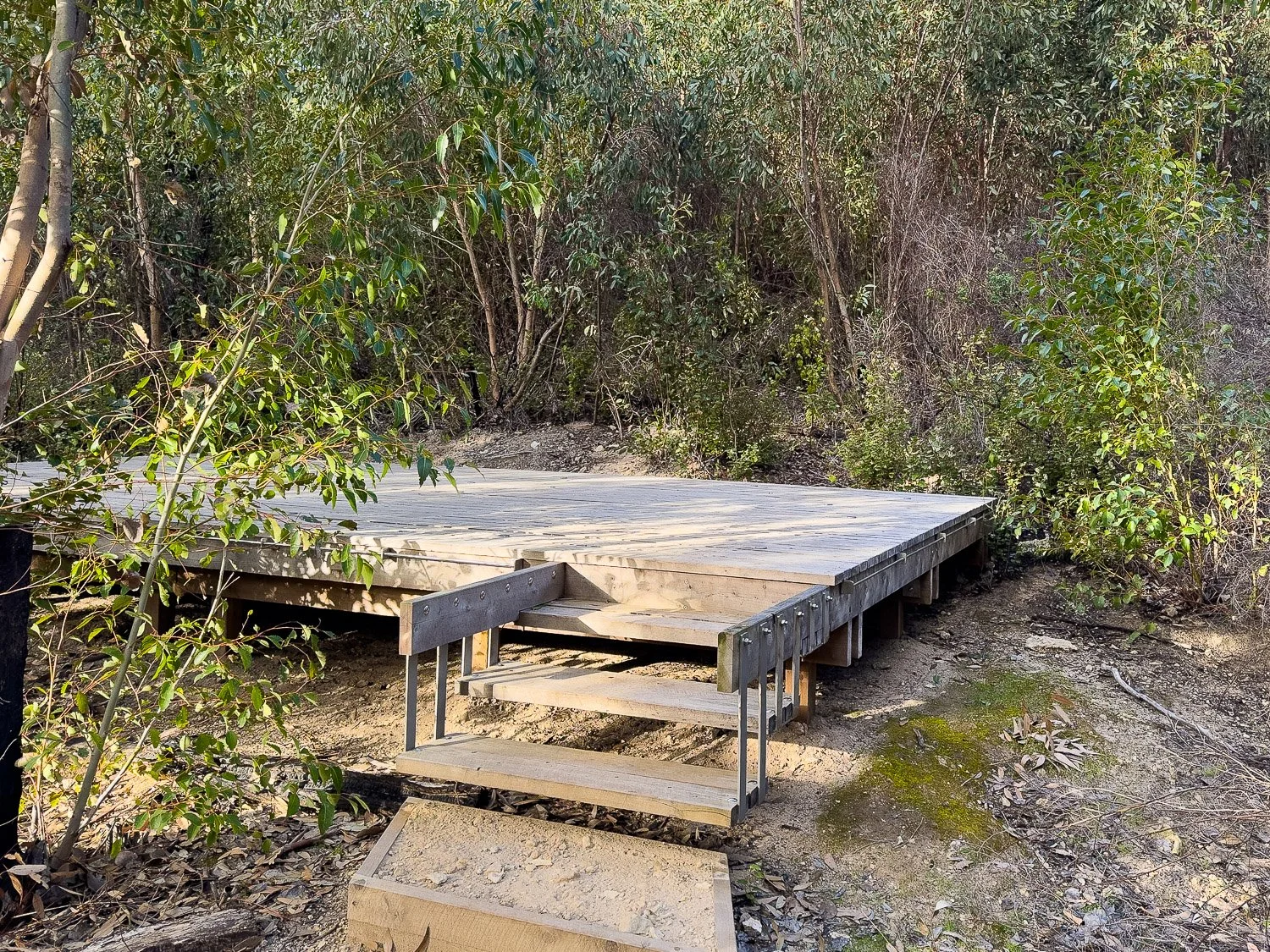
We have often pitched on tent platforms with our non-freestanding tents. Key is to carry line extensions, a few deck hooks (not screws or cup hooks that damage the platform) and to be prepared with a variety of techniques. With two of us, we can set up in under five minutes even on tent platforms.
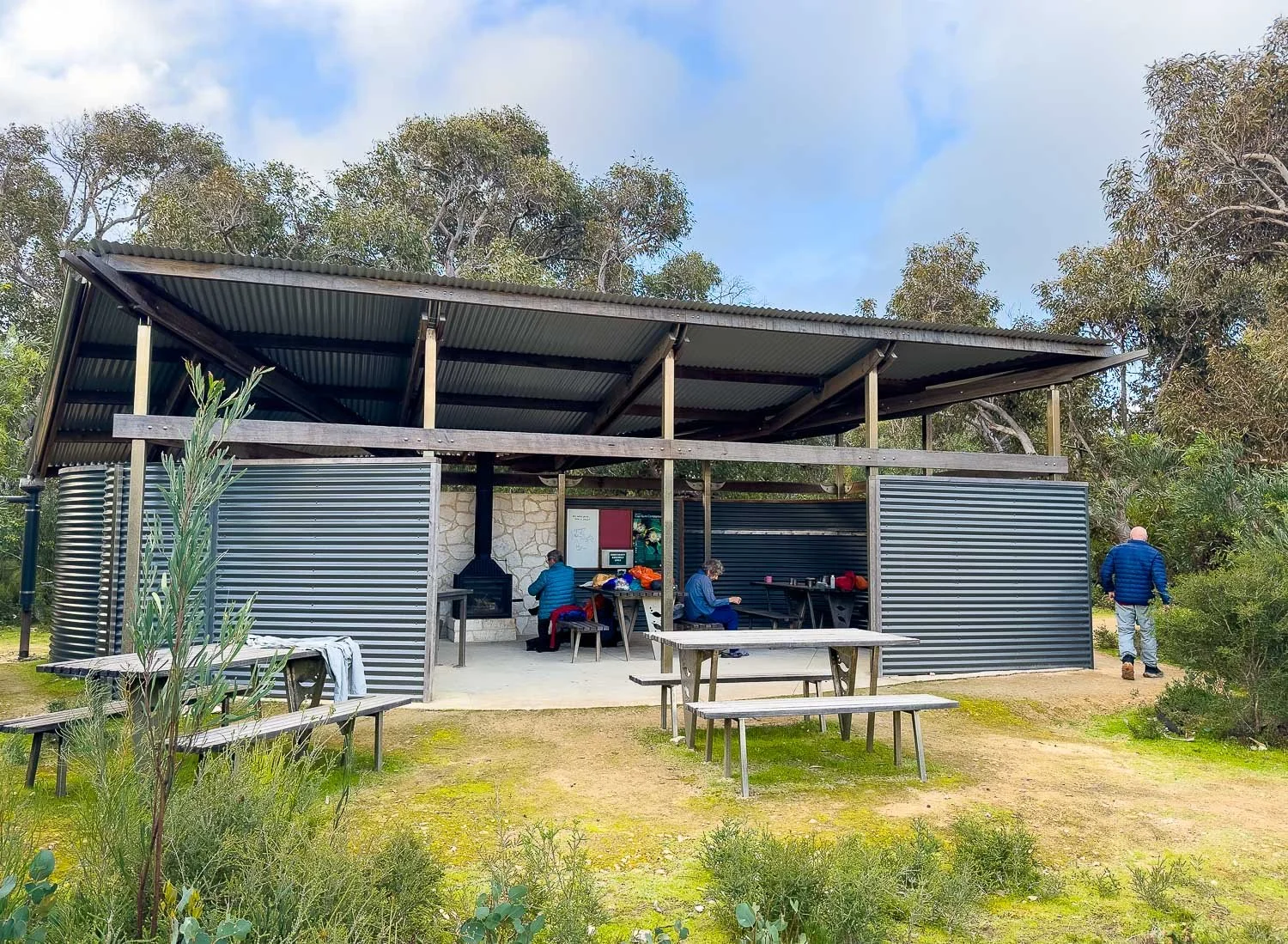
The hut is positively luxurious by Australian standards; perhaps not by NZ standards, which are more like European Mountain huts. There’s even a slow combustion fire, and wood in a shed out the back!
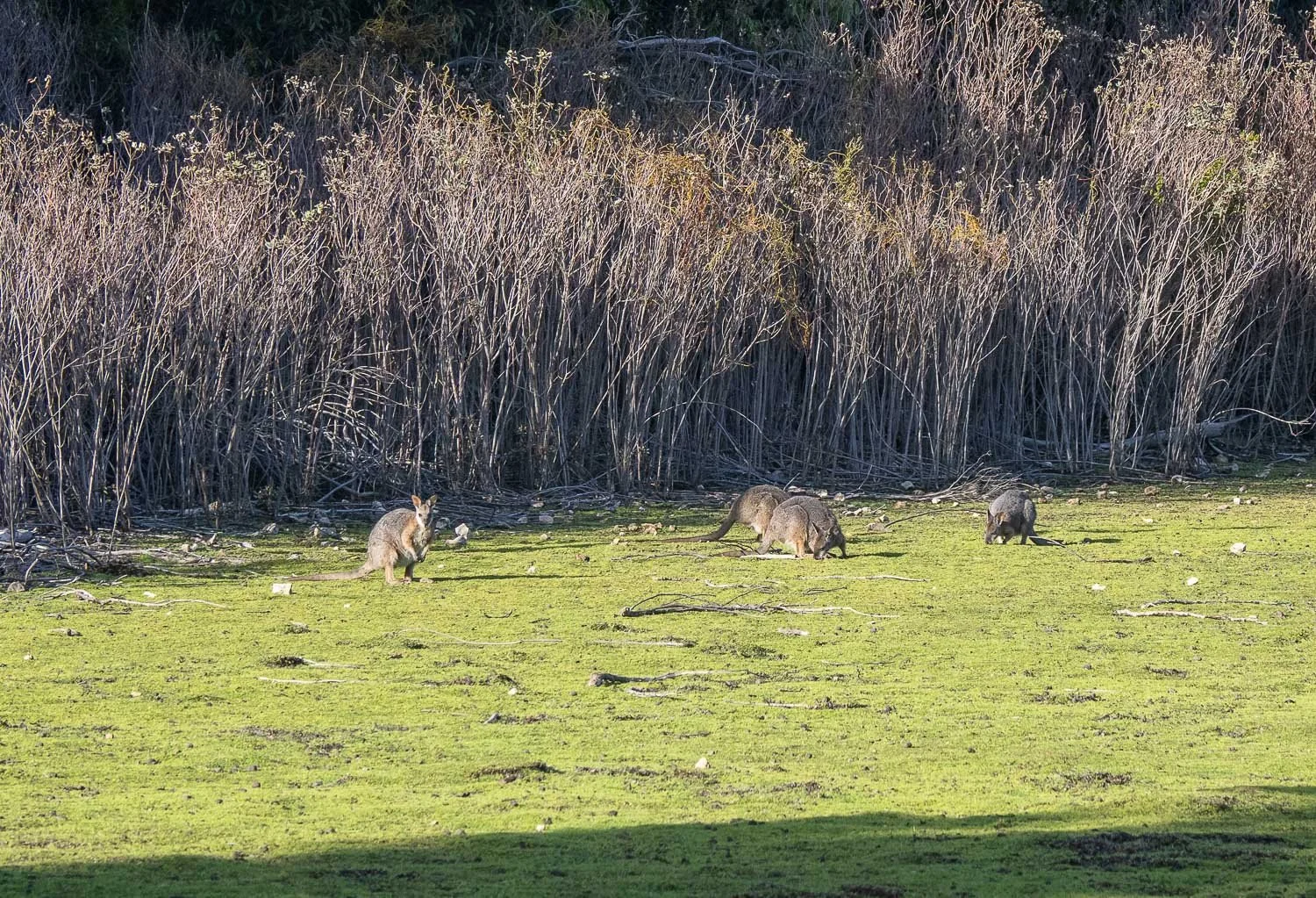
From the picnic tables, watch Tammar Wallabies grazing and, later, listen to the eerie cries of bush stone curlews.
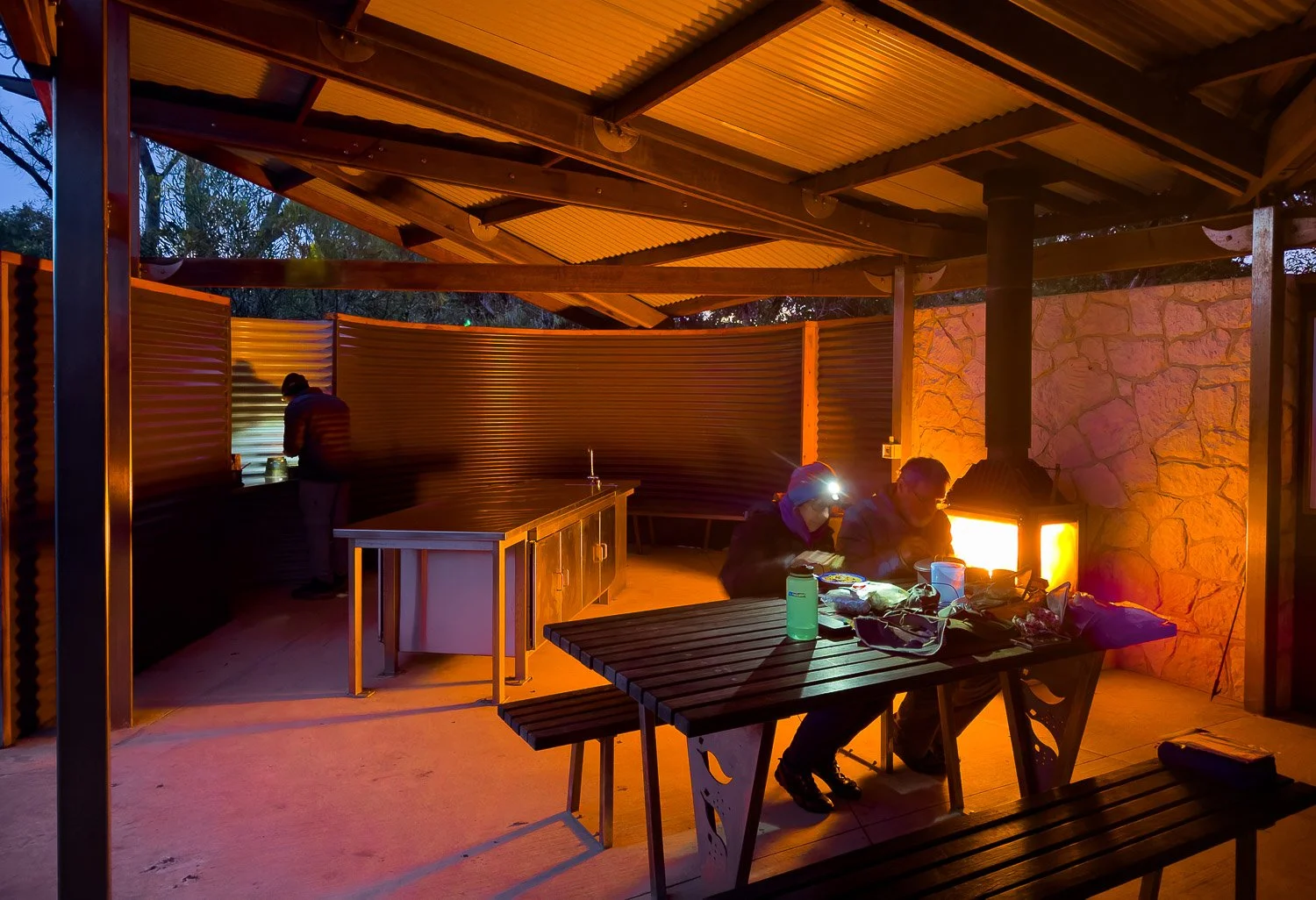
We are hiking in the peak spring season, with only one other couple on trail at the same time: we find that extraordinary for such a fantastic hike. The bush has recovered from the wildfires: the trail is ready and waiting for you!