Snake Lagoon to Cape de Couedic (Day 2)
Meeting the wild Southern Ocean
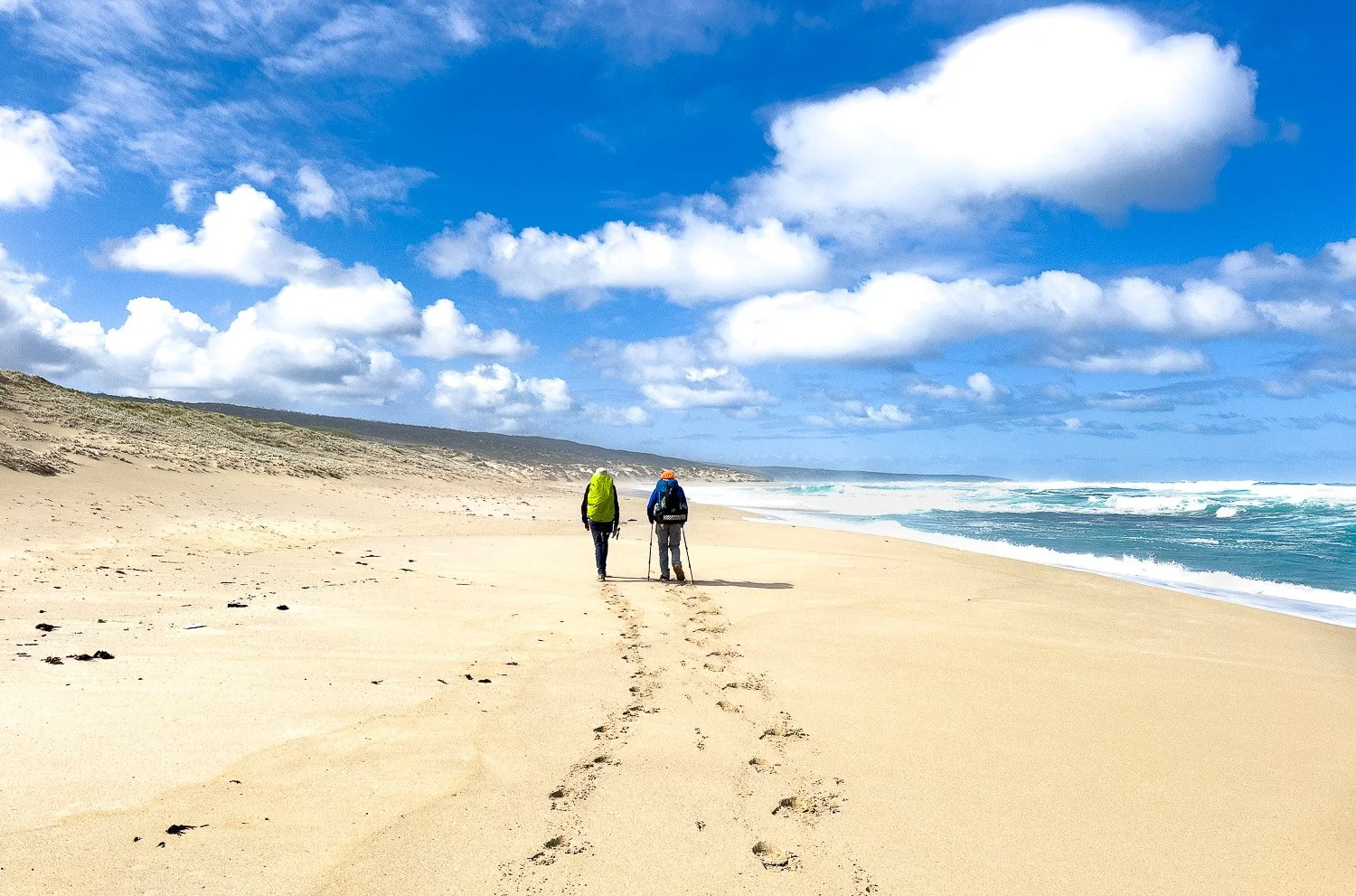
Golden sands, turquoise water and solitude on beautiful Maupertuis Beach.
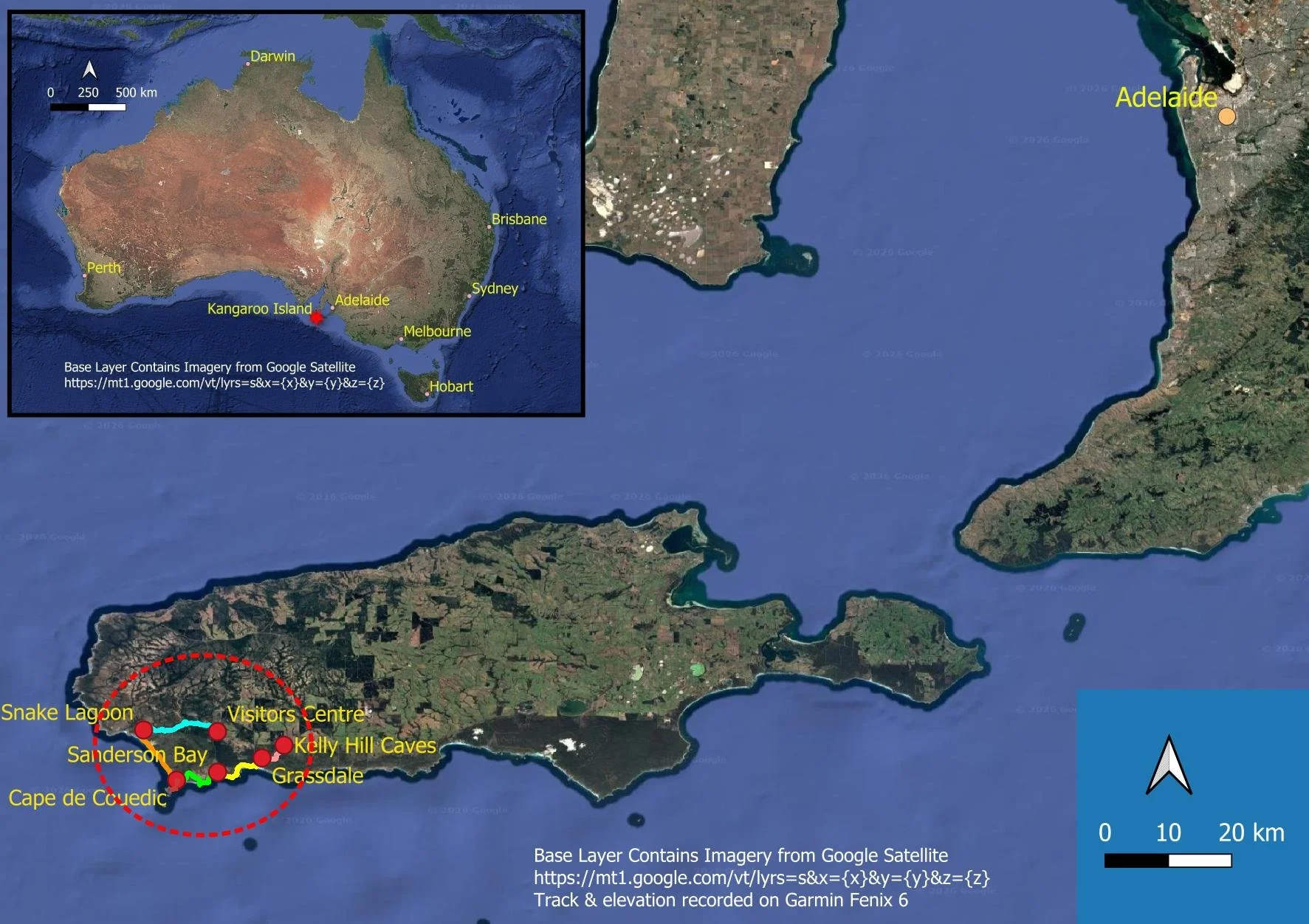
Hike Locality Map
Today’s Hike
Cup Gum Hut to Hakea Hut (Maupertuis Section) 14km, 7 hrs*
*NPWS suggested hike time; we took 7 hours including our side trip to the Rocky River mouth.
If you follow our itinerary, today’s 14.8km/9.2mi hike with just 310m/1020ft elevation gain takes you along the river to the magnificent coastline. En route, we highly recommend the fun 1.2km/0.75mi return spur trail to the river mouth with its splashing waterfall and pool, great for a swim on hot days; leave your main pack at the junction and take a day pack with PLB, first aid kit and essentials. If you don’t take the spur trail, view the pool from the headland.
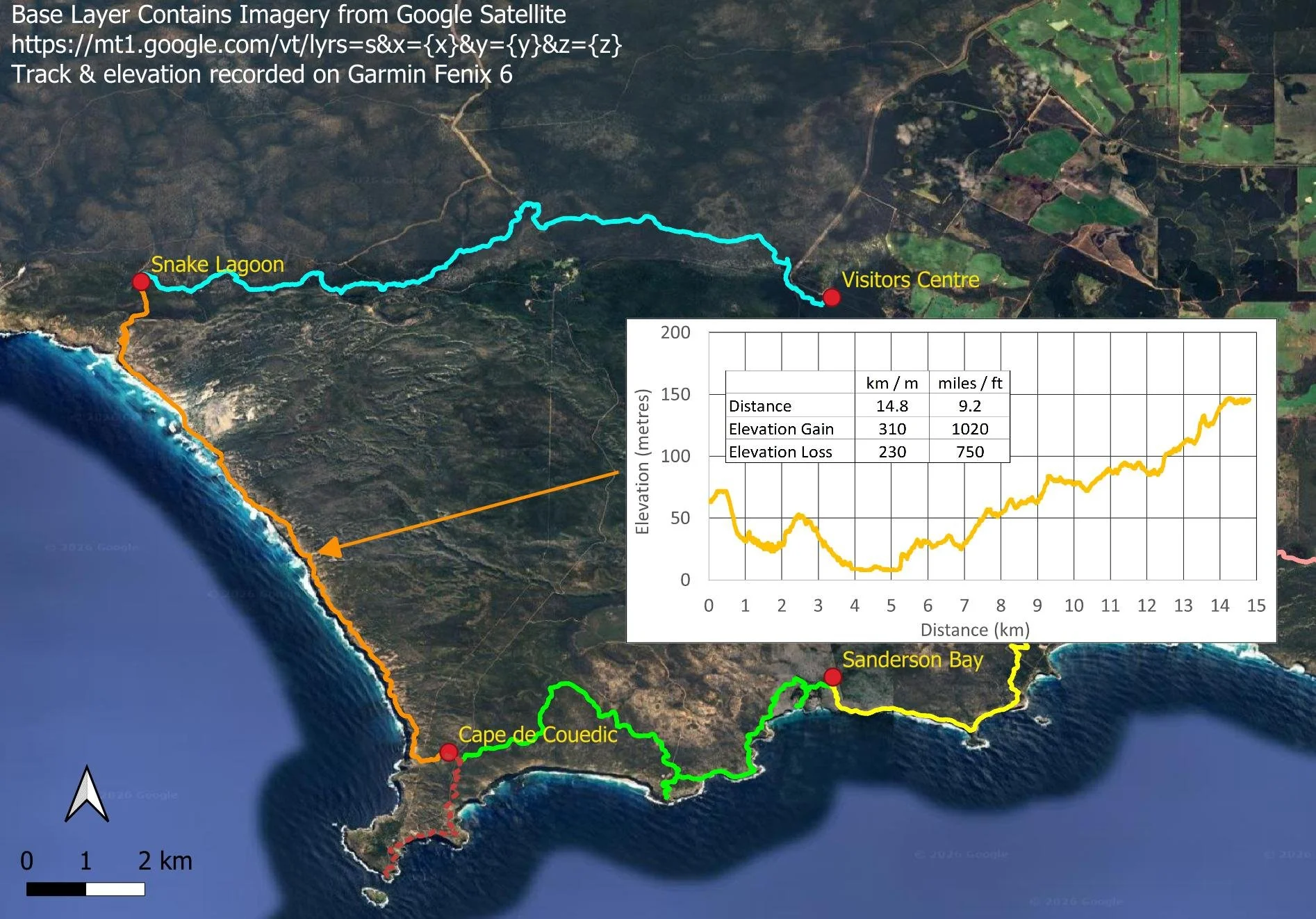
Day 2 Detail Map
Then traverse the rocky limestone headland for about 1km/0.6mi before descending to Maupertuis Beach, but only if you can walk below the high tide mark. Rare shorebirds like Hooded Plovers nest above the high tide mark so, if it’s high tide, take the alternate route along the dunes.
Watch for the trail marker post on the dunes where you leave the beach via a sandy scramble as you near the headland. Traverse more dunes before emerging onto rocky limestone cliffs, following the edge with constant views of the Southern Ocean — look for whales and dolphins! — until the last 900m/0.56mi when you head inland to Hakea campsite.
Faster hikers might choose to divert at the end to include Admiral’s Arch, but we strongly recommend that slower hikers don’t attempt this: it’s an extra 8km/5mi and you’ll run out of time. If you’re following our itinerary, you’ll either have dropped a resupply at Hakea Hut the day before you started the hike, and visited Admiral’s Arch and Weir Cove then, or you’ll visit them on the afternoon of your last day.
Walk with Us:
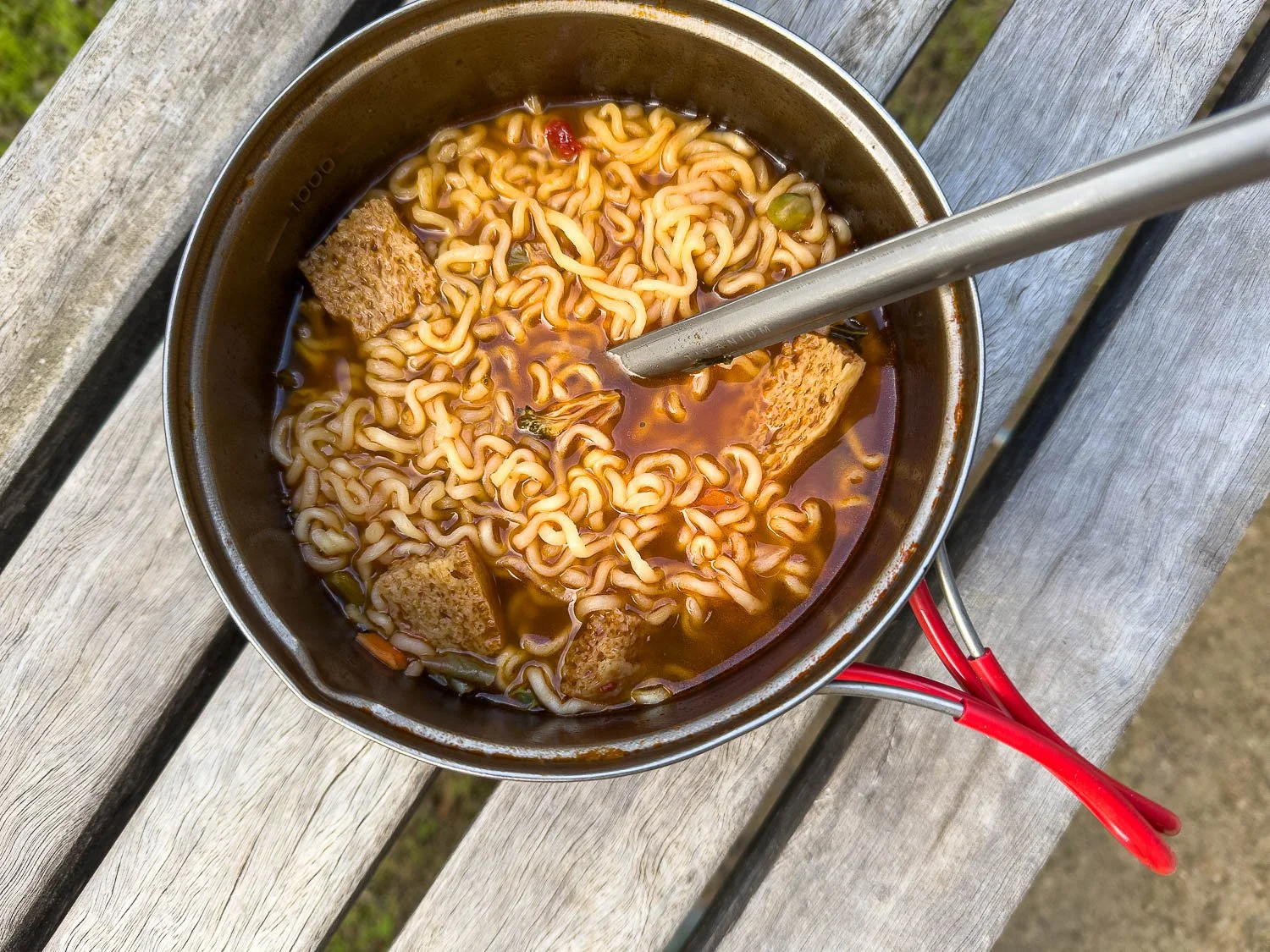
Breakfast noodles with wheat gluten for protein and dehydrated veg for carbs and fibre is a favourite hiking staple.
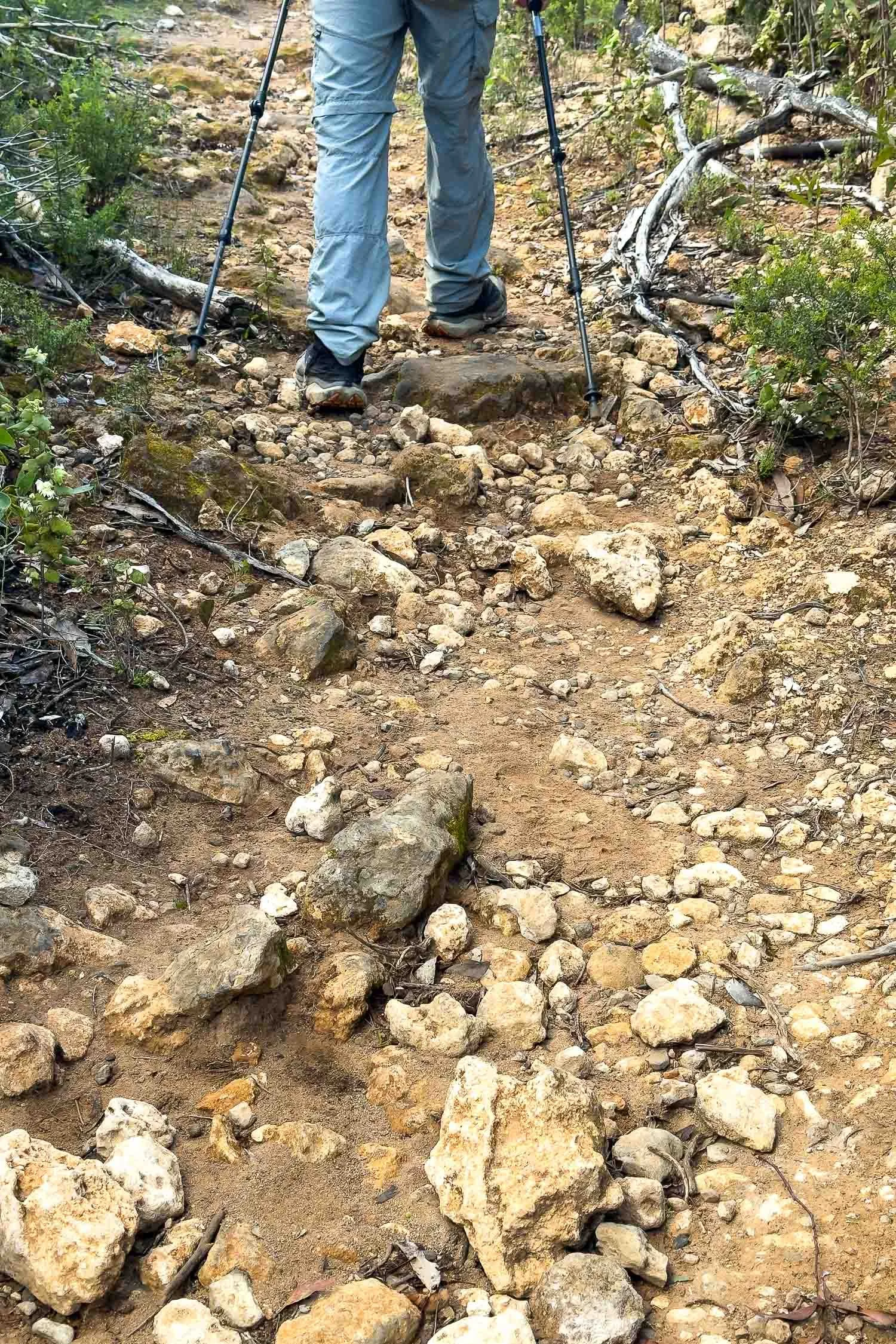
Even at the start, the trail is more rocky than much of the previous day.
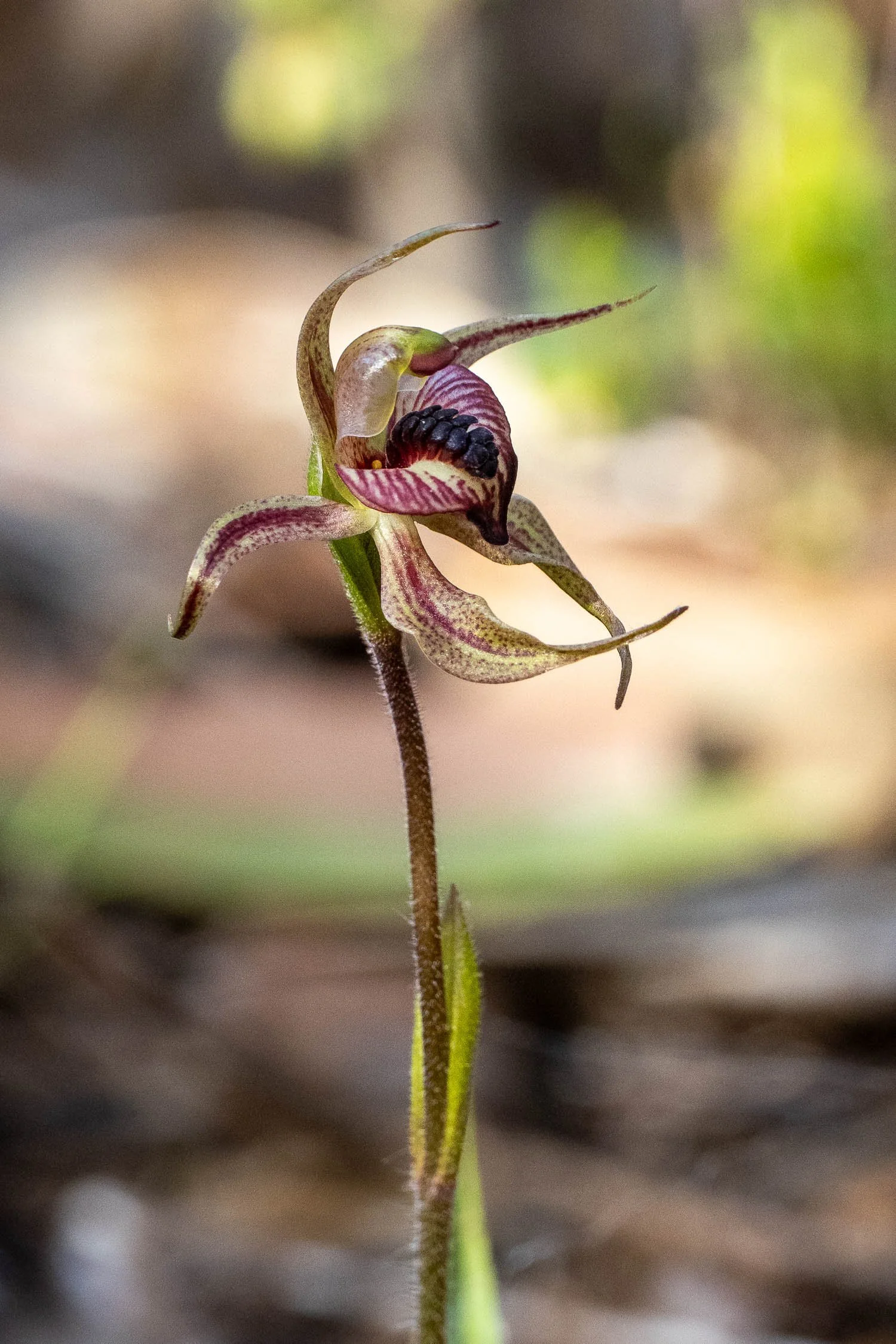
Wildflowers such as the Heart-Lipped Spider Orchid (Caladenia cardiochila)…
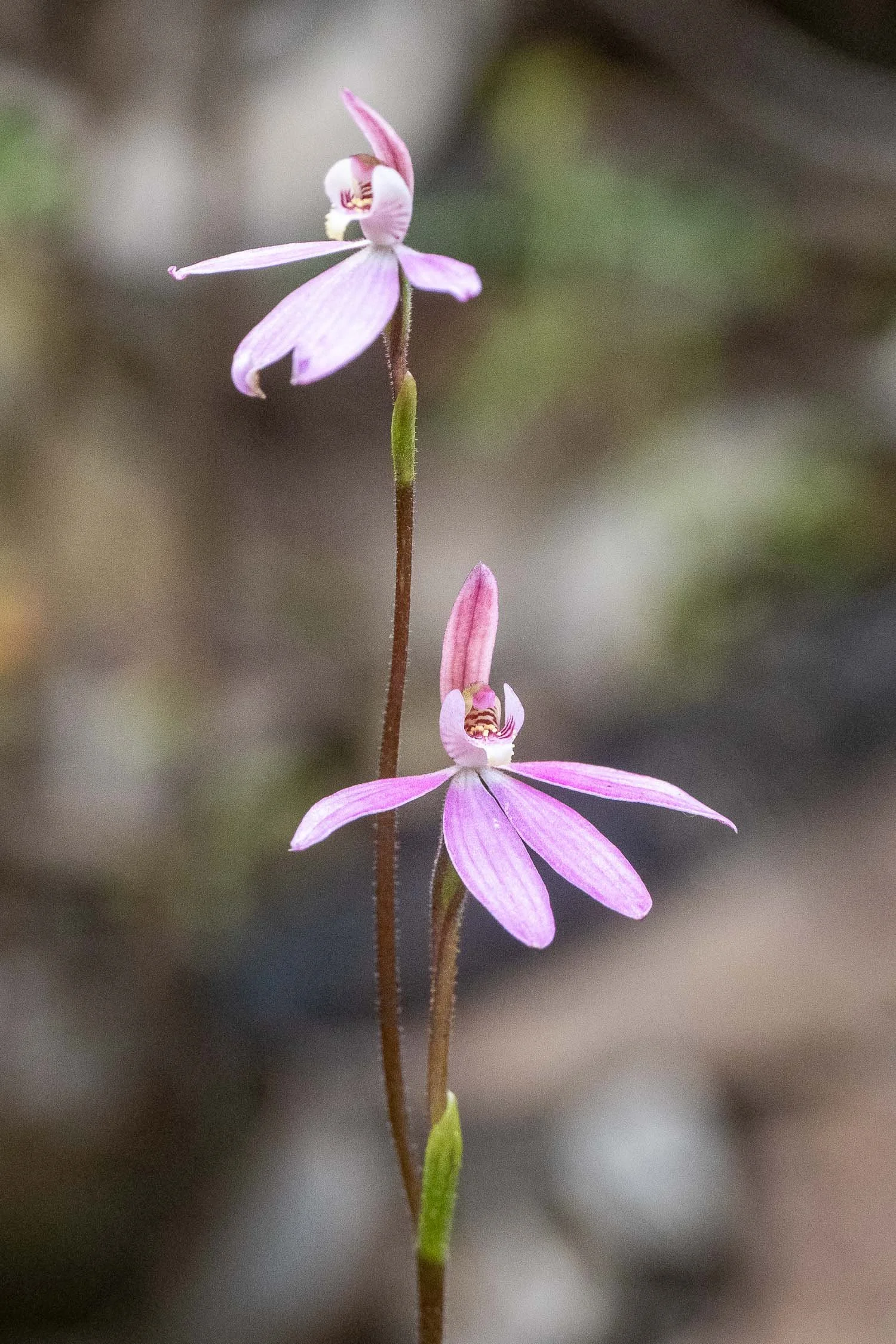
… and Pink Fingers (Caladenia carnea) trackside.
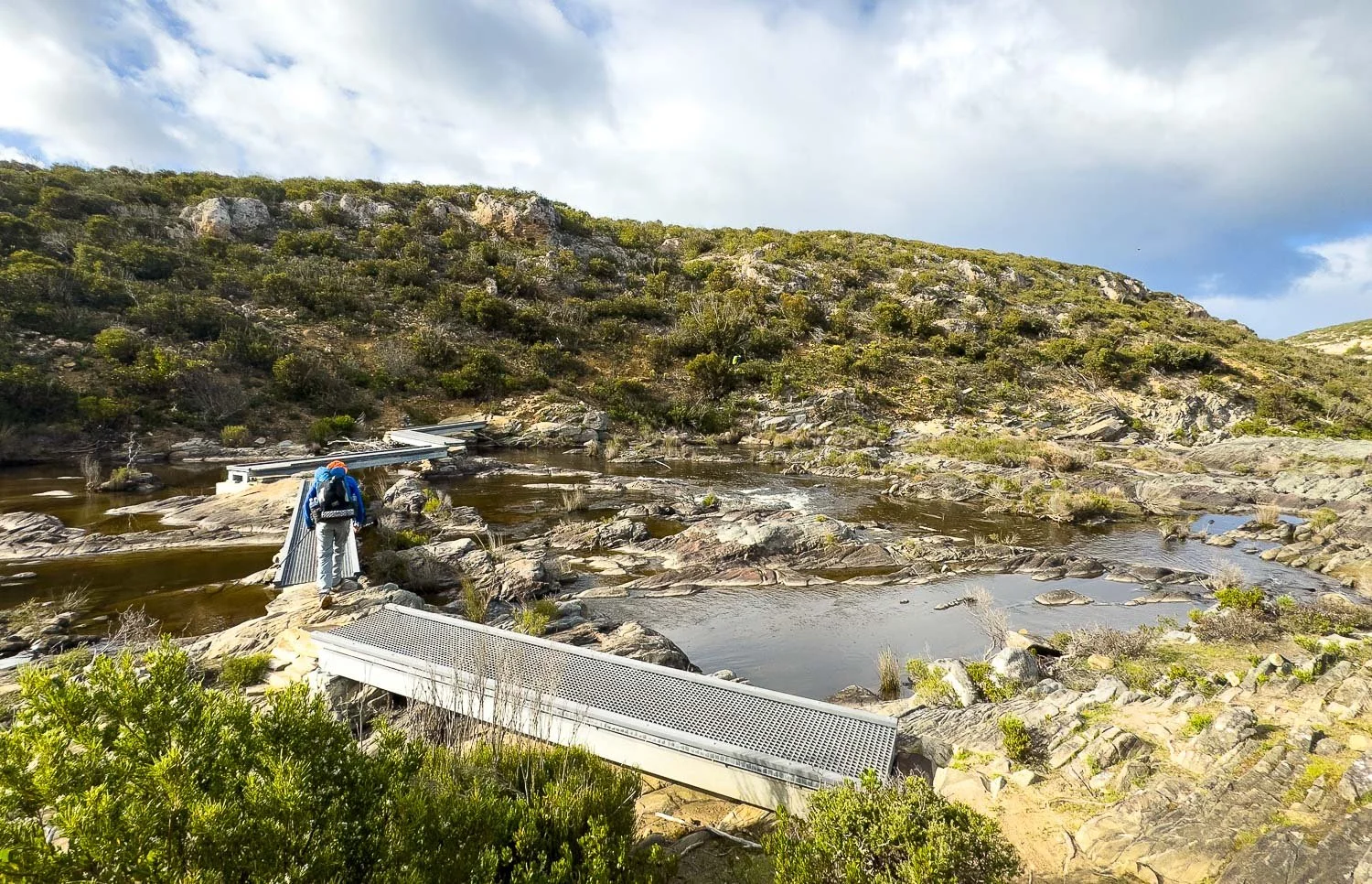
Cross to the true left of the Rocky River. True left and true right are the sides when you face downstream; it’s a handy way of describing routes along watercourses because they twist and turn so much that compass directions are unreliable.
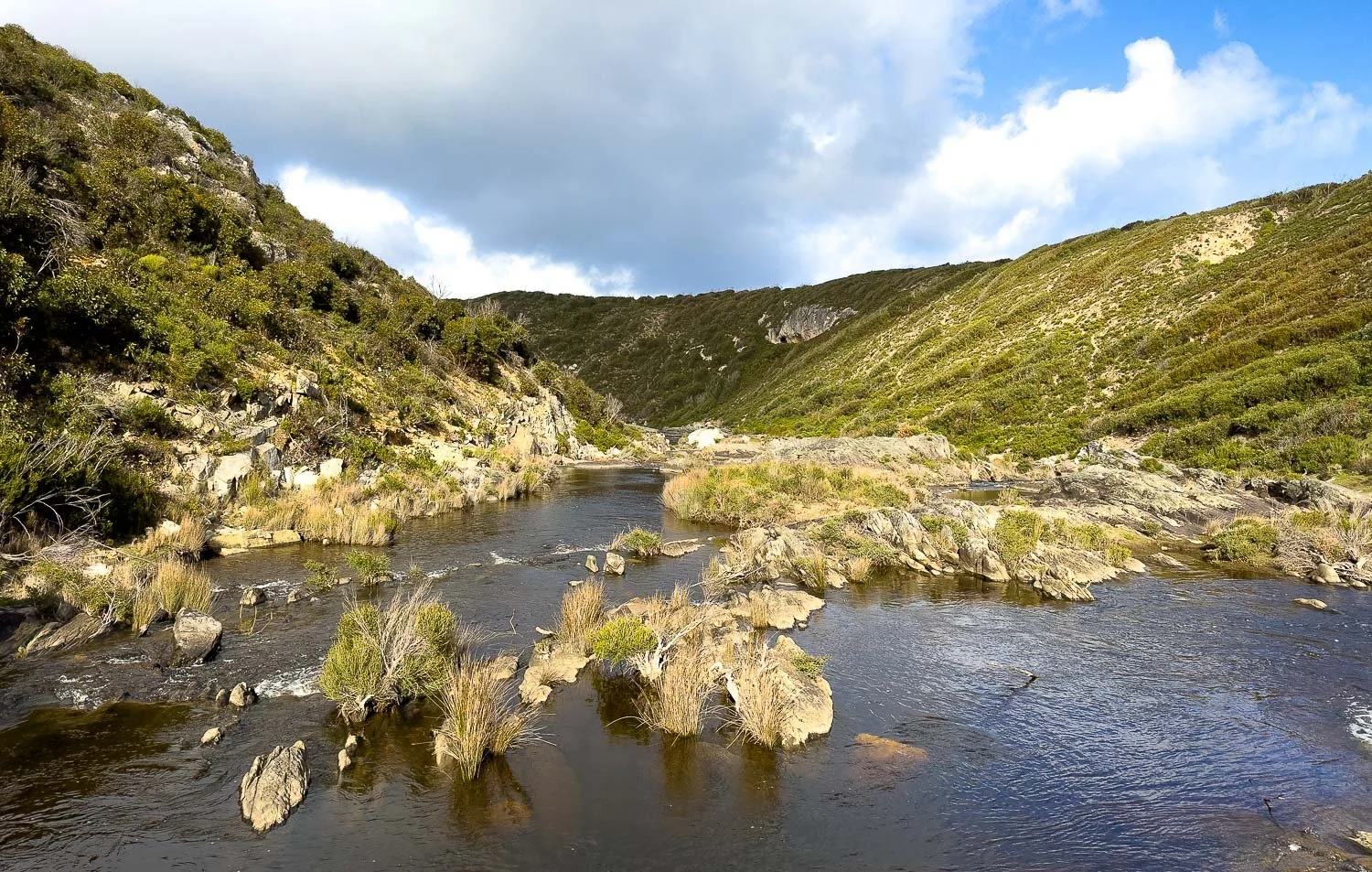
Delightful views downstream.
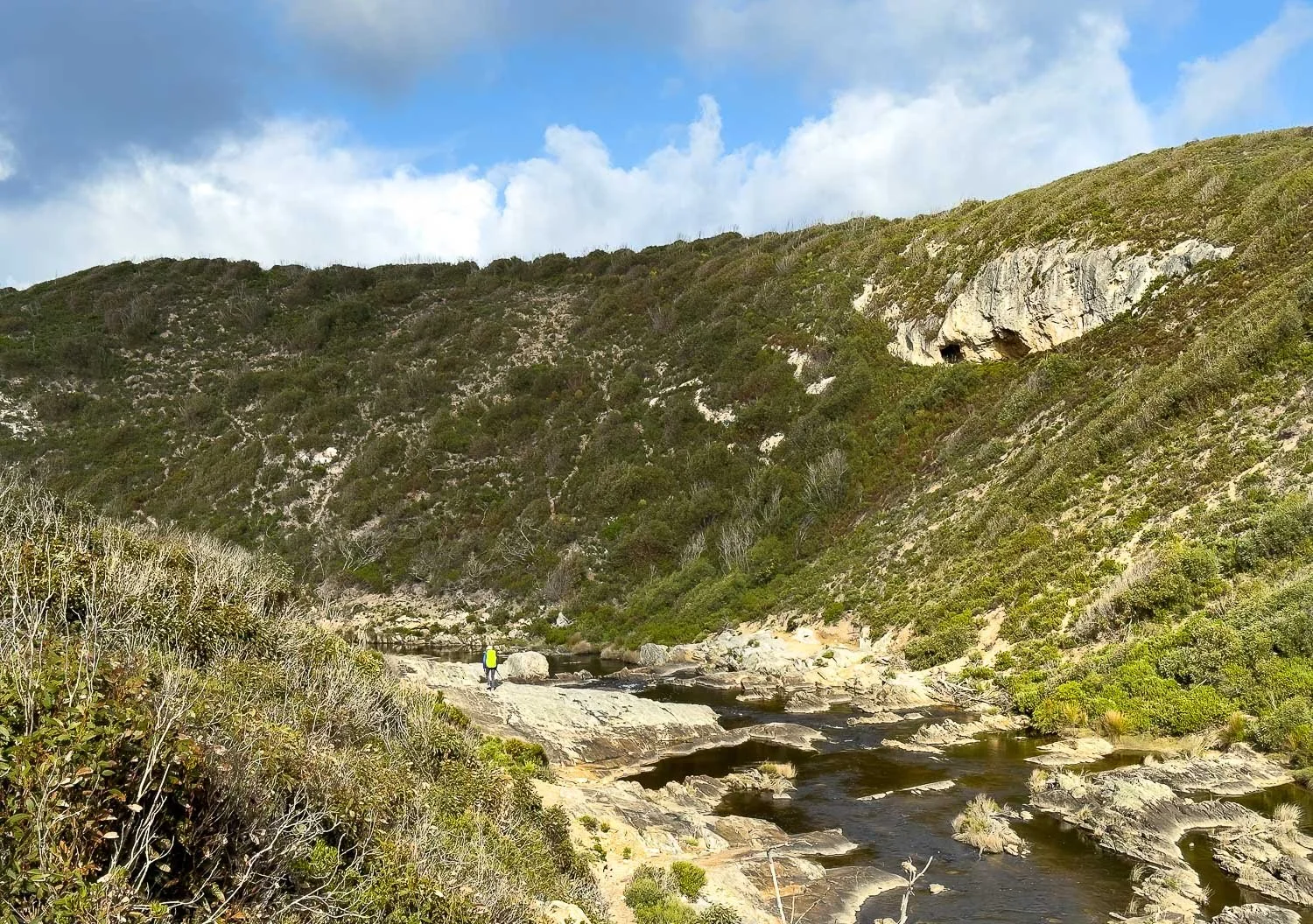
Shortly after crossing, leave your pack at the junction and take the spur trail towards the mouth, following the true left bank.
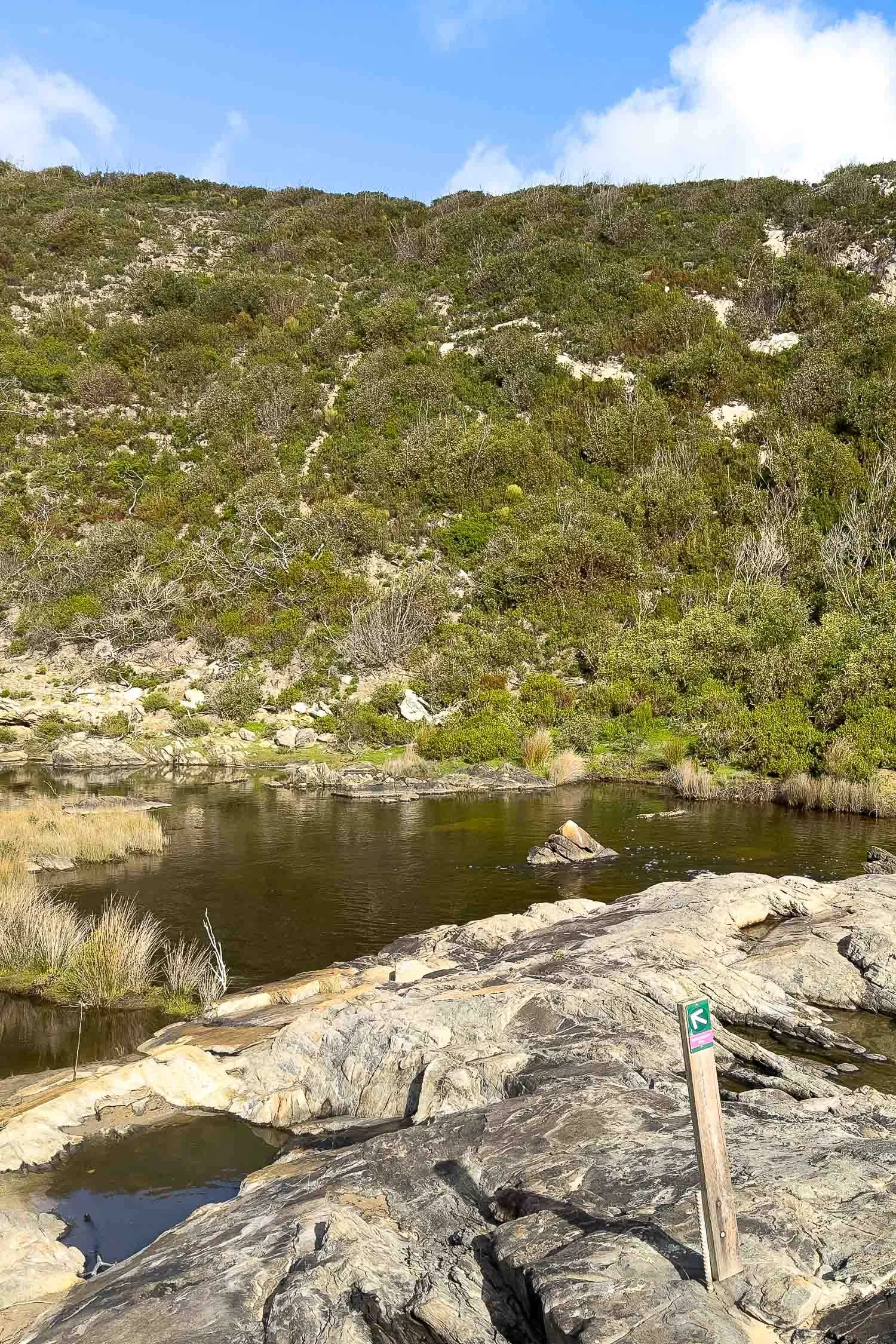
This section is by far the most scrambly…
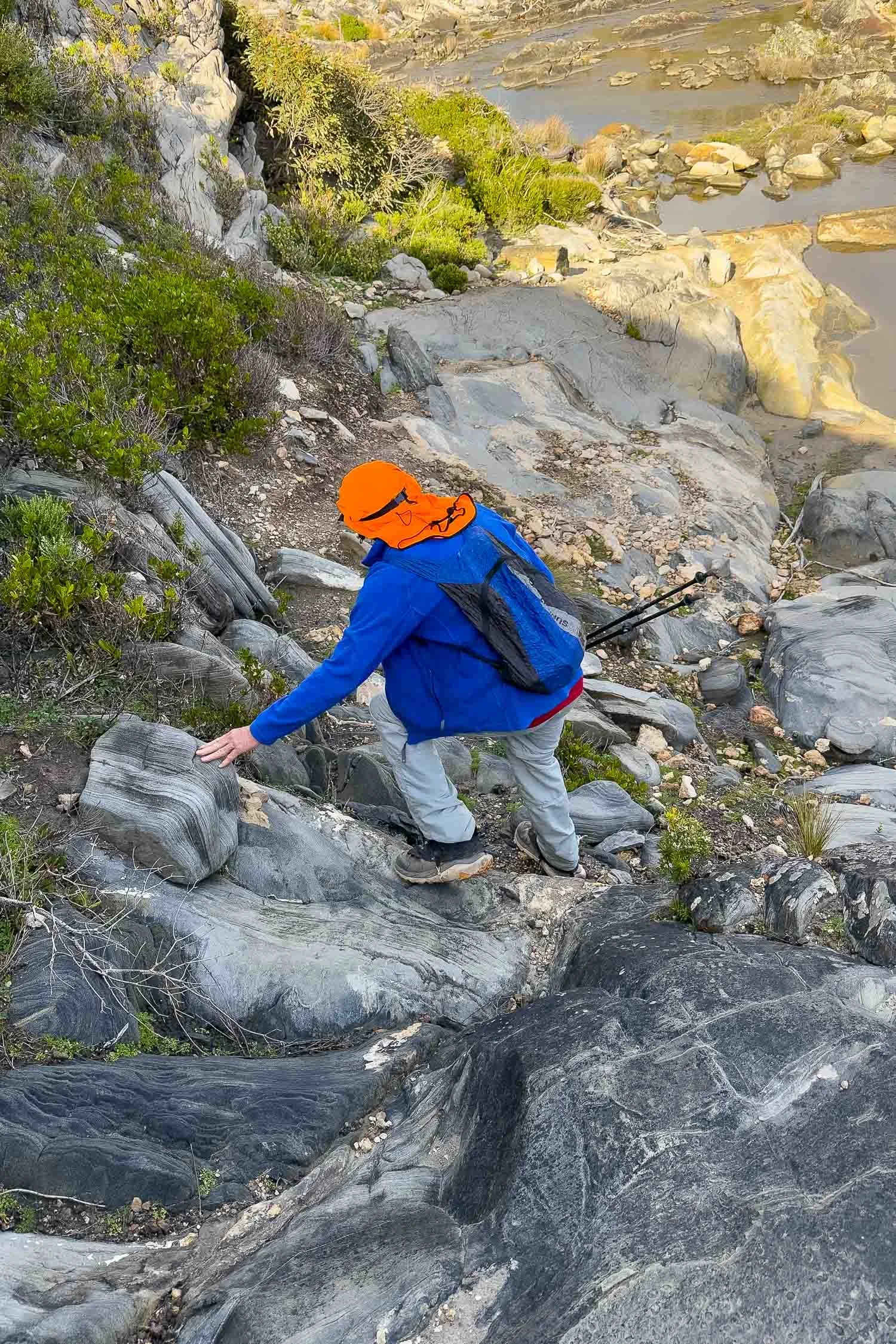
… but it really isn’t at all difficult.
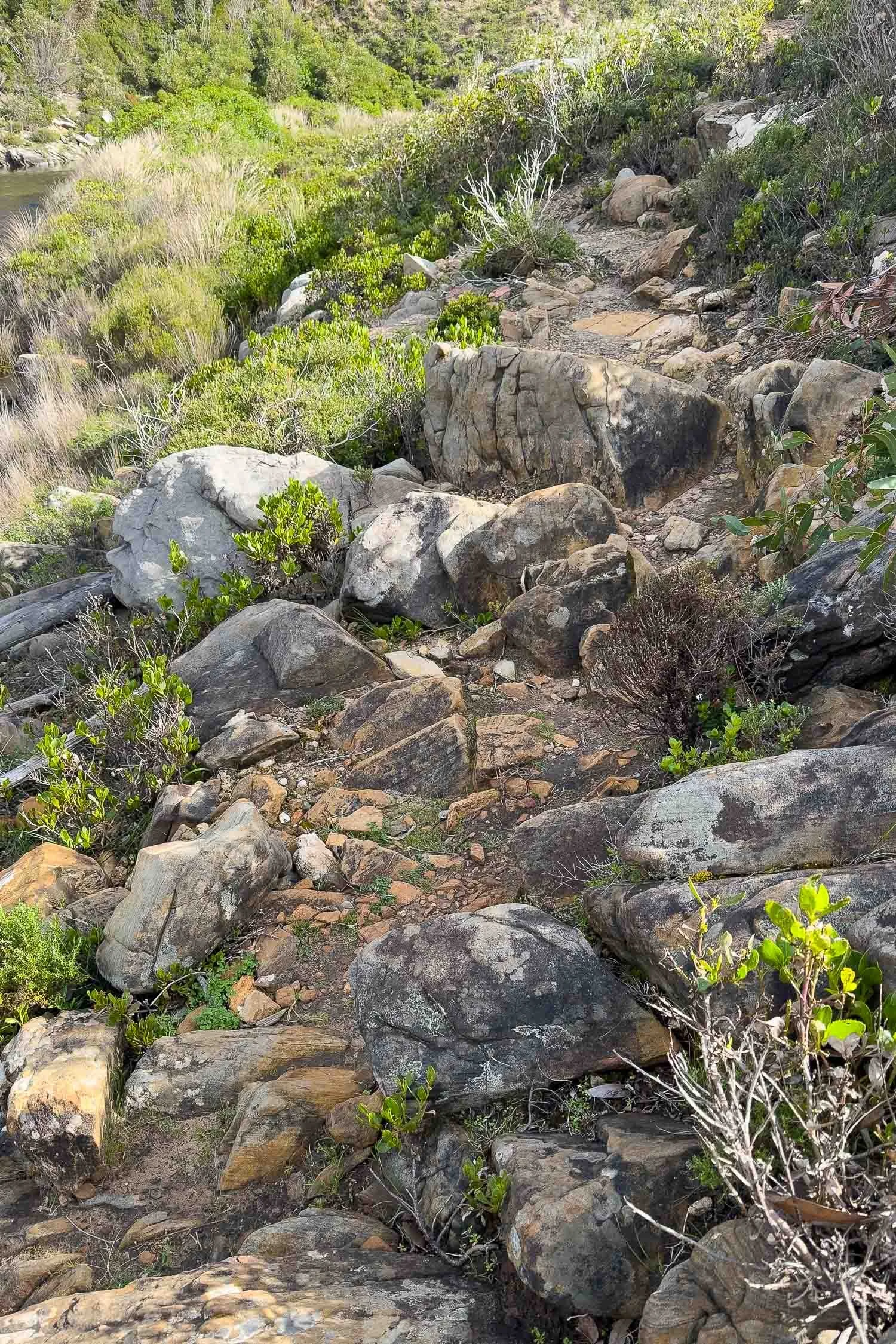
These images are the rockiest and steepest you’ll encounter.
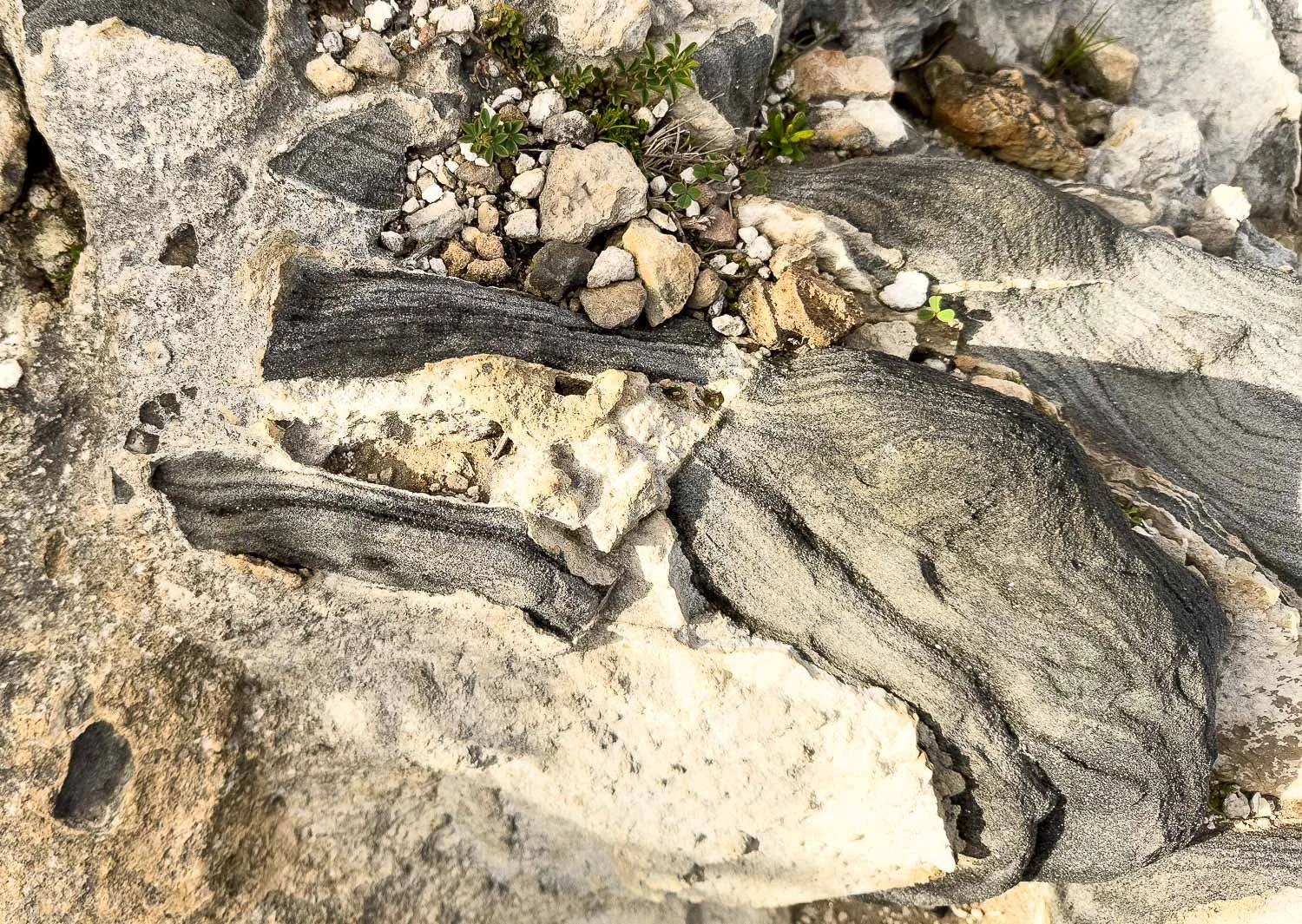
Geologists will enjoy the rocks here.
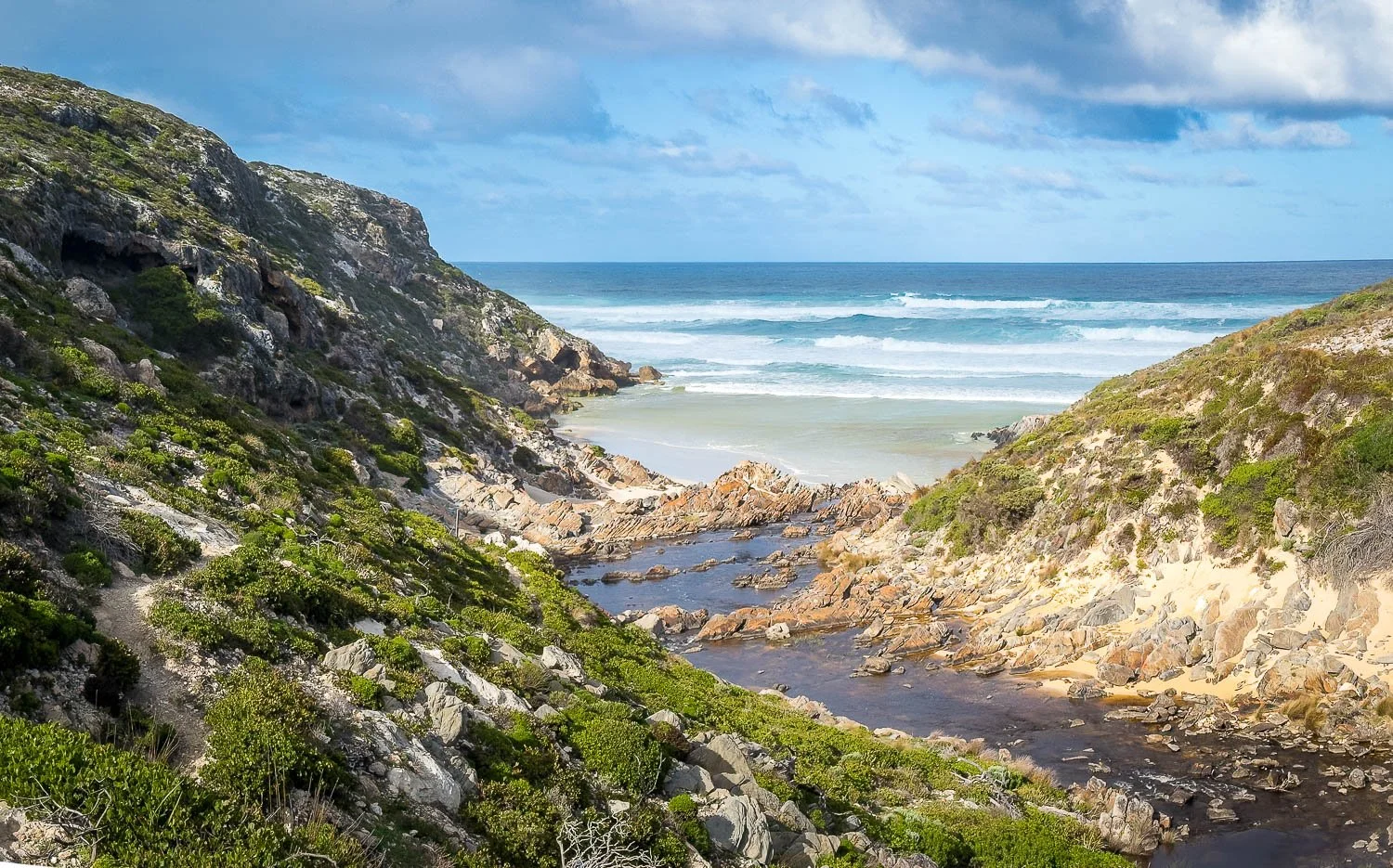
View down to the mouth of the river. The waterfall and pool are just out of shot to the right.
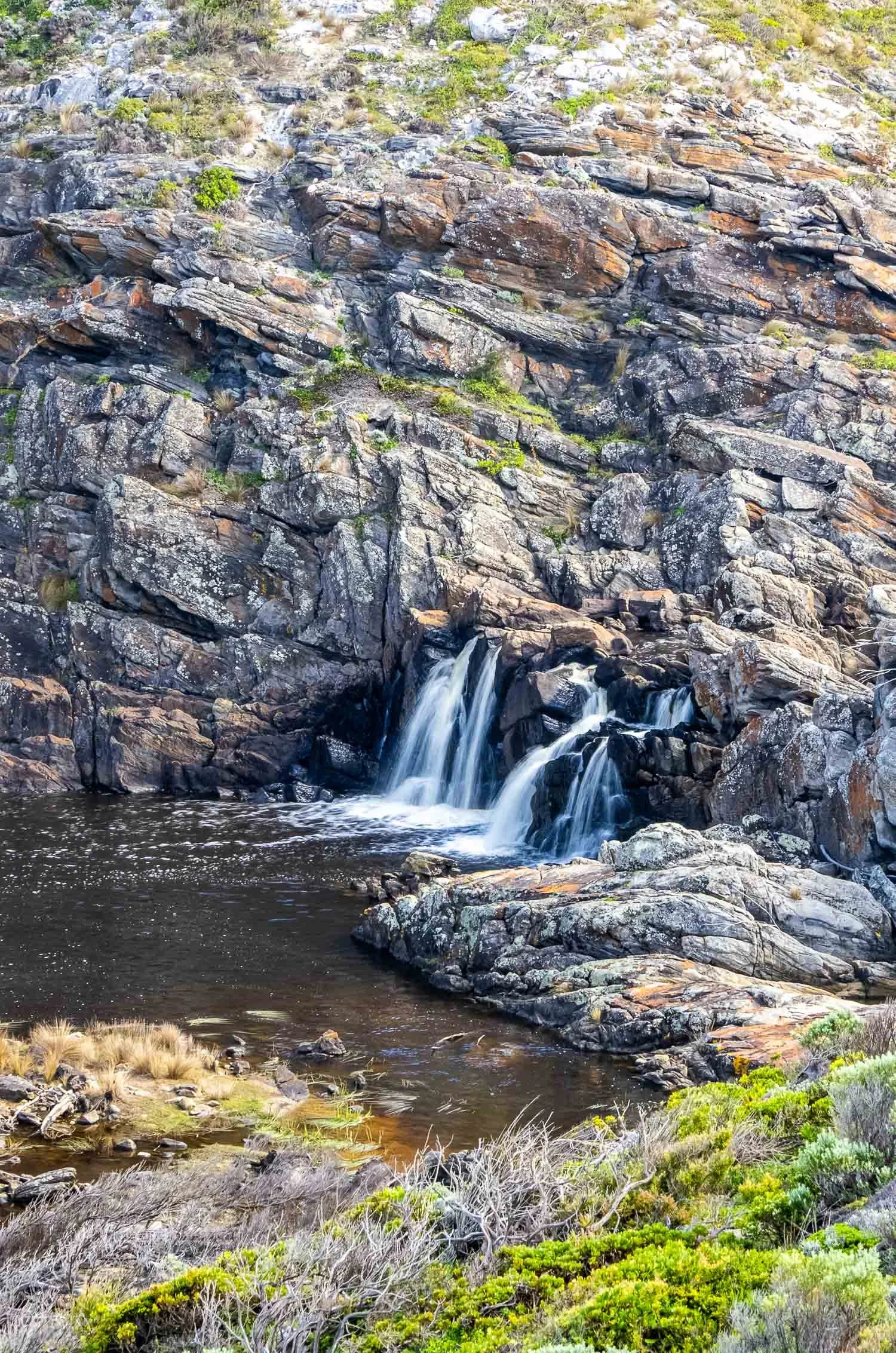
Faster hikers sometimes hike the out and return from Cup Gum to the pool on the first day for an evening swim; slower hikers are better off taking a dip today.
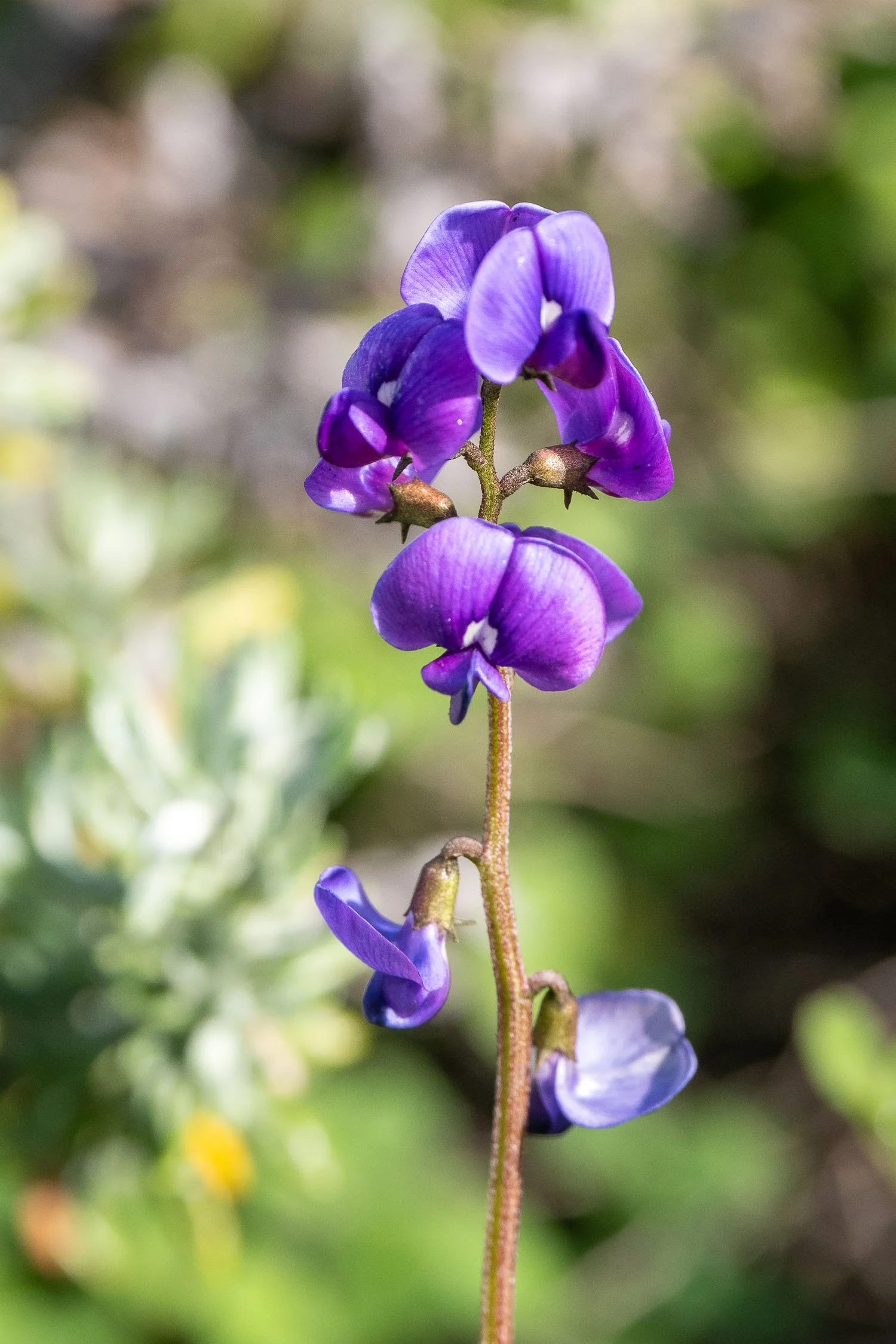
Coast Swainson-Pea (Swainsona lessertiifolia)
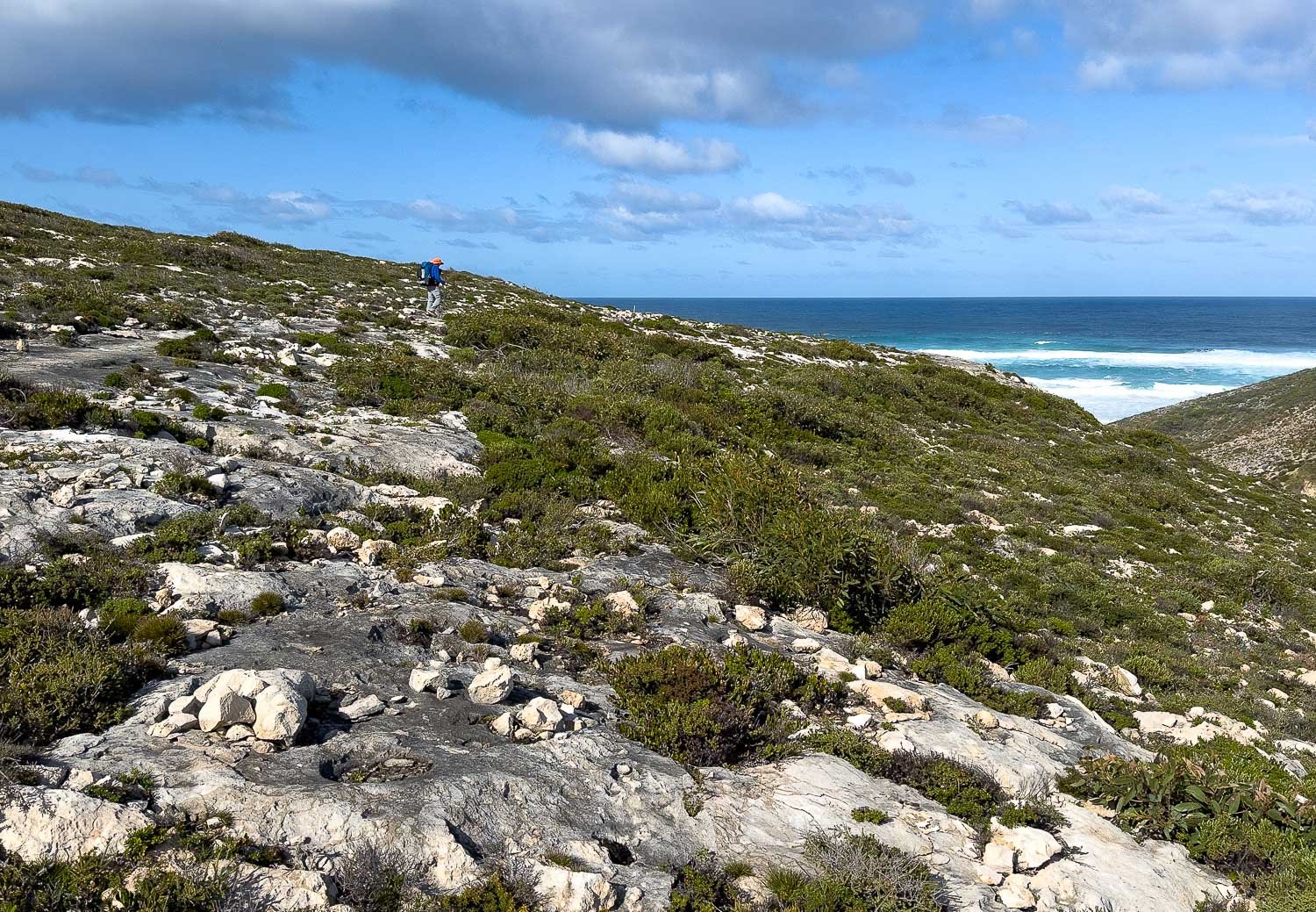
Back on the main trail with rough limestone and groundcover shrubs sculpted by wind.
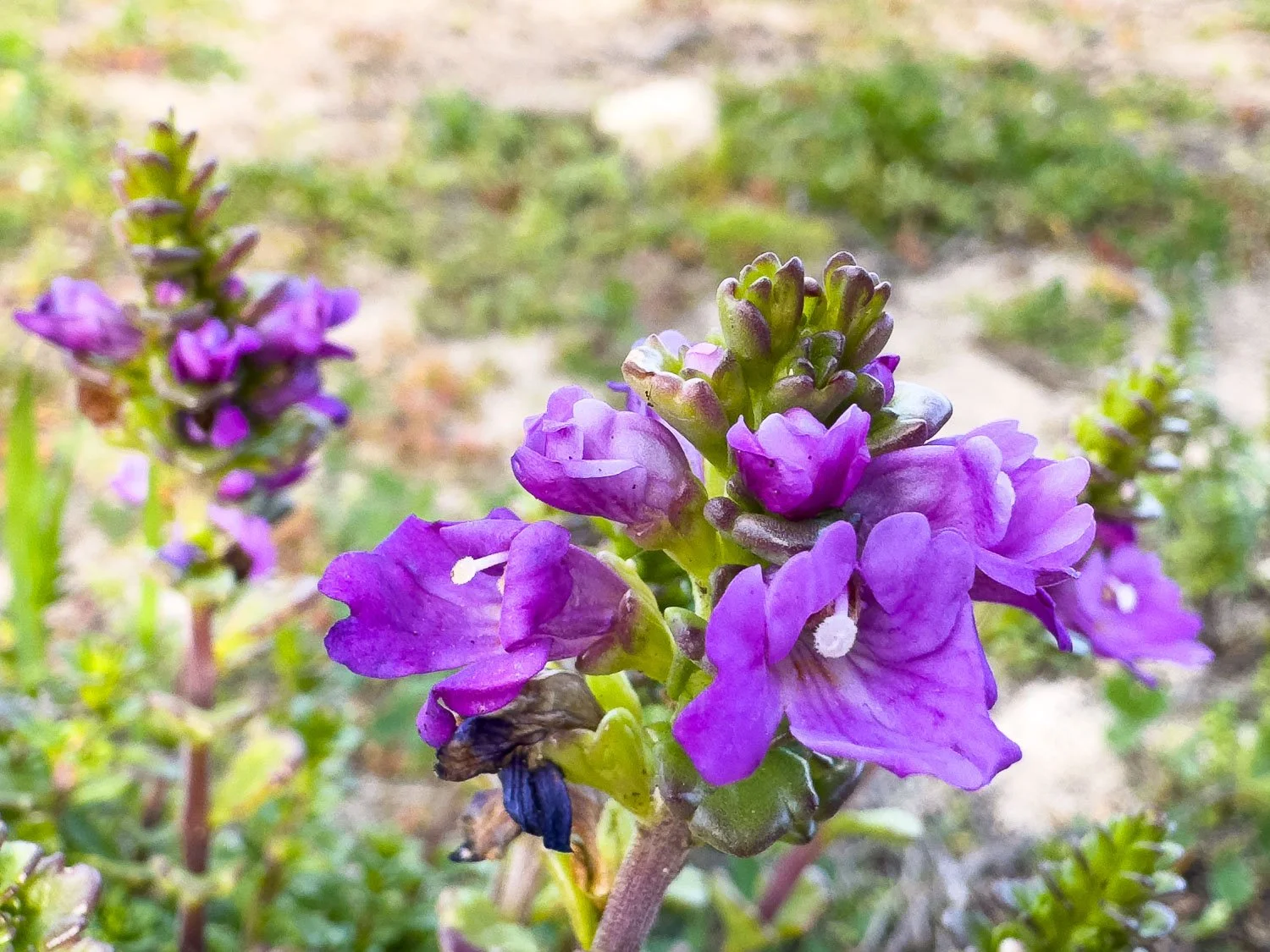
This year, we are just a fraction early for peak flowering, which varies from season to season (2025 was exceptionally late) but there is already a lot out: here, Purple Eyebright (Euphrasia collina).
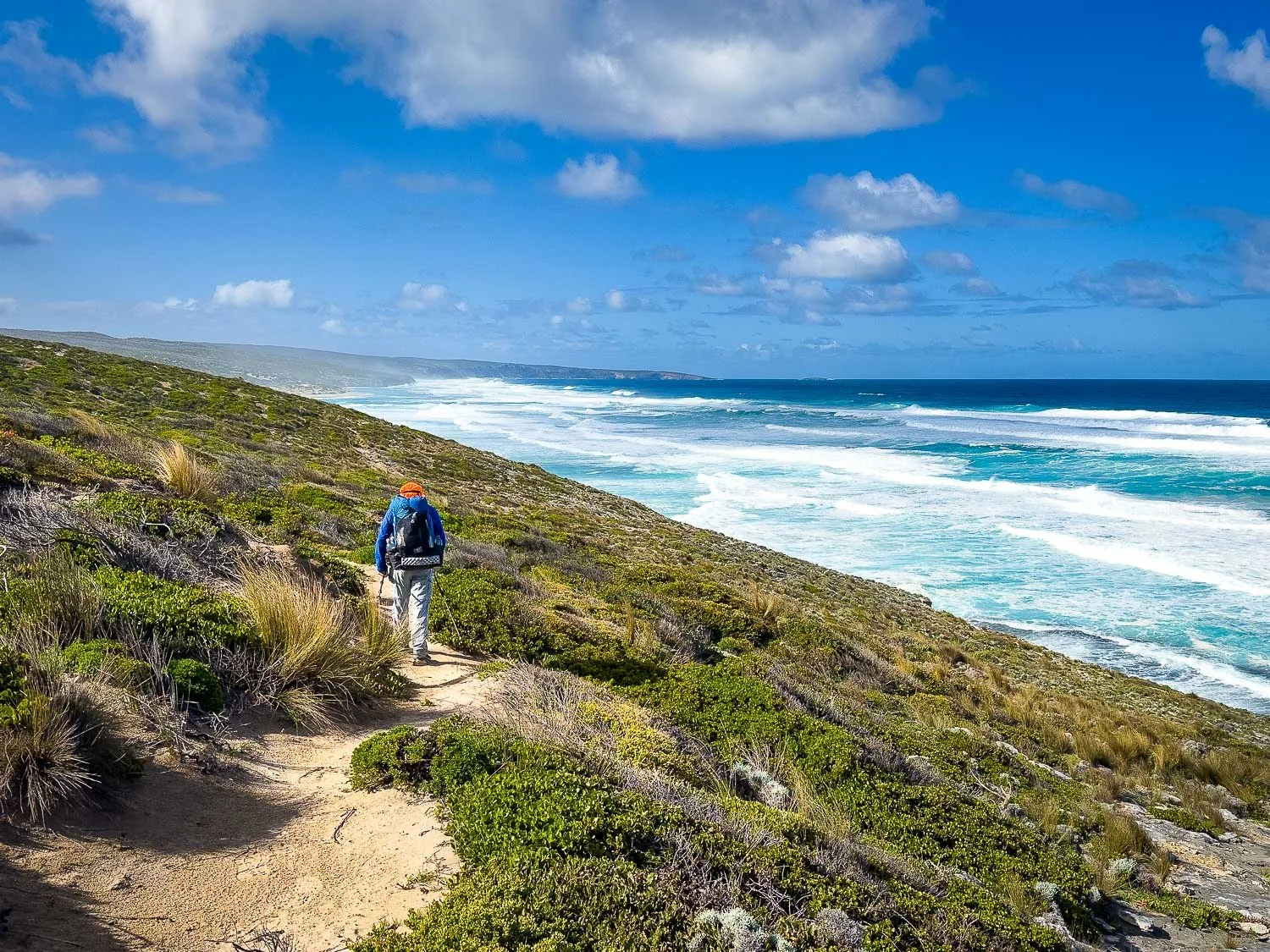
Sandy track alternates with rocky sections…
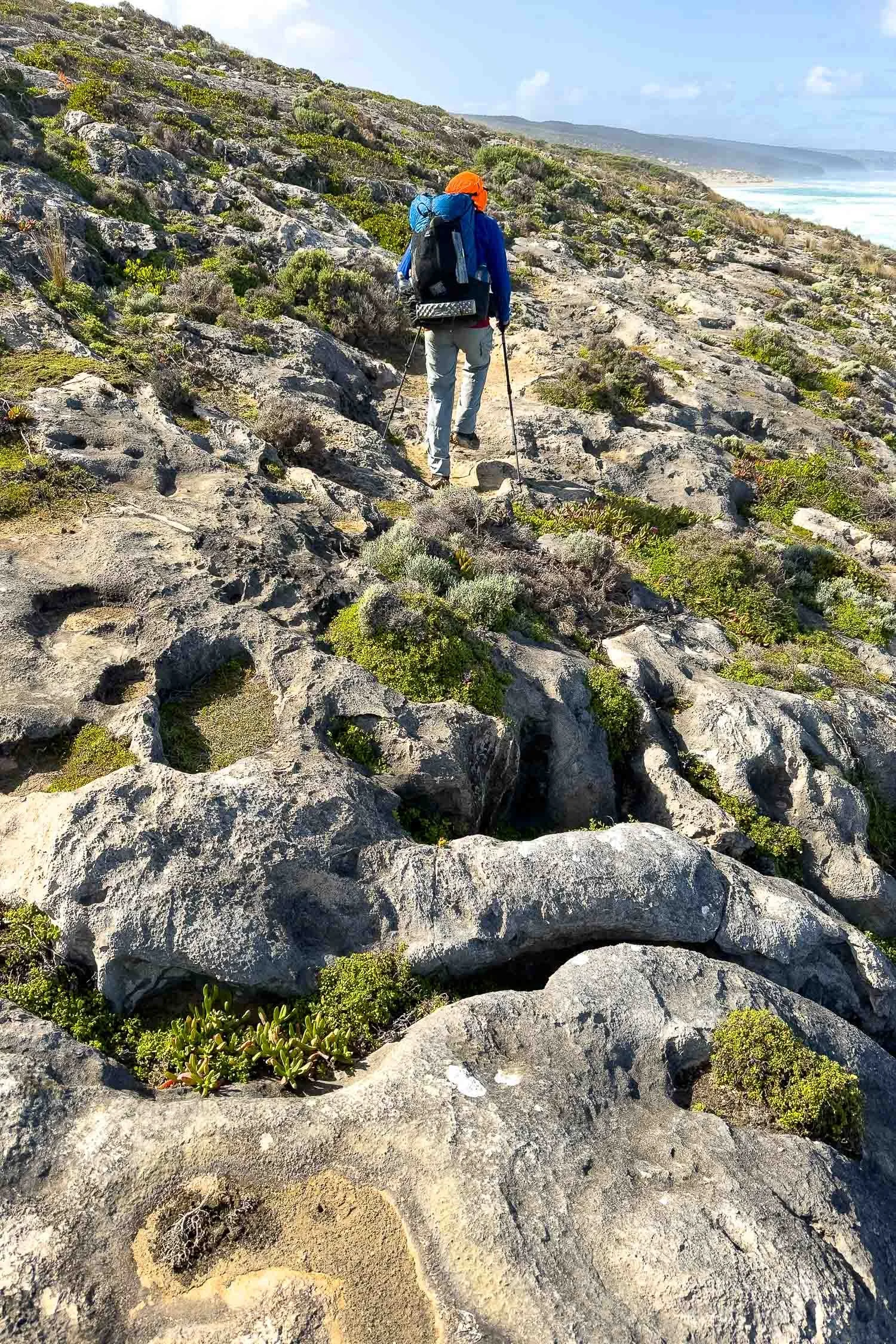
… like this. The hollows are filled with succulents as if they’ve been planted by a keen gardener!
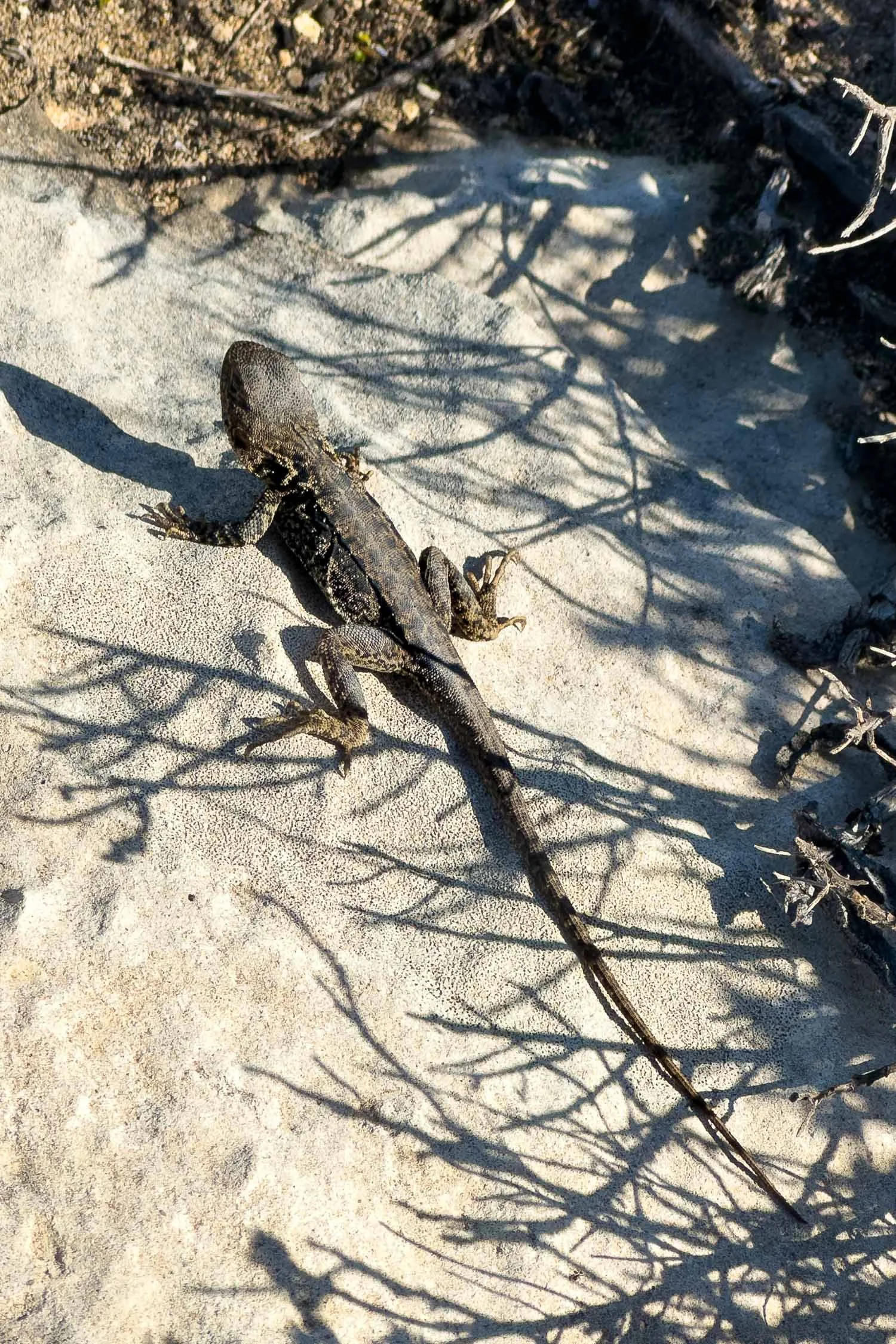
A little Painted Dragon (Ctenophorus pictus) warming up in the sun.
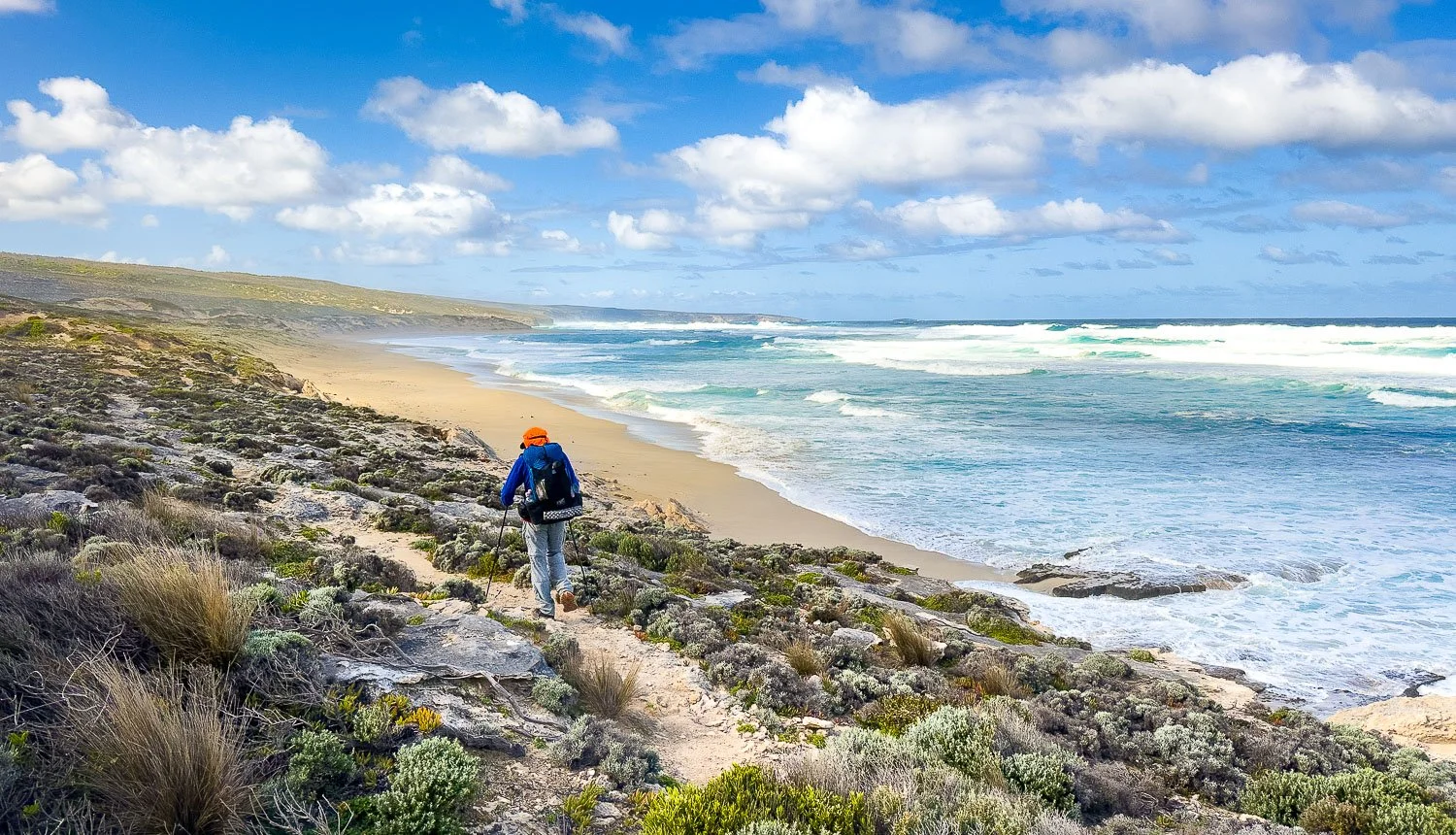
Descending to Maupertuis Beach
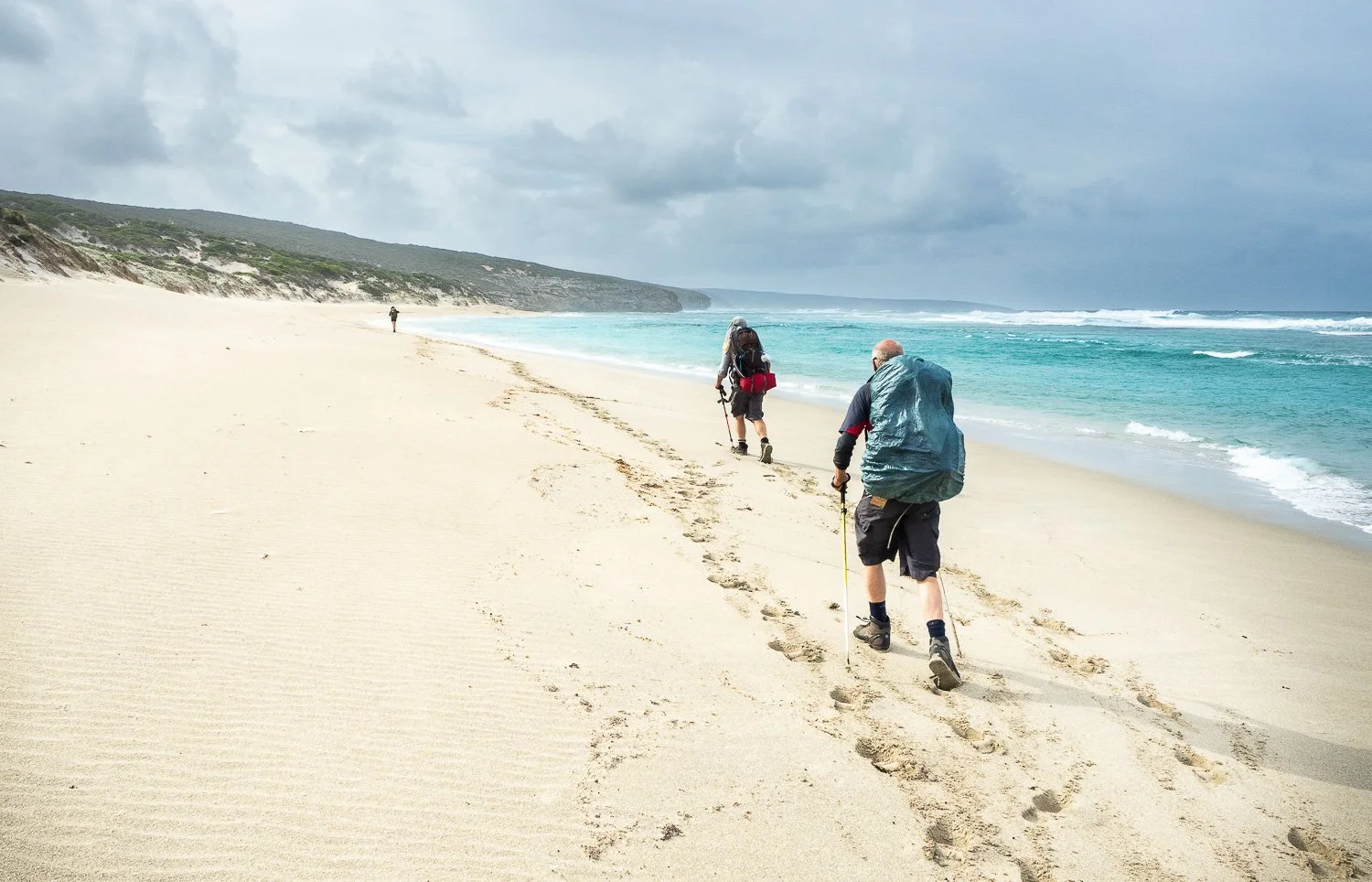
On Maupertuis Beach in 2017 with heavier packs and other friends, walking in the soft sand below the high tide mark so as to avoid disturbing nesting Hooded Plovers.
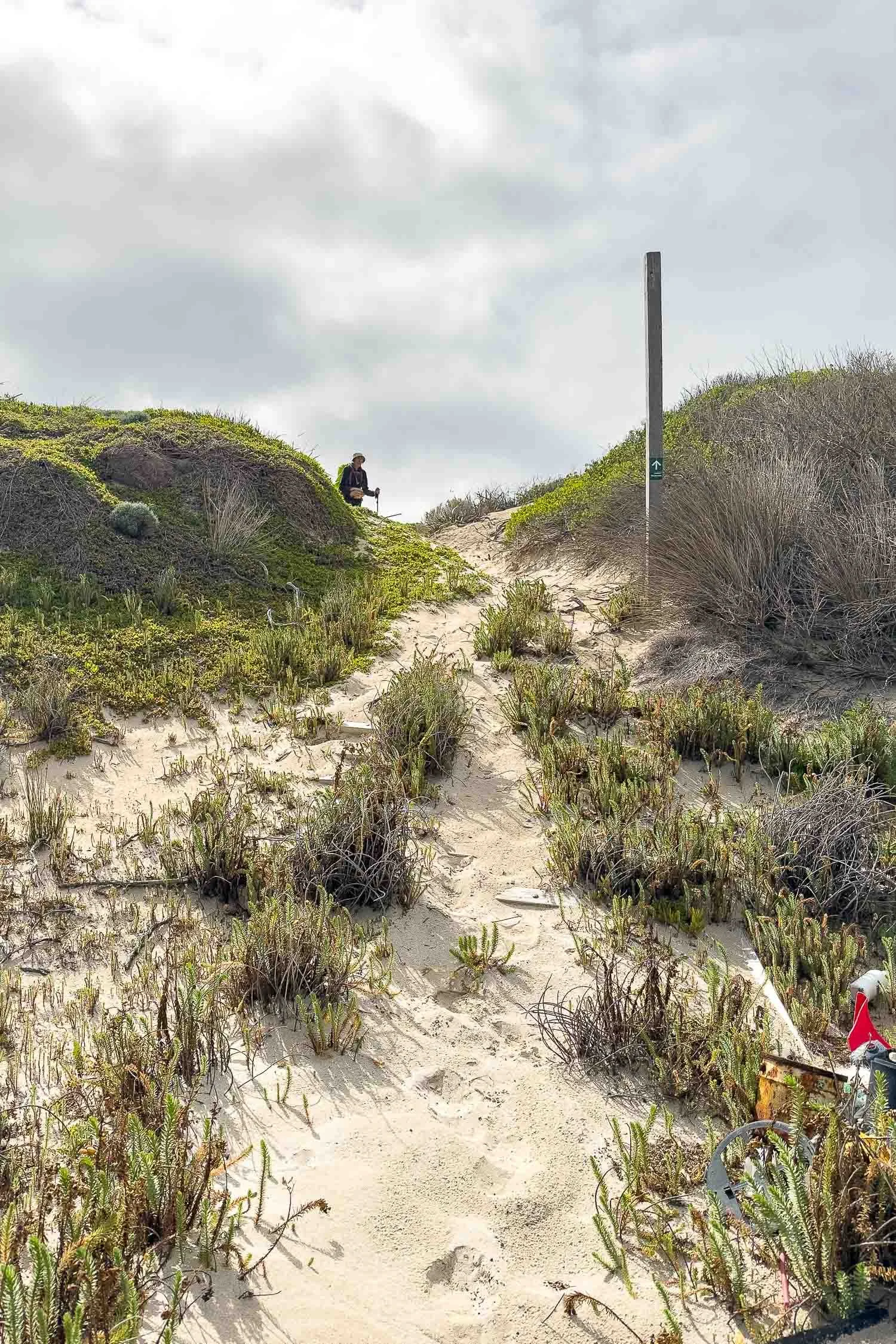
Once you near the end of the beach, before reaching the rockier section, look for the post marking the exit.
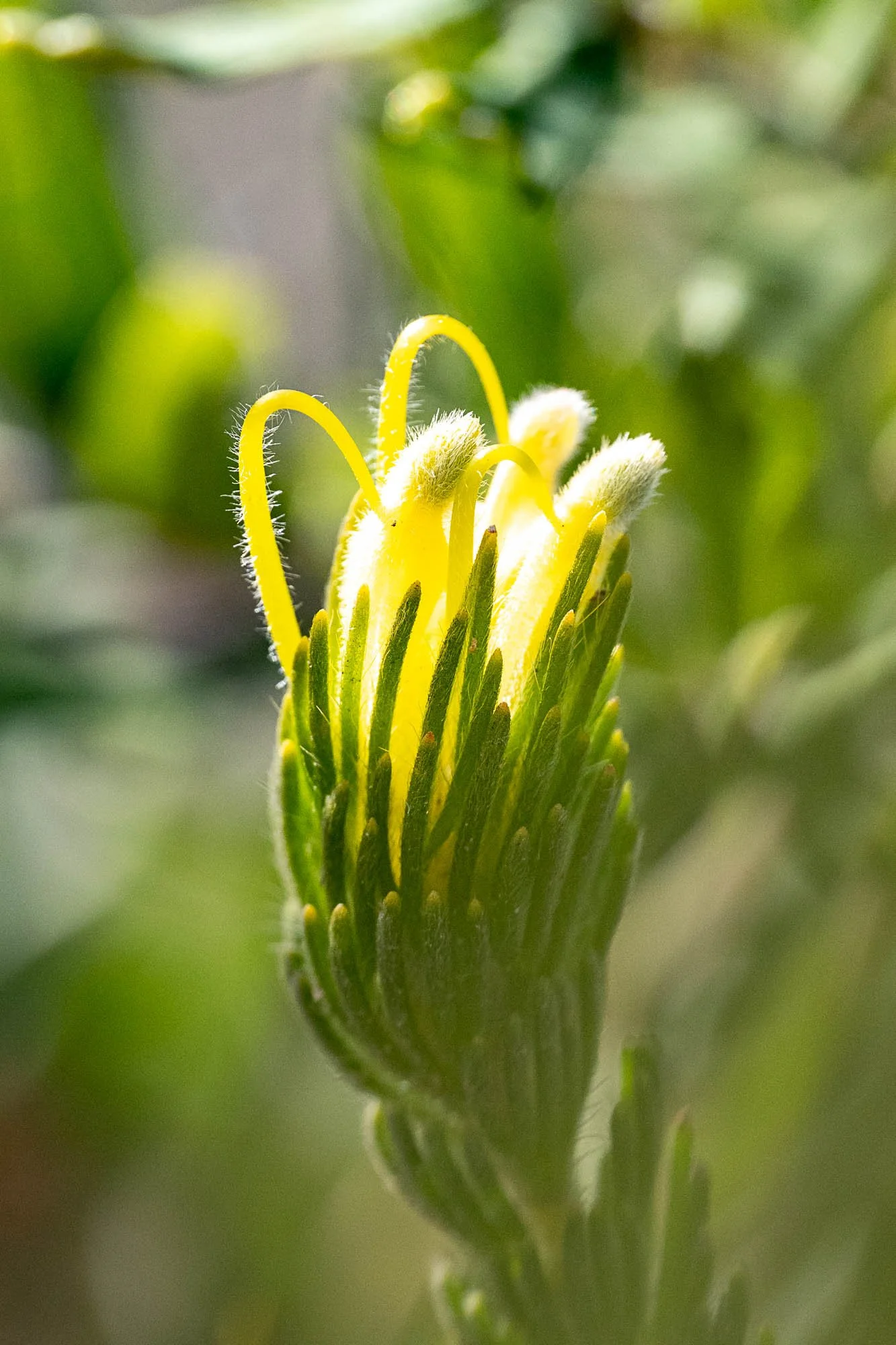
Kangaroo Island Woollybush (Adenanthos terminalis) is yet another endemic species.
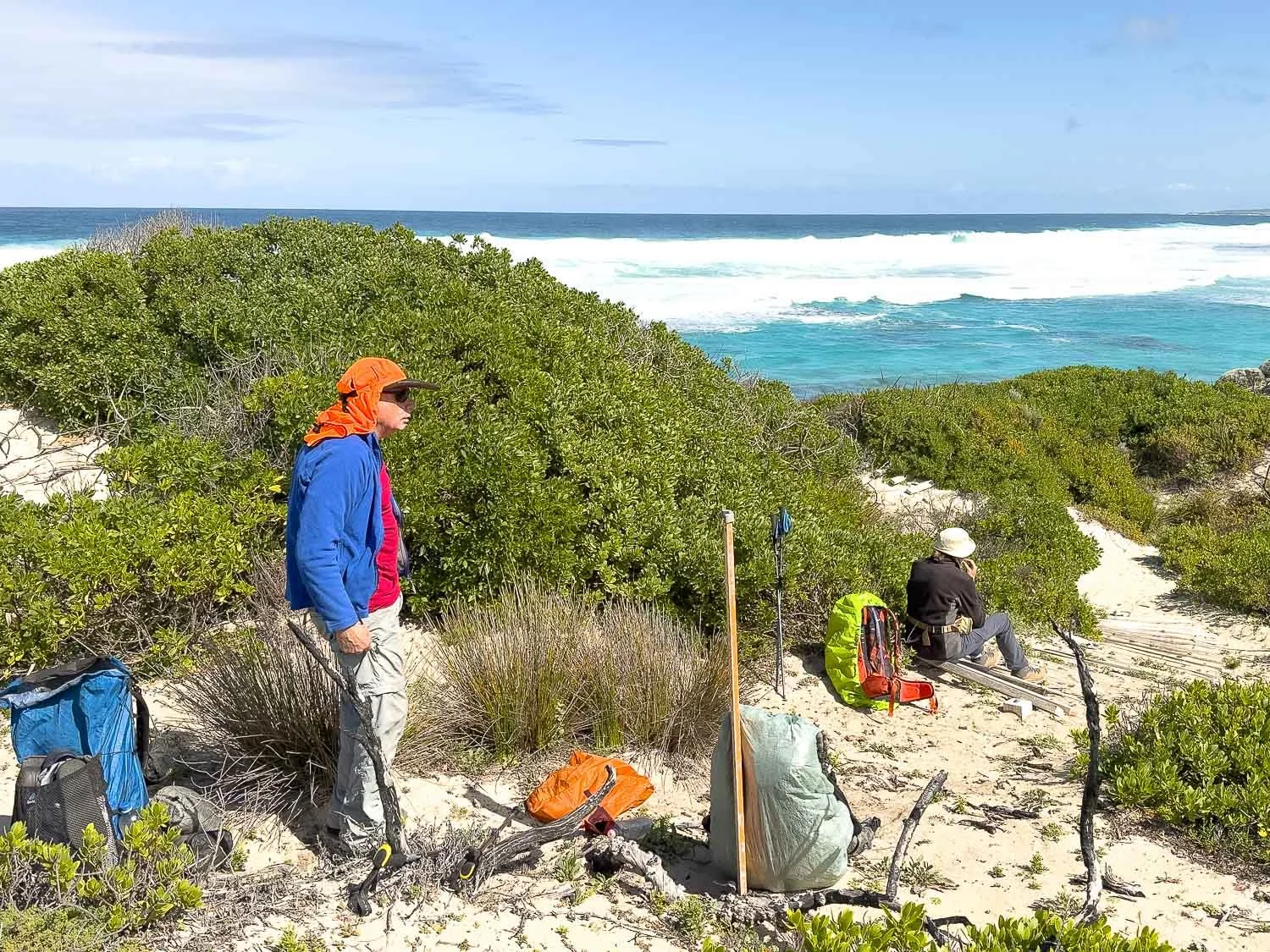
Time for a snack in the dunes.
We like a mix of high-protein one such as pulled pork, jerky, and various Asian-style dried seafood snacks; check the nutritional panels on the back, many are more than 50% protein, and also high in sugar ie calorie dense. We alternate with high carb/sugar snacks like jelly snakes and sour worms, and licorice straps, but not chocolate as it melts. We throw in a few salty ones such as dried seaweed snacks. Protein bars and Sesame Snaps are a favourite: very high in protein, calories and carbs. Mixed nuts, trail mix and GORP (good ol’ raisins and peanuts) are hiking staples for good reason, but many of us find that trail mix gets boring fast! Geoff, who needs more calories than me, packs a stash of almonds to supplement our shared snack supply.
On long hikes more than two weeks, Geoff calculates calorie and protein intake daily but, on short hikes like this one, we don’t bother as we already know roughly how much we need. It’s useful matching protein and calorie content of dehydrated meals, breakfasts and lunches, to your needs, plus roughly how many snacks to supplement but, over five days, no one will fade away! Fast packers need more, but leisurely folk like us can relax on short walks.
However, the biggest danger is just chucking in a few bags of lollies, random bars and other snacks, because we almost always pack too much, and snacks are a surprisingly heavy component of your diet on trail. Weigh or lay out what you think you’ll eat in a day, then multiply by the number of days, or package each day separately.
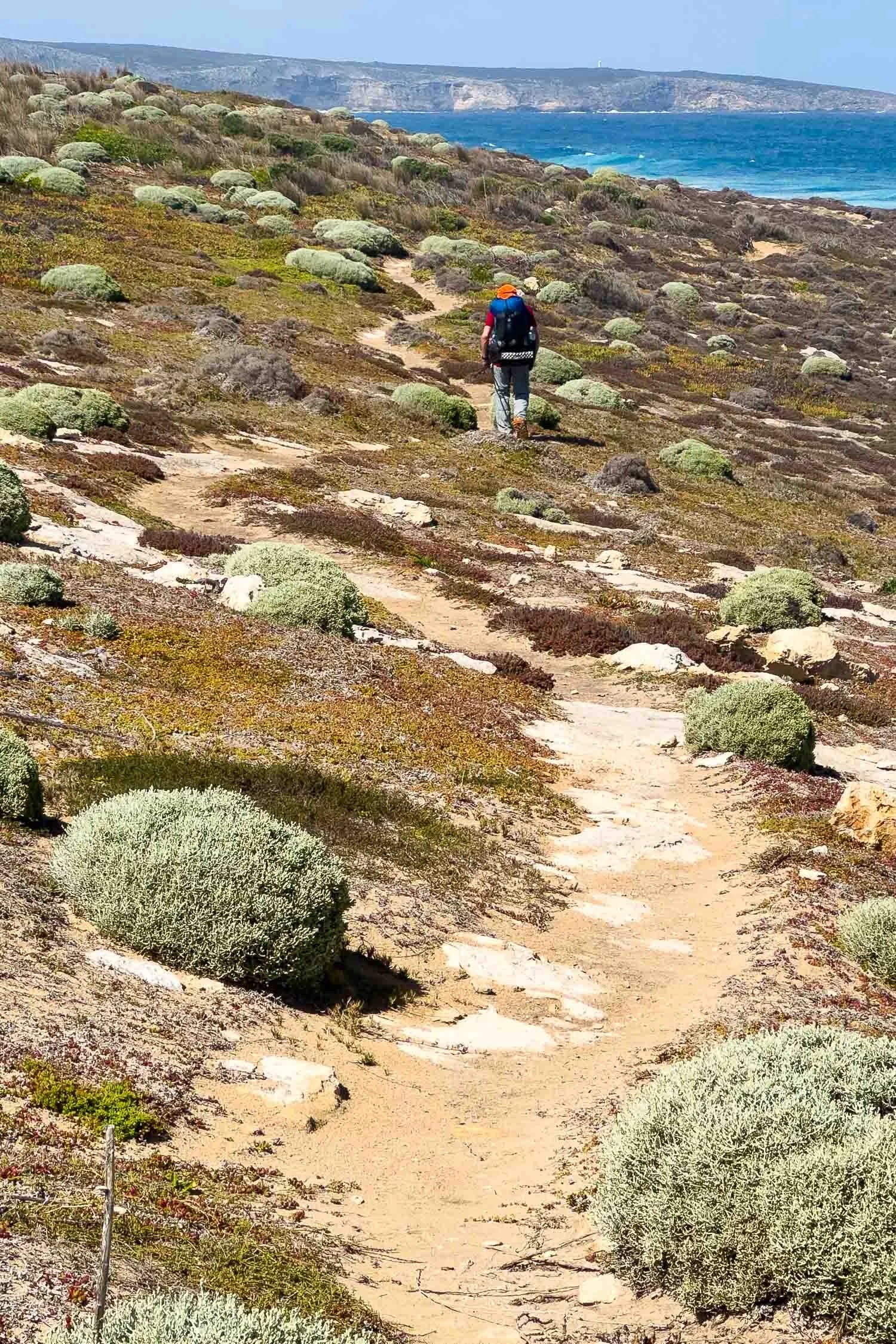
The track winds its way through Cushion Bushes (Leucophyta brownii) that look as if they have been meticulously pruned by an avid gardener.
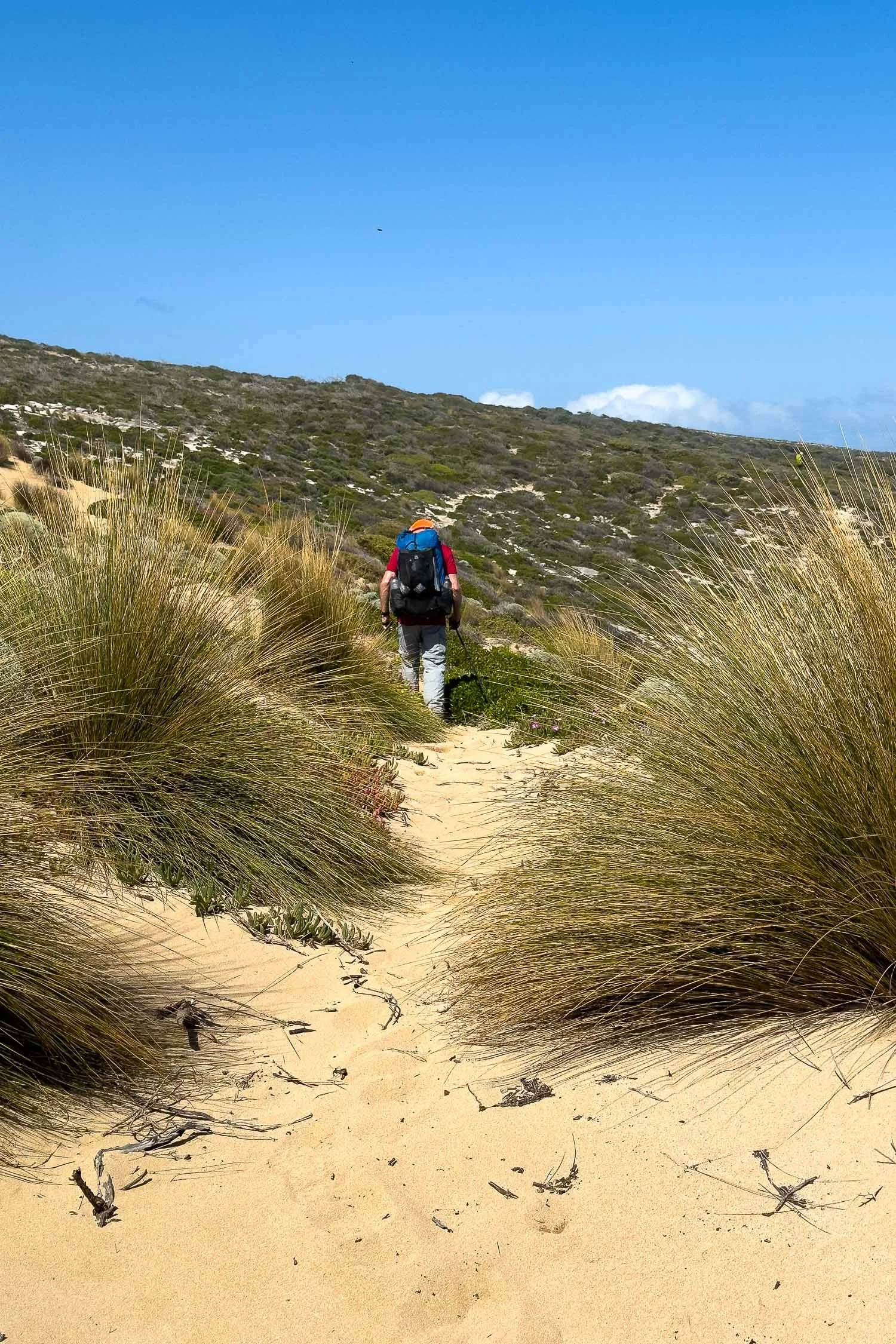
Once again, the sand track alternates with…
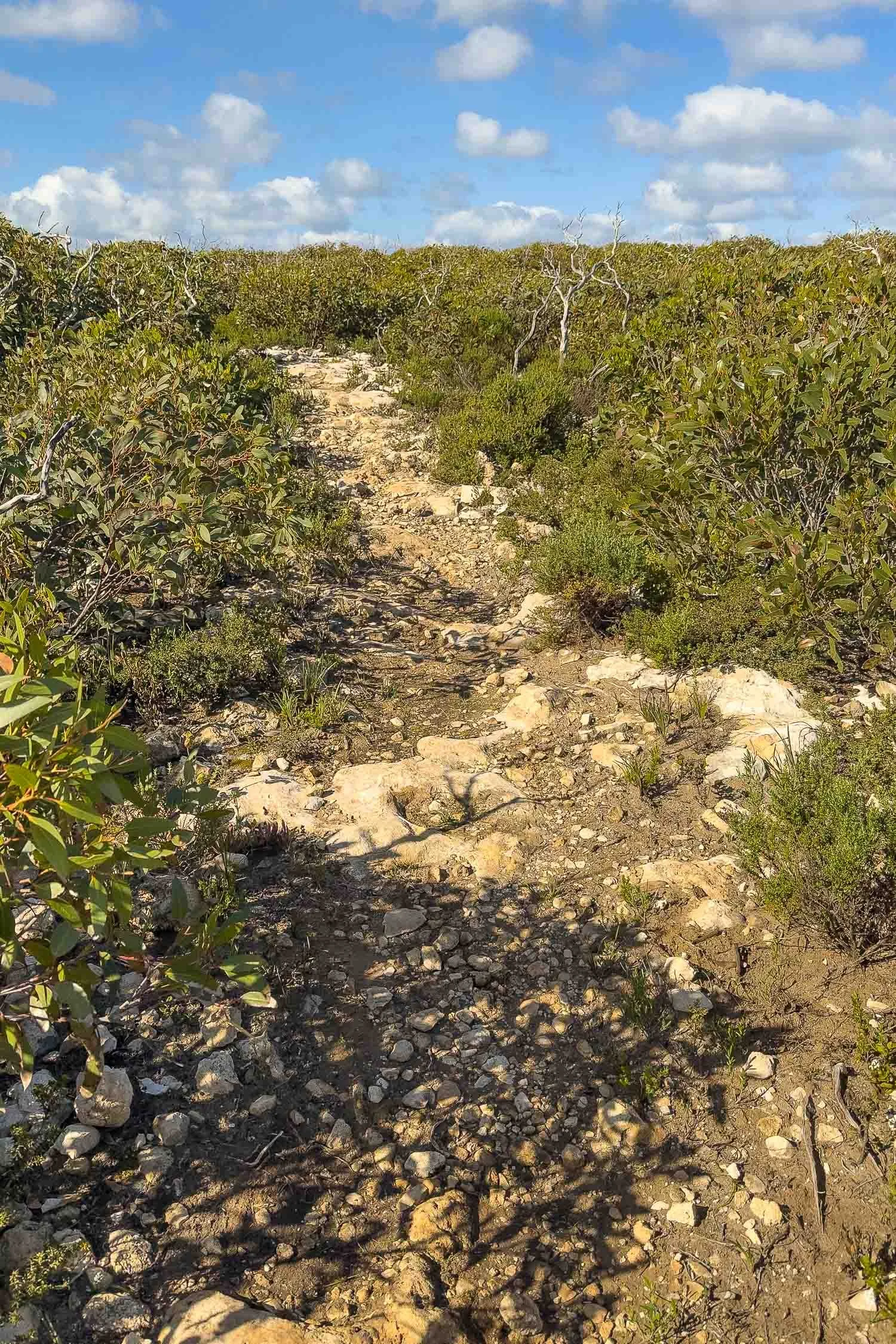
… rockier sections
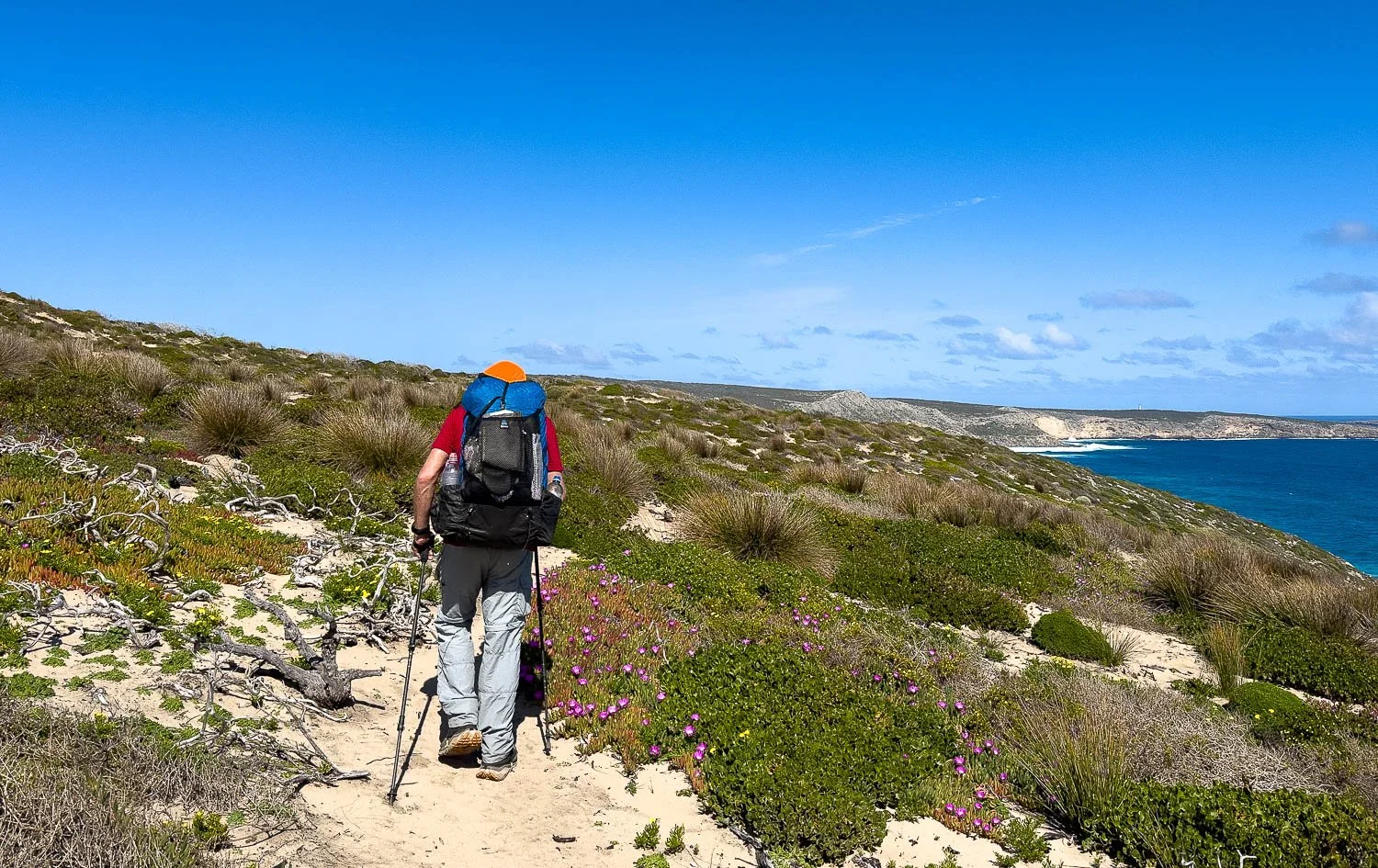
The vegetation appears to have recovered from wildfire faster in the sandier areas than in the hotter burn limestone.
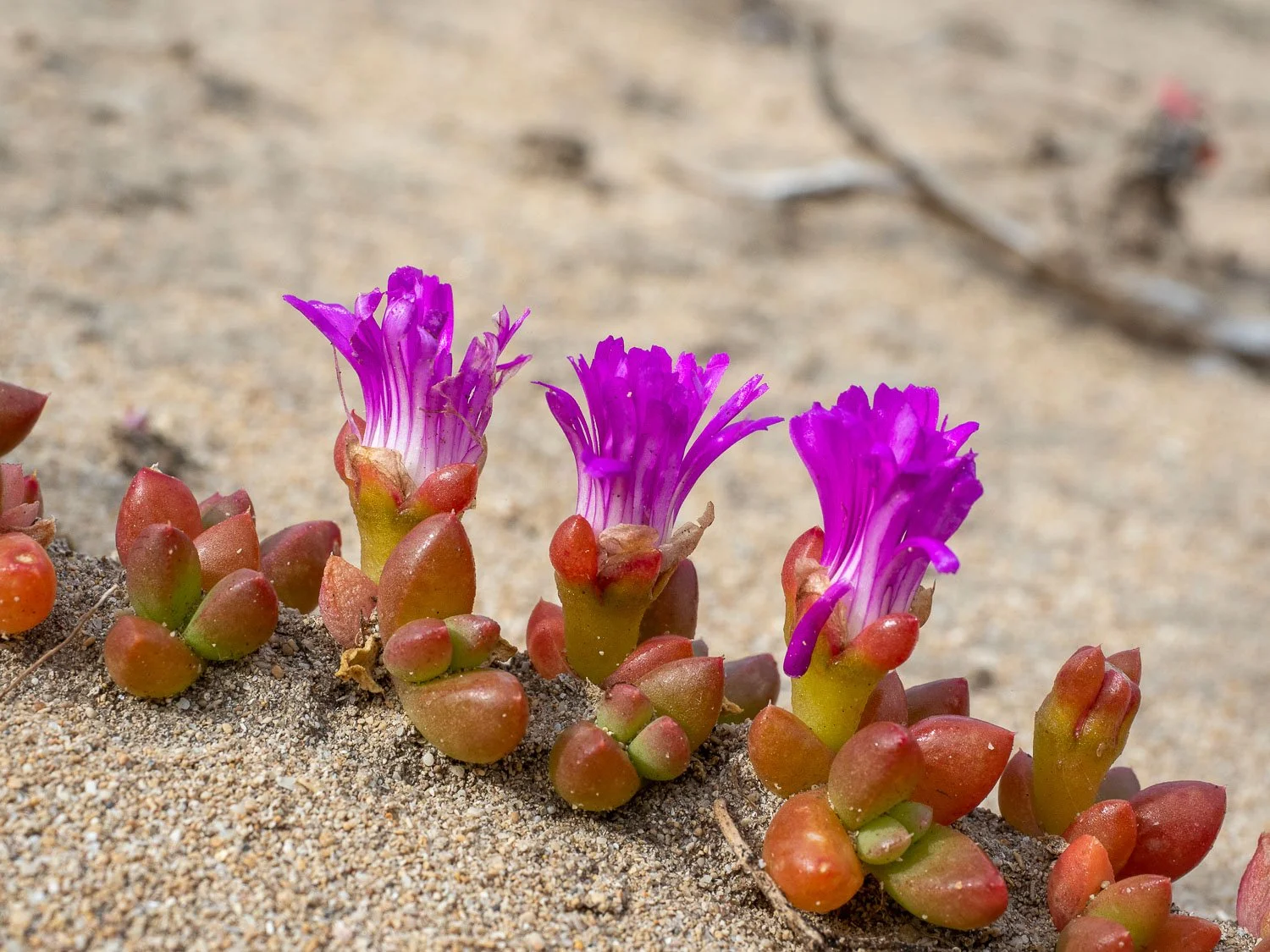
Australian Pigface aka Karkalla (Carprobrotus rossii) is edible; the salty leaves can be steamed and the fruit is sweet.
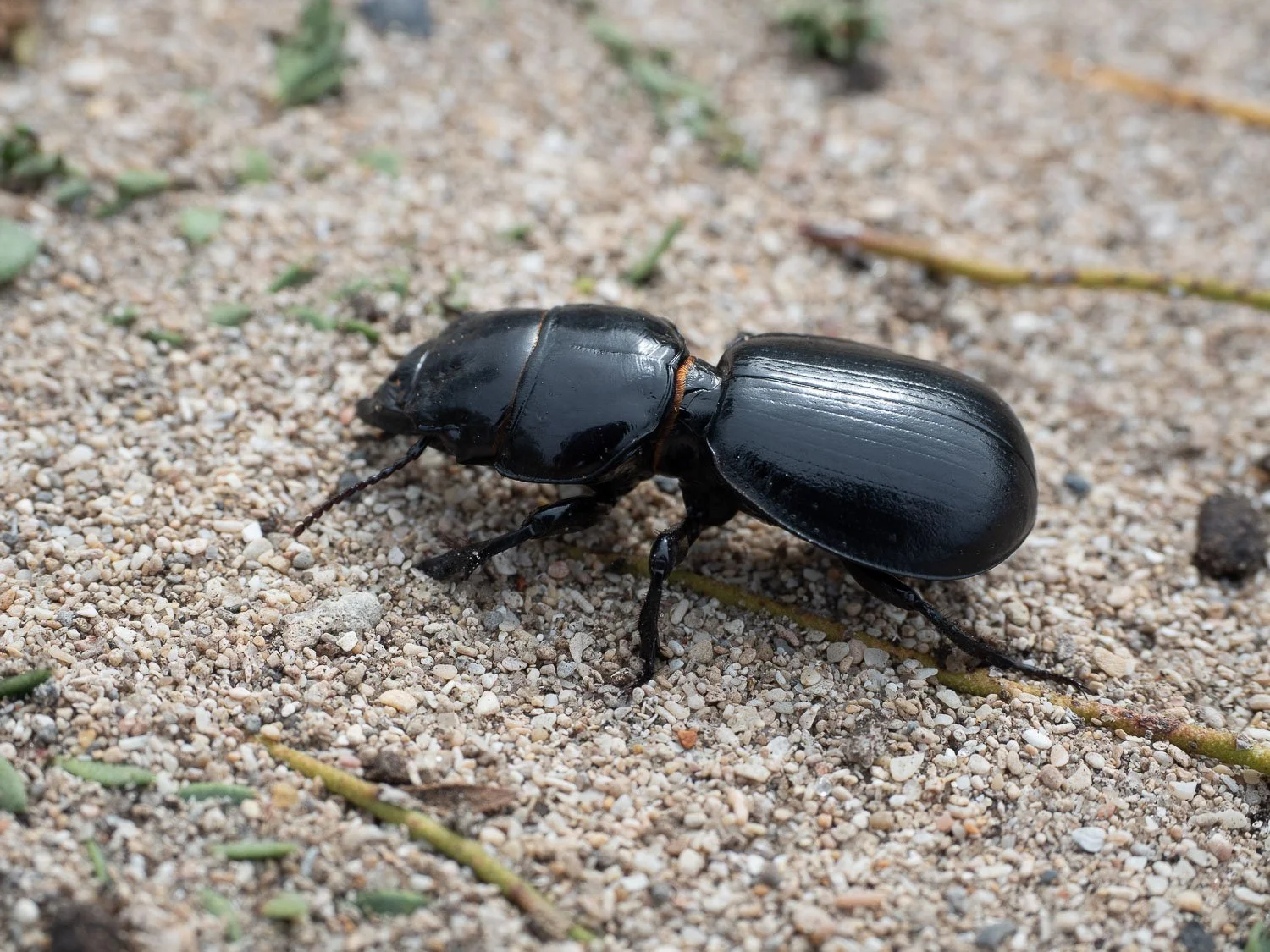
Plenty of insects and wildlife on the trail too, here a beautiful black scarab, probably Carenum ineditum
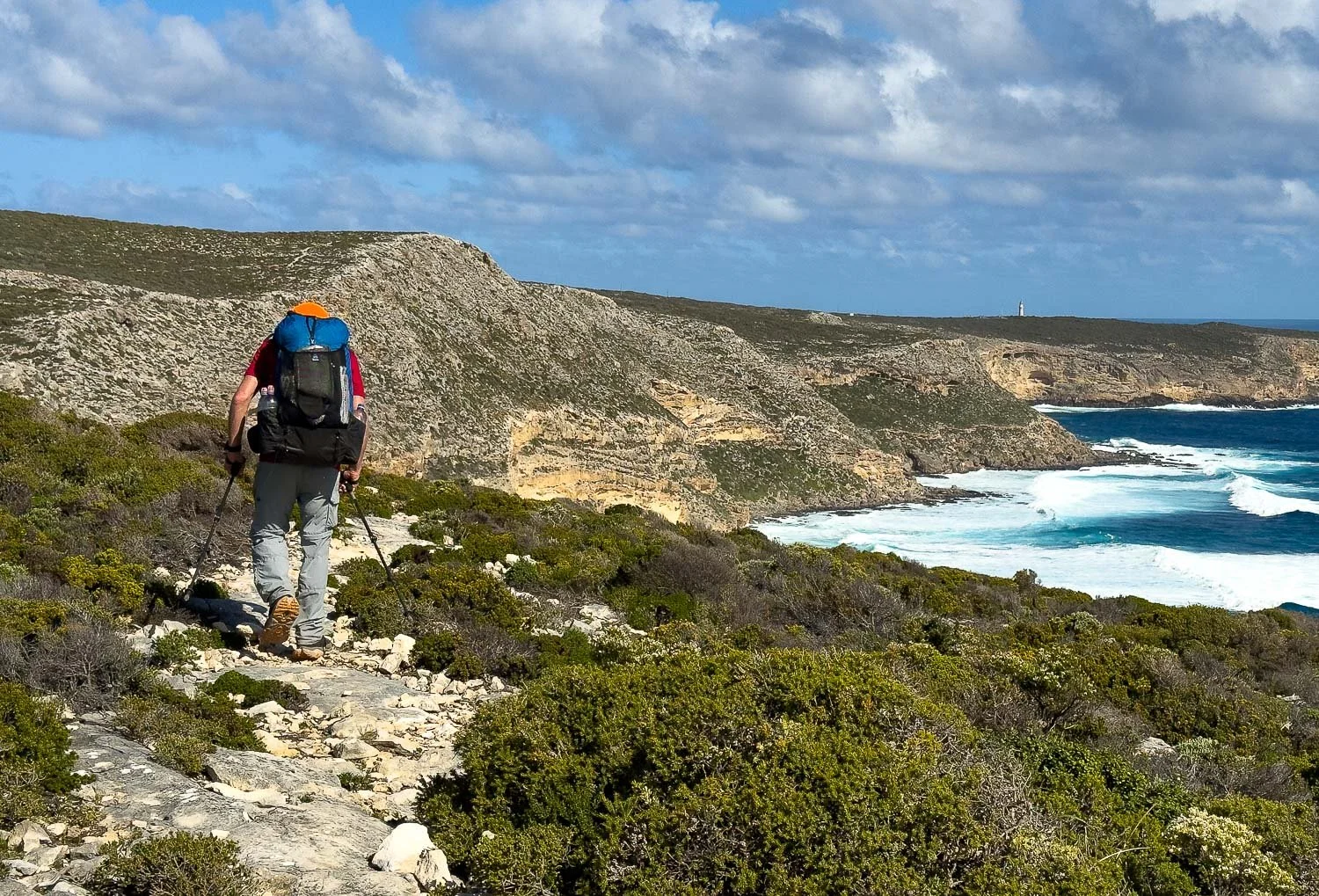
Nearing Cape de Couedic, and rocky again on these limestone bluffs. The constant views are extraordinary.
As mentioned earlier, faster hikers may divert to Admiral’s Arch today, but we recommend slower hikers not do this, and instead head straight to Hakea hut.
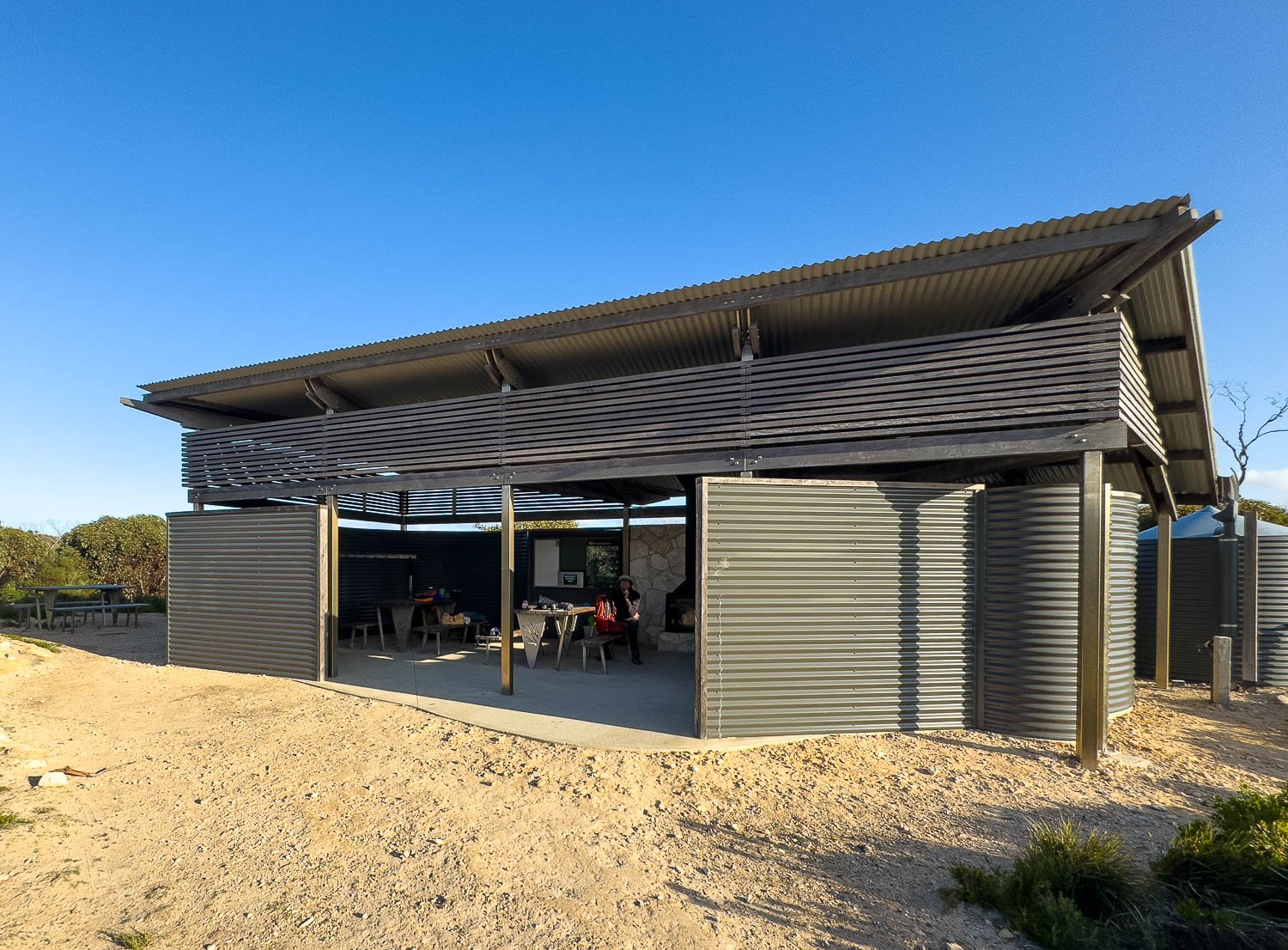
Redesigned Hakea Hut, with valuable extra protection. Last time we hiked here, without the wooden slats and two sheltering panels to narrow the front entry, a northwesterly weather system blew rain right to the back wall and hail bounced inside, such that the hut provided little shelter.
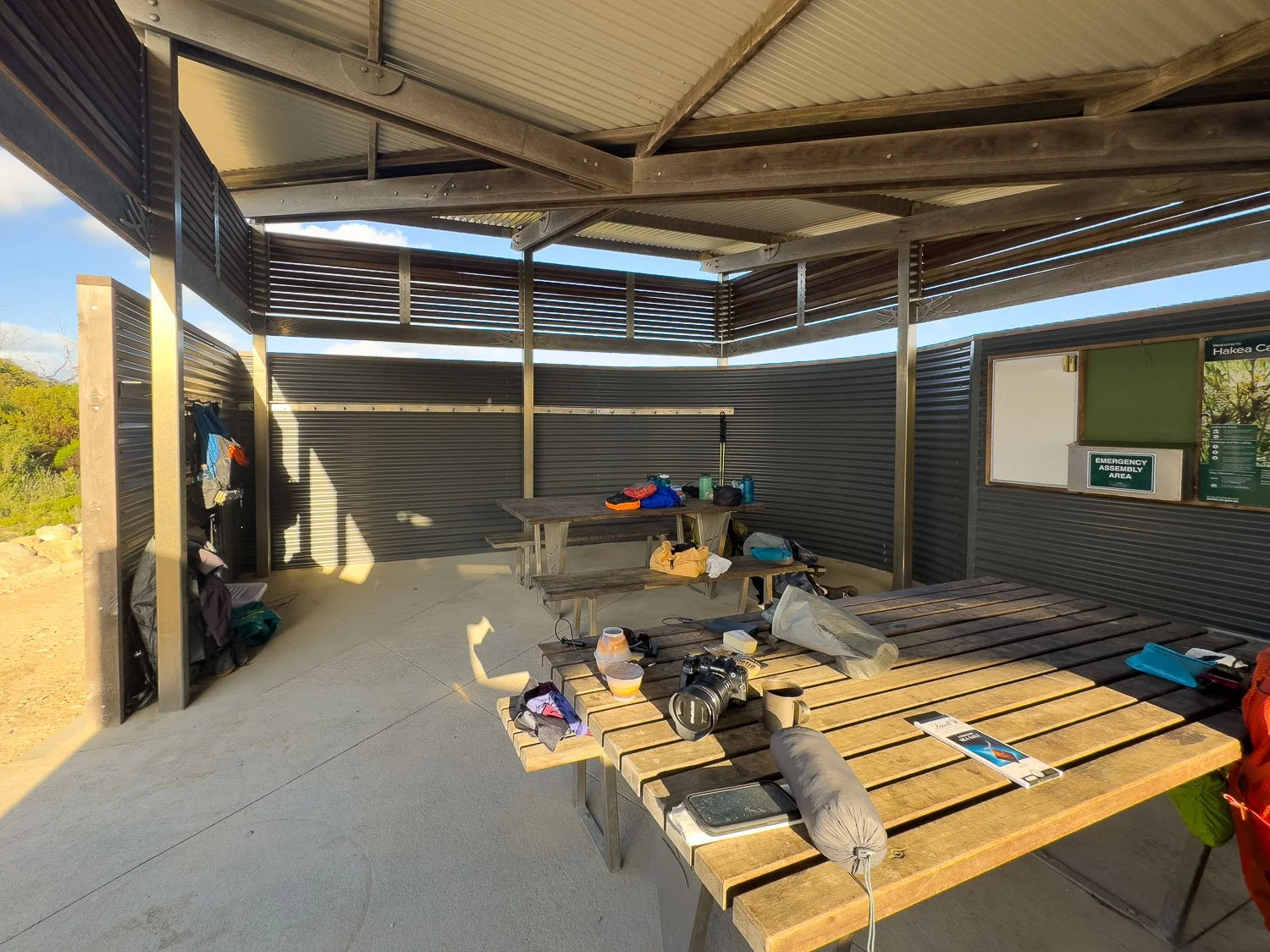
Hooks for jackets and packs along the wall: do not leave them overnight with food inside, and open all pockets. Last time we hiked, small critters — maybe mice or native marsupials — chewed through a friend’s pack to get at toothpaste inside! They even chewed through the tube! Place food in the stainless steel rodent-proof cupboards instead.
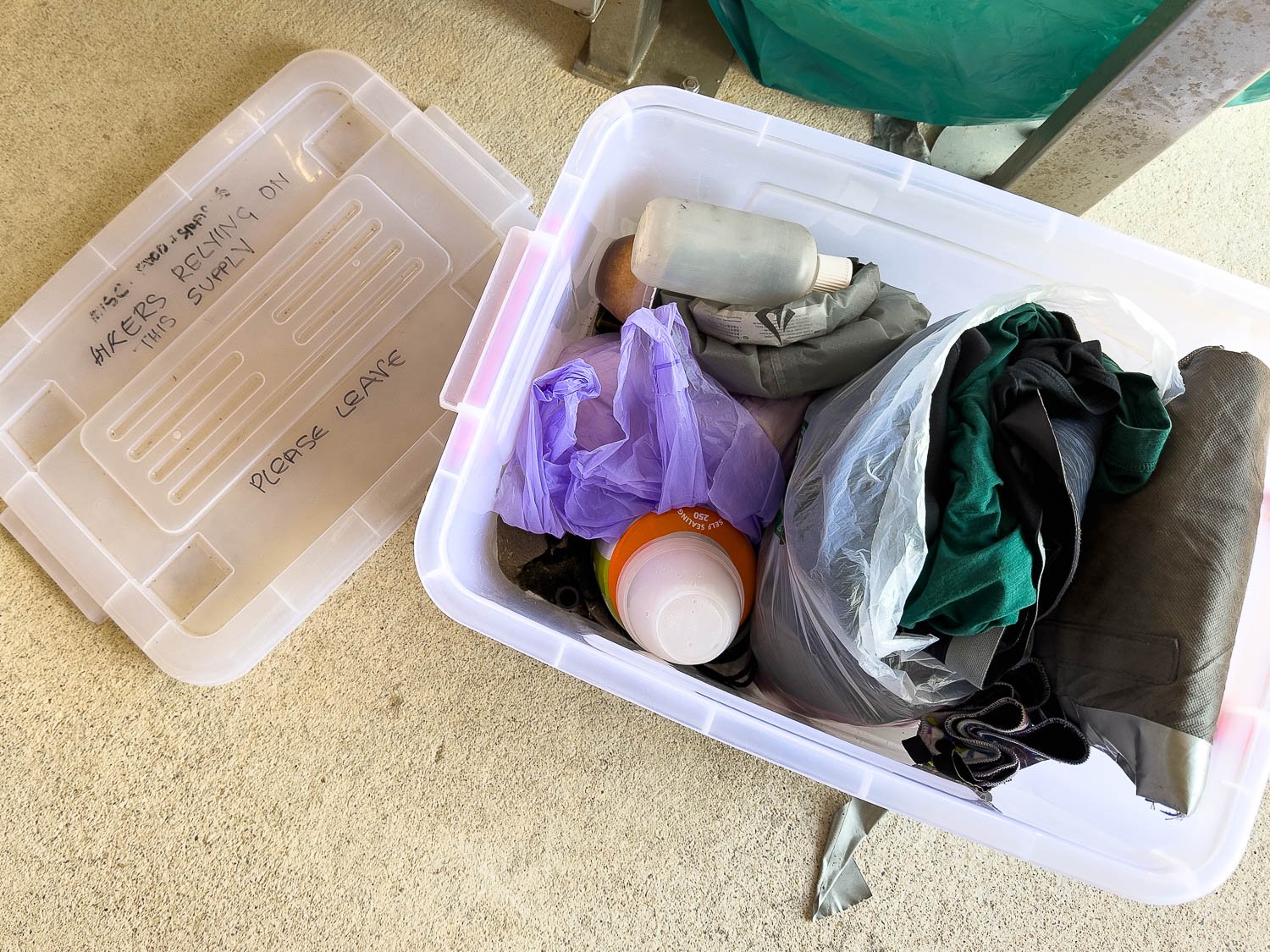
We dropped this resupply box along the 300m long vehicle track from the main road to the campsite the day before starting the hike. There are meals for tonight and the remainder of the hike, fuel, fresh clothing and treats like non-dehydrated self-saucing dessert pudding tubs that are too heavy to carry on trail. We also offloaded dirty clothes and rubbish. Retrieve your box when visiting Admiral’s Arch on the afternoon of your last day, or after you’ve picked up your car from the Visitor Centre.
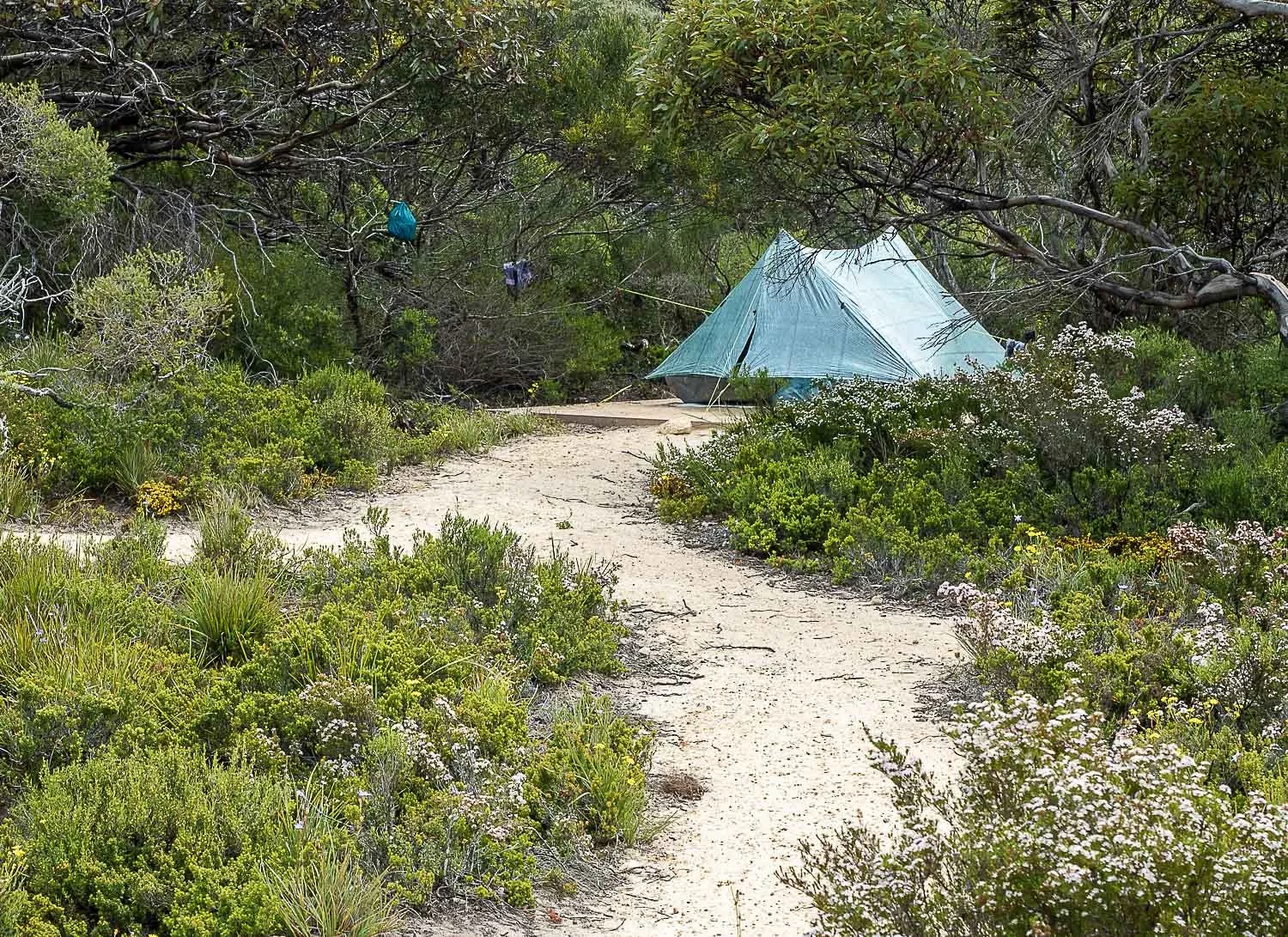
In 2017 (above), even sites higher on the slope were sheltered: would this still be the case after the 2019 bushfire?
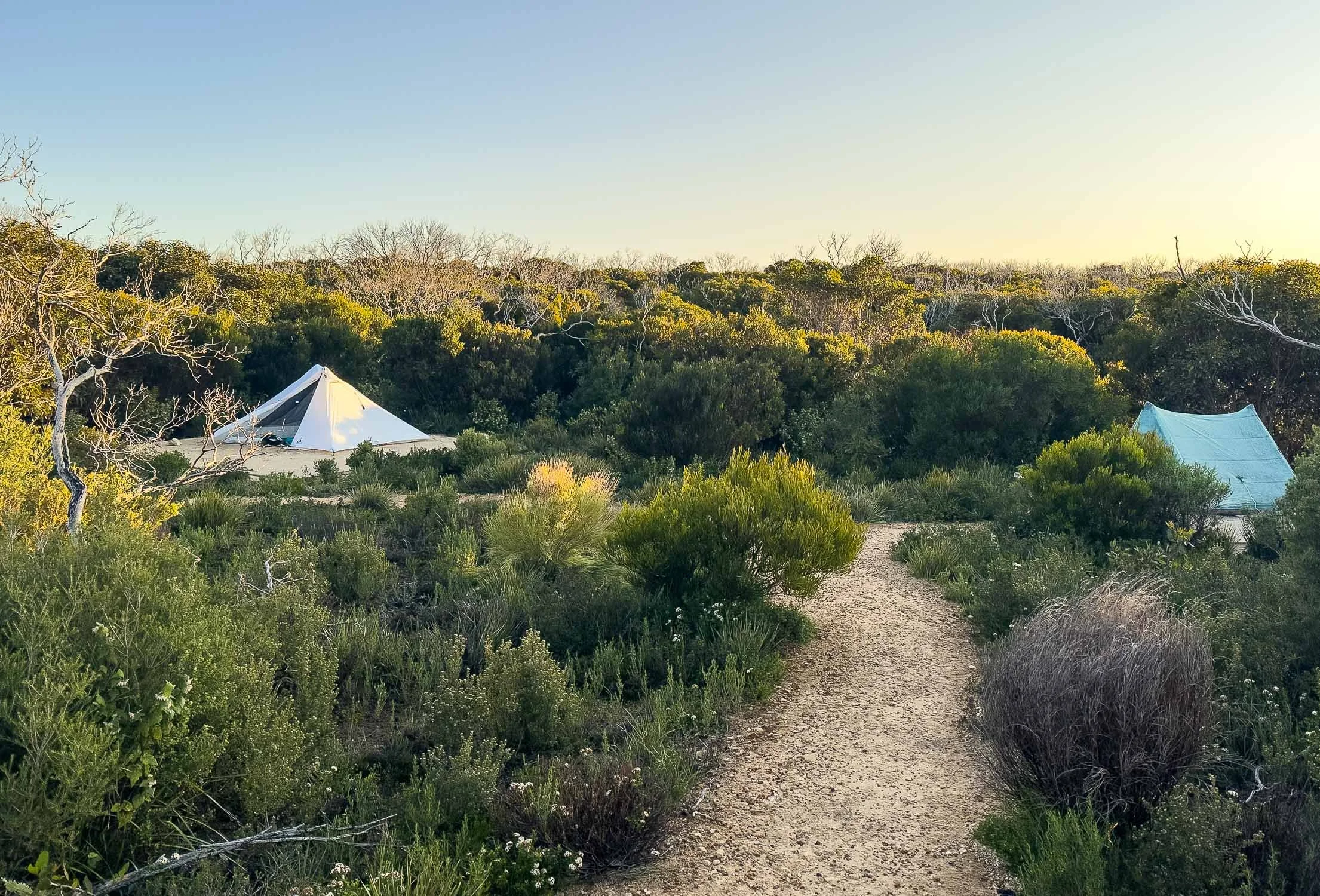
Yes! The canopy is indeed lower, but you can still tuck in amongst the regrowth and the shrubs are flowering beautifully. The lack of overhead tree cover does, however, increase condensation on cool nights.
Today’s hike along the coast has been nothing short of spectacular, with its open cliffs and headlands providing views almost every step of the way: what an exceptional trail this is!